Spectator Life

Spectator Life

An intelligent mix of culture, style, travel, food and property, as well as where to go and what to see.

Is Labour right about the power of oracy?

It is no surprise that a speechwriter and a barrister-turned-politician would think the art of speech-making should be taught in schools. It’s like pig farmers at a barbecue eulogising the nutritional value and superior flavour of pork.  The speechwriter in question is Peter Hyman and the former barrister is Sir Keir Starmer, Britain’s presumptive next PM. In serious fields of scholarly inquiry, the goal is to make the complex appear simple. Unfortunately, the field of education sits under the social sciences, which try to make the commonplace sound complicated. This is why making speeches and discussing ideas are dubbed ‘oracy’ and are the Labour party’s new big education idea.

School portraits: snapshots of four notable schools

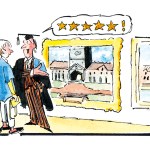
Hurstpierpoint College, West Sussex Hurstpierpoint College – or ‘Hurst’ – aims to provide an ‘excellent all-round education’ that enables every child to ‘achieve their own personal bests’. The school is located in the West Sussex countryside, is co-educational and for pupils aged four to 18 years. Its 140-acre campus is impressive and, having abandoned full boarding in 2019, it offers flexible and weekly boarding from Year 9, along with a chaperoned weekly train service from Clapham Junction. The college was established in 1849, and claims to have the oldest Shakespeare society in existence and the oldest school magazine in the country.

You won’t know it, but a school trip will be the best day of your life

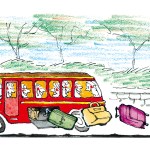
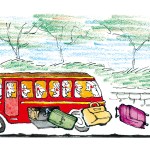
‘We need 800 words on a memorial school trip by next Friday. And Taki’s already written one.’ As soon as I agreed to this commission, I started to worry. What if Taki’s childhood involved countless trips to Penscynor Wildlife Park, St Fagans Museum of Welsh Things or Wookey Hole? There would be a risk of repetition. After some reflection, I decided this was unlikely. I had even gingerly lowered the rear step of the minibus to maximise the resulting damage Unlike Longstanton Spice Museum, which is an Alan Partridge invention, Penscynor Wildlife Park, though now defunct, actually existed. It is surprising that it failed financially, since it must have made several million pounds a year from the sale of car stickers alone.

Could you find love with a business degree?

‘D’you know what the acronym MBA stands for?’ The 27 -year-old who asked me this had a deep tan and fluorescent teeth. He may have winked, but the eye twitch was more likely a nervous tic from looking at himself in the mirror so much. I responded with a look of indifference tinged with fear. ‘Married’ – he paused for dramatic effect and demonstratively looked at my wedding ring – ‘but available.’ I felt nauseated.

Are boys’ schools a thing of the past?

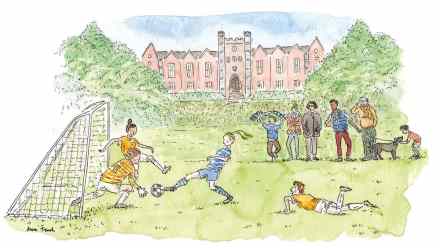
First Charterhouse, then Winchester – now Westminster. In the past two years alone, three of Britain’s most famous schools have recently turned, or are planning to turn, fully co-educational. How many more boys’ schools will follow?  One popular argument for the change is, as ever, that girls will be a ‘civilising influence’ upon teenage boys – especially in the light of the sexism exposed by the ‘Everyone’s Invited’ scandals. The more that teenage boys learn to study with girls and respect them, the less likely it is such scandals will be repeated. I taught at two traditional schools which turned co-educational in the 1990s, Uppingham and Cranleigh. Then, it was usually a shortage of numbers which triggered the move to take girls.

How to succeed in exams

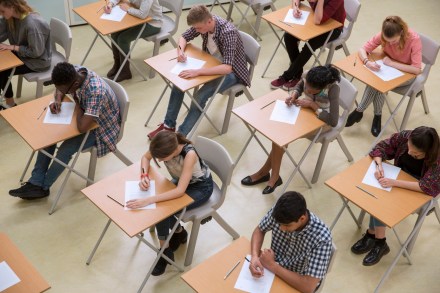
Exams start on Monday. Thousands of A-level and GCSE pupils will be swotting hard for them right now. Some will do well; others won’t. Knowledge and ability are the two obvious keys to success. But there’s another factor that’s often overlooked: exam technique. Having taught thousands of students of all abilities at several leading schools, I know this is a vital reason why some teenagers are more successful than others: they use the right exam techniques under pressure. So what are these techniques?  First and foremost, arrive early. Exams need a clear head and turning up at the last minute is certain to be stressful.

The timeless rules of youth

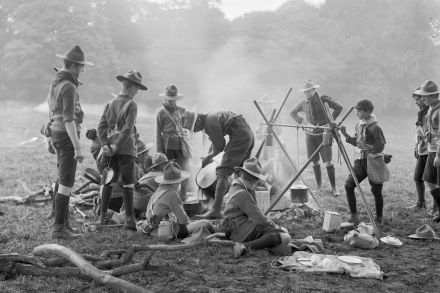
Every so often, one stumbles across some long-forgotten text that could have been written yesterday. It’s a reminder that often the answers to today’s problems lie in the past. I had one of those moments when I read Lord Baden-Powell’s Rovering to Success. Recently I had another such moment reading about Kurt Hahn’s Six Declines of Modern Youth. He wrote of a widespread decline of self-discipline, a dislocation from the world and a weakened tradition of craftsmanship. All this, and more, rings true. And, God knows, we need to find solutions. Kurt Hahn is not exactly unknown: the German-born educator who later settled in Scotland was the late Duke of Edinburgh’s headmaster at Gordonstoun which Hahn founded together with Lawrence Holt.

Independent thinking: private schools need reinvention, not abolition

It is one of those ancient mysteries: why has no Labour government been able to abolish private schools? Harold Wilson didn’t spare grammar schools (and nor did Edward Heath’s government, which followed). New Labour, too, for all its reforming zeal, never dared disembowel the independent sector. When the party did promise to do so – in 1983 and 2019 – it lost heavily. But are private schools about to run out of luck? For once we have a Labour opposition which is threatening to end their charitable status – and which also looks as if it will cruise to victory at the next general election. Labour’s pre-manifesto has promised to end tax breaks in order to ‘fund our vision for the education system’. It has suggested that it hopes to raise £1.

Private education’s dirty little secret

Someone once said that the two greatest moments you enjoy when owning a yacht are the day you buy it and the day you sell it. You could make a similar case for school fees: nothing feels quite as good as the day you finally stop paying them. Much as we are impressed by the hockey pitch, what we’re really choosing for our kids is a peer group All the same, I feel a bit of an ingrate grumbling about private schools, since both my daughters did very well from them. Both ended up with a superb network of seemingly lifelong friends, had a mostly very happy time at school and attended the universities they wanted to attend, studying the subjects they wanted to study.

How to get in to an American university

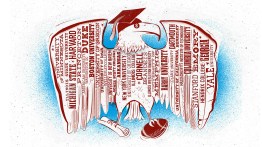
Angela McAuslan-Kelly is a normal sixth-former at Robert Gordon’s College in Aberdeen. Her dad is a bus driver and her mum works in a coffee shop. ‘They are not very wealthy,’ explains Holly Cram, a former captain of the Scottish national women’s hockey team. Angela, though, is off to Princeton in September. ‘I completely get why students want to do it. They are sold on the dream of getting a scholarship’ The reason is American universities’ extraordinarily generous scholarships, especially for sports. ‘She is very bright and she is very good at chucking a heavy thing on a wire,’ laughs Cram. Angela’s love of hammer throwing means she will soon find herself rubbing shoulders with the scions of American business.

Will AI kill homework?

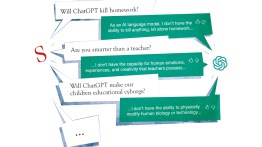
If the success of a new technology can be measured by the speed of uptake, there is no denying the epochal impact of ChatGPT. Within five days of its launch in late November, the artificial intelligence chatbot, which can provide clear, detailed answers to human questions, was being used by a million people. Now it’s used by 100 million, with a growing waiting list of those looking for a chance to try it. Even the mighty Google has allegedly issued a ‘Code Red’, realising that a machine which can answer any question without having to send you off to some unreliable websites might pose a threat to its search-engine business model. Bill Gates has said that ChatGPT is equivalent to the first PC. Others have claimed it’s akin to the dawning of the internet.

How to tempt parents away from private schools

Destroying private schools isn’t just a preoccupation of left-wing activists. The former education secretary Michael Gove said in 2019 that he wanted state schools to be so good that paying fees would be seen as an ‘eccentric choice’. Labour has explained that if it wins power, the party will scrap charitable status for private schools and charge VAT on fees. Even among Tory voters, as many people agree with this policy as oppose it. Is it surprising that support for private schools, including among the middle classes, is on the decline? The cost of private education has more than doubled in 30 years, even accounting for inflation. The average cost of sending a teenager to a private day school is now £16,500 a year and nudging £20,000 in London and the South East.

Why maths to 18 is a bad idea (by a maths teacher)

Whenever I tell people I used to be a maths teacher the most common response is: ‘I absolutely hated maths at school.’ It is an age-old tale, to loathe maths lessons (or indeed your maths teacher). So, what better way to make children loathe maths even more than to make it compulsory until the age of 18? Rishi Sunak’s plan, announced at the start of the year, aims to address innumeracy and better prepare pupils for the workplace. There are many reasons why, on the surface, it seems a sensible approach – not least because the UK is one of the few countries in the world that does not require children to study maths in some form up to the age of 18.

How to raise a genius

If you want to master something, you should study the highest achievements in the field. To learn how to paint beautifully, visit the National Gallery. If you want to be a great scientist, spend some time in cutting-edge laboratories. If you want to write, read great literature. But this is not what parents usually think about when considering how to educate their children. Most simply outsource the work to existing bureaucracies. Is there, however, something that they could learn from the great figures of the past?

Why become a teacher?

There was an article in this magazine’s last Schools supplement in September that, just for a moment, made me panic. ‘Why I’ve quit teaching’ was the headline. Not great timing. I’d just resigned from my secure civil service job in the Department for Transport to start a Postgraduate Certificate in Education in secondary level history. My thoughts raced. Had I made a serious blunder? What if I wasn’t cut out for this teaching gig after all? Would I end up an emotional wreck and go crawling back to Whitehall? When you’re teaching you’re always thinking about and sharing a subject you find profoundly interesting At my work leaving party I had well-meaning but ominous conversations along the lines of: ‘We admire your decision but think you’re absolutely mad.

School portraits: snapshots of four notable schools

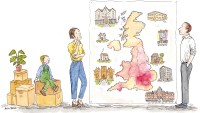
Roundhay School, Leeds ‘While we were taught about racism and sexism, there was too little time spent making sure everyone could read and write,’ said Liz Truss of her alma mater three years ago when she was minister for women and equalities. Roundhay School’s record begs to differ – it has been ranked ‘outstanding’ by Ofsted for more than a decade now. In 2020, the same year as Truss’s speech, the school received a World Class Schools Quality Mark. Roundhay is based in Leeds, and educates 2,600 pupils across a gorgeous 22-acre site on the outskirts of the city.

Why I betrayed my friend over a bottle of rum

There are moments in a boy’s adolescence when he catches a glimpse of the man he will become. Faced with adversity, is he the brave sort – or the sort who runs away and lets others suffer? Aged 13, on a school trip to Portsmouth, I discovered I was the latter. Tom insisted he’d found the bottles on a street, which made him sound considerably weirder than he was It was my first year at Bradfield College, a boarding school in Berkshire. About a hundred of us new boys packed on a coach. I vaguely recall the hooligan energy of too many young males in a small space: over-excited heads popping up to shout swear words in the direction of the staff at the front, then ducking down to avoid censure.

The true cost of Labour’s war on private schools

In a newspaper article five years ago, Michael Gove singled out the tax exemptions enjoyed by private schools thanks to their charitable status as one of the ‘burning injustices’ of our time. He took it for granted that scrapping these benefits would raise money and proposed spending it on children in care instead. ‘How can this be justified?’ he said of the exemptions. ‘I ask the question in genuine, honest inquiry.’ Answer came there none, and Keir Starmer has now said that private schools will be treated like any other commercial business if Labour wins the next election. Since that looks quite likely, I thought I’d take up Michael’s challenge and say why I think that’s a bad idea.

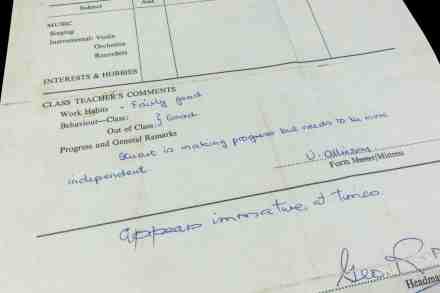
Bring back the handwritten school report

The end of term is here and parents up and down the country will be awaiting the arrival of their child's end-of-term report. But I hope they won’t be expecting too many pearls of wisdom from the impersonal emails that will ping into their inboxes shortly.   Ten or a dozen years ago (the exact date varied, school by school), in an act of educational vandalism, handwritten school reports were abolished. Edicts were issued by school ‘senior management teams’ and grudgingly, reluctantly, teachers put their fountain pens and little bottles of Quink back into their desks, never to be taken out again.   The personal touch in the reporting process disappeared with them.

What teachers really want for Christmas

As the end of term approaches parents may be wondering what to buy their child’s teacher for Christmas. It’s the season of goodwill, after all. It’s also a golden opportunity to win a way to Sir or Miss’s heart, so they’ll continue to take good care of little Olivia or Oliver in the new year. The days of apples left on desks are long gone, so what to give teacher might cause some confusion. Money is tight this year, an added complication – although at some of the independent schools where I’ve taught gifts seem to become more extravagant each December. So what kind of presents do we teachers really want? The short answer, especially at the end of a long, tiring term is: ‘Something alcoholic, of course – preferably wine or designer gin.

Carol Vorderman: My maths manifesto for the nation

A glittering TV career, an MBE, various honorary degrees, tens of thousands of TikTok followers and the only person to win the (now cancelled) Rear of the Year award multiple times. There are many accolades that Carol Vorderman has been afforded during her 40-year career, yet few mean more to her than her claim to having possibly taught more people alive in Britain than anyone else. Through books, tapes and online classes, the former Countdown star has – according, at least, to my remedial fag-pack maths – educated more than a million people since the late 1980s. She started when the national curriculum was introduced in 1988 with instructional classes on VHS, and she’s subsequently taught generations of adults and children.

Why I’ve quit teaching

For the past four years I have worked at an academy in Hackney. I was deputy head of maths for three of those years, and head of maths for the final term, managing 16 staff. After nearly a decade teaching in the state sector, I’d finally worked my way up to a well paid and respected position. But this summer I walked away from it. I’m not alone. The profession is haemorrhaging talent: data from the National Education Union published earlier this year revealed that 44 per cent of teachers intend to leave the profession by 2027. Retention in London schools is particularly poor. The reasons why teachers quit are complex, but there are a few common themes. One is exhaustion.

How a skiing trip turned me into a megalomaniac

In the instant I first became aware of the unpleasant nature of the cosmos we all infest, my megalomaniac nature and a desire to marry Rupert Murdoch, I was on a school trip to Gstaad. Now and then the night train stopped at snow-capped stations, which I could see from my lower bunk. My teenage illusions of glamour were invested in that journey: echoes of Sidney Lumet’s Murder on the Orient Express – Hungarian counts looking like Michael York, imperious German princesses with toy dogs in the dining car… My expectations were rudely curtailed when someone threw up. Two splodges of vomit landed on my stomach, before sliding to the floor where they lay there staring at me. ‘Oh God,’ said the 15-year-old schoolgirl responsible. ‘Too many mixers.

School portraits: snapshots of three notable schools

Trinity School, Croydon Headmaster Alasdair Kennedy says he wants students to leave the school ‘without any sense of entitlement, but with a humility that acknowledges the fact there is always more to learn and others to learn from’. The former grammar school, which accepts boys from the age of ten, now offers a co-educational Sixth Form, in a state-of-the-art building opened by Boris Johnson in 2012. More than half of parents do not pay the full fees of £20,437 per year due to scholarships and bursaries. This summer, 84 per cent of students got into their first choice university, with almost half of all grades awarded being A*s.

How to get through a school reunion

T here’s no need for a mirror at school reunions. Just look all around you to see the cruel effects of anno domini on your old contemporaries – and don’t fool yourself that you alone have miraculously dodged the hair-thinning, waist-expanding horrors of middle age. Is that really the semi-divine girl who scored a modelling contract in her first term in the sixth form and was in a Nivea advert in Elle? Can that be the Brad Pitt of the Remove – the one who had sex before first lesson every morning? Where has the plumpness in her dewy lips fled to? How far back along his scalp have the golden ropes of hair retreated? I’m certainly not one to speak.

The struggle of summer with a disabled child

Day one of the school holidays this year set the tone for the sprawling six weeks ahead. My teenage son rolled out of bed at a leisurely 1.05 p.m., by which time my daughter had smashed her head repeatedly against the kitchen wall, bitten my leg and trashed our living room. And so began a typical ‘summer break’ for a family with a disabled child. The gap between holiday provision for children with, and without, special needs and disabilities (SEND) during summers has long played out under my roof because I have one of each. Before my non-disabled son reached an age when he could sleep in all morning, I would enrol him in play schemes and clubs or lean on loving grandparents to entertain him while his dad and I worked; the typical summer juggle of so many parents.