Spectator Life

Spectator Life

An intelligent mix of culture, style, travel, food and property, as well as where to go and what to see.

Love letters: why has the alphabet fallen out of fashion?

Last term I invigilated a reading examination at a fee-paying prep school where I work as a supply teacher. About five minutes in, a little girl called Maisie raised her hand. She looked downcast. ‘Yes Maisie?’ She pointed, unspeaking, at the first question. ‘Shall I read it to you?’ She nodded. I read it. ‘Does that make sense?’ She shook her head. ‘Well,’ I began, stalling, as I tried to work out which bit was confusing for her, ‘why don’t you have another look at the text? The answers will be there in the story.’ She mumbled something. ‘What’s that?’ She mumbled again, and this time I heard her: ‘I can’t read.’ Maisie is nine. She has been at this school since she was five.
The Oxbridge Files. Which schools get the most pupils in?

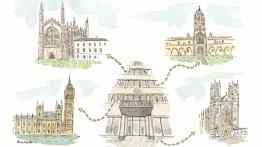
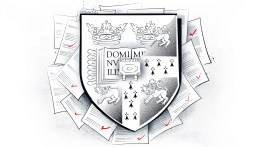
Oxford and Cambridge have released figures showing how many offers they gave to pupils from schools in the 2020 UCAS application cycle. We have combined the figures in this table. It shows how well state grammars and sixth-form colleges compete with independent schools. Over the years, both universities have roughly doubled the proportion of pupils from state schools: 67 per cent, up from 52 per cent in 2000. Of the 80 schools, 35 are independent, 22 grammar, 15 sixth-form colleges, seven comprehensives or academies, and one is a further education college. (Schools are ranked by offers received, then by offer-to-application ratio. If schools received fewer than three offers from one university, this number has been discounted due to UCAS’s disclosure control.

How to win the Maths Challenge

Simon Singh, founder of the Good Thinking Society and author of The Simpsons and Their Mathematical Secrets, believes that parents should ferociously ‘lobby their children’s schools’ if they still don’t run the annual Maths Challenge. For those not familiar with it, the Maths Challenge is a phenomenally well-organised competition run by the United Kingdom Mathematics Trust (UKMT). It doesn’t cost much to enter — £13 for ten papers (for ten pupils) — and is a massive opportunity for children from all backgrounds. UKMT, a charity founded in 1996, aims to ‘advance the education of young people in mathematics’. It works with schools and volunteers to arrange junior, intermediate and senior challenges.

How Harris Westminster conquered Oxbridge

Westminster School is being kept on its toes by its partner sixth-form college round the corner, Harris Westminster. There’s no imminent threat yet, in the ‘How many did you get into Oxbridge?’ stakes: last year, Westminster (private, £10,497 per term for day sixth-formers) got 71 of its pupils into Oxbridge, and Harris Westminster (state, £0 per term) got 36 in from a cohort about twice the size. But watch those Oxbridge statistics draw closer to each other in the next few years, as Harris Westminster’s highly motivated and excellently taught students continue to soar, and Oxbridge colleges become ever more nervous of offering places to the (as they see it) over-entitled and over-advantaged privately educated middle classes.

Have we let exams become too important in shaping schools?

I was working in my study at Brighton College one summer term afternoon when my PA banged on the door: someone at The Spectator wanted to speak to me urgently. An animated editor burst on the line, audibly back from a very good lunch, barking: ‘What’s all this you’re saying about exams and tests squeezing scholarship and rounded learning out of schools?’ ‘Sitting exams in rows in sports halls has little bearing on what school pupils will ever do later in life,’ I spluttered, my fumbled response sufficient for him to commission an article ‘by tomorrow’.

School portraits: a snapshot of four notable schools | September 2021

Brampton manor academy This co-educational state school in Newham, east London, is setting the standard for the academies programme. With hundreds of high-achieving pupils, its selective sixth-form, which opened in 2012, has attracted attention for its stand-out Oxbridge achievements. This summer, 55 pupils secured Oxbridge places, beating Eton for the first time. The sixth-form receives around 3,000 applications for about 300 places per year, while some two out of three pupils are eligible for free school meals. One pupil puts its high achievement rates down to discipline, highlighting the rules around punctuality (there’s detention if you’re late) and a strict uniform code.

The golden age of the grammar schools

Some lucky parents have already solved their school and university problems. They have managed to insert their young into state grammar schools. If all goes according to plan, they will need to pay no gigantic fees, their sons and daughters will be educated to what at least looks like a high standard, in orderly classrooms — and an increasingly anti-middle-class Oxbridge will not be prejudiced against them when they apply. I envy them, having myself spent the GDP of a small Latin American country on private education over the past three decades, with variable results. But I also increasingly wish it were not so.

Who’s being hurt by ‘white privilege’?

14 min listen

While Labour are shuffling people round yet again.. 'There needs to be a change in messaging from the leader's office, because otherwise it just looks like he's rearranging deckchairs on the Titanic.' - Isabel HardmanAnd the DUP are getting ready to welcome in their third leader in less than a month... 'Donaldson is actually in a much stronger position this time round, than if he had won by one vote last time round.' - James Forsyth A new report seems to show that in education, the group seemingly most negatively affected by the idea of 'white privilege' are white, working class children.  'I've been involved in the social mobility foundation for quite some time and there's no doubt that the demographic most missing in these programs is white, working class.

Have we hit peak graduate?

The Tory party has turned sharply against the idea of ever larger numbers going to university. The reasons for this are both economic and political, I say in the Times today. On the economic front, the taxpayer is bearing more of the cost of the expansion of higher education than expected — the government estimates that it will have to write off 53 per cent of the value of student loans issued last year — and there is a belief that the lack of funding for technical education is contributing to the UK’s skills and productivity problems. Politically, the issue is that graduates tend not to vote Tory Politically, the issue is that graduates tend not to vote Tory. At the last election, the Tories beat Labour by 44 per cent to 32 per cent.

Why I picked an apprenticeship over a politics degree

I’d always wanted to work in the media but had no idea how to get there. I would spend hours during sixth form trawling the pages of impressive journalists on Wikipedia, desperately trying to get some sense of what was required. My conclusion? An Oxbridge education tied most of them together. Inspired, I applied to various top universities. After getting a handful of offers, I picked a politics course at a leading institution, the University of Warwick. In the meantime, I started getting as much work experience as possible. The more I did, however, the more I realised that there were actually alternative paths into the industry. So many of the young journos I met weren’t graduates. Their route had been the government’s apprenticeship scheme.

The misunderstood motto of Rishi Sunak’s old school

The first thing that Dr Tim Hands, headmaster of Winchester College, would like to clear up is his school’s world-famous motto, ‘Manners maketh man’. Whenever a Wykehamist makes the papers, this ancient phrase is wheeled out, referring to his (in)decent manners. But this isn’t quite right, says Hands. Two pieces of stained glass — one formerly in Bradford Peverell church near Dorchester, and another in the Warden’s Lodgings at New College Oxford (founded by Winchester’s founder Bishop William of Wykeham) — read ‘Manner maketh man’. This, says Hands, is the origin for the school’s motto. ‘“Manner” means what you are and what you do — not how you fold your handkerchief.

I never considered sending my daughter to boarding school – until the pandemic hit

Last summer, we joined the sharp-elbowed ‘exodus’ that saw demand for places at independent schools increase by up to 30 per cent. We were guilty, according to the Observer, of creating ‘an even larger divide between affluent and disadvantaged pupils’. Not to be out (middle) classed, we went one better, enrolling our 15-year-old daughter as a boarder. Home for the holidays, she so animatedly regaled us with her experiences that we might have smugly congratulated ourselves on our selfless financial sacrifice were it not for one qualification: ‘But I’d rather be here, with you.’ We’d never countenanced boarding.

The Oxbridge files: which schools get the most offers?

Oxford and Cambridge have released figures showing how many offers they gave to pupils from various schools last year. We have combined the figures in this table below. It shows how well state grammars and sixth-form colleges now compete with Britain’s finest independent schools. Over the years, both universities have roughly doubled the proportion of pupils from state schools: it now stands at 60 per cent, up from 50 per cent in 2000. This is reflective of which schools get the best A-level results. Of the 100 schools below, 48 are independent, 23 are grammar, 19 are sixth-form colleges, 7 are comprehensives or academies and 3 are further education colleges.

What my misspent youth taught me about handling ‘problem’ children

I’m teaching a boy named Drayton. He’s from a typical Coventry family. I should know. I went to school in ‘Cov’. It seems like only the day before yesterday I was hopping the fence with Drayton’s older brother to go to KFC. But that was ten years ago. These days, Drayton orders an Uber Eats to be delivered through the palisade bars of the steel fence. And I’m the one in authority who is supposed to be reining him in. ‘Easy, Bossman. What we doing today?’ is how he addresses me as he enters my classroom. ‘Now, now, Drayton. It’s Sir, to you,’ I say. ‘Yeah, dat’s calm, innit.’ Which means that’s OK with him. He asks me for a pen, then a pencil and finally a ruler as he does his work.

What did Spectator writers really get up to at school?

Rod Liddle If you leave a Bunsen burner on for about ten minutes, then quickly put the rubber pipe over a water tap and turn it on full, you get a small explosion and a scalding stream of water to be directed at a boy called Harris. Similarly, if you attach crocodile clips to Harris’s jacket and then wire it up to a power source, it makes him jump about a lot. I loved physics lessons. Jeremy Clarke Snow in the playground. The tall caped figure of the headmaster appeared on a short outside staircase — a rare balcony appearance of a benign, reclusive demigod. One long-distance snowball among the flying hundreds, arcing higher than the rest, travelling through the air in slow time, apparently laser guided, is fixed in the memory of all who saw it.

Six rules for picking the wokest school

One of the great advantages private schools offer is an ability to change with the times. While some hold on to traditional notions, many are adapting nimbly to the new woke world — expunging their problematic historical figures and educating pupils in the new equivalent of U and Non-U. But how do parents ensure their little treasures aren’t triggered and are always confined to the safest of spaces? Here, then, is our guide to the wokest schools. Rule one: lots of schools were woke decades ago At my alma mater, Westminster, the history curriculum was pretty much decolonialised in the 1970s by left-wing teachers.

Mixed blessing: do single-sex schools have a future?

If you were starting with a blank screen to design an education system today, it seems unlikely that you would think of creating single-sex schools, any more than you would single-sex professions or single-sex restaurants. Education for life is something we do together, like working or eating. Their existence is explained by the fact that when the first were established, most girls didn’t go to school. William of Wykeham founded Winchester in 1382 for ‘poore scholars’ who would be boys — that was obvious. Dean John Colet founded St Paul’s School in 1509, taking advice from Erasmus of Rotterdam and putting the management of the 153 scholars ‘from all nacions and all countres indifferently’ into the hands of the Mercers’ Company.

Which instrument should I play?

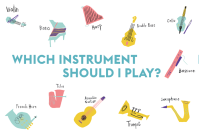
Thinking about taking up a musical instrument, but unsure where to start? Whether you have amazing musical abilities or not one iota, try our handy quiz to find out what’s right for you, from tissue paper and comb to saxophone.

The school trip that gave me my first act of rebellion

What I remember in most vivid detail about my school trips are the coach journeys. This may be testimony to the fact that the schools I went to never took me anywhere glamorous, not because they didn’t have the money (our parents were paying enough) but because it wasn’t really thought decent or necessary to take children somewhere exciting in those days. At St Joseph’s Convent, our most exotic outing was to Birmingham for a recorder festival, aged about six. Picture a coach-load of little girls in maroon blazers, maroon felt hats, maroon A-line skirts and beige gloves — yes gloves. We went everywhere in beige gloves. Maroon felt hats in winter, straw boaters in summer. But always beige gloves. We were young ladies. We did things properly.

Remote lessons have been an education for teachers like me

I had a Post-it note beside my laptop during the online lessons I taught during lockdown. It simply said ‘shut up’. I have spent 20 years teaching maths in urban comprehensives, reflecting and refining my methods and trying to train others. I thought I was doing a pretty decent job, but the pandemic and the necessity of teaching remotely has made me rethink the whole process. Early on in May I realised I had to work out, from scratch, what I actually wanted my students to become and how, in the world of screen-mediated learning, I could help them achieve this. What do I want my students to become? I want them to become autonomous problem-solvers, courageous in the face of the Unknown Problem.

School portraits: a snapshot of four notable schools

St Edward’s School, Oxford St Edward’s School has featured in these pages before, because of its North Wall performing arts centre which attracts (in ‘normal’ times) more than 20,000 public visitors a year to its exhibitions and performances. St Edward’s sets great store by being part of Oxford as a whole. ‘Beyond Teddies’ is the school’s community outreach programme, encompassing a community farm on school grounds where young people with learning disabilities and autism explore basic outdoor skills, marshalling the Oxford Half Marathon and visiting local care homes. Academically, the co-ed boarding and day school also thinks outside the box, with its pioneering ‘Pathways and Perspectives’ courses.

Should you take your children to visit Auschwitz?

Is the Auschwitz museum suitable for children? I pondered that question on a visit accompanied by a plane load of secondary school teachers, organised by The Holocaust Educational Trust. The Holocaust was first included on the UK’s National Curriculum in 1991 and the Trust charters aeroplanes for a professional development course for UK teachers, taking them to Auschwitz and back within a day. It aims to increase their understanding of the atrocity so that they can teach it more effectively.

The best online resources to use for home school

All you carefree millennials sans famille – spare a thought for parents currently in lockdown. While twenty-somethings may be secretly rubbing their hands with glee at the chance to catch up on their books bucket list or work their way through Netflix over the next three months, there is no such joy for parents. The announcement that schools were due to close was met with a mild look of panic by every parent I know – we’ve all become teachers overnight, except without the PGCE or the crowd control skills, all whilst holding down the day job. Wish us luck. Fortunately, in the age of the internet, plenty of help is at hand online.

How Oxbridge PhDs became the preserve of the super-rich

Oxford and Cambridge have gone to great lengths over the last few years to increase the number of admissions of state-school educated students at undergraduate level – to varying degrees of success. As Robin Harman reported in Spectator Life recently, there’s still a worrying disparity between the number of offers made to disadvantaged pupils and the take-up of those offers, even though the number of offers made has risen steadily.

How to survive the Eleven Plus: a parents’ foolproof guide

How is Britain seen by outsiders? What marks us out? Humour, self-deprecation, our changing weather, frequent cups of tea. But there’s something else that foreigners say after a spell here: the UK is a place where couples without children worry about where their unconceived children will go to school. As a Scot, I used to think this a bizarre English affectation — until my eldest son announced he’d like to join his friends and take the Eleven Plus set by grammars and private schools. Would I let him? Only then did it dawn on me why prep schools get their name: to prep children for this specific exam.