Spectator Life

Spectator Life

An intelligent mix of culture, style, travel, food and property, as well as where to go and what to see.

What is the secret of Millfield’s sporting excellence?

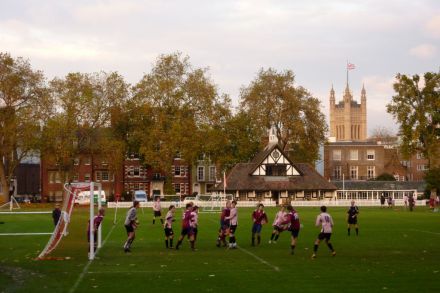
There’s one safe bet at any Olympic Games: there will always be a generous handful of Millfield alumni on Team GB. At Tokyo there were 13 Old Millfieldians (OMs); in the previous Games in Rio there were eight; four years before that, on home turf, there were nine (two of whom won gold). In 2016 the tally of OMs at the Games was higher than Pakistan’s entire delegation. In 2012 they won the same number of gold medals as Canada. What is Millfield’s secret? How did this independent boarding and day school, tucked away in an unfashionable corner of Somerset, far from the Notting Hill brigade, become a sporting powerhouse? ‘The philosophy is not about creating Olympians. It’s about creating a lifelong relationship with sport’ The obvious answer is its sprawling facilities.


Why are all female teachers called Miss?

You could be forgiven for thinking you’d inadvertently turned back the clock. Cross the threshold into the majority of British schools and what appears to confront you is a workforce of unmarried women. Surely it’s 1904 not 2024, and teaching is still a spinster’s business? For, in the average 21st-century school, each and every woman teacher – married, unmarried, divorced, celibate, cat-loving, asexual or simply overworked – is addressed by her pupils as ‘Miss’. The problem comes when ‘Miss’ is more than linguistic laziness. Could it in fact imply contempt? I’m not talking about ‘Miss’ as a regrettable replacement for a name, as in ‘I asked Miss for some lined paper’, though that’s bad enough.

How to make the new natural history GCSE worthwhile

Teaching for a new GCSE in natural history looks likely to begin next year. It’s part of the Department for Education’s ‘flagship sustainability and climate change strategy’. Apparently this subject is intended to teach pupils ‘how to keep the world safe’. Baroness Floella Benjamin, for instance, suggests it will show them how they can ‘save the world from catastrophe’. Paying attention to non-human life might cure some teenagers of their unhealthy obsession with selfies However well-meant such declarations may be, natural history is in fact about identifying and studying plants and animals, not fretting about ‘the plight of our planet’ and ‘how to rescue it’. Worried about what teenagers would in fact be studying, I wrote to the OCR examination board.

Are school reunions really that bad?

Outside a visit to the dentist, there are few things in life as unappealing as a school reunion. That’s particularly the case when it marks an anniversary with a big number attached. In our case, 30 years. On the face of it, it’s a micro-disaster in the making. The plan is to take a hundred or so men and women – many of whom are deep in the grip, knowingly or otherwise, of a mid-life crisis – wrench them away from their daily lives and transport them back to the boarding school where they were all teenagers together. You then throw in a free bar and disco – and let them get on with it.

School portraits: snapshots of four notable schools

Queen Ethelburga’s, York Set in 220 acres of beautiful countryside between Harrogate and York, Queen Ethelburga’s College is an award-winning day and boarding school that welcomes girls and boys aged from three months to 19 years and boarders from Year 3. It is known for its high-ranking academic performance. College, one of its two senior schools, placed second nationally last year for A-levels and 18th for all-round academic performance. The other senior school, Faculty, which offers more ‘creative and vocational subjects’, climbed several places to third in the north for A-levels and seventh for overall performance. The college places emphasis on growing pupils into resilient, caring and confident adults.

Russia lives on in my mind

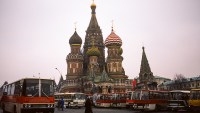
My kids, at our local comprehensive, go on school trips to Leigh-on-Sea. I went to a much fancier school, so I went on school trips to Leningrad and Moscow. The first time must have been in 1990. We were all going through dramatic changes; and so was Russia – not that as cossetted, self-absorbed 16-year-olds we were able to take much serious notice. We joked, nervously, gauchely, ahead of our departure about the likelihood that an Aeroflot flight could be relied upon to get us there in one piece. We practised our rudimentary GCSE Russian: ‘Chto eto? Eto GUM!’ (What’s that? That’s [the department store] – GUM.’) ‘Gdye Dom Knigi?’ (Where’s the bookshop?) ‘Chepukha! Vzdor!’ (Rubbish! Nonsense!

There is good news in the world – and it is mostly about wine

My last piece began with a one-word sentence: ‘Gloom.’ A dear friend reproached me. ‘In a world already abundant with gloom, surely you can find a way of cheering us up. After all, you’re not writing about politics – or at least you’re not supposed to be.’ I promised to try harder to propagate good news. When it comes to wine, that is not impossible. Twenty years ago, in Lisbon, I was treated to a bottle of Barca Velha. I was told that the Portuguese regarded it as their Château Latour. Needless to say, it was not that good but I remember thinking that it was a jolly decent drop of stuff, and – in those days – excellent value. Only half of that judgment still holds true. I tried a 2012 the other day and it was excellent: as good as a Bordeaux second growth.

Tips for day two of the Festival

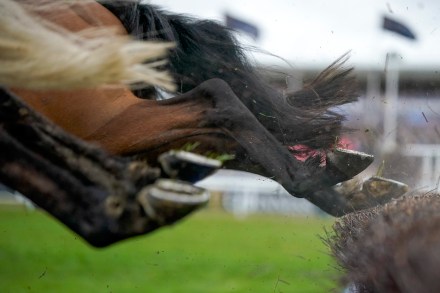
The Betway Queen Mother Champion Chase (3.30 p.m.) is the highlight of day two of the Cheltenham Festival and – despite Jonbon’s defection this morning – it provides an intriguing seven-runner contest over two miles. There are various arguments to be made for the top two in the market – El Fabiolo and Edwardstone – each winning this £225,000 pot. However, both potential frailties too: El Fabiolo has not always convinced with his jumping and Edwardstone’s runs have lacked consistency this season. The Cheltenham Festival is a marathon not a sprint and there is plenty to look forward to I would rather dabble each way on Henry de Bromhead’s gelding CAPTAIN GUINNESS, who is an old favourite of mine and a regular here at the Festival.

It’s time to ditch the all-inclusive

There are some who would love to spend an eternity by a pool in Spain dancing the ‘Cha Cha Slide’ until they pass out on a sun lounger. There are others who would prefer to spend the afterlife with bifid-tongued demons than wait in line for a subpar continental buffet. I fall into the second camp. It’s not that I think all-inclusive holidays are without purpose, it’s just that I think all-inclusives have passed their sell-by date. I’m sure that Gérard Blitz’s initial idea for an all-inclusive came from a good place: his desire to entertain the masses. But these resorts are a far stretch from the original straw huts and bartering beads of Club Med’s 1950s design.

Japanese toilets aren’t all they’re cracked up to be

What is the world’s best city in which to be caught short? You can imagine a lively discussion on this question on a TripAdvisor forum. A strong candidate would be Tokyo, which has recently added to its long list of otherworldly attractions, a collection of 17 high-tech architect designed public lavatories. The toilets feature, and arguably star, in Wim Wender’s Oscar-winning film Perfect Days which tells the story of a reclusive, obsessively diligent cleaner whose job it is to keep the facilities in immaculate condition.

Bored of generic hot sauce? Try these

Sick of sriracha? Try Sambal Oelek, an Indonesian chilli sauce that’s easy to make in minutes, by blending red chillies, salt and either vinegar or lime juice together. Or buy a jar ready-made. If I were to be consigned to a desert island and could take only one spicy condiment it would be molho apimentado from Brazil Will 2024 be the year of hot sauce? The Guinness Book of Records recently certified the world’s hottest chilli, Pepper X. In case you’re wondering, hot peppers are rated for heat on the Scoville Scale, created by American pharmacist Wilbur Scoville in 1912. It measures the amount of capsaicin (the chemical compound that causes spicy heat) in a pepper and assigns it an SHU (Scoville Heat Unit) rating.

Five tips for day one of the Cheltenham Festival

Lucinda Russell is a trainer that I love to have on my side for the Cheltenham Festival. It’s not simply that she has got to be one of the nicest people in racing but, more importantly from the viewpoint of a gambler, she knows exactly how to prime one of her best horses for a big target. I have been wanting to put up APPLE AWAY for this meeting for some time but Russell, who has trained three Festival winners to date, made this difficult by initially entering her seven-year-old mare in four Cheltenham races over as many days. The Unibet Champion Hurdle is, of course, the traditional highlight of day one of the Festival We now know, finally, Apple Away’s one and only target: today’s Grade 2 Maureen Mullins National Hunt Challenge Cup Amateur Jockeys’ Novices’ Chase (5.

Now AI is coming for musicians

Do you remember those far off misty days of yore, when shocking, startling, amazing, disquieting revelations from the world of Artificial Intelligence only arrived every year or two, or even longer? It was about, ooh, a fortnight ago: a wistful, innocent time of smiling boy scouts, and honey for tea, and vicars in bicycle clips, and all we had to worry about was this funny new thing called GPT3. For about an hour after making that ditty I had that chorus ‘You can’t even hijack planes’ spinning in my mind Since then, things have, to say the least, accelerated.

Give me back my codeine

It’s a long time since I took a powerful drug that wasn’t dispensed by a pharmacist. Last winter, during what has become the annual post-Christmas Covid collapse, I searched in vain for the codeine cough linctus I’d been prescribed when the virus first struck four years ago.  Why must we suffer because a few scrotes misuse it? ‘Keep it on the bedside table,’ said my GP at the time, ‘and when you wake up coughing in the night, take a swig and you’ll be able to go back to sleep.’ She was right: it provided blissful relief and precious, life-enhancing sleep. But when I asked my current GP (we’ve since moved out of London), she gazed into the middle distance and made gnomic pronouncements of the ilk, ‘We don’t really do that any more’.

Married At First Sight feels strangely traditional

There should be a salacious German word for the blissful relief one feels at not being in another’s uncomfortable situation. Not pleasure at their misfortune, as in schadenfreude, just toe-stretching- and-dancing joy that you are safely under a blanket on the sofa while others are undergoing intense public scrutiny.  First impressions suggested earnest, caring individuals fed up of the transience of modern-day hook ups This is the feeling I have when watching Married At First Sight, the hit American TV programme that is now franchised to 24 other countries across the world.

Did we really need Warsi and Baddiel’s podcast?

Podcast fever continues to dominate the political airwaves. The rewards for success are enormous and popular podcasters are able to fill concert halls around the county by delivering a couple of hours of chitchat to willing punters. Since the running costs are minimal, the profits are vast. This explains the gold-rush of media darlings and former politicians thronging into the digital space. Often the shows are billed as acrimonious punch-ups between sworn enemies like George Osborne and Ed Balls or Rory Stewart and Alastair Campbell. But the presence of a microphone seems to sweeten the mood and to turn animosity into peace and harmony. Listeners are likely to feel cheated.

A river-side chat with Paul Whitehouse

The words ‘immersive experience’ have always suggested, to me, a rather strained hour or two smiling patiently at unemployed actors pretending to be ghosts or personages from the olden days or, if I’m really lucky, chocolatiers who are not called Willy Wonka for legal reasons. In fact, all the publicity for the ‘Fish and Feast with Paul Whitehouse’ seemed designed to raise my blood pressure: it was not just ‘with’ the comedian and actor, but ‘expertly curated’ by him and included a session with a ‘wild cooking expert’. Animals, plants, and the man of Borneo can reasonably be called wild; cooking is in the other column with swimming and camping.

Tottenham have betrayed their fans

For as long as anyone can remember, Tottenham Hotspur have offered half price season tickets for pensioners. No longer. This has been scrapped from the beginning of next season. Those already enjoying the 50 per cent concession in the vain hope they will live long enough to see the team win a trophy again will see their annual discount reduced, in phases, to 25 per cent. And only if they sit in certain allocated sections of the ground. For those of us approaching our golden years, we don’t even get that. The discount has been discontinued. Older fans are being pushed to one side by a club that seems hell bent on appealing to a younger market The price of a standard season ticket is going up too, by 6 per cent.

Two bets pre-Cheltenham

It may come as a surprise that, even though we are just four days away from a certain major racing Festival in the Cotswolds, today’s betting column will be a no go area when it comes to putting up tips for Cheltenham next week. There are three reasons, all hopefully logical, for this approach. First, I (possibly even we if you follow my tips) already have eight horses in the ante-post portfolio from the past four months. Secondly, the value has gone in the current ante-post lists and, particularly for the big-race handicaps, it is now better to wait until after the 48-hour declarations when there will be more each-way places on offer from almost all bookies.

Why women love gay films

Last month, the BBC offered an apology of sorts after a red-carpet reporter at the Baftas asked Andrew Scott, star of the film All of Us Strangers, about fellow Irish actor Barry Keoghan’s appendage. This had been the subject of conversation thanks to Keoghan’s naked dancing in the film, Saltburn, in which Keoghan’s floppy bishop steals the final scene. To settle this nagging concern the BBC turned to a gay man. ‘There was a lot of talk about prosthetics. How well do you know him?’ the reporter asked an annoyed Scott who shook his head and walked away.

Avoid microplastics? Don’t bother

They’re everywhere, it seems: in the oceans, the fish, the soil, our drinking water, our vegetables, our grains and cereals, our meat – even in us. Microplastics and smaller nanoplastics are tiny particles of plastic flubbage measuring half a centimetre or less that result from the degradation of plastic refuse, and according to recent news coverage the world is simply crawling with the stuff. Anxiety might turn out to be the biggest health problem caused by microplastics It’s getting everyone in a tizzy. On the one hand you can’t possibly avoid it, since it’s already more or less everywhere. But you must do something, the reports insist, or risk a plethora of terrifying health consequences: cancer, hormonal imbalance, diabetes, reproductive problems, and more.

Private school isn’t worth it

In the end, it was the sports kit that persuaded us to pull the plug: two technical training tops at a cost of £90. A directive had come down from the senior school that all pupils must be in new gear from Kukri (official supplier to county cricket clubs and Commonwealth Games England) by the start of the Michaelmas term. I replaced what our sons had outgrown in the school’s uniform shop (five items: £200), but baulked at spending another £100 when their old training tops still fitted. School fees are already unaffordable – and that’s before you factor in VAT at 20 per cent Our sons had been in prep school since we bolted from London after the lockdowns to a part of the country we barely knew.

Could the BBC sink Desert Island Discs?

Desert Island Discs is 80 years old and to celebrate this milestone the BBC has planned an event unprecedented in the show’s long history. It is also one that will surely have its creator and original presenter, Roy Plomley, spinning in his grave. Desert Island Discs Live will take place at London’s Palladium over three nights later this month with host Lauren Lavern in conversation with celebrity guests Russell T. Davies, Katherine Ryan, Lemn Sissay, Ellie Simmonds, Dara Ó Briain, Sue Perkins ‘and more to be announced’. The whole charm of the show, and the reason for its longevity, is its intimacy If this sounds like your sort of thing then it’s not too late to book – there is, at the time of writing, a whole raft of tickets still available from between £44 and £92.

Sydney Sweeney and the return of real body positivity

Yay! Boobs are back! Sydney Sweeney made engagement farming easy with her cleavage-revealing curtain call this past weekend as the host of Saturday Night Live. If you spend any time online at all, I’m sure you’ve seen the video. Wrapped in a revealing little black dress, Sydney thanks the cast, the crew, Lorne Michaels and giggles and bounces in familiar ways I haven’t seen in decades. For anyone under the age of 25, they’ve likely never seen it in their lifetime – as the giggling blonde with an amazing rack has been stamped out of existence, a creature shamed to the brink of extinction. sydney sweeney’s end speech at SNL pic.twitter.

Why Cambodia is the best country in the world

Yeah, I know, ridiculous. Cambodia? How can that be the best country in the entire world? For a start, most people can’t place it on a map. This includes close relatives of mine who are studying geography at A Level. They know all about the Marxist topography of urbanism, but Cambodia, err, um, is that near Africa? Also, Cambodia?? Isn’t that the country that suffered a fearsome Maoist genocide within living memory, with a quarter of its population dying by execution, torture, famine and disease, and the rest left so hungry they resorted to eating giant spiders roasted in tomato powder? The landscape is agreeably green, the jungles are often untouched, the islands can be Edenic (but primitive) Well yes, it is.

A Soviet guide to vodka

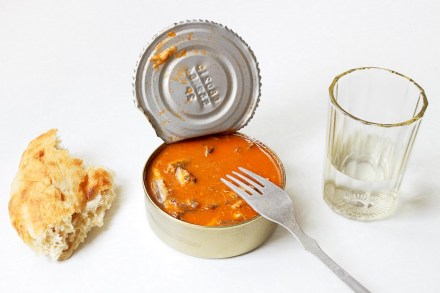
One of the perks – a perilous one – of visiting the Former Soviet Union in the 1990s was the cheapness of the vodka. I was used to paying London prices for it but in Estonia (where I lived for two years) you could find bunker-bars where they’d serve you a generous tumbler – enough to blitz you for an evening – for about 40 pence. Most people wanted nothing more from alcohol than that it should anaesthetise them and help them forget, and vodka was ideal for this. Unlike whisky or brandy, you couldn’t crow over its ‘vanilla overtones’, its ‘hints of butterscotch’ or its ‘aged in the wood’ qualities. It simply got you drunk, no more, no less. And the bars served it that way: doled out, clinic style, in a measuring beaker.

Can’t sleep? Try a boring audiobook

I’m sleeping with the actor Richard E. Grant at the minute and can highly recommend the experience. He’s reading Agatha Christie’s The Murder at the Vicarage to me and has the perfect voice for it, faintly lascivious but not disturbingly so. As for the content, it’s just what’s wanted – engaging but not too stimulating. Like so many of us, I’m nodding off to the sound of an audiobook. Crime novels work well, as long as they are not overly gruesome or suspenseful I was already enamoured of Richard E. Grant who’d, on other late nights, read me Iris Murdoch’s The Sea, The Sea. The plot unfolds at a gentle pace and nothing unduly dramatic or loud happens – there are no car chases or football chants.

The Nazi next door: inside my grandmother’s house

Each time I return to Hamburg (about once a year, on average) I pay a sentimental visit to my grandmother’s magnificent old house, where she spent her cosseted, idyllic youth, during the Weimar Republic and the Third Reich. It’s a robust Teutonic villa, a bombastic relic of the Gründerzeit – that flamboyant building boom which followed Bismarck’s triumphant unification of Germany. It’s on one of Hamburg’s smarter streets, a leafy avenue called Heimhuderstrasse – but it’s not the ornate architecture that draws me there, or even the snob value of the neighbourhood. What brings me back year after year are the stories that cling to this house like ivy – stories from the life my German grandmother lived before I knew her, before and during the second world war.