Spectator Life

Spectator Life

An intelligent mix of culture, style, travel, food and property, as well as where to go and what to see.

Are we ready for P(doom)?

It’s difficult to remember a time before climate change – a time when our daily discourse, our newspaper front pages, endless movies and TV documentaries, and Al Gore, Greta Thunberg and Sir David Attenborough (Peace Be Upon Him), were not lecturing us, sternly and constantly, about the threat to our planet from the ‘climate emergency’, the melting of the ice caps, the levelling of the Amazon jungle, the failure of the Gulf Stream, the desertification of Spain, and the complete and total cessation of snowfall in Great Britain, apart from the regular occasions when it snows.  In fact, if you are under 30 you may not even be aware that there was a time when we didn’t vex about Anthropogenic Global Warming.


Why Apple killed its electric car

After spending over $10 billion, screwing over corporate partners, hiring and firing talent and a decade of work trying to develop a flagship product for a new, massive market, Apple has killed what could have been its most ambitious product yet: an electric car. The failure of the electric vehicle project singularly reflects the culture and hubris of Apple Its death comes with no announcement, for Apple never officially acknowledged ‘Project Titan’ existed, but Mark Gurman of Bloomberg reported last week that its 2,000-person team had been shifted to other projects. Its demise is surprising because Apple rarely gives up on big projects, and because of just how much time and money had been spent on it.

Get ready for the cowboy renaissance

Marvel is at death’s door. What’s next? Some say we can track an incoming recession by the length of women’s skirts, others by the popularity of dance music. Film, as the composite of a million images, comes out as a more sophisticated forecaster – and not just of the economy, but of lifestyles and mentalities. Styles rise and fall with the times. They’ve been doing so since the early days of commercial cinema. A cowboy craze has already spread to TV Take the original shift from film noir to Western. Noir, which peaked in popularity in the latter half of the 1940s, dealt with the leftover anxieties of world war two. Sometimes this was obvious: in Orson Welles’s The Stranger, a Nazi war criminal descends on a peaceful Connecticut town.

Four bets for the weekend’s big handicaps

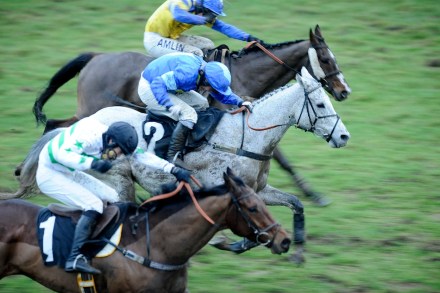
BENSON did this column a massive favour a year ago when landing the bet365 Morebattle Hurdle after being put up at 16-1 (he went off at a starting price of 11/1). In truth, he faces a stiffer task in the same race tomorrow because he is both one year older and running off the top weight of 12 stone in a fiercely-completive 18-runner handicap. However, with more rain forecast between now and the off, along with his trainer Sandy Thomson in fine form (six winners from his last 15 runners for a 40 per cent strike rate over the past 14 days), I am happy to stay loyal to this battle-hardened warrior on his 26th visit to the racetrack.

What has Amy Lamé actually done for London?

It’s no surprise that Britain’s night economy is in dire straight given a quarter of people told pollsters they would like to see nightclubs permanently closed even after the pandemic. Yet nobody embodies modern society’s contempt for club culture quite like Amy Lamé, Sadiq Khan’s embattled ‘Night Czar’. Places that ought to be the capital’s dedicated nightlife districts, such as Soho, are being squeezed to death Yes, as she stressed in a recent op-ed defending her record, she did her stint on the scene herself. But as any investor will tell you, past performance is no guarantee of future returns – and Lamé’s record speaks for itself.

The joy of going solo

Managing other people’s expectations takes the joy out of pretty much any excursion. Most things are better enjoyed alone. This hit me many years ago when I decided to risk a bullfight in Las Ventas in Madrid. My grandfather wasn’t long dead, and had been a fan of la corrida; I felt that this was something I wanted to do alone, lest whoever I was with think I’m a total sicko. As a naturally highly neurotic mother, it’s liberating not having to worry if one’s uniquely precious offspring I’ve since become less cautious about admitting how much I like going solo. Without the pressure of having to think about whether everyone else is having fun, you can immerse yourself fully in whatever new experience it is, and not be subjected to conversational post mortems either.

How to carry out a citizen’s arrest

One Monday morning about 30 years ago, I drove to work, parked my car in the village car park, and started hauling my bags of files out of the boot. In my new role with a firm of solicitors, the weekend had been a chance to familiarise myself with my pressing caseload. I initially paid little attention to a small group of people in heated animation nearby as I unloaded the car. Then I realised what was in fact going on was an attack; someone was pinned against a van. Seconds later, I heard weak squeals for help. I dropped by bags and bellowed, ‘Stop! Stop that now! I am a solicitor and I’m telling you to stop now!’ I strode to the huddle and continued yelling at them to stop.

Magnolia will never go out of fashion

Last week’s news that a mature magnolia tree had been felled in a suburb of Poole, Dorset, because wood decay made it a threat to nearby houses, will have touched the hearts of gardeners everywhere. For, in the words of the plant collector E.H. Wilson, after whom Magnolia wilsonii is named, magnolias are ‘aristocrats of the garden’. This is scarcely hyperbole, since magnolias can trace their lineage back to the Pliocene epoch, and are famous for their noble stature, and beautiful, showy and often highly scented flowers.

The problem with self-checkout tills

Our national malaise arises in part from the poor state of many of Britain’s private services. No, not a misprint. I mean private services. Many on the political right berate public services, implying that were they only to be privatised everything would be sweetness and light. Yet modern technology now makes it all too easy for companies to treat their customers with just as much high-handed disdain and bureaucratic inflexibility as any state enterprise. Drive into a pub car park and forget to record your number plate and you’ll receive a fine of £100. Contesting this requires several hours of your time trying to find a receipt to prove you bought a drink.

Idris Elba’s champagne makes the world seem less troubled

Gloom. Relentless rain out of a sullen sky enhanced an already pessimistic mood. We were talking geopolitics and agreeing that the West ought to brace itself for a hard landing. Try as we might, we could find no good news, anywhere. Where is the self-belief of the Reagan/Thatcher years? Instead, a culture war is taking place Some of us were veterans, one or two of whom had spent time in Washington in 1980, the build-up to the Reagan era and the prelude to the most successful decade in modern peacetime history, in which Margaret Thatcher played a crucial role.

Is racing being ruined by ‘super-trainers’?

Back in November, 20 horses went to post in the Troytown Chase at Navan. Fourteen were trained in Co. Meath by Gordon Elliott, who provided the winner Coko Beach and four of the first five home. He broke no rules. To those who objected to his mass entry, Elliott retorted that he hadn’t stopped any horse running in the race by running the number he did. It had not filled to its capacity and his entrants had a range of owners.

The genius of Flanders and Swann

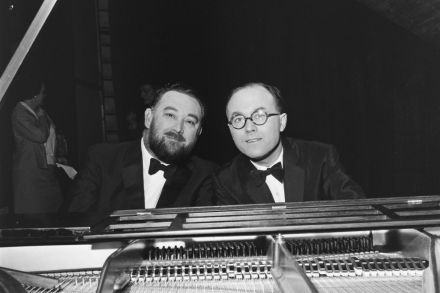
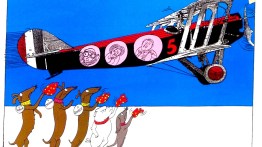
War has had its apologians ever since history began,From the times of the Greeks and Trojans when they sang of Arms and the Man,(But if you ask me to name the best, sir, I’ll tell you the one I mean,Head and shoulders above the rest, sir, was the War of 14-18) If you’ve never heard Michael Flanders’s rollickingly good version of Georges Brassens ‘La Guerre de 14-18’ – an ironic take-down of the industrial-scale slaughter of the first world war, then you’re missing a treat. I first heard Flanders and Swann in my schooldays: I loved ‘The Gnu’, ‘The Hippopotamus Song (Mud, mud glorious mud)’ and ‘Misalliance (The Honeysuckle and the Bindweed)’.

In praise of long films

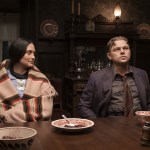
Late last year, Martin Scorsese’s epic Killers of the Flower Moon switched from cinema to living room on the Apple TV streaming service. An increasingly popular tactic, the move from big to small screen draws in a whole new audience, many of whom deliberately waited to see it for the price of a monthly subscription rather than spend a night at the pictures paying for overpriced popcorn, listening to other people’s conversations and not being able to check their Instagram account every five minutes. You would think watching anything for more than two hours requires some sort of marathon effort akin to sitting through The Ring Cycle Yet even as they relaxed on their sofas, they took to social media to complain: ‘Why are these films so long?

Why have women stopped smiling at me?

No one seems to be talking about how the faces of most of the female population appear to have frozen. I increasingly find myself gazing admiringly at groups of young men – like some sort of proud avuncular patriarch – who seem the only people left capable of smiling. Like knights of old, they are protectors of an arcane tradition that is dying out. Women form the bedrock of civilisation: without them on side, things ultimately go awry for any society The so-called ‘bitch face’ look is chic at the moment. Look at billboards and none of the models are smiling. It’s all very Bret Easton Ellis.

Where is the Princess of Wales?

Tuesday’s statement about Prince William was terse to the point of being unhelpful. ‘The Prince of Wales has pulled out of attending the memorial service for the late King Constantine of Greece at Windsor Castle due to a personal matter.’ Granted, William has been unusually active during the past few weeks. One minute he has been photographed hobnobbing with the stars at the Baftas, the next has been diving into controversy by calling for a humanitarian ceasefire in the Middle East. Therefore, his absence from the memorial service could be down to anything from exhaustion to some minor but unpleasant personal complaint.

The horror of travelling with pets

It’s 7 in the morning, I’ve got to Milan Linate airport two hours before my plane to Bari, and already things are going horribly wrong. The airline aren’t letting my cats fly with me. I’ve got documents to show they’re microchipped and all their vaccines are in order, but two uniformed men, straight out of Mussolini central casting, are telling me the carry-cage is all wrong. Perhaps I should resent these animals and all the hassle they’ve brought me ‘It should have metal sides,’ they snap. ‘You cannot fly with this cage.’ I tell them honestly that I flew with it from Britain the day before – the very same airline to this very airport – that I always fly with it, but they’re having none of it.

Frank Skinner: twilight of an insurgent comic

Watching Frank Skinner perform his latest one man show at the Gielgud Theatre reminded me of what it must have been like back in the dying days of variety. By the late 1970s and early 1980s cheeky jokesters and all-round entertainers such as Tarby, Brucie, Doddy and Manning were feeling the heat from a new breed of alternative comedian vehemently opposed to the old guard’s reliance on tedious stereotyping and shallow observation. Now in their mid-fifties (considered ancient back then) many took the hint, hung up their dickey-bows and retired to Bexhill; others struggled on in tatty end-of-the-pier shows in front of dwindling geriatric audiences. Mystifyingly, Sir Bruce Joseph Forsyth-Johnson CBE continued his wearisome nice-to-see-you shtick right up until his death in 2017 aged 89.

Dinosaurs and culture wars

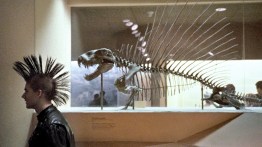
Last week marked the 200th anniversary of the most significant evening in the history of palaeontology. On 20 February 1824, the learned gentlemen of the Geological Society gathered at their rooms on Bedford Street in Covent Garden for a meeting that would transform human understanding of prehistoric life. To begin, the clergyman William Conybeare announced and described the Plesiosaurus. A vast marine lizard that Mary Anning had discovered in Dorset, the Plesiosaurus was memorably described as ‘a serpent threaded through the shell of a turtle’; it would later leap from the rocks of Lyme Regis into the fiction of Jules Verne and Arthur Conan Doyle, and into the popular imagination as the Loch Ness monster.

The enduring ghastliness of Alastair Campbell

As someone who was fond of Derek Draper (a feeling that probably wasn’t mutual, as I nicked his bird) it was strange to see photographs of his funeral. It seemed like a state occasion for some legendary leader who had died in battle defending his country, rather than for the husband of a likeable TV presenter who had been unlucky enough to catch a virulent version of a sickness which so many shook off. Sir Elton John sang; Sir Tony Blair speechified. Gordon Brown, Peter Mandelson, Ed Balls and Alastair Campbell showed up; the Blair Bunch reunited. The dignity of Draper’s widow and children sat oddly next to this ghastly bunch of carpetbaggers, reminding us that before he found redemption, Derek became famous – notorious – for revealing the hollowness at the heart of New Labour.

AI just exploded. Again

When they come to write the history of the AI revolution, there’s a good chance that the writers will devote many chapters to the early 2020s. Indeed, such is the pace, scale and wildness of the development, it is possible entire books will be devoted to, say, what happened in the last week or so. This is happening now, not in some dystopian future If you’ve not been paying attention, let me talk you through it. On 15 February Sundar Pichai, CEO of Google, and Demis Hassabis, the head tech bro at DeepMind (the London-based AI company bought by Google in 2014) announced the launch of Gemini Ultra 1.5 Pro. It may sound like a slightly superior razor-blade, in truth it is a very serious machine. To demo Gemini 1.

Every woman needs a nemesis

My nemesis is a student at another university. She has not always been my nemesis. We were friends until I realised that she was not who she purported to be. Her interests had been systematically poached from the people around her. Talking to her always felt like an interrogation from a particularly insecure detective. Real feminists know that empowerment comes from defining the breadth of your own animus She mined me constantly for pointers on speed-reading and language-learning. Rarely did she actually follow my advice, especially when it required resourcefulness and hard graft. The final straw came when my nemesis inquired, out of nowhere, about my career plans. ‘Thanks,’ she said when she’d finally managed to file them down to a single job title. ‘I’ll look into that.

Looking ahead to the Cheltenham Festival

Tomorrow’s Bet Eider Handicap Chase at Newcastle is just the sort of marathon contest in which I usually like to have a bet but, with so many of the 13 runners out of form and the going likely to be very soft, I am happy to give it a miss this time around. Instead, I am going to turn my attention to the Cheltenham Festival, which is less than three weeks away. Unusually for me, as I tend to like the value odds often offered by horses from the smaller yards, I am going to put up two horses from the two most successful stables in Britain that have gone slightly under the radar.

Airbnb has ruined Cornwall

Michael Gove’s restrictions on Airbnb are too late for Mousehole, the next village along. It mirrors Dull-on-Sea in The Pirates Next Door: ‘Too busy in the summer and in winter it shuts down’. Last year there was so much traffic in Mousehole that the bus couldn’t get through, and it dumped trippers at the top of the hill. Down by the harbour, at the bus stop, I saw a Sainsbury’s van instead. And that, to paraphrase Niall Ferguson, is how empires fall. ‘What about my view?’ is their worldview. My husband calls them coffin dodgers Any analysis of the impact of Airbnb on Cornwall must include the question: what happened to staying in hotels? As a child I stayed at the Treyarnon Bay Hotel near Padstow.

Logan Roy is disgusting

The other day I met a young woman wearing a crop top emblazoned with the words Waystar/Royco – the media conglomerate at the heart of Succession, HBO’s cult television drama about the nasty Roy family and their insane attempts at one-upmanship for control of their father’s company. It won Emmy and Golden Globe awards three years running for best drama, plus numerous extra gongs for the cast, making it – in my book – the most overrated piece of entertainment of all time.  Shouldn’t men like Logan Roy, and behaviour like Cox’s, be relegated to a distant era? What I disliked most about Succession, which I finally forced myself to watch this year, was the show’s star patriarch Logan Roy, played by gruff ex-RSC man Brian Cox.

The dangers of skinny dipping

Several years ago, I went for a swim after I’d been for a job interview. I’d just finished my lengths, had my shower, and as I wrestled my knickers back on, a voice from behind me said ‘It’s Ettie, isn’t it?’ Quite how she recognised my bare bottom I don’t know, but the woman who’d interviewed me earlier in the day was certainly keen to continue our conversation, up close, personal and starkers. And for those of you who’ve never tried, I can assure you that trying to juggle one’s bosom into a bra in a flustered hurry when one is still slightly damp to protect what shreds of self-respect remain is inelegant at best.

Chelsea buns are the best of all buns

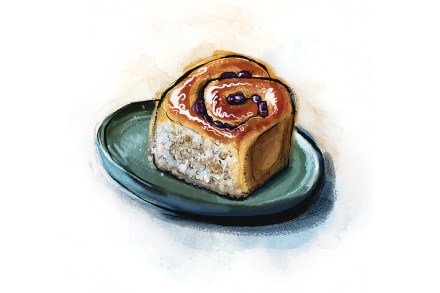
The Chelsea bun was first baked in the Bun House in Chelsea in the 18th century. It was a bakery which found particular favour with the Hanoverian royal family, as its pastries were reminiscent of those from whence they came. But these buns were for everyman: they were customarily bought by the poor on Good Friday along with hot cross buns. On these days, the demand was such that the buns were sold through an opening in the shutters, and a police presence was needed. The Bun House was headed up by Richard Hand who was known as ‘Captain Bun’; after his death, the shop passed on to one of his sons and then another. In 1839 there was no one left to take it on, and the shop closed.

‘You can stare at a cow you will soon eat’: The Newt, Hadspen, reviewed

The Newt is an idealised country house in Somerset which won the World’s Best Boutique Hotel award last year. It is small, beautiful and mind-meltingly expensive, even for the Bruton Triangle and its mooing art galleries. Poor Somerset! It never wanted to be monied enough to have a triangle, but the rich make their own mythology. Since they paint every-thing grey – and now green, I learn at the Newt – they need it. A triangle fills the day. The Newt is for people who think that Babington House is stupid (it is) and though the Newt has its own issues – like the King, its taste is almost too immaculate – you never feel that the chief executive of a media conglomerate will bounce past you on a space hopper eating a fishfinger sandwich and shouting into an iPhone.

Cricket is one of the best anti-depressants

I love it when the England cricket team flies east in the winter. It means they’re playing in the early morning, UK time, and that’s just when I need them the most. Because cricket is a powerful antidepressant. Without the sound or sight of bat on ball, early mornings at the moment would hold their usual threat The fireworks of Bazball have been lighting up the sky for nearly two years now, and as that period has coincided with war and economic doom, the on-field heroics of Ben Stokes and the gang have been particularly welcome. But, thrilling as last year’s Ashes undoubtedly were, they still took place in the summer, the time of year when depression is at its least potent.

Can England rain on Scotland’s Six Nations parade? 

Watching England play Wales in the Six Nations the other day, a lacklustre match between two middling sides and distinguished only by lashings of Welsh hwyl as the visitors outperformed their role as underdogs, I remarked to the Irish friend who was with me: ‘The Welsh don’t like the English, do they?’ ‘Get in line,’ my friend replied. Fair point, and the Scots, proud members in the queue and a better team than Wales, will sorely test the idea on Saturday that Steve Borthwick’s newish-look side are any better than their predecessors. Scotland are scarily good, prevented from beating France onlyby a blade of grass For some time it felt as if England didn’t have to do much more than turn up to the Calcutta Cup to get the win.