Spectator Life

Spectator Life

An intelligent mix of culture, style, travel, food and property, as well as where to go and what to see.

Two tips for the Irish Grand National

Irishman Martin Brassil is a brilliant target trainer but even he has to handle the ups and downs that come with participating in the so-called Sport of Kings. Horse racing, particularly at the highest level, can bring despair as well as joy as Brassil experienced at last week’s Cheltenham Festival when he had three fancied runners over the three days. Built by Ballymore was a disappointing 4-1 favourite when he came only 14th of the 21 runners in the Coral Cup Handicap Hurdle, Fastorslow unseated his rider when well-fancied for the Boodles Cheltenham Gold Cup and, worst of all, Ose Partir, was brought down and, sadly, fatally injured in the Boodles Juvenile Handicap Hurdle.


’Allo ’allo, have you got a licence for that model engine?

As far back as I can remember, I always wanted a steam engine. When I was five my parents promised that I could have one when I was 12: I think they thought I’d forget. I didn’t, and seven Christmases later I unwrapped a model traction engine made by the Birmingham firm of Mamod. It was chunky and basic, and its bright green and red paint gave it a toy-like appearance. But its brass valves and copper pipes were unquestionably the real thing. Out in the garden, Dad and I lit it up. The engine grew warm, it hissed; its flywheel whirred into life. And a glorious aroma filled the morning air: a blend of hot metal, WD40 and the sweet, chemical fragrance of burning fuel tablets. One breath and I was hooked.

The irresistible horror of the farm shop

Picture the scene; you’re Kate Middleton and it’s Saturday lunchtime. You’re out enjoying suburban Windsor. The Audi is safely stowed – along with hundreds of other cars mostly produced in Germany, the Czech Republic or the West Midlands – in a nearby car park the size of the deck of the USS Harry S. Truman and about as eco-friendly. The farm shop is a kind of Peppa Pig World for adults There’s a faux 1950s Citroen van-lookalike with corrugated panels from which a pair of stressed teens in brown aprons are selling overpriced macchiatos, almond lattes and stone-cold hot chocolates, to a lengthening queue of gilet-wearing mums and dads. Most of them are too busy pretending not to watch their children tormenting each other to notice they are being royally ripped off.

In defence of ready meals

Earlier this week I read that, from the moment of pulling into the car park to exiting it, the average supermarket shopper reads just seven words. Seven words. My initial reaction was: who are these Neanderthals? So, for want of something to talk about over supper after nearly 20 years of shackles, I ran this random fact past my husband. He was amazed anyone read as many as seven. My reaction this time was more fulsome: who is this Neanderthal, and why am I having dinner with him? When I was home from boarding school, I was positively relieved when she reached for an M&S carbonara rather than Delia These seven words are all the more stark when you know the average length of time spent in a supermarket: 37 mins.

The trouble with apple cider vinegar

The snake oil salesman is back in town with an old favourite: apple cider vinegar – or ACV as it’s called by those in the know. The ‘wonder-juice’ has been around for centuries, peddled by Greeks and Romans alike. In recent years, it has become something of a panacea, a social media ‘superfood’. But just how good is this cloudy, acidic liquid? The purported benefits range from weight loss to curing cancer. I’m no oncologist, but the cancer claims seem a little dubious. That said, let’s not dismiss apple cider vinegar entirely. The likes of Jennifer Aniston, Kim Kardashian, Katy Perry and Victoria Beckham swear by it – and if Brass Eye taught us anything, it’s that celebrities are always right.

My night with a murderer

My father met a murderer once; a carrot-topped former chorine called Ann Woodward, who gave her veddy veddy posh husband both barrels after discovering he intended to divorce her for someone more upper-class. She got off after her mother-in-law, Elsie, who preferred a killer in the family to a scandal, bought off the American cops. That was back in 1955, and Ann is now one of the subjects of the new Ryan Murphy FX series, Feud: Capote v the Swans. Murderers generally get what they deserve, which is a relief, as not so long ago I had one in my bedroom These days, murderers generally get what they deserve, which is a relief to me, as not so long ago I had one in my bedroom.

Johan Cruyff, ‘total football’ and the birth of the modern game

The greatest rivalry in football for the past decade is coming to an end. Managers Jürgen Klopp and Pep Guardiola clashed in 30 games across Germany and England, but neither came out decisively on top (their final meeting was a 1-1 draw earlier this month). In May, Klopp will leave Liverpool for good. It’s a shame that two of the best managers of all time may never face each other again, because their rivalry has raised the calibre of the sport so spectacularly. Klopp and Guardiola tinkered relentlessly with their squads, tweaking formations, positions and playing styles in order to best one another.

Chicago doesn’t know what limits are

Chicago residents bristle when you ask them whether they eat deep-dish pizza. ‘Yeah’, they sigh, ‘we might occasionally when someone visiting wants to try it out’. Sigh. ‘We have great thin crust though’. But lots of places have good thin crust. I came to Chicago to try the deep dish. But deep-dish pizza is stupid. It’s not a pizza, more a dense pie: the sauce sits at the top, and the filling beneath is quicksandy cheese. Sausage meat, jalapeños, chorizo, bacon, red onions and mushrooms are thrown into it and expected to learn how to swim. I got a deep dish on my last day in Chicago and found it wasn’t good. Not for any explicable reason – something like this can’t taste bad — but from my own somewhat pompous sense that God must be against it.

What my strange old friends taught me

As a young man I sought out the company of much older people in the arts, feeling they had some secret to life, often the same one in different guises, which I wanted, needed to discover. In the let-it-all-hang-out youth culture of the 1990s I felt awash, and the elderly (which to a 20-year-old meant anyone over 60) were also kinder, less threatening, more generous with their time. Two people who influenced me most were Daniel Farson – roistering Soho writer and broadcaster, a kind of modern-day Toby Belch – and Karin Jonzen, a septuagenarian Swedish sculptress with a studio off the King’s Road. It was all pure gold, a kind of heightened life you swore you’d always strive for Dan I met by design.

China’s greatest poet was a drunk teenage girl

One of China’s most famous poems was penned by a teenager with a killer hangover. ‘Heavy sleep can’t get rid of the dregs of alcohol,’ she grumbles, sequestered in her darkened room after a night of boozing and bad weather. She has to ask a maid to open her curtains. Here comes one of the quintessential images of classical Chinese poetry: a crab-apple tree stands in the drenched earth, wrecked by the storm. Her maid, who hasn’t been drinking, sees nothing wrong. The poet is full of sorrow. Spring has faded. To her, drunkenness was always beautiful, even when it led to disaster Li Qingzhao grew up in 12th-century Shandong, an eastern province around four hours from Beijing.

Inside the Kent townhouse built for heroes of the Napoleonic wars

‘I’m used to going deep into narratives, and I just loved the story of this house,’ says actress and director Sara Sugarman, who is selling her Grade II* listed Georgian home in a historic Kentish dockyard. Her roles include TV series Grange Hill and Juliet Bravo, movies Sid & Nancy and Mr Nice, and she has also directed Lindsay Lohan in Confessions of a Teenage Drama Queen and Jonathan Pryce in Very Annie Mary, earning the Sundance Film Maker’s prize along the way. ‘I wanted pure authenticity, so I researched everything I could about the history of the house and 1830s design and got a real hunger for it.

The monstrous beauty of Nico

Few things sum up the chasm between childhood and adolescence more poignantly than our changing relationship with music. One minute life is all familial cuddles and nursery rhymes – the next it’s all parental alienation and rock’n’roll. One year I was eagerly buying the records of Pinky & Perky, the next those of Dave Dee Dozy Beaky Mick & Tich – and the next, the records of the Velvet Underground and Nico. Nico had finally found the family’s piano and was pumping away on it as if her life depended on it My relationship with Nico – the fantasy and the reality – is one of the funniest never-meet-your-heroes experience I’ve ever had.

Love Desert Island Discs? Try this

In its primary Sunday morning slot, Desert Island Discs on BBC Radio 4 finishes at noon. This is the cue for radio cognoscenti to turn the digital dial a single notch – to BBC Radio 3. Because as Desert Island Discs ends, Private Passions, its lesser known twin, is about to begin. I wrote here recently about the celebrations around DID’s 80th anniversary. And many of the comments from Spectator readers were along the lines of ‘yes, but it’s no Private Passions’. And that sentiment, which I partly share, comes, I think, from the fact that PP feels the more serious, the more grown-up of two otherwise very similarly formatted shows.  ‘The big difference is that on Desert Island Discs people do not necessarily have to be passionate about music.

What happened to the good old fashioned Chinese restaurant?

In 1909, London’s first Chinese restaurant was opened by Mr Chang Choy off Piccadilly Circus. Named simply ‘The Chinese Restaurant’ – so exotic! – Choy specialised in what was described as ‘imperial banquet’ style cuisine which required at least half a day’s notice to prepare. Customers were then required to pay a hefty deposit in advance to cover the purchase of ingredients for such imperial delights as ‘sturgeon bones’, ‘fish maws’, ‘gelatine’, ‘dried cabbage stalk peel’ and ‘chrysanthemum shoots’. A 1937 edition of Where to Dine in London declared that, ‘Englishmen who have spent their lives in the East will appreciate the traditional menu’. Hmm, I wonder.

Safety tech is killing motorsport

Finland has a population of only 5.5 million, but it leads the world in motorsport. It’s the crucible of racing greats Markku Alén, Timo Salonen, Ari Vatanen, Keke Rosberg, Hannu Mikkola, Juha Kankkunen, Tommi Mäkinen, Mika Häkkinen, Marcus Grönholm, Kimi Räikkönen, reigning World Rally champion Kalle Rovanperä and current Formula One driver Valtteri Bottas. Known collectively as the Flying Finns, the country can boast nine F1 drivers, 57 grand prix wins and four F1 world titles, 16 World Rally crowns, five Paris-Dakar wins, two Le Mans 24 Hours victories and a World Endurance GT champion. Could omnipresent driver aids and the green movement spell the end for the Flying Finns?

Why the Romans loved asparagus

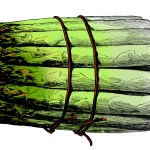
It is said that asparagus was Emperor Augustus’s favourite food. And France is, despite its Gallic spasms, a fundamentally Roman civilisation. Ask nine out of ten Frenchmen if they will have asparagus on their Easter table and they will say ‘mais oui’. The crunchy, slightly bitter stalk has enthralled humans for millennia due to its strange flavour and supposed medicinal properties. Those proto-French Romans were huge fans of the plant. You may even learn an asparagus recipe or two from studying their methods. The French smother their asparagus spears in hollandaise or béarnaise sauce Most of the information on Roman cuisine comes from visual depictions found in frescoes and mosaics that depict what went on during banquets at the time.

Sail the Nile in style

It’s hard to resist a bit of amateur sleuthing when you’re on a Nile cruise. As my boyfriend and I boarded the luxury liner Oberoi Zahra, we scrutinised the other passengers like Hercule Poirot might. Was the elegant Chinese-American businesswoman’s young companion her son or her lover? What resentments lay behind the silent mealtimes of the elderly British couple? Were the group of three young couples, who always had their meals together, really just friends? And who was staying in the best suite on the ship, equipped (we spied over the top deck) with a private hot tub? Is booze less haram than pork?

An 18-1 tip for the Cheltenham Gold Cup

The Boodles Cheltenham Gold Cup (3.30 p.m.) is the highlight of not just the final day of the Cheltenham Festival but this whole glorious week of racing. Yet, again, the Festival has been largely dominated by horses from the other side of the Irish Sea but I hope a British-trained horse will land the £350,00-plus first prize today. Despite winning twice at the Festival and landing last year’s Randox Grand National, CORACH RAMBLER remains a bit of a mystery in that we still don’t know how good he is at his very best. With his hold-up style, he never wins by more than he has to and he is always best in the spring.

Terfs are the new punks

‘PUNK’S NOT DEAD!’ I will sometimes write as a sign-off on emails to mates when I’ve said something particularly ‘bad’. It’s something of a joke with me; although I was around the scene early on (1976) and started my career off as a 17-year-old writing about punk, I didn’t much like it. I liked black music – disco, Motown, soul; I thought that most white music was just a nasty old racket. The establishment has moved from right to left but remains sexist, snobbish and racist But I do like the phrase, implying as it does a refusal to bow down to the establishment. Although we had a Labour government from 1974, it’s fair to say that the establishment of the 1970s was a fusty right-wing thing, sexist and racist and snobbish.

I ❤️ the NHS

There is much to bemoan about the NHS, from the cruel entitlement of its junior doctors to its zest for hiring diversity and inclusion staff when many people can’t even see a GP. I have been a harsh and consistent critic for years. I don’t like the cultish, Big Brother vibes, the gawping black hole for funds that seem mismanaged, and I don’t like the socialism.  I had a caesarian section less than a fortnight ago. I’d have one again just for fun I still don’t like those things, but I have now seen the charm of the rackety NHS. Having a baby, I discovered the it’s generosity. I had a caesarian section less than a fortnight ago at UCLH in central London. I’d have one again just for fun.

Game theories: is the head vs heart distinction real?

When you play a game – cards, backgammon, chess – should you listen to your head or your heart? Do you sit there coldly calculating the odds, or do you go with a hunch, gut instinct, your sixth sense? It’s a question I’m discussing with Marcus du Sautoy as we sit in the Beaumont Hotel in Mayfair, enjoying one of their regular games evenings. Even if our subconscious picks up on someone’s body language without us registering that that’s what we’ve done, it’s still reason Marcus laughs when I mention the head or heart choice. ‘Head, of course! I’m a mathematician.’ His latest book, Around the World in 80 Games (which I reviewed for the magazine) examines the games he’s encountered on his travels.

Four bets for day three of the Cheltenham

There are two competitive big races to look forward to on day three of the Cheltenham Festival: the Grade 1 Paddy Power Stayers’ Hurdle (3.30 p.m.) and the Grade 2 Ryanair Chase (2.50 p.m.) The former race is for experienced staying hurdlers over a trip of three miles and I am happy to have already taken on the warm favourite, Teahupoo, with a horse at a big price. I put up Home By The Lee at 28-1 before Christmas and he will line up much shorter today. At half time, it’s pretty much honours shared with the old enemy, the bookmakers I remain optimistic about his each way chances, especially as connections have reached for first-time blinkers. If Home By The Lee does not win, I would love to see Fergal O’Brien land his first-ever Festival winner with Crambo.

Can private schools survive Labour’s VAT raid? 

As Labour edges closer to power, any hindrance to that goal is being ruthlessly removed. The £28 billion pledge in green spending has been dropped; plans to elect the House of Lords delayed. Bankers’ bonuses will remain uncapped. City financiers are subjected to prawn cocktail offensives at £1,000-a-head soirées to hear Rachel Reeves preach fiscal probity. ‘My instinct is to have lower taxes,’ the shadow chancellor insists. Yet it’s an instinct that seems absent when it comes to easy targets such as the 2,500 independent schools in England and Wales on which Reeves wants to levy VAT and business rates. Both publicly and privately, Labour insists this pledge will remain. Insiders view it as that rarest of policies: a popular revenue-raiser.

Parents won’t take Labour’s attack on private schools lying down

As citizens of an orderly state, we allow ourselves to be taxed. We fork out for council tax so that local services function. When it comes to income tax, some may grit their teeth, but we hope it gets funnelled towards the greater good. We accept, though perhaps dislike, ‘sin taxes’ on cigarettes and booze. We don’t pay VAT on virtuous things, such as books, private healthcare and opera tickets, because these should be available to the widest possible audience. This Very Annoying Tax will put a child’s French lessons on the same level as a packet of Benson & Hedges  Which brings me to school fees: what could be more virtuous than educating your child in the best manner possible? Well, that’s not the thinking of the Labour party.

How to survive the 11-plus interview: a parent’s guide

Newcomers to England who start a family are often slow to realise that one of the biggest factors in the Game of Life here starts with the 11-plus exam. If your children are at a school where anyone is sitting such exams, you may find – as I did – that your children want to have a go. You then realise, as Alan Bennett put it in The History Boys, that ‘the boys and girls against whom your child is to compete have been groomed like thoroughbreds for this one particular race’. And after the exam comes the interview. Another race. As a parent, this process is hateful. The idea of someone passing judgment on so young a child is awful Scots have nothing like it and I’m not sure many other countries do. The 11-plus is perhaps the world’s toughest test for children of that age.

The extraordinary results of one school’s ban on smartphones

Last autumn the principal of the John Wallis Church of England Academy, where I work as the head of external relations, summoned me to his office and presented me with a Yondr phone pouch – ‘You know, like the ones you get at concerts?’ I blinked at him, hoping this would disguise how uncool I am. He handed me a pocket-sized fabric pouch with a magnetic latch that was opened using a special unlocking base. He had ordered one for every pupil in the school. His idea was that they would all put their phone inside their pouch first thing in the morning and it would not be released until the end of the school day. If students could still carry their phones around, it gave them more of a feeling of ownership than a policy which took all the phones away.

The elite coach taking school football to a new level

On a wet and windy afternoon at Repton School, technical director of football Luke Webb is putting his first team through their paces. At first glance this training session looks much the same as any other, but I soon start to spot some subtle yet significant differences in his approach. Webb keeps his distance, there’s no shouting from the touchline, yet all his players seem to know exactly what to do. They start off with close passing drills, then move into small-sided games, and finish with an exercise designed to hone the low driven cross – a delivery all defenders dread. Webb teaches players to play with freedom, to be less risk-averse Afterwards, there’s no big team talk. Instead, as the boys pack up the balls and cones, he chats to them one-on-one, quietly.

The day my self-defence classes paid off

Marlborough College has developed something of a reputation for churning out wives for the great and the good. It is wrong, though, to assume the place operates like a ‘girls in pearls’ finishing school, where everyone practises their deportment or learns how to arrange flowers, while waiting for their prince to arrive. Instead, Marlborough girls leave school knowing how to build a fire, camp on a hillside and fire a gun. CCF is popular. I have happy memories of mock exercises on Salisbury Plain. Equally happy are memories of our self-defence lesson, which was given to girls in Upper Sixth.