Spectator Life

Spectator Life

An intelligent mix of culture, style, travel, food and property, as well as where to go and what to see.

The fury of the Med

Scylla and Charybdis are said to have sat off the Sicilian coast, where Mike Lynch’s boat foundered, and where 3,200 years before, Odysseus navigated between the monster and the whirlpool. Many think of the Med as a gentle sea, more like an oversized eternity pool, unbothered by the killer storms and cliff-high waves that rage beyond Gibraltar. The howling wind had ripped along the coast, whisking the beach away overnight I thought that, too, before I was bashed up by wild tempests in the two years I criss-crossed the Mediterranean in Odysseus’s wake. One morning, I turned up at a hotel on Mykonos. As I made my way to the breakfast table, the agitated maître d’ shimmered up and said, ‘I’m so sorry, sir, the beach has been washed away overnight.

The loneliness of the digital nomad

Young people have always wanted to leave Britain. Once upon a time, they joined the merchant navy. In the 1970s, they headed to Australia. Leaving seems mysterious and risky. It’s boring to never want to escape. ‘I just got back home after being in England for two days,’ said the former Geordie Shore star Sam Gowland, who lives in Bali. ‘What a depressing, grey, cold, gloomy, miserable × 100 place. If it’s possible, and you’re at an age where you can, move abroad.’ I could sustain a pale imitation of the life of a 19th-century Mexican silver magnate from two hours of Zoom work Today, influencers offer advice for those looking to become digital nomads. The website Nomad List recommends an array of destinations, including ‘Places with Attractive Women’.

J.D. Vance was a weird teenager. So were most of us

Two photos from the youth of Republican vice-presidential candidate J.D. Vance have recently surfaced and are filling his opponents with glee. In one of them, he’s dressed as a woman, with shoulder-length golden hair, a look of yet-to-be-plucked wistfulness, and three days of teenage stubble. The other shows him loitering in a men’s bathroom, a faint aura of The Munsters about him, as three smiling young women (fellow members of his Ohio school’s student government) pretend to relieve themselves standing up into a row of urinals.

Why are men being told to worry?

What’s a guy got to do these days to take a pee in peace? Standing at the urinal in London King’s Cross train station, I was trying to embrace the present, not dwell on the failures of the past or the great trials to come; and for a brief moment, I felt that Zen-like tranquillity that, as all guys know, is key to avoid a freeze moment at a public urinal. But then, ‘MALE SUICIDE IS AN INCREASING PROBLEM. IF YOU OR ANYONE YOU KNOW ARE HAVING THOUGHTS...’ blared the Tannoy system. My inner Buddha fled. I left the public toilets thinking, ‘hmm, I don’t think I’ve been feeling particularly suicidal of late... But maybe?’ I was soon gazing at the latest poster campaign for prostate cancer (anti, not pro). One in eight!

The trouble with expat parents

When my mum picks up my WhatsApp video call, she’s on the beach. As we chat, I watch her take small sips from a wet can of lager, dodging the hairy men in budgie smugglers who try to pass behind her. Inevitably, I’ll spend most of our conversation staring at her earlobe, since she’ll press the phone against her head in order to hear my various life updates over the screeching sound of holidaymakers frolicking in the shallow water. If the connection’s good enough, I might be able to make out her excitement about the pink bikini she’s just bought, or get the gossip from the local scuba shop, with its dramas that are more exciting than a soap opera’s.

The decline of football speak

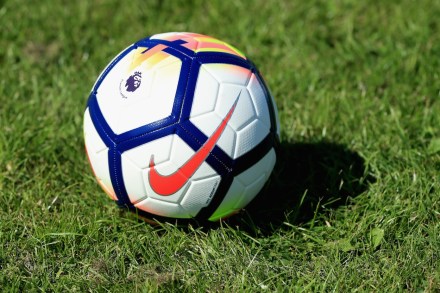
The new Premiership season kicked off this weekend and, with all the usual hype, will come novelties. There are the gamely optimistic new arrivals and returnees, no doubt a breakout star or two, some eyebrow-raising new hairstyles (Mo Salah) and some ingeniously tweaked – and therefore ‘must-have’ – revenue-gouging strips. As ever, there will be new rules, including yet further tinkering with VAR. But what interests me, as an English teacher and student of socio-linguistics, will be any novelties in the figurative language which the players, fans and journalists use to describe the game. Over nearly 50 years of watching football, it has been fascinating to hear the football lexicon evolve in ways that can be quite culturally revealing.

Alain Delon seduced us all

In a 1962 interview, Alain Delon pushes aside a carafe of red wine and explains that when offered his first cinema role, he didn’t really want it: je n’avais pas envie de faire spécialement ça. Delon, who died over the weekend at the age of 88, may not have been immediately seduced by cinema, but cinema was instantly seduced by him. In a lifetime filled with roles playing rogues and gangsters – Plein Soleil (1960), Il Gattopardo (1963) and Le Samouraï (1967) – the role he is best known for is himself, a shapeshifter who flirted with the actor’s mask; sometimes hiding behind it, sometimes letting it slip off altogether.

Edinburgh is ruined by the Festival

As an arts journalist, you know you’re getting old when you scan the Edinburgh Festival programme, and instead of thinking ‘Wow, look at all this,’ your reaction is ‘Oh Christ, look at all that’. You tell friends that you’re off to cover Edinburgh in August, and instead of lighting up with envy, they suck their teeth in sympathy. Ouch – nasty! And yet there it is, nonetheless: that great immovable cultural blow-out on the shores of the Forth; infinite, monstrous, plastered all over press and media, and defying you to ignore it. Could you design a less suitable host city for a major international arts festival? No, it’s got to be done, and you know what that means. The hell of a Cross Country train.

Why is British political merchandise so bad?

Balanced rakishly on my late grandmother’s china parrot is a MAGA hat bought in 2016 when it seemed highly improbable that Trump would beat the walking pantsuit, Hillary. Much like my Vote Leave badge, I bought it as a piece of provocative fast-fashion and my ever-expanding archive of political merchandise from the last decade. I also own a ‘Forward’ Obama cap from his 2012 campaign, purchased when I lived in the States, but it didn’t make the parrot. The MAGA hat’s genius lies in its simplicity: it does exactly what it says on the brim Fast forward eight years and Granny’s parrot is still a cap-wearing Trump supporter.

My friend the would-be killer

This is a complex tale involving an American murder, the popular British TV series Flipper, and the philosopher Friedrich Nietzsche – but bear with me. Next month sees the centenary of the conviction of two spoiled Chicago boys – Nathan Leopold, 19, and Richard Loeb, 18 – who admitted carrying out what the press at the time dubbed the ‘crime of the century’.  I had always sensed that my friend had a dark side and that he kept parts of his life secret from me The two student friends were sentenced to life imprisonment for murder, plus 99 years in jail for abduction, after admitting kidnapping and killing a 14-year-old boy, Bobby Franks, before mutilating his body with acid to disguise his identity.

Two tips for Ripon and Newbury

The William Hill Great St Wilfrid Handicap at Ripon tomorrow (3.20 p.m.) is always a difficult puzzle for punters to unravel. Run over six furlongs for a first prize of more than £50,000, a field of 19 runners has been declared. With its unusual undulations on the sprint course, Ripon is a specialist track which means that it is an advantage to have strong course and distance form. The trouble is that so many of these experienced sprinters have just that so it does not narrow the field down by that much.  Northern trainers have a superb record in the race too but, once again, they are extremely well represented in the race tomorrow and so this fact is not a huge help either in the search to find the winner.

A-level day is not Judgement Day

The Guild Chapel in Stratford-upon-Avon presents its congregation with a vision of terror: a medieval Doom painting depicting the Day of Judgment. On the left are those who have behaved themselves – the Saved – who joyously bound towards the gates of Paradise. On the right, sinners pay the price for falling short of the moral mark: they are tortured by demons and fed into the Mouth of Hell, to be swallowed by a fanged serpent. This summer, another Day of Judgment looms. Yesterday, thousands of UK 18-year-olds will receive their A-Level exam results. In one nervous scroll, years of schoolwork was validated, university places confirmed or denied, and future careers seemingly mapped out.

The myth about electric car owners

Every time I write about electric cars, there is an explosion of hostile comments online in which readers angrily denounce electric vehicles and the people who drive them. Much of this animus rests on a plausible yet mistaken assumption – that EV owners are all passionate environmentalists, sanctimoniously swanning around in their zero--emission vehicles while disdaining the ghastly, planet-killing masses burning dinosaur juice. Let me disabuse you of this. That stereotype was perhaps partly fair when applied to the Toyota Prius – although even then I suspect it concerned only a minority of owners.

How bus travel lost its magic 

At the former Chiswick Works in west London, I recently celebrated the Routemaster’s 70th birthday. I owe my existence to this majestic mode of transport. My mum was a conductress on a Routemaster – the No. 16 – which cut a merry swathe from Cricklewood to Victoria, right through the centre of London. My dad, like a lot of young Irishmen, had arrived in London in the 1950s to help rebuild a city still recovering from the second world war. Every morning, he’d catch the first bus from his digs off the Edgware Road to various building sites. One morning he got chatting to the young clippie, and married her a few months later. ‘Open the front door,’ he’d say to me years later, ‘and the whole world’s outside.

The healing power of wine

What goes best with a broken rib? The answer, I think, is any drink you enjoy that will not make you laugh. I was strolling along to Richmond station after spending the night with old friends. (Very Jorrocksian: ‘Where I dines, I sleeps.’) I was carrying a scruffy overnight bag containing one shirt, one pair of socks, ditto underpants and sundry toiletries. Phone rings: put down bag – and suddenly a toerag appears from nowhere, grabs the luggage and scoots off. I yell ‘Stop thief’, run a few paces and trip. Passers-by prop me up and ask if I want an ambulance: would have saved a lot of trouble if I’d said yes. Instead, I went home hurting, then managed to fall over and could not get up. Unable to raise anyone on the phone, I contacted 111, and was told to ring 999.

What can save Britain’s ash trees?

The next time you drive or walk down a country road, you may well notice that something is not quite right. Look around and you might see that tall ash trees in the verge-side hedgerows are no longer as handsome, their leaves sparse and scattered, even brown and wilting, while naked branches point accusingly to the sky. A disaster is unfolding, which, on the face of it, seems hardly less serious than the one that hit the countryside in the early 1970s, after ‘Dutch’ elm disease was imported in timber from Canada and killed 30 million trees. This time, the victim is the European ash (Fraxinus excelsior). The disaster is plain, even to urban dwellers.

How the Premier League abandoned its fans

It’s become a regular occurrence: a friend or a friend-of-a-friend is visiting London, wants to go to a football game and messages asking for help getting tickets. My standard response is: no chance. The most recent of these was from New Zealand-based Spectator contributor David Cohen, whose son will be in London in the autumn. I’d love to be able to help him but know I almost certainly can’t. The sad reality is that I’m struggling to get tickets myself these days, let alone able to assist others. The clubs themselves are too greedy to do anything other than continue to wring as much out of the fans as they can When I first started going to football, to West Ham games in the late eighties, it used to be easy getting in. You just turned up.

When cabin crew feel fear

‘How do you cope with this?’ The poor woman is looking up at me with the big Bambi eyes I’ve seen grown men adopt when extreme turbulence hits. I have to say something comforting; it’s part of my job description as cabin crew. They even tell us what to say on the cabin crew training course. Get down to eye level with the passenger, adopt a comforting tone, agree with their distress, and reassure them everything will be fine. I hate the kneeling down bit; it feels a little insincere and overly intimate. Plus, I’m ashamed to say, you can probably hear my knees cracking from the cockpit. Unfortunately, I’ve still got a rather large chunk of my mortgage to pay, so I duly launch into ‘the routine’.

Salad bars are a crime against humanity

I love salad but there need to be rules. Salad should never be squashed in with hot food (e.g., in burgers); must never be dressed with anything from a bottle; and salad must never be served buffet style. Oh, and if it’s warm it’s quite simply not salad. For this reason, today I am speaking out against the horror story that is the salad bar. Landing after a very long flight from London to Melbourne, I was looking forward to dinner with my hosts who promised me ‘a real treat at a gorgeous restaurant you will love’. But their email also informed me that we would be going to a vegan, raw food place, heavy on the avocados, and with a no onion or garlic section for those adhering to the plant-based Jain diet that excludes roots and underground vegetables.

An alternative to Giffords Circus

I’ve never been seduced by the circus. As a motif in children’s literature, particularly taken up by Enid Blyton and Disney. In fact, as an animal-loving child, I think I found it cruel; I wanted Nellie the Elephant to pack her bags and say goodbye to the circus, I longed for her to slip her iron chain. In childless adulthood, I forgot all about it. Until I moved back to Oxfordshire and Giffords Circus appeared on the horizon every summer, its posters slapped on every lamppost from Charlbury to Cheltenham. The posters might have pulled in some punters, but for a certain type of middle-class patron, Giffords needed no advertisement. Everyone knew about it. It was the day out du jour. The young, the old, the child-laden, the childless: all came in their droves.

How to shop at Waitrose

Over the years, I have spent a pretty penny on therapy. I have also spent a lot of money in Waitrose, of which there is a big branch that I like to call a ‘flagship’, very close to my flat. Of the two, therapy and Waitrose, it is probably Waitrose that has provided the most mental relief and has certainly been better value overall. Items may cost a bit more than they do at other supermarkets, but it’s free to enter the shop and there is no time limit on browsing, peering closely, or fondling the goods. Waitrose is not a shop that rewards a quick in and out, which is why I struggle to see the point of its Little Waitrose offshoots Waitrose has soothed me over the years in several ways.

Parenting tricks from a lawyer

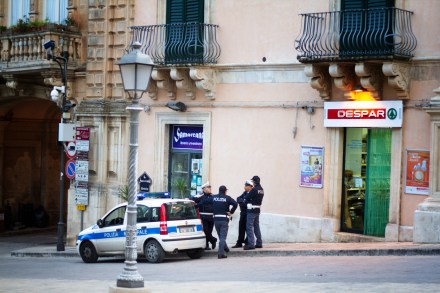
Whether it is the anti-immigration riots in the UK, with hundreds of arrests and prosecutions, Elon Musk’s lawsuit against OpenAI for breach of contract, or the UN’s International Court of Justice cases about the Israel-Palestine and Ukraine-Russia conflicts, the law is all around us. Teaching children about this invisible but powerful force can improve their understanding of life and society. Of course, this could be done in the formal setting of a classroom or a visit to the local law court, but there are plenty of opportunities in everyday life to impart legal knowledge. I explained that it was probably unlawful to sell lemonade on the street without a trading licence For children, the law is most visible in the form of police officers patrolling the streets.

I’m too British for la dolce vita

At this time of year, the heat of Naples wakes me up around 7. A five kilometre jog takes me over Monte Echia, from where I can see Vesuvius, Capri and the city below me framed in bright blue. After a cool shower, I go to a café for breakfast: a pastry and puddle of strong coffee paid for out of loose change. I spend the day sweating in front of a pizza oven, before strolling home, stopping to pick up some pungent tomatoes and red wine for dinner. Truly, this is a life I dreamt of, so why do I go to bed each night wracked with anxiety? If life is slow here, it’s out of necessity La dolce vita, the sweet life, is a term I heard before I even knew Fellini’s 1960 film existed.

The tyranny of the self-service check out

The other week I popped into my big Morrisons after the school drop-off. It was a biggish shop, including things like socks, olive oil and washing powder, hence going to a proper supermarket rather than just whizzing into my local Tesco Express. Not being able to find the correct type of fruit or vegetable on the touch screen scores highly in the irritation stakes But lo and behold, when I came to check out my shopping, not a single manned till was open. ‘There’s nobody on them until 10 a.m. love,’ explained the apologetic cashier who inevitably had to help me with an unexpected item in the bagging area (a packet of toothbrush heads that were too light to register on the pathetic shelf they give you at a self-service till).

We oldies can’t help but think of death

I used to think a lot about Switzerland and how to accrue enough morphine to top myself when the time comes. But yay, at last, an assisted dying law seems likely and I can stop plotting. No one talks about death. But oldies think about it all the time, not deliberately – it just inserts itself into everything. I’d like to write another trilogy, but will I finish it? Doubt if I’ll last through novel 1, never mind 2 and 3. When the garden centre chap tells me to buy tiny saplings and avoid 15-foot trees which will likely die, I know I’ll be dead before the three-footers look anything like a copse. But he quotes the ancient Greek proverb, ‘Society thrives where wise men plant trees in whose shade they will never sit’.

In praise of the Olympic champ stamp

As a confirmed critic of modern tattoos, who sounded off in these very pages about the ugly plague of body tats infesting our streets, I might be expected to disapprove of the latest manifestation of the fashion – the habit of many athletes taking part in the Paris Olympics to adorn themselves with the distinctive five interlocking rings of the Games’ logo: what I’m calling the ‘champ stamp’. In fact, the athletes have such beautiful bodies – young, toned and fit – and the rings themselves have such a pleasing symmetry that I can only approve and applaud the discreet addition of the logo to their rippling musculatures.

A tip for Britain’s richest flat handicap

York’s famous Ebor meeting will be here before we know it and trainer William Haggas will be attempting to plunder many of its top races with his talented string. Although his stables are in Newmarket, Haggas is a Yorkshireman and so he particularly enjoys seeing his runners win at the course which lies some 40 miles from his birthplace of Skipton. The race that Haggas targets with relish each year is the Sky Bet Ebor Handicap, which is the richest flat handicap run in Britain and has a prize of £300,000 for the winner. The contest on Saturday 24 August is over a distance of one mile six furlongs and for a maximum field of 22 runners so, with a fast pace all but guaranteed, stamina is of the essence.

The problem with pintxo

Visiting San Sebastián last month, I was reminded of the joys and hazards of grazing. The speciality in this chic city, and throughout Spain’s northern Basque region, are pintxos – miniature open sandwiches topped with everything from chorizo and padrón peppers to anchovies and baby eels. Pintxoing, as I’ll call it, becomes almost like a game in San Sebastián’s labyrinthine Old Town, in which the regional delicacies are colourfully displayed in bar-top glass cabinets. The goal is to eat enough pintxos to keep hunger at bay, but not so many that you don’t have room for one more. You’re never starving, but the flipside is that you’re never entirely satisfied, either.