Spectator Life

Spectator Life

An intelligent mix of culture, style, travel, food and property, as well as where to go and what to see.

Why I’m a pro-screen parent

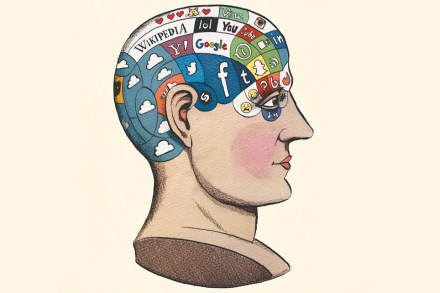
Have you ever looked after a child that doesn’t nap from 5 a.m. to 7 p.m.? I have. Just to be clear, I’m talking about a 14-hour day with no relief whatsoever from grannies, nannies or DHs, the ghastly acronym that Mumsnet uses for fathers to signify ‘darling husband’. Next question: have you ever looked after a child for the standard 14-hour shift and not turned a screen on? Don’t lie, because no mother on this planet will ever believe you. Seasoned mothers know that the only way to make it to the business end of the day – 5 p.m., give or take – is to fill chunks of the never-ending day with screen time, sometimes quite large chunks since you’re asking.

The democratisation of cocaine

Love or loathe Danny Dyer, hard-man hooligan of Football Factory, EastEnders bod and breakout Rivals star, but he does talk sense. The kind of straight-up, geezer sense you can only get down the pub, a locale to which he is no stranger. In the promotional press for his latest film, Marching Powder, Dyer, when pressed on the not-so-euphemistic title of the film, had the following to say on cocaine: ‘I’ve got that social butterfly thing where I mix in both circles and believe me, everyone’s fucking at it [...] it’s classless actually, that drug.’ To some of us, this may seem obvious. In my decade of active addiction, I obtained and recreationally ‘enjoyed’ the drug with anyone from builders to baronets.

The rise of protein washing

I bought some pork scratchings the other day, and the packet said it was ‘high in protein’. Gruntled, the brand, is distributed by the Keto Shop and is now being marketed as some type of health food. I had to laugh. Wolfing down a packet of pork scratchings in the pub is now part of the latest health kick? Demand for protein is being driven by health-conscious middle classes, including Gen Zers. According to one national poll, nearly half of adults in the UK have increased their protein intake in the past year, including a whopping two-thirds of those aged 16-to-34-year-olds. This is boosting demand for chicken breasts, lentils and – I can hardly believe I’m writing this sentence – cottage cheese.

Nurses shouldn’t have tattoos

Of all the aspects of dating that make me grateful I came off the market when I did – ghosting, choking, sober socialising, facial hair like Brahms’s beard – it’s the spread of large-scale visible tattoos that makes me feel like I got the last chopper out of ’Nam. Neck tattoos and sleeves were once either indicators of prison gang allegiances or the preserve of thrash metal bands and their fans. Although perhaps the most heavily inked man in rock is Travis Barker, drummer of pop-punk crossover tarts Blink-182. His whole head is tattooed, as is Kerry King’s of Slayer, who also has ‘God Hates Us All’ down his left arm. Among Phil Anselmo of Pantera’s extensive body art is a portrait of himself as a demon with his now ex-wife riding an extending tongue.

The changing smell of Britain’s streets

The other day, while on my lunchtime walk, I passed a woman on a mobility scooter holding an impressive-looking doobie. Later, on my bus home, a bloke got on having just extinguished a joint, bringing the overpowering stench with him. Some commuters don’t even bother to put them out. All you can do is sit and tut passive-aggressively, hoping they’re only going a few stops. While cannabis use has slowly declined over the past 25 years, it seems that you can’t escape it in public. Perhaps part of the reason is that so few people now smoke at all, even tobacco. It makes weed far more noticeable. The other reason is that the police don’t bother punishing those caught. Most are either let off with a verbal warning or a fine.

Can happiness be found in the gut?

I share little in common with the royal family, but like certain members of that beleaguered group, 2024 turned out to be a particular annus horribilis for me. With sorrows coming at me, not as single spies but in bloody great battalions (I won’t bore you with the details), I decided to take action by spending a week at a specialist clinic in Austria being pickled, pricked, pummelled and poked. It’s been 50 years since the eccentric German entrepreneur Rolf Deyhle founded a permanent centre for what became known as the ‘FX Mayr Cure’. He bought the impressive property from a golf club and a former student of Franz Mayr, an Austrian gastroenterologist who focused on the regeneration of the intestines.

The naked truth about French health care

Faithful readers will know of my journey through the French health care system. I have not shared these histories because anyone should be particularly interested in my aches and pains, or to complain. If I wanted to moan about a health system on the verge of a nervous breakdown I would return to Britain. No, I drone on because it’s worth repeating the astonishing discovery that it is actually possible to have a health system that isn’t crap. And I have made some other discoveries along the way. In previous episodes, I have covered the remarkable behaviour of French GPs, who actually answer the phone – and will see you the same day if necessary or tomorrow if less immediately urgent.

I was convinced by the cholesterol sceptics

It’s never a good thing when your cardiologist sounds alarmed on the phone. Come in tomorrow, he said: we’ll get you on the table. He wasn’t talking about cracking my chest, thank Christ, but threading a wire in through a vein to get a look at the heart, blow up a tiny balloon to stretch the artery, and maybe leave behind a metal tube or three. I wasn’t keen on that last part. Then I thought: serves me right. I should have avoided all those bacon sandwiches and steaks fried in butter. ‘The wages of sin is death.’ Probably should have taken the statins, too. But if you are, understandably, unwilling to take a fistful of pills every day for the rest of your life, there are some medical mavericks to confirm your decision.

Anxiety is good for you

These are some of the things I worried about this morning. Should I brush my teeth while drawing the curtains, to save time? Should I get out of the bath at 7.40 a.m. or 7.45 a.m. to be fully clothed for the Tesco home delivery between 8 a.m. and 9 a.m.? Should I instantly pick up the coat hanger that fell off the door handle as I left my bedroom or wait till I return this evening? These are mind-staggeringly boring things to think about. They’re even more boring to write down. That is the life of the worrier: a new worry dropping into the brain roughly every five seconds. Life is one huge to-do list for us worriers.

Love is blind? The truth about dating with a disability

Dimly lit bars are great first-date venues for most people: the seductive ambience, the candles, the gentle clink of a martini shaker. But they couldn’t be worse for a visually impaired dater such as myself. I was born with ocular albinism and nystagmus, which renders me blind in one eye and severely partially sighted in the other. Yet, stubborn to the end, I have persevered with sepulchral bars for well over a decade now. The results have been mixed. I’ve sat down next to the wrong woman when returning from the bathroom, got lost on the way to the very same bathroom and, on one occasion, spilt an entire Bloody Mary down the front of my date. Funnily enough, she didn’t want to see me again.

My son was born in the passenger seat footwell

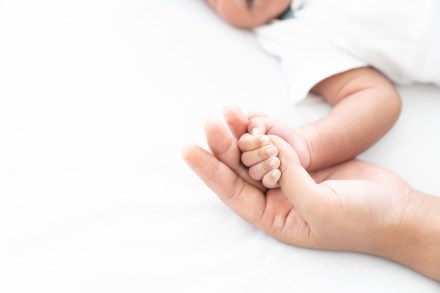
A few days before Christmas, I was gently woken by my wife telling me that while I’d been sleeping through the night in blissful ignorance, she had been writhing in labour downstairs. At the last moment, she had decided against giving birth at home and now wanted to go to the hospital. I hadn’t known a home birth was even on the cards – clearly, my wife and I need to work on our communication. Moreover, it was a week before the due date, so I had gone to bed thinking there were still days remaining before the great panic. Within minutes, we were in the car and racing to the maternity ward. Racing, but not fast enough. As we arrived at the hospital car park, my wife informed me that she wasn’t able to get out of the car. She was delivering our baby there and then.

What happens when you can’t pee?

‘I really do think you should think seriously about that operation,’ my urologist told me about a year ago. The plumbing had deteriorated further and, in a calculated gamble for more tranquil twilight years, I eventually capitulated, submitting in early December to a so-called TURP, a transurethral resection of the prostate. Two days later, he sent me home with a reassuring message: ‘It’s settling down nicely, but don’t be alarmed by a little blood in the urine in a few weeks’ time. Expect a sort of “dry rosé” colour when the scabs start to fall off.’ I took that as a green light for a family Christmas in northern Spain, a plan marred only slightly by my Spanish wife Marina’s wrist fracture (she tripped on the stairs) shortly before we set off on Brittany Ferries.

An insomniac’s guide to sleep

One of my favourite dad jokes – and, since I became a father, I have many – is to respond to the question ‘How did you sleep?’ with ‘I lay horizontally in a darkened room with my eyes closed’. But it has never been that simple for me. All my life I have suffered from insomnia. Something that should be easy – newborn babies can just about manage it, after all – has become the hardest thing in my life. I’ve lost jobs because of it, and relationships: you feel like you are cut off from society. That’s one of the most annoying parts – most people’s response to the word ‘insomnia’ is to feel an obligation to say: ‘Really? I always fall asleep the moment my head hits the pillow!

In praise of hospital food

I’ve been in hospital, bed-bound, for six weeks; because I can write it’s not so bad, but between deadlines time passes slowly, so landmarks in the day come to mean a lot. Most of all, I look forward to my husband visiting at 3 p.m.; secondly, the meds trolley trundling towards me like a dear old open-handed friend at 9 a.m. – but a close third must be the bell which announces the arrival of meals: breakfast at 7 a.m., lunch at 12 p.m., dinner at 5 p.m. In the first bay I stayed in, I always made my ward-mates laugh by squealing with genuine glee when I heard it.

The vanity of hair transplants

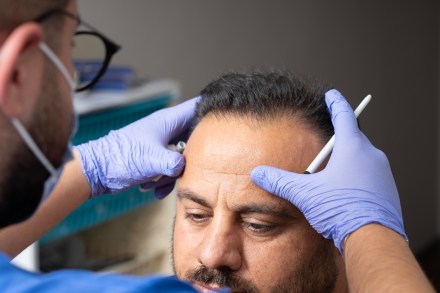
I used to think that one of the few things that men had over women was their lack of manifest vanity. Not that men weren’t vain, but apart from turning their chests into Doritos at the gym or dyeing their greying locks that unnatural shade of black, there were very few ways for them to enact these impulses. That was, until hair transplants. One of the men in my local corner shop was proudly peacocking the follicles sprouting from his forehead As it turns out, hair transplants aren’t actually a new thing. According to my research (Google), modern hair transplant techniques were pioneered in Japan in the 1930s. Despite being nearly 100 years old, the operation has surged in popularity in recent years. Why?

Prisons must prioritise mental health

What is prison for? I’ve wondered that a lot, these past five years. In February 2020, just a few days after the UK left the European Union, and as scientists worked to agree an official name for the ‘new coronavirus’, I was sentenced to 45 months in prison for a fraud I’d committed in 2014. During my time inside I discovered a system that did almost everything badly and didn’t seem to know its own purpose. Meanwhile our jails remain a mystery to those who haven’t been there. Since my release I’ve written and spoken to help people understand our prison system. I believe there is a better way of doing things, which would protect the public, provide value for money, reduce crime and help people who’ve committed crimes turn their lives around.

I am facing a future in a wheelchair

I’ve always liked the old Winston Churchill maxim ‘Never stand up when you can sit down, and never sit down when you can lie down’. After a month lying down in hospital, contemplating life without the use of my legs, I now utter a laugh which I hope is suitably hollow. O, my lovely legs! By the time I was 14, they were the longest in my class; by the time I was 17 they had embarked on the merry dance that has been my ‘journey’, propelling me forever onwards towards enough fun, love and money for nine lifetimes. Now I feel like a mermaid – without the sexiness – and my shameless gams are but a floppy old mono-thing.

The science of a happier 2025

As 2025 gets under way, I’m going to guess that one of your hopes for the coming year is ‘to be happy’. I’m also going to take a punt that you’re likely to spend a considerable amount of time, effort and money doing things you hope will make you feel that way. But considering that happiness is the number one goal of most people living in the western world, here lies the unspoken paradox at the heart of this tireless quest. Most of us can reel off a list of things that we believe will make us feel good – a great holiday, a delicious dinner, a promotion at work, fabulous sex. Yet many still don’t have a clue about how the feeling of pleasure is made in our brains in the first place. And knowing would be an incredibly useful way to work out how get more of it in 2025.

How real is your ADHD?

Why does everyone suddenly seem to have ADHD? It’s a question that many of us working in mental health have been asking each other recently. Just a decade or so ago I rarely saw anyone in clinic with ‘attention deficit hyperactivity disorder’; now I see at least one case a day. It’s bewildering. Have all these people simply been undiagnosed for years? Is ADHD a medical fad? No one yet knows. The increased awareness of mental health problems has been a boon for private doctors. It’s a gold mine ADHD used to be mainly diagnosed in children, but more and more people are now getting a diagnosis in adulthood.

Lily Phillips is scared of real sex

A young woman called Lily Phillips, known to certain users of the internet, has recently spoken about a cunning stunt she performed earlier this year. She had sex with 101 men in a single day. As I see it, there are three possible responses to this story. Or maybe four (phwoar!). The first is to suggest that Ms Phillips’s behaviour is not entirely ladylike. Or, less pompously, that she is a slut and a whore and so on. This is the traditional response. It is, to almost all cultures known to history, common sense. Most of these cultures had, and have, stern penalties for such behaviour. The modern West gradually decided that exclusion from polite society was punishment enough, but it has become hard to say whether we still have a polite society from which to exclude people.

The day my mother asked me to kill her

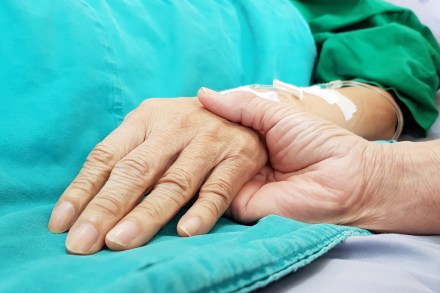
With today’s vote on the assisted dying bill, I am reminded of my mother. Susie was 89, in failing health but of sound mind, when she took me aside at her house in the south of France to tell me she wanted me to kill her. She had no intention, she said, of enduring the humiliation of a decaying memory and a crumbling body, and was determined to avoid the old people’s home, the geriatric ward and the hospice. Some days my mum really wanted to kill herself, and some days she really did not ‘You have to know,’ she said to me, ‘not only when to leave a job, or a party, or a relationship, but more importantly, when to leave life itself.’ Susie told me she needed help with her plan of killing herself, and asked if I would help.

The fundamental flaw in Britain’s maternity care

Just over a year ago, I gave birth to my daughter. Labour was surprisingly smooth, unlike my previous emergency c-section. Once I started pushing, my daughter came quickly. I heard the reassuring sound of a newborn crying, and I felt the most indescribable sense of relief. Then, I started haemorrhaging. Before I knew it, I was under general anaesthetic in the operating room. When I came to my senses a few hours later, my first thought was the hospital’s policy: no visitors after 8 p.m. I had 12 hours before being left alone overnight with my daughter in a room full of equally badly injured mothers. A sense of panic set in. The countdown had begun.

Should we worry about Ozempic?

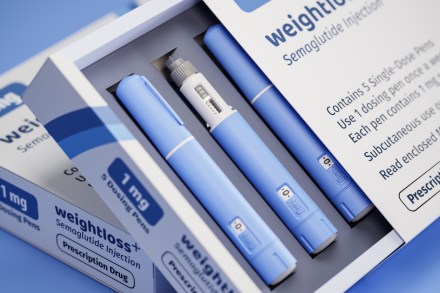
History has taught us to be shy of miracle drugs. But that hasn’t stopped weight-loss drugs being eagerly promoted by fans such as Boris Johnson, and even touted by Keir Starmer as a possible means of getting people back into the workforce. In the US, according to a survey by polling firm KFF earlier this year, one in eight adults has already taken a weight-loss drug. Grand claims have been made. Could RFK Jnr be right in suggesting that weight-loss drugs are causing more harm than they are worth? A trial of 17,600 overweight adults suffering from heart disease – sponsored by the manufacturer of Ozempic, Novo Nordisk – found that those who took it saw reduced deaths from all causes relative to a control group given a placebo.

I’m one of the new wave of stroke victims

The NHS has warned of a staggering 55 per cent rise in strokes among healthy middle-aged people in the last two decades. Sir Stephen Powis, medical director of the NHS, offered no explanation for what he calls an ‘alarming’ increase, beyond the standard advice to take more exercise, eat carefully, and avoid smoking and excessive alcohol consumption. The figures on which Sir Stephen bases his alert are truly startling: 12,533 people in their 50s suffered strokes in Britain last year, up from just 8,033 in 2005, while 19,421 people in their 60s were stricken – compared to just 13,650 in 2005. I have a personal interest in these statistics.

Why girls love fags

I can’t remember exactly when I had my first cigarette, but I remember roughly how I started. I was probably 13. I picked up one of my mum’s packets of ten Silk Cut, which was about half full. I slipped one out, put it in my pocket, saving it for later. My friends and I walked through the streets of Crouch End until we found a corner that was quiet and away from the prying eyes of our parents. At funerals, everyone wants to smoke. People who gave up 20 years before and go jogging five times a week suddenly have a craving We got our matches out, lit it, and passed it round. When the smoke first hit the back of my throat, I retched a bit and coughed but carried on. I got a head rush, felt dizzy, and within a couple of minutes it was gone. No, it wasn’t good for us.

Why blokes love coke

If cocaine were a perfume, it would be Chanel No.5: a timeless classic impervious to the flux of fashion and taste. It straddles all socio-economic divides, provided you can afford it. When I lived in Spain, cocaine was the recreational drug of choice because it was more widely available than other narcotics, and its grade was relatively pure. Cocaine is shipped from South America or Mexico directly to Iberia rather than transiting other points, where it is blended en route to its destination. Consequently, the reveller in Madrid vacuums up less talcum powder and household cleaning product than does his counterpart in London. Here in the Home Counties, there is unquestionably cocaine use – notably among Baby Boomers who can point to St.

My failed attempt to game GP appointments

Nearly 20 years may have passed, but a good number of people will still recall the exchange between a salt-of-the-earth member of the public, Diana Church, and the then-prime minister, Tony Blair. The year was 2005, the occasion a pre-election edition of BBC Question Time, and the issue at hand? Well, plus ça change – the hoops patients had to go through to see an actual GP. Mrs Church had asked the PM whether something could be done about a system that required her to book an appointment no more than 48 hours in advance. That’s right, no more than (not no less than) two days before.

Are you ready for the baby wars?

Such an awful lot of stuff is happening right now, even the keenest observer of social trends could be forgiven for missing a statistical milestone passed earlier this month. So here it is: at the beginning of October, it was revealed that, for the first time since the 1970s baby bust, deaths outnumbered births in the UK – meaning, in effect, that all of our population growth (about 680,000 for this year) came from immigration. The reason why is obvious. The boomers – i.e. people born during the great baby boom of 1945-1965 – are dying out, and they are not being properly replaced, thanks to a low total fertility rate (TFR, which equals ‘births per woman’). In England and Wales, TFR fell to just 1.49, far below the accepted replacement rate of 2.1.

Obesity will soon be history

I’ve just seen a graph which surprised me only slightly less than one might which showed that the majority of people in the UK thought that Keir Starmer could be trusted to tell the truth about what he had for breakfast. It shows that US rates of obesity have started to fall. The reason, according to the Financial Times, which published the graph, is that one in eight Americans is now taking semaglutides, drugs like Ozempic and Wegovy. I’ll state right here that I’ve got flesh in the game – though a good deal less than I did before I encountered the wonderful world of semaglutides. I wrote here in the summer of 2023: I’ve had an interesting relationship with my weight. In my teens, I was so thin that my mother would cry when I went home to visit.