Spectator Life

Spectator Life

An intelligent mix of culture, style, travel, food and property, as well as where to go and what to see.

I’ve found the perfect pregnancy diet

The world is full of people fierce in the belief that they know the right diet to make your children glow with superior health. Few are shy about saying so. Fortunately, I’m here to help. I happen to know exactly what should go into your mouth, and into theirs, and, although you haven’t asked, I’m happy to tell you. My confidence comes from the psychology department at Durham University, which has just published the results of a long-running experiment on getting children to eat their greens. Our broadsheets have summarised their findings with due reverence: ‘getting children to eat their vegetables starts in the womb’ (to quote the Guardian). ‘The secret to giving toddlers a taste for greens may start in pregnancy,’ agreed the Telegraph.

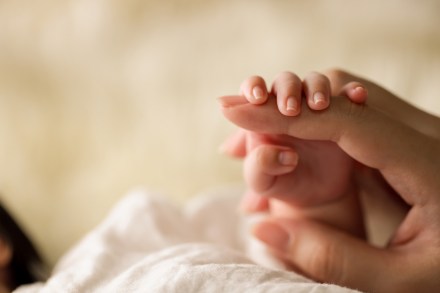
Why new mothers need the lost art of ‘nidgeting’

Before the birth of my first child, I had never been around a new baby. I had also never seen a woman in labour, so I wasn’t remotely prepared for my own. My first came close to an emergency caesarean because, after six hours of pushing, I still had not gotten my daughter out. When she was finally born, weighing over nine pounds, I felt overwhelming gratitude for the women who had stayed by my side through it. I will always remember one particular midwife with short-cropped grey hair and a barking voice, who coached me through the contractions like an unrelenting PE teacher. Without her, I don’t know if I could have done it. In her commanding presence I was part of a team and we had won a great victory together.

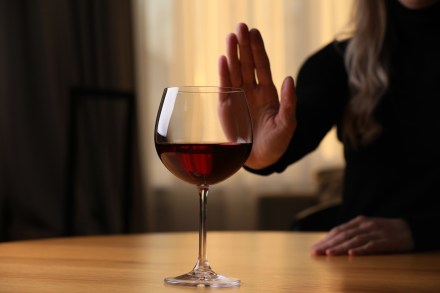
I gave up drinking… but don’t call me teetotal

I hate teetotallers. The pitying looks they give you with their cold, unclouded eyes. Those patronising, bored smiles they smile, as though they are indulgently listening to the table-talk of children. Their uncouth early departures from the dinner table and tactless talk of early starts. Teetotallers are as bad as people who insist on whipping out their phones to film fellow guests when they’re dancing. They’re buzz-killing squares who should learn to live a little.   And yet … I have, despite my worse judgment, recently mounted the wagon. In my heart, I remain a devoted drinker. In my mind, I continue to see myself as the Falstaffian life of the party.

Your hormones aren’t linked to the stars

For most women, the time between your first and last period is defined by things other than the phases of the menstrual cycle. Or at least it used to be. But much has changed in the ontology of modern womanhood from the halcyon era of the 1990s, when women were positively encouraged to get out there and get on with it rather than sit around mooning about how rotten they feel. But here we are. Periods, like so much else that was formerly humdrum, have burst hideously on to the scene; sapping, among other things, a woman’s valuable Right to Ignore. Instead of being seen as a mild inconvenience of only the vaguest interest, menstruation has ascended the feminine ranks to become life-defining, soul-shaping and universe-channelling.

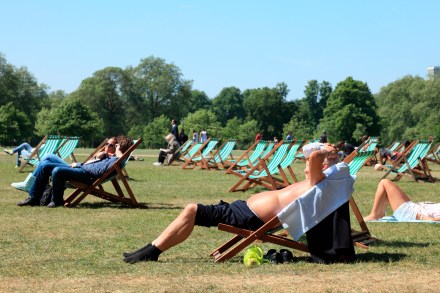
The madness of British sunbathing

‘Mad dogs and Englishmen go out in the midday sun.’ The phrase’s origin is somewhat disputed, but it was made famous by Noël Coward’s song of the same name, supposedly written on the drive between Hanoi and Saigon in the early 1930s. Coward was English himself, and the song is a humorous act of national self-flagellation; an explicit dig at a peculiarity deeply embedded in the British culture: our collective inability to behave sensibly in the sun.  Spring, by almost anybody’s measure, is upon us. May provides two Bank Holidays and the first reliable warmth of the year. Like clockwork, the country takes leave of its senses.

Diets haven’t gone away

Four years ago the NHS told us that over half the female population was trying to lose weight so it's hardly surprising that many millions are injecting themselves with fat jabs.  But I refuse to pander to the notion that us women all need to be a size 10 so I shan't be going anywhere near the jabs or dieting.  If I feel like a piece of toast with blueberry jam, the odd crisp and a nibble of chocolate I am not going to feel fat or guilty about eating any of it.  Who says we have to be so thin anyway?

No, we don’t all need therapy

Only the most heartless fantasist would deny the life-saving role that therapy plays in helping people manage mental illness. Some people, of course, find it enjoyable or helpful for their own reasons and fair play to them. ‘You do you, babe,’ as they say.   But in the round, there is more wrong than right with the edifice. What else is one to conclude after Meghan ‘Sussex’ née Markle, one of the luckiest and most spoiled women in the world, posted on Instagram last week that that the ‘hardest seven years’ of her life – those that followed her becoming a duchess, having two healthy children and trading a royal residence for a $29 million mansion in California – had come to an end?

Do women really need breast reductions?

When I became wheelchair-bound at the end of 2024, the biggest change I had to deal with was not being able to walk any more on my lovely long legs. But, as I surveyed my poor ruined body in the cold light of 2025, I was dismayed to see that there were a multitude of minor indignities which had vandalised my youthful looks since my spine went under the knife.  My lovely, glossy, dyed dark hair was now thin and greying. My teeth were mostly missing. My bingo wings could have flown me to the Moon. My lovely legs were like an old man’s. My bum had disappeared. My lovely vulva was vandalised with an unspeakably common plastic catheter. My stomach was crenellated from rapid weight loss.

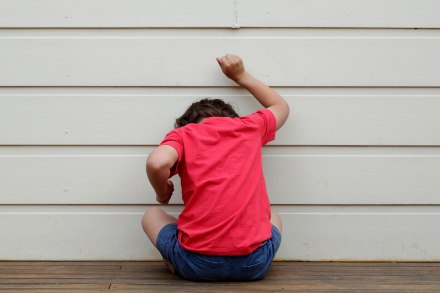
I won’t blame myself for my son’s autism

I’m a writer, and I’m raising my son knowing that he might never understand what I do for a living.  He’s just turned four. Last year, he was diagnosed with autism. I knew that the NHS was overwhelmed with referrals, so I was expecting a long process. Instead, all it took was a single hospital visit with a pediatrician. She had no doubts.   Autism is not a life-threatening illness like congenital heart diseases, and it’s not a debilitating mental disorder like schizophrenia. But, depending on where a child falls on the spectrum, it can require lifelong care. It’s not what I would have chosen for my son. It’s not what any parent would choose.

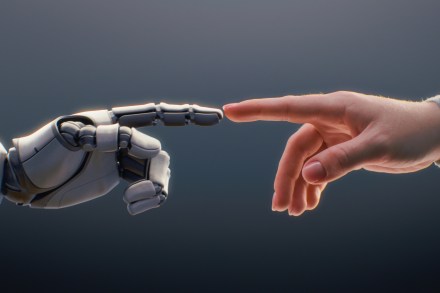
Meet the humans training robots at the ‘arm farm’

AI is set to take over all cognitive tasks in the next few years. Your hard-won career as a paralegal, data analyst, radiologist, coder or novelist is about to be hacked out from under you. So far, so apocalyptic. But what about the jobs that are primarily embodied? Sous-chef, rehabilitation nurse, plumber, dog-trainer? These are expected to lag behind, awaiting the next generation of robots. But there is an important further question. Who will train these robots? Answer: you will.  This is the concept of the arm farm. On an arm farm, practitioners of the aforementioned jobs - chefs, nurses, plumbers etc. - wear Go-pro helmets, pressure-sensitive gloves, even full motion-capture rigs, and do the jobs that the robots will ultimately usurp.

Why exercise music stops you from throwing in the towel

Over the past few months, I’ve been training for the London Marathon, so most weekends I’ve been out running more than 20 miles at a stretch. I carry the usual bits to make these long slogs vaguely civilised – energy gels, a water bottle, a couple of fruit pastilles. They help, of course. But there’s one thing I absolutely cannot do without: music.  Non-runners sometimes ask if I ever feel like giving up and trudging home. And honestly, the only times that’s happened is when my AirPods have died and the music – my invisible pacer, my emotional support DJ – has suddenly vanished mid-run.  This makes sense, according to Victoria Williamson, a researcher and lecturer in music psychology and the author of You Are the Music.

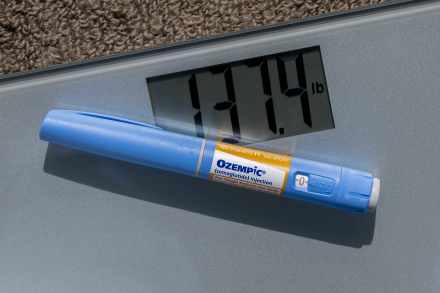
Will Ozempic trigger a big fat divorce boom?

One of the funniest - and in my opinion, falsest - things women have long said is ‘I’m doing it for myself - not for men’ about improving the way they look. Men have rarely said the same about women, which reflects that men have never been principally valued for their looks, historically, as they generally earned far more money than women. Women had to look as pretty as possible in order for a man to pick them and support them financially, thus my brilliant line ‘Men are judged as the sum of their parts; women are judged as some of their parts.

Ozempic has ruined Easter

It’s a funny thing, being a feminist surrounded by women on weight-loss drugs. As someone who recognises the health risks of being clinically obese, I’ve never been a fat liberationist – but pretty much all of us used to be against prescribed beauty standards. In practice this meant we would critique the harmful impacts of the ‘size zero’ or ‘heroin chic’ trends rather than obsess over having gained a few pounds over Christmas. Yet, with the rise of weight-loss jabs, skinniness has become a norm rather than a feminist discussion. And twee ideas about ‘being good’ or ‘cheating’ have been replaced by – well – feeling too nauseous to cheat at all.  Which is why Easter is a fascinating holiday in this era of weight-loss jabs.

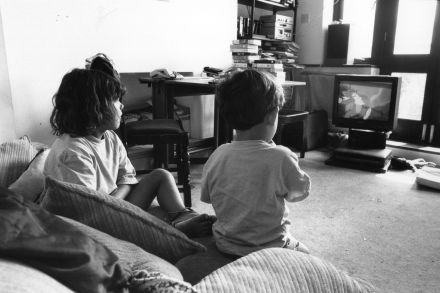
Not all children’s screens have the same effect

When you have children, it’s incumbent upon you to develop a variety of new skills – paramount amongst which is the ability to ignore unsolicited advice. From the moment you share a grainy black ultrasound with the world, it rolls in. Birth, breastfeeding, sleep, diet, teething, clothing, tantrums... everyone’s got ideas about how to do it right. If your choices diverge from their wisdom, you immediately become tenants of different camps. The only sensible approach is to put your hands over your ears and go ‘La la la la’ until your children are emotionally well-regulated, financially independent adults with a 2.1 from a Russell Group university.

A cigar is never just a cigar

‘Oi mister! Will you buy us summit in the shop? I got the money.’ ‘Here we go,’ I think, ‘another grotty 15-year-old making the usual request for a bottle of Dmitri Vodka or 20 Benson & Hedges. Reluctantly, remembering my rebellious teens, I agree. Surprisingly, he hands over £80. ‘Can you get me a Montecristo Linea 1935 Leyenda cigar?’ he asks. ‘Or, if they ain’t got that, a Davidoff Escurio Gran Toro. You can keep the change, mister.’ This event, of course, has never actually happened. But it seems to be within the government’s fervid imagination that it has. The Tobacco and Vapes Bill, which cleared the House of Commons last year and passed in the House of Lords this month, will make it illegal for anyone born after 1 January 2009 to buy tobacco products.

Yes, women still want to have children

Nearly one in three British women are now predicted to have no children, compared to around one in 20 in 1970. The assumption is that this is because young women have simply lost interest in becoming parents. But on the contrary, nine out of ten say they hope to become mothers one day, and the desire for a home and a family to call their own remains stubbornly persistent.  Striking new analysis by the Centre for Social Justice published this month found that more than three million women aged 16 to 45 may miss out on having the family they hoped for – 600,000 more than if fertility patterns matched their grandparents’ generation.  Make no mistake, this is one of the forgotten tragedies of our time.

The sinister future of AI toys

There is a moment in a recent University of Cambridge study into Artificial Intelligence in children’s toys that unintentionally recreates one of the most disturbing scenes in film history. The report, AI in the Early Years, published earlier this month, involved observing 14 children aged three to five as they played with a conversational AI soft toy called Gabbo, a device that looks like a Nintendo Game Boy that has been embalmed in pastel fur.  During one interaction recorded in the study, a five-year-old tells its stuffed companion: ‘I love you.’ Where Kubrick gave us ‘I’m sorry, Dave. I’m afraid I can’t do that.

The rise of grey market peptides

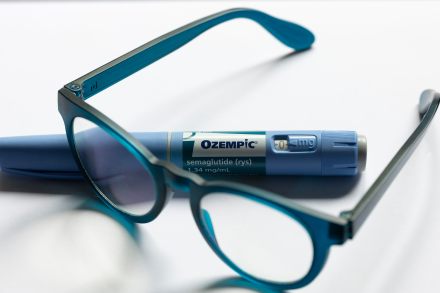
Would you inject yourself with an unapproved drug you could only buy off a sketchy website? Most people instinctively would say no. Yet, throw in a debilitating chronic condition or a crippling insecurity, and the promise of miraculous effects, and the question becomes a lot harder. Such is the quandary faced by those considering taking peptides, the hottest health trend in Silicon Valley, but a trend soon to leach into the mainstream.   Peptides – mainly produced in China – are short chains of amino acids that carry out a range of biological processes, from modulating hormones to repairing tissue damage. You know one of them already – GLP–1 (Glucagon-like peptide-1), marketed as Ozempic or Mounjaro.

Please stop telling me your ‘sleep score’

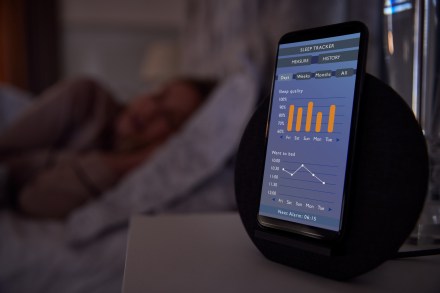
People say that there is nothing as boring as listening to someone tell you about a dream they have had. I think there may now be something even more tedious: someone telling you about their sleep score.  Since my husband bought himself an Apple Watch, he has become a sleep swot. Our morning conversations have become a one-way monologue in which he proudly tells me about his resting heart rate, his time spent in deep slumber, the number of wake ups (with a 16-month-old next door, I am quite aware of the latter already).  Honestly, is there anything less romantic than waking up to a breakdown of your spouse’s biometrics?

Your AI Granny will speak to you now

There’s a trend on YouTube at the moment for videos in which older people give advice. They speak directly to camera, frankly and without pretension. One can almost sense the care home staff hovering in the background, coaxing their barely extant charges into making one last testament of their time on Earth. The videos have titles such as ‘Things I’d tell my 30-year-old self’, ‘Harsh realities of being an 85-year-old woman’, ‘A girl and a woman talk about life’, ‘Lessons learned’ and ‘How to deal with loneliness.’   The commenters below the videos respond, largely, with gratitude and a surprising lack of trollery. ‘I’m terrified of dying,’ one commenter writes. ‘I fear many things, but nothing scares me as much as death does.

We should all be tree huggers

Recently, I was in my local park when I noticed a young girl staring at me with a puzzled expression. She then turned to her mother and asked: ‘Why is that man hugging a tree?’ It was a good question. Why was an old, cynical, embittered hack like me hugging a tree? The simple answer is: I’ve become a tree hugger.  There was a time when I laughed at people like me; and many are still laughing. Tree hugger is a term of abuse that everyone seems happy to use. Green politics may have moved closer to the mainstream but we tree huggers have been left out in the cold. We are the friends of the earth who have very few friends. To ‘climate sceptics’ on the right, we’re just lunatics. To left leaning eco-warriors, we are eco-wimps.

Is perimenopause a myth?

I was born in London in 1982 and my parents were neither hippies nor part of the Women’s Liberation Movement. As a result, frank talk about body parts, functions and sexual development was generally non-existent. The arrival of my period was not something I remember having any feelings about whatsoever, and it certainly wasn’t something the womenfolk in my family celebrated. Hormones were rarely invoked in the culture more widely apart from in a general 'raging' way to explain the wildness of teens. Flash forward 40 years and the cultural tides have turned in quite a startling way. Now it often feels like women talk about nothing but their periods, or the dwindling thereof.

How we all got hooked on Calpol

At the present count, we have 14 syringes. Some are stuffed in kitchen drawers, but I have also found an alarming number under my eight-year-old daughter’s bed, suggesting heavy recreational use. But this isn’t a crack den. It’s simply your average British household with small children who take – need? – the family-favourite brand of paracetamol, Calpol. Formulated in 1959 and administered to children for nearly 70 years, Calpol is a part of British life. And this is set to continue: more than five tons of Calpol are sold every day and more than 12 million units each year. With more than 70 per cent of the market share, Calpol is the family narcotic of choice. Nothing conjures up childhood memories quite like that little brown bottle.

Yes, gyms are conservative

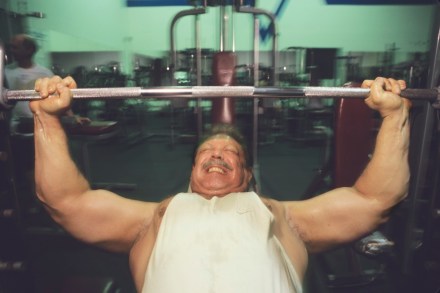
This new year, you may find yourself in the gym. The aim, of course, is to mitigate the effects of the gallon of brandy butter consumed over Christmas. But you may also be trying to build the ‘new you’ (clichés abound when it comes to fitness). Yet as a Spectator reader, you might soon find yourself strangely at home. That’s because the gym is a curiously conservative space. Partly that’s down to the kind of people it attracts, but also because of its existing clientele: disaffected young men. Last year, a Guardian columnist was mocked for stating this, but anyone who’s spent time in a squat rack knows it’s true.

The doctor who wanted me dead

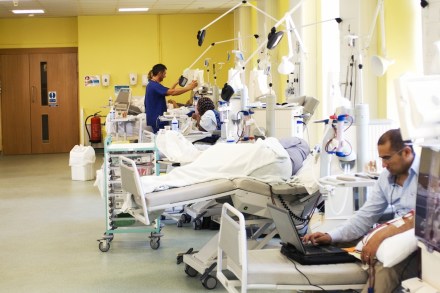
On New Year’s Eve, at about 3 p.m., I phoned for an ambulance. The pressure sore on the weight-bearing surface of my right amputation stump – one of three on that stump – had torn open, exposing bone: specifically, the cut end of the fibula. Although it was a pain to have to go into A&E, it wasn’t unusual. I had last been discharged from hospital a week before in Glasgow for infection of said pressure sore. The first two of my armoury of autoimmune illnesses – scleroderma, antiphospholipid syndrome, hypothyroidism, autoimmune uveitis and Sjögren’s syndrome – have caused me to have hundreds of hospital admissions over the past 26 years, and around 45 to 50 operations in theatre.

Giving up caffeine is a fool’s errand

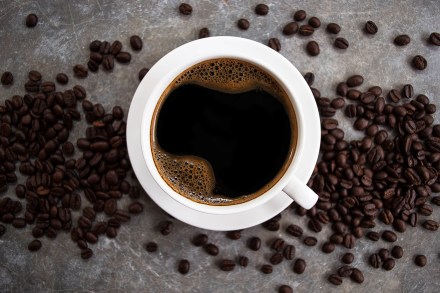
Everyone is giving up something these days. Even before this week’s flood of new year’s resolutions, we’re in the age of subtraction as people shed vices like old skins. Cigarettes, alcohol – those villains have been booed off the stage by the newly health-conscious, whose accusing stare is now turning to a fresh culprit: caffeine. Like most sanitising trends, the anti-caffeine narrative is biggest across the pond. ‘Decaf desirability’ is ‘peaking’, the New York Times told us last month, as turmeric lattes, mushroom elixirs and chicory brews threaten to knock coffee off its perch.

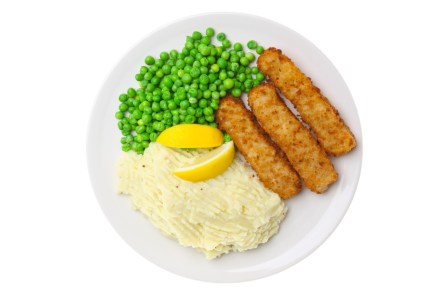
Children need nursery food

In news that will surprise no one, it emerges that vegan children are thinner, shorter and – dare we say it – sicklier than their counterparts. A recent study by the University of Florence details how children who follow a vegan or vegetarian diet are deficient in vitamins and minerals and consistently exhibit a lower BMI than their omnivorous peers. Although children who follow a vegetarian diet consume more fibre, iron, folate, vitamin C and magnesium than omnivores, the only way for plant-based children to grow healthily is with a carefully planned regimen of supplementation – think pills with your brekker every day until you leave home.

Christmas in a care home

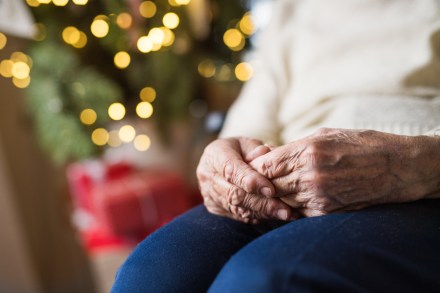
Christmas Day in a care home is often thought to be the saddest shift of the year: a place where staff trudge in reluctantly through the dark and cold, while the rest of the country unwraps presents and gets merry; where residents sit quietly, reminiscing about the happiness of Christmases past. And yet, for those of us who work these shifts year after year, that idea bears little resemblance to the truth. It is, strangely, one of the most joyous shifts to work. There is grief and gratitude, absence and presence, memory and forgetfulness, and moments of surprising hilarity. Someone will say something outrageous. Someone will fall asleep halfway through pudding. Someone will insist they have already had lunch or get away with having two. Care home Christmases are more traditional.

The scammer in the sitting room

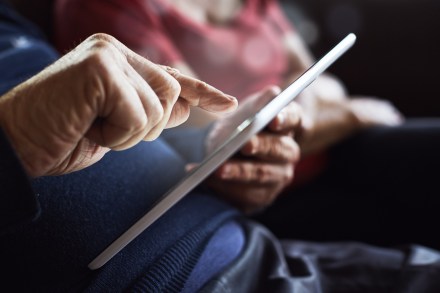
It began when one of the care home residents I look after asked me to take her picture for her Facebook account. Harmless enough – until I noticed the photo had been requested by Michael Bublé. The messages were affectionate and convincing and before long she was being asked for personal information. I had to find a way to gently break it to her that this was very unlikely to be Mr Bublé, which led to tears, disbelief and embarrassment. In the end, I blocked the scammer on her account – along with several other suspicious profiles. The Mental Capacity Act’s third principle states that everyone has the right to make a bad decision. However, it’s best to stop such things before we start discussing the law. This story isn’t unusual.