Spectator Life

Spectator Life

An intelligent mix of culture, style, travel, food and property, as well as where to go and what to see.

Have we learned anything in the 30 years since Leah Betts died?

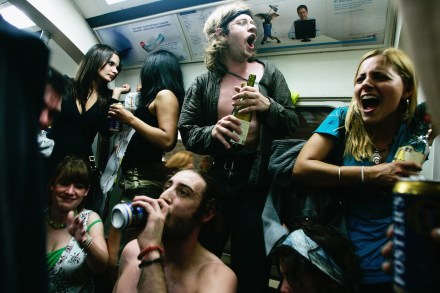
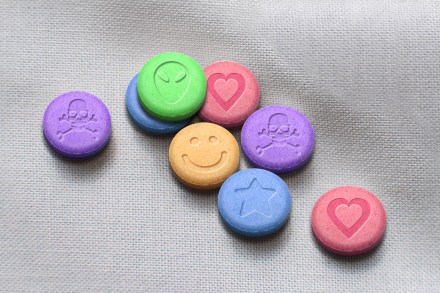
In the mid-1990s, ecstasy was a drug of the suburbs. My friends and I, all A-level students and shortly to become beneficiaries of the final years of higher education that didn’t come with tuition fees, did not fit the model of ‘drug users’ that the media, still in thrall to 1980s heroin hyperbole, fixated on. When we took ecstasy, it was in the clipped gardens of semi-detached houses that had been vacated by parents for the weekend. We popped pills in beer gardens, in rickety small-town clubs with swirly carpets and fogged mirrors or, in summer, in the sun-bleached parks of central Chester. We cared not for the risks, judging them to be inconsequentially small compared with necking a bottle of vodka or even driving without a seatbelt.
Just how sick are Gen Z?

Anyone who has allowed themselves to spend time on TikTok – to say nothing of those who have ever looked at porn on the internet – will have an inkling of the vortex that lurks. Even for those of us who have so far resisted full-blown internet addiction, the ever growing appetite can never be satisfied for more than a second or two. Gen Z, as we know, has been more shaped by these dynamics than anyone else. This has produced well-documented traits such as extreme sensitivity and apparent inability to cope with criticism or challenge; social anxiety leading to a lack of interest in spending time with others in person, ready hostility, a failure to mature emotionally and economically, and a complete estrangement from the old go-to escapist pastime of reading printed words.

Sober October and the hangover of wellness

By now, you have probably given up on Sober October. I’ve never done it, mainly because I’ve been sober for 15 years. There’s two things, however, that I’m truly thankful for. The first is that I gave up drinking before Instagram stories became a widespread means of social documentary. The second is that I had been sober for four years by the time the absurd country-wide rehab that is Sober October was established as a charity initiative by Macmillan Cancer Research in 2014. But if I had still been drinking, I would never have thought it might apply to me. In fact, I would have relished the opportunity to loudly denigrate it, probably from a pub or while staggering around public places, as I often did. Such is the active alcoholic predicament. Dry January?

Gen Z’s obsession with ageing is making us look older

Turning 24 came with more than just cake and candles. Alongside the celebrations came a barrage of life-determining questions: when are you getting married? Where do you see yourself living? When will your job become a career? With a single step into my mid-twenties, I felt suddenly catapulted into a new world of adult expectations. And nothing captured this shift more than my birthday presents. I love my new pilates ring and am curious to see what collagen will do to my complexion, but there was something unnerving about receiving an entire haul of health-inspired gifts. When my friends arrived that evening to celebrate my ‘achievement’ of turning 24 – still unemployed and still at home – the wellness theme continued.

Motherhood is tougher and lovelier than I could imagine

My son’s first birthday has arrived, which feels like a much bigger milestone for us than it is for him. I had to let go of any expectations around motherhood early. At eight months pregnant I learnt that I could not have the calm, candlelit water birth I had planned (does anyone actually have one of those?). It transpired that I had a condition called placenta previa, and so would need a planned caesarean. The midwife cheerily told me not to worry about him ‘coming out the sunroof’ – a rather grating expression as it implies an easy way out, when I am, as it happens, a car without a sunroof. Then came the rather startling announcement from the surgeon that my baby was ginger (my husband and I are more Draco Malfoy than Ron Weasley).

The Princess of Wales is wrong about phones

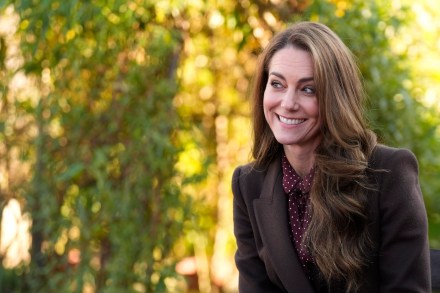
I am not sure about the protocol for arguing with a royal essay, but at the possible cost of my head I will respectfully disagree with the Princess of Wales’s call for parents to ban smartphones from family mealtimes, written with Professor Robert Waldinger of Harvard Medical School. ‘Our smartphones, tablets and computers have become sources of constant distraction,’ she writes, ‘fragmenting our focus and preventing us from giving others the undivided attention that relationships require.’ She instead appeals to us to ‘look the people you care about in the eye and be fully there’. I know what she means. She is thinking of surly teenagers scrolling through social media over dinner while their parents try to engage them in conversation.

Running is being ruined by the ‘wellness’ brigade

Is there a more obnoxious introduction in 21st-century Britain than the words ‘I’m a runner’? ‘I’m a runner,’ followed by the gulp of a protein shake or (shudder) the announcement of a 5k personal best. ‘I’m a runner,’ from a wheezing wannabe in carbon-plated trainers: ‘The shoes Kelvin Kiptum wore when he broke the marathon world record? Yes, yes they are.’ I am no Kelvin Kiptum. I’m not even Simon Pegg in Run Fatboy Run. But I am a runner, with the blackened toenails, tight hamstrings and race medals to prove it. It seems that those things are no longer worth much, though.

Wild swimmers are the most boring people in Britain

There’s much to enjoy about the autumn months in the UK. Teenagers are restricted to school playgrounds rather than the high street between the hours of nine and three. Landlords in rural pubs start remembering that they have a fireplace that might be worth lighting. And provincial airports become populated with polite, cashmere-wearing pensioners on their way to the Azores, rather than gangs of stags and hens drinking the Wetherspoons dry at 7.30 a.m. But there is a fly (or should that be waterborne parasite?) in the ointment. There was a time when there was no such thing as ‘wild swimming’. You just called it swimming outdoors.

Life lessons from a 105-year-old

I once asked a 105-year-old woman if she had any advice. What lessons had she learned throughout all those years? She paused and reached for the cup of tea I’d brought her. ‘Oh, I don’t know,’ she said and took a sip. And that was that. I’d half expected my mind to be blown, to leave her room practically floating, to hear an illuminating sentence that would unlock life and help me understand how to live better. I’d prepared for enlightenment and received humility. I work in a care home where the average age of its residents is 88. I’ve heard many extraordinary stories from a prisoner of war, a monk, a friend of Frank Sinatra’s. A nurse once told me: ‘The key to happiness is giving it away.’ A hairdresser advised: ‘Be willing to talk.

Phones are drowning out our inner lives

I’m sitting in a meditation class at a yoga studio in Chicago, neon lights pulsing pink and purple while the instructor talks over a movie soundtrack. I almost can’t believe I’ve paid $30 to be here. When she runs out of scripted wisdom about mindfulness and presence, she starts ad-libbing: ‘And that doesn’t mean you shouldn’t respect yourself…’ I try to tune her out, focus on my breath, but it’s impossible. She demands our attention. I went to six classes before deciding it was a waste of time. Each week, fewer people showed up. By the sixth class, it was just me and this 40-year-old instructor. Isn’t meditation supposed to train attention through silence and stillness?

Clapping, going grey, getting naked: how to break your phone habit

I’ve been having trouble with my phone recently. I noticed it particularly while in France a few weeks ago. I’d flop on the sunbed with a book and then spend half an hour scrolling through ridiculous videos online. But then I do it at home, too – go to bed early thinking ‘Ooh good, nice early night with my book’. And then I see a video of a dog jumping into a swimming pool, or a chef cooking a Japanese omelette, or someone removing blackheads from their nose, or a clip of something that might be a cake but also might be a shoe, or someone else offering an improbable DIY tip involving a clothes hanger and a jar of honey, or a video of nail art, or of an influencer promising ‘THE ONLY RECIPE FOR BANG BANG CHICKEN YOU’LL EVER NEED’, and so on and so on.

Fat people are being fed lies

Every afternoon, I witness the unedifying spectacle of teenagers waddling out of the comprehensive school on my street in south London. Many of the 14- and 15-year-olds appear to weigh the same as their age. Few manage to make it past the chicken shop without buying a box of deep-fried nuggets to share between them. It crossed my mind that teenagers, cruel as they are, can no longer call a kid ‘Fatty’ (or ‘Tubs’ if they’re in private school). Shouting that in a playground would cause a Spartacus-esque reaction. In my school in the mid-1990s, being overweight was an oddity suffered by a maximum of two children in every year group. These days, it’s the skinny kids who are the exception. I blame the parents.

The shame of a middle-aged gym-goer

We are told being non-judgemental is a virtue, that discrimination is a vice, and that the avoidance of prejudice is not merely possible but laudable. Perhaps the quickest way to give the lie to these statements is to reveal to you that I am a 53-year-old man who regularly goes to the gym. What are we to make of someone of advanced middle age who nevertheless spends some of his few remaining hours lifting bits of metal up and putting them down again? Prejudice, I fear, suggests the worst. In the gyms I attend, the mirrors show a mix of the youthful and good-looking, the muscled and toned. Then there are the very fat, with their looks of wild hope or sinking doubt, the smattering of the ordinary and eccentric.

Emma Thompson is wrong about sex

I watched most of Good Luck to You, Leo Grande when it was on TV some months back. I wondered whether to write something about it. But I can’t write about every representation of sex that offends me. Who am I – Mary Whitehouse? Thankfully Dame Emma Thompson, the star of that film, has now handed me an opportunity. Can I first say something about her? I can’t stick her. Is she a good actress? I don’t know. I can’t tell – it seems to me that she leaks her personality into every role. In Sense and Sensibility it seemed she was merging the character of Elinor Dashwood with the character of Emma Thompson, the famous self-righteous know-it-all celebrity, and I did not want such a merger. Actors are meant to get their own personalities out of the way, aren’t they?

What we’ve forgotten about intimacy

Last year one of the big oil companies informed its employees that they had to disclose any ‘intimate relationships’ with colleagues. I remain grateful that my employer has not yet asked me to do the same, because I’m not sure I could survive the embarrassment that would ensue. I don’t just enjoy ‘intimate relationships’ with numerous male and female colleagues but would also need to confess that I enjoy intimacy with multiple other people outside of work. The fact that my life is beginning to sound like a tale of sexual perversion illustrates the point that intimate relationships are nearly always understood to be sexual ones.

Am I ready for Turkey teeth?

My parents both had false teeth. My mother had all her teeth taken out one winter afternoon. I can remember her huddled by the electric fire with a small bowl of blood beside her, mourning their loss. It was a loss not just of teeth but of youth. She can’t have been much over 40. Because of her I feel rather proud of the fact that I’ve managed to hang on to mine. I tell this to my dentist, Marcus. He’s not impressed. I should have guessed by my stint watching the video in the waiting room of a blonde whitening her teeth and smiling. Just hanging on to them isn’t quite good enough. I haven’t had mine straightened, realigned or veneered. I haven’t had ‘a smile make-over’. Actually, I have rather large teeth.

Are you in #ChronicPain?

The pinned post at the top of the r/ChronicPain subreddit is ‘how to get doctors to take you seriously’. The subreddit has 131,000 subscribers, and is a tricky community for outsiders to understand. People talk in acronyms (chronic lower back pain – CLBP, myalgic encephalomyelitis – ME, acceptance and commitment therapy – ACT) and have their own vocabulary (‘spoonies’ and ‘zebras’). There are flippant memes about muscle relaxants next to horrific stories of medical negligence. People report their condition being so bad that they’ve dropped out of school or are even unable to care for their children. We can imagine the feelings of grief – and, of course, the sheer physical suffering – that come with chronic pain conditions. Or at least, we can try to.

I’m a Strava addict

If a man runs through a forest but doesn’t post it on Strava, it didn’t happen. I won’t believe it, anyway: the athletic tracker app is my new addiction. The name is borrowed from the Swedish word meaning ‘to strive’. Users document their sporting activities – walking, kayaking, surfing, skiing – and share their adventures with their followers. Founded in 2009 by two Harvard graduates who met on the rowing team, the app has 150 million users. That’s small fry compared to Facebook’s three billion or TikTok’s 1.3 billion. But Strava is on the up, acquiring Runna, another fitness app, in mid-April. Strava syncs to your smartwatch, if you have one. As well as mapping your distance and tracking your time, it lets you add photos and captions to your posts.

Walking, not working out, is the best exercise

These days almost everyone you meet is a member of a gym, and instead of attending church every week – as they did in days gone by – they make regular visits to these temples of the body beautiful: the new religion of our times. Yet despite these obligatory bouts of body worship, the general health of the nation – physical and mental – does not appear to be improving. The evidence tells us that obscene levels of obesity are at an all-time high, and everyone has heard stories of those struck down in the prime of life by strokes, coronaries or – most common of all – cancer, the plague of our age.

Britain still leads the world… in STDs

When I read on the BBC website that ‘England will be the first country in the world to start vaccinating people against the sexually transmitted infection gonorrhoea’, I felt a flare of rare patriotism. We Brits, far from the no-sex-please-we’re-British libel which self-loathing Europhiles like to paste on us, have been known for our sexual generosity (some might say incontinence) since the dawn of cheap foreign travel, so it makes sense for us to take preventive measures. A tiny, immature bit of me even wanted to snigger, as when I was a young girl the idea of ‘the clap’ was a matter of some amusement on the part of my cohort. However, this is a serious business. It will not be available for everyone.

The unfashionable truth? Early motherhood is wonderful

At the end of last year I developed a pathological aversion to going to my local supermarket, owing to a garish sign in the window counting down the number of ‘sleeps’ until Christmas. The twee Americanism was grating enough, but I had another reason to feel queasy: I was heavily pregnant with my first baby and my due date was Christmas Day. Of course, my husband and I were longing to meet our much-wanted son. But as the day drew inexorably closer and I dived ever deeper into the ubiquitous ‘exposés’ on early motherhood, I began to feel afraid. Is it any wonder? To read pretty much any book, magazine or internet forum about becoming a mum in 2025 is to be told that it is an ordeal to be dreaded.

The sorry state of our public conveniences

Britain’s public loos are a national embarrassment. If you are in any doubt, head to Liverpool Street Station and spend a penny. It’s unquestionably the most odious and unpleasant public lavatory anywhere in the supposedly civilised world. It has to be experienced to be believed, but suffice it to say that the level of cleanliness on display would make a Medicine Sans Frontier doctor fresh from West Africa recoil in fear and reach for their PPE. The floor is usually awash in various places with unknown fluids. The long shared trough installed for handwashing is so disgusting that you wouldn’t clean your dog in it. The supposedly automatic taps barely dispense water. The soap dispensers are equally hit and miss.

I’m finally out of hospital

Throughout my four months in hospitals, I dreamt above all of being home. This isn’t exceptional – it’s a very common desire – though I did meet one woman who complained that she’d find it too ‘quiet’ at home after the clatter of the ward. But for me the situation was extreme. I’m an only child; I live apart from my husband of 30 years because my desire for solitude is more persistent than it has ever been for any drug. I turned down a quarter of a million pounds to go on Celebrity Big Brother because even the idea of sleeping in a roomful of strangers for a few weeks made me feel murderous. In the hospital in Brighton and then in the rehabilitation centre in West Sussex, I wasn’t getting paid a six-figure sum to do the thing I most dreaded.

Maybe you’re not anxious. Maybe you’re just stressed

Something rather odd has happened to the way we talk about worry. The straightforward term ‘stress’ has been overtaken by the quasi-medical concept of ‘anxiety’. The problem is that the words don’t mean the same thing and treating them as interchangeable can have unhappy consequences. The way we use the term ‘stress’ is different to the semantics of ‘anxiety’. Stress tends to have its causes outside – deadlines, bills, crying kids, nagging bosses. Events can be stressful. We all suffer from occasional stresses and strains. These are things that happen to us. Stress is circumstantial, episodic, even inevitable.

I’ve had it with neurotic dog owners

‘She’s overweight! You should weigh her every week and if she puts on so much as 50g, immediately reduce her diet,’ one commenter said. Another castigated me for not using organic shampoo, and someone else told me off for my poor choice of outdoor coat. Under every post were furious debates, judgements and accusations. I adore Dixie. She is coming up for four years old and I want the best for her. But she is, after all, a standard short-haired dachshund, not a human toddler – and frankly it all seems a bit much. The number dogs being given fluoxetine, the same drug used in Prozac, has increased tenfold over the past decade. Perhaps that’s because more than half of dog owners are now members of some kind of Facebook groups related to pet health and wellbeing.

Could Ozempic cure your phone addiction?

It’s already known for whittling down waistlines – and now Ozempic looks set to have the same effect on wine consumption. Research recently published in the journal JAMA Psychiatry found semaglutide, the weight loss medication also sold under the brand name Wegovy, reduced cravings in people with alcohol use disorder.  The study by California’s USC Institute for Addiction Science divided 48 participants into two groups and found those injected with semaglutide drank less in each sitting than those offered a placebo. It is not the first research to link the jabs – originally designed as a diabetes treatment – to lower incidence of substance abuse.

Will I ever pee again?

When I was a girl, around 13 or so, my mum started calling me, half-enviously, half-fondly, ‘The Camel’, due to my ability to retain water. Every Saturday morning we’d go shopping at the Bristol city centre department stores; she’d need the toilet maybe three times, but I wouldn’t need it at all. ‘Have you “been”?’ she’d ask me before we left the house. ‘No!’ I’d snicker, spitefully. When we got home after four hours out, I’d make a point of sprawling on the stairs, chugging Corona cherryade by the gallon and gossiping with a mate for around an hour before I finally ‘made my toilette’. It became part of the war of attrition which is so common between mothers and daughters.

We need to talk about femcels

Women’s expectations are off. They want men with advanced degrees, but on university campuses, women outnumber their male counterparts. They want men with above-average incomes, but the gender pay gap has been reversed – young women now out-earn men. They want men who share their politics, but in almost every western country over the past decade or so, women have slid to the left while men have remained centrist. NEW: an ideological divide is emerging between young men and women in many countries around the world.I think this one of the most important social trends unfolding today, and provides the answer to several puzzles. pic.twitter.

Am I losing my marbles?

‘You need to get yourself tested’, my wife said after yet another of my lapses, ‘you’re fast becoming a marble-free zone.’ I couldn’t disagree. Perhaps the relentless ‘mental ’elf’ craze had alerted me to my own flaws, though groping for names and words is, surely, excusable by 67. But I would often devour a book and, days later, struggle to remember not just title, author and plot but whether or not I’d actually read it. And could I reconstruct last week’s events, even in outline? No, of course I couldn’t. The health insurer confirmed they do indeed ‘provide support for that’, the cost counting against my annual limit. I therefore fixed an appointment with the GP: ‘Very sensible to come in about this.