Spectator Life

Spectator Life

An intelligent mix of culture, style, travel, food and property, as well as where to go and what to see.

Why tech bros love fighting

Ladies and gentlemen, this is the maaaiiin event of the eeevening. In the red corner, fighting out of Boca Chica, Texas, Eeeeelon ‘the Execuuutioner’ MUUUSK! And his opponent, in the blue corner, fighting out of Palo Alto, California, Maaaark ‘The Madman’ ZUCKERBEEERG!  Sadly, we might never get the fight between Elon Musk of Twitter and Mark Zuckerberg of Facebook. Musk has said that he would be ‘up for a cage fight’ with Zuckerberg. Zuckerberg then responded simply: ‘Send me location.’ The internet erupted. UFC legend Georges St-Pierre offered to train Musk while UFC heavyweight champion Jon Jones announced that he would be ‘Team Zuck’. Bookmakers started taking bets.

Confessions of a mid-life rollercoaster addict

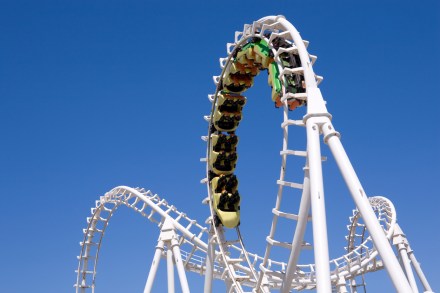
My heart is racing, my breath ragged and my stomach threatening to send back the burger I ate for lunch. But as the safety harness I’m wearing is released and I lower my shaking legs to the ground there’s only one question on my mind: when can I experience it again? My name is Antonia and I am a 44-year-old rollercoaster addict. I am hooked on rides that command queues of over an hour yet are over in seconds; that hurl me upside down, haemorrhage my bank balance and have spurious science-fiction names. In less than two years I have been to England’s twin temples of hair-raising attractions – Alton Towers in Staffordshire and Thorpe Park in Surrey – six times, battering my senses until I drive home in a stunned but satisfied stupor.

Flavour of the month: July – cycling, chocolate and an Isle of Wight invasion

In a new monthly series, Spectator Life will be bringing you facts, stories and items of general wonderment associated with the month ahead. Welcome to July – where we learn what ‘Twix’ is short for, why England’s World Cup-winning footballers painted white stripes on to their boots and how many times Charles and Diana met before their wedding… 1 July 1903: The first ever Tour de France gets under way. If you think the race has had its controversies in recent times, you should have seen it in the early years. Competitors sometimes had themselves towed along by cars, or simply got into the car for a lift. Others took the train.

Is the glucose monitoring craze really so healthy?

At £300 a go, the Zoe is a reassuringly expensive accessory. It has a recognisable logo and even had a 200,000-strong waiting list at one point. That wouldn’t be so unusual if Zoe was a must-have handbag or jewellery, but it is  a continuous glucose monitor that you stick to your arm. Some charities ask non-diabetics to donate their wearables to be reused by people who actually need them Continuous glucose monitors have been available to diabetics for a few years, but now non-diabetics without any particular reason to worry about their pancreas are also getting in on the act. Like the fear of gluten a few years ago, glucose levels have gone from something only those with a diagnosed medical condition ever think about to a widespread obsession.

The ‘noise cameras’ silencing the supercar show-offs

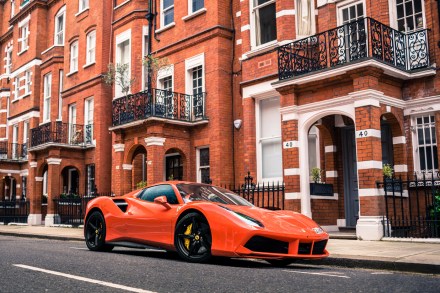
As a motorcyclist, I’m used to hearing complaints about loud exhausts. Plenty of bikers revel in the roar of their motor – after all, a powerful engine is one of the main appeals of motorbiking. But for anyone living near a busy road, the sound of revving can be thoroughly stressful. Most people who spend time in towns or cities will have jumped at the distinctive noise of a tailpipe backfire, a couple of short explosive bursts that can sound like gunshots, or the drone of a clearly illegal exhaust note. The idea that someone has modified their car or motorbike to give the rest of us a fright is downright infuriating. One suspects that it is mostly a young male thing: adolescent drivers shouting ‘look at me!’ in the most juvenile way.

Glastonbury has become the new Last Night of the Proms

Time was when the pinnacle of the summer’s musical experiences – certainly from a UK television perspective – was the Last Night of the Proms. Preceded by weeks of more staid performances of classical music which most people did not tune in to, the conclusion of the Proms season, which dates back to 1895, was a collective cultural experience. Watched by those at home, as well as the audience of the Royal Albert Hall, it was and remains an effervescent outpouring of costume, flag-waving and patriotic singing – more an example of massed karaoke than a traditional virtuoso performance, particularly during the annual rendition of Sir Henry Wood’s Fantasia of British Sea Songs.

The invasion of the wheelie bins

Once I thought nothing could make residential Britain look uglier than pebble-dashing, PVC windows and satellite dishes. I was wrong. As if the country had not been brutally homogenised enough by the fact that every high street has the same shops, now every residential road is reduced to being an identical backdrop for a very persistent invader: the wheelie bin. Lined up like Daleks, they are breeding in my North London neighbourhood, blocking front gardens and pavements. Outside houses split into flats, where each has its own set, there are actual crowds of these 4.5ft graceless plastic buckets, which come in multiple colours for different sorts of rubbish. When wheelie bins first started infiltrating our streets just over a decade ago, we valiantly tried to fight back.

How to see world-class opera for £11

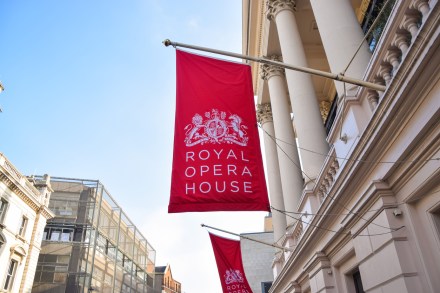
I’ve always been happy to splash out on attending all sorts of events – £80 on tickets for run-of-the-mill Premiership football matches; £120 for the ghastly experience of watching rugby in Twickenham’s concrete jungle; £60 to attend a concert by ancient rockers who’ve seen better days. As an English teacher, I’m also an avid theatre-goer – despite the fact that the last time I went to the theatre, to see a woke version of Henry V full of gratuitous swearing and cheap jibes at Brexit, it cost £55 for a restricted view.   But I’d always avoided opera, put off by its somewhat elitist image. And I’m not the only one – a survey for Classic FM revealed that many of us have never considered going, dismissing it as ‘too posh’ or too expensive.

Is Scottish reeling the route to romance?

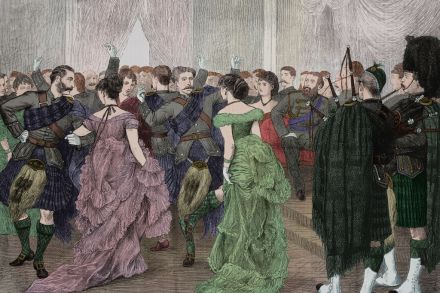
‘Remember to flirt outrageously.’ This essential piece of advice is imparted courtesy of Country and Town House magazine for its readers curious about Scottish reeling. The reel, a social folk dance, dates back to 16th-century Scotland and has remained popular for all this time, notwithstanding a brief hiatus in the 17th century when the Scots Covenanters assumed the stance (rightfully, some might say) that such amusement leads to mischief leads to sin. Less curious about the dancing than the flirtation, I joined some friends for the final, sweaty session of the season at London Reels.

There’s nothing rock and roll about Glastonbury

In 1970, Glastonbury was a humble new festival for ‘free thinking people’. Entry cost £1 and you were given free milk for the duration. Today Glastonbury attracts more than a quarter of a million people from all over the world. Tickets cost £335, reassuringly expensive enough to keep the riff-raff out. You’re more likely to pitch your tent next to a corporate lawyer than anyone devoted to the counter-culture. Glasto is the culture now — and in 2023 the culture is the exorbitant cost-of-living. A pint of beer at the festival costs £7; half a pint of Coca Cola is £3.  Most events at Left Field could easily be staged at the Tory party conference later this year Glastonbury is still primarily about music, thank goodness.

Is this the end of the road for Meghan?

Has there ever been a more brutally effective piece of social satire than the South Park episode that mocked Harry and Meghan?  Since it aired in mid-February, the Duchess of Sussex, previously a seemingly ubiquitous and unstoppable cultural phenomenon, has effectively withdrawn from public life. She’s made just one formal appearance – at an awards show, which ended in the farce of disputed paparazzi car chase claims – and has given precisely no interviews.  The couple's media empire also seems to be imploding. Spotify has axed their $20 million (£15.6 million) podcast deal, with senior exec Bill Simmons ungallantly labelling the pair ‘fucking grifters’.

Drivers beware: the rise of the vigilante cyclist

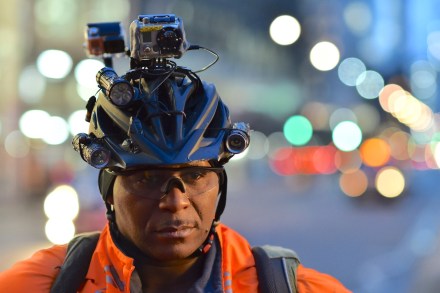
Do you ever break the law when driving? According to surveys, quite a few of us do – three in five drivers admit regularly speeding. And if that's you, then be careful: Mike van Erp is out to get you. You may already know Mike. He’s the media-savvy cyclist (better known as Cycling Mikey) who has become a minor celebrity for his dashcam videos of rule-breaking drivers in London. Now his niche hobby is catching on. ‘There were almost 15,000 reports last year that led to the police taking action’ ‘I don’t think I’m even in the top ten cyclists reporting bad drivers in London,’ Cycling Mikey tells me over the phone. ‘There were almost 15,000 reports last year that led to the police taking action. And I only submitted 383 reports in total.

Why I’m with Boris Johnson on Ozempic

Seeing Boris Johnson’s byline in the Daily Mail, I felt a flare of the affection which made me break free from my blue-collar tribalism and vote Tory for the first time in 2019. I remember thinking that the experience was rather like losing one’s virginity; worrying about it for months, then secretly planning it, then taking the plunge and thinking the morning after – ‘Gosh, that was nothing to be scared of – I might even do it again!’ I’ve been quite the reprobate myself during my long, louche life, and I’ve certainly lied and adulterated, so of course I can’t condemn anything that I’ve done too, as that would make me a filthy hypocrite. What I can’t forgive in a politician is sanctimoniousness – and he had none.

Why I hate the new Pride flag

If you needed more proof that gay men aren’t in control of things any more – at least where the activist set is concerned – look no further than the evolution of the LGBTQ+ Pride flag. If, as Oscar Wilde once wrote, ‘Fashion is a form of ugliness so intolerable that we have to alter it every six months’, then the new Pride flag is somewhere between a prisoner of war and Frankenstein’s monster: a tortured and overburdened horror; a stitched-together crime against nature.  What was wrong with the old rainbow flag? Rainbows are happy and beautiful. Everyone loves a rainbow. And that, precisely, was the problem. You can’t strike fear into the hearts of your enemies with a rainbow. Big Gay needed something more militant.

What do we think of when we think of Essex?

Apparently much of the notoriety – or perhaps by now it has become allure – of Essex is my fault. In 1990, weeks before Mrs Thatcher was defenestrated, I wrote an article in the Sunday Telegraph called ‘Essex Man’, in circumstances that Tim Burrows describes entirely accurately in this exceptionally well-written and intelligent book. Although the Iron Lady was about to be history, the part of England that had come to exemplify her achievement and her legacy was throbbing with capitalist energy more than ever – which motivated the profile of Essex Man and his hard work and ability to seize opportunities in a society where native ability counted for more than class.

The best moments of music in literature

Haruki Murakami said that ‘I feel that most of what I know about writing fiction I learned from music.’ Music and literature enjoy a close relationship. Authors rely on rhythm and tone for their writing. So when a writer chooses to incorporate music into their work, it always makes for a powerful moment, connecting the reader in a sensory way to the story.  Music functions as a character in Pride and Prejudice. As a guest at Netherfield Hall one evening, Elizabeth Bennet’s sister Mary gives a performance that is not well received. Her voice is described as ‘weak, and her manner affected.’ Mary, however, remains blissfully unaware of the uncomfortable atmosphere her music provides.

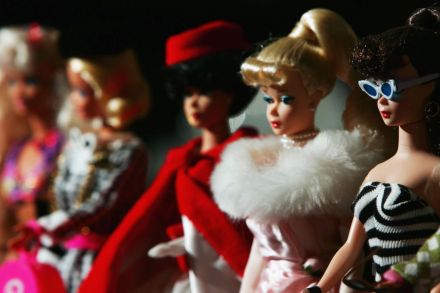
The dark side of Barbie dolls 

On hearing of the Duchess of Sussex’s alleged fondness for the Diabolo de Cartier Music Box (retailing for almost £3,000, in lacquered wood and gold-finish metal, freed bird motif turns when ‘La Vie En Rose’ plays), I reflected on the adult liking for childish things.  Though the box is ostensibly for Meghan’s infant daughter Lilibet Ltd – sorry, Lilibet Diana – a source told Australia’s New Idea magazine that ‘Meghan has fallen in love with Cartier’s absolutely divine music boxes.

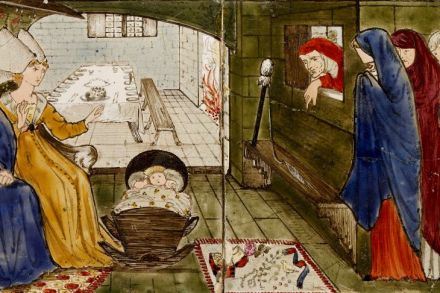
Why religious art is as relevant as ever

In the heart of Shoreditch, a handful of arts students have strayed from their typical east London mould. Those who study at the Prince’s Foundation School of Traditional Arts are taught, through research and the practice of traditional arts and crafts, to ‘experience the beauty of the order of nature – a spiritual, sacred beauty, connecting the whole of creation.’ The School’s ethos is centred around the philosophical vision of its president, the King. Charles is known to have some woolly ideas about aesthetics and spirituality and alternative medicine, articulated in his 2010 book Harmony: A New Way of Looking at Our World.

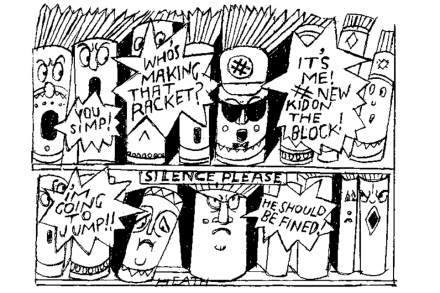
Cooking the books: the rise of fake libraries

There is a growing fashion for fake books. Not fake as in written by a series of AI prompts, but fake as in things – cleverly painted empty boxes, or a façade of spines glued to a wall – designed to mislead the casual onlooker into thinking that they are books. A recent New York Times article highlighted the trend. It featured various interior designers offering spurious arguments in favour of fakes over real books: they can be a practical solution for hard-to-reach shelves; a smart example of upcycling unwanted volumes destined for landfill; useful and humorous storage boxes. Neat, quirky design solutions are, however, the least of it. This fashion signals a profound shift in our attitude to books.

The case against Ulez – by a cyclist

Whether you’re more afraid of the forces of order or the forces of chaos is generally a matter of disposition. A natural anti-authoritarian who despises being told what to do – especially when told to do something stupid – I’m more horrified by excesses of order. Granted, my greater fear of the state may simply betray that I’ve largely lived in an orderly western world, and after a few dog-eat-dog nights of mayhem and carnage I might change my tune. Nevertheless, during the Covid lockdowns, for example, I was less distressed by the odd neighbour who dared to invite a friend to tea than by most Britons’ blind, bovine compliance with an economically self-destructive, socially disastrous, politically despotic and medically idiotic regime.

Bud Light fought the blue-collar culture war – and the war won

If Budweiser is the King of Beers, as its slogan claims, then Bud Light has long been the Queen. Launched over 40 years ago, in 1982, and now the world’s most successful low-calorie beer, ‘B Minus’ occupies a funny sweet spot in America’s sprawling consumer conscience. Also known as ‘redneck soda’, ‘frat water’ and ‘turtle jiz’ – Bud Light is a product that conveys a mass-marketable sense of irony. That’s what ad men dream about.   But then, two months ago, Anheuser Busch, Bud’s parent company, did something stupid. Some marketing whizz decided it would be super-provocative to ‘partner’ – as marketing drones like to say – with the trans influencer Dylan Mulvaney.

In defence of the boozy office party

I’m not big on nostalgia – if the past was so great, how come it’s history? - but I allowed myself a smirk of reminiscence on reading recently that Ann Francke, chief executive of the Chartered Management Institute (‘a professional body focusing on management and leadership’) has put the damper on the age-old tradition of getting blotto at work parties. Francke told the BBC that while hanging out after-hours with workmates is ‘a great team-building opportunity’, managers have a responsibility to keep inappropriate behaviour in check. ‘That might mean adding additional activities alongside alcohol, limiting the amount of drinks available per person or ensuring that people who are drinking too much are prevented from acting inappropriately towards others,’ she said.

Do we still need Pride Month?

With Pride Month beginning tomorrow, how proud are you of your sexuality? As a white cis-gendered male, I am frankly a little embarrassed about mine. I mean, it’s not exactly cool to fancy the opposite sex these days, and many of us hetero-normies have become increasingly wary of appearing ‘inappropriate’ when making a move on someone we like the look of. So don't expect me to be parading my vanilla-flavoured proclivities through central London any time soon. What would I even wear to signal hetero-pride – baggy cords and a neatly tucked-in shirt? That said, you might well spot me at some of this year's shenanigans; after all, the organisers certainly know how to put on a show.

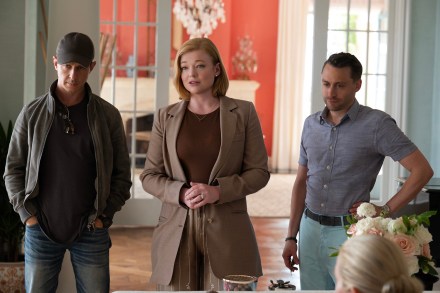
I loved Succession. I’m glad it’s over

There has always been something fitting about the idea that Succession will be the last great show on television. Logan Roy, the patriarch, is old media made flesh, slowly declining into debt and dementia. The show revelled in the fact that none of the next-in-line knew how to replicate him.  From its premiere in 2018 to its last episode this week, HBO’s dynastic drama stood out from a crowd of forgettable spin-offs and interchangeable franchises, amassing countless awards and millions of viewers.  Succession was tragically hilarious and hilariously tragic Succession fast became appointment viewing: you couldn’t actually wait for the next episode to land.

Is it time for the £100 note?

Thanks to the recent spike in inflation, never have indisputable luxuries such as Sharwood’s mango chutney or Anchor butter quite so tested the domestic purse strings. The sad truth is, however, that it’s much worse than you think. Because unlike the watched kettle, the frog of devaluation hasn’t just arrived at a nice simmer, it’s begun to boil over. And mango chutney at £4.10 a jar is but the tip of the iceberg. For the long view consider the BBC’s new drama, Ten Pound Poms, about Brits who emigrated to Australia in the 1950s for the princely sum of a £10 processing fee. These days the closest you’ll get to Australia for a tenner is a four-pack of Castlemaine XXXX – and there probably won’t be much change from that either.

Never mind AI, the streaming services are already destroying themselves

There is much concern about the frightening advance of AI. In Los Angeles, members of the Writers Guild of America which represents 11,000 writers have entered their fourth week of strikes. They are demanding, among other things, higher pay, and crucially, that the studios guarantee they won’t slice into writers royalty payments by crediting AI tools such as ChatGPT on scripts.  There is indeed a real threat of screenwriters' jobs becoming redundant as AI advances. Yet the streaming services who employ writers are far more likely to self-sabotage long before AI becomes sophisticated enough to produce television and film scripts worthy of being made.

The case for culling friends

Since I’m so old – 64 this summer – Facebook has always been my preferred form of social media. But if I was a softer soul there’s a feature on it that might really tug at my heartstrings: 'See your memories.' Because many of mine – going back more than a decade – are now blank of any actual memory: 'Content not available.' I know what these were: photographs of me with ex-friends (they’d always take the selfies, as I don’t have a camera-phone) who I’ve fallen out with and who have since deleted the photographs. In 90 per cent of cases, I’d say that I was the one who caused the falling-out.  If I’m being honest, I don’t miss any of them.

In celebration of Gilbert and George

I'd always questioned the creative genius of self-confessed 'living sculptures' Gilbert and George. Their dogged determination to be seen as 'different' felt archly self-conscious and not particularly interesting. Like so many fly-by-night avant-gardists of the 1960s, the duo's 'originality' tended to hang on hoary old controversies such as scatological imagery, sex and nudity – hardly revolutionary even back then. But listening to the pair's touching interview with John Wilson on BBC Radio 4's This Cultural Life recently made me reassess their contribution not just to art, but to the gaiety of the nation.

It’s time to ban young children from restaurants

When you have small children just getting them out of the door can be traumatic. Finding and applying each shoe can be enough to provoke a tantrum – and not just in the parent. And no, they can’t bring their Power Rangers swords, because we are going out to lunch and everyone knows that plastic swords and restaurants don’t mix.  Eventually you will arrive at the restaurant, although it will 20 minutes later than the booking. As you push the buggy inside, the establishment falls quiet like the Slaughtered Lamb in An American Werewolf in London. There’s a scrape of chairs – a pause – then the chatter resumes. But in that moment everyone is thinking the same thing: please don’t sit next to us.