Spectator Life

Spectator Life

An intelligent mix of culture, style, travel, food and property, as well as where to go and what to see.

Is your pet killing the planet?

As a travel writer, I used to joke about the so-called ‘downsides of the job’. The stupidly complex shower-fixture in the five-star Maldivian Paradise. The unexpected commission to go to Denmark in winter. The vague but real sting of disappointment upon realising that the free hotel pillow-chocolate is actually a mint. But in recent years a genuine and troubling downside has arisen. When I meet someone and tell them what I do, the listener often winces, perhaps with a hint of moral superiority, and says something like: ‘Don’t you feel guilty about your carbon footprint? You’re killing the planet!


Should I become a microdoser?

Microdosing, the practice of taking a very small amount of a mood-enhancing drug, has been happening in America for a long time. But in the UK, microdosing was, until recently, a fringe activity. Now everyone – teachers, techies, lawyers, hedge fund managers and hipsters – is doing it. Microdosing is moderation in pursuit of moderation. It’s the perfect leisure activity for our health and safety obsessed times It seems like half of London is stoned on something. You’re having a perfectly normal conversation with someone who seems perfectly normal – and then they mention, in passing, that they’ve been microdosing either mushrooms, ketamine, LSD or some other weird drug.

Flavour of the month: September – Beyoncé, Gaddafi and Dr. Seuss

This month’s dose of trivia and anecdote sees a Yorkshireman insulting an England cricketer, the young Beyoncé training her voice in an unusual way, and Keith Floyd taking revenge on a table of diners who’d made one of his waitresses cry... All three female Prime Ministers of the UK have had the same initials, albeit one of them with the order reversed 1 September 1969 – Muammar Gaddafi seizes power in Libya. He subsequently abolished all military ranks above his own one of Colonel, because he was fearful of people launching a coup against him. 2 September 1666 – The Great Fire of London breaks out. It famously started in a baker’s shop on Pudding Lane, which might lead you to assume that the lane was named after the shop.

Admit it, the French are better than us

The French, according to the enshrined belief system that I grew up with, are work-shy layabouts. They never turn up for a job on time as they’re too busy drinking wine for breakfast. And once they do finally start, they break off almost immediately for a two-hour lunch with more wine before dithering about a bit and then finishing early. If anyone threatens these unproductive practices, they blockade ports or set fire to lorries full of lambs.  We British, by contrast, have work ethic running through our veins. We fill every unforgiving minute with sixty seconds’ worth of distance run, as Kipling put it. They ridicule us as a nation of shopkeepers, but this is mere jealousy – we are strivers while they are hopelessly lazy shirkers.

The terrible triumph of tenderness

When I was a young woman in the 1980s, videotape was the new-fangled entertainment form; on evenings in, my second husband and I liked nothing better than to whack in a VHS and record something off the the telly. We felt like we were in The Jetsons – though seen with a modern eye, we must have looked more like The Flintstones. We were particularly fond of Duran Duran videos – and of a philosophical debate which was first aired in 1986 on the then-sophisticated Channel 4, now most famous for showcasing a transvestite playing the piano with their penis. The debate was part of the Modernity And Its Discontents series, this particular episode being called ‘The Tough And The Tender’ in which Michael Ignatieff interviewed the philosophers Ernest Gellner and Charles Taylor.

How to shock a Satanist

I wish I could be like actors and pretend to be bored by press junkets, but the truth is I love the attention. My job as a Hollywood writer and producer mainly involves sitting in front of a computer and shouting at my kids, so free drinks, launch parties and people telling you how great you are is the perfect antidote to a room filled with empty Monster Munch packets and that urine sample you were meant to hand in to the doctor. Writers are such terrible narcissists. We not only expect complete strangers to be fascinated by our every thought; we want them to pay for the privilege. You can imagine how much we relish poor journalists being forced to listen to us talk about ourselves for days on end.

Bring back sex, drugs and rock n’ roll 

It’s generally not hard to find a thoroughly depressing, joyless, plaintive, whiny, doom-laden, monotoned, earnest, life-sucking, soul-less, uninspiring, hapless and gloom-inducing article in the leftier British press. In fact, I sometimes wonder if the editors have sacked all their journalists, installed ChatGPT, and simply sit there, sipping Waitrose crémant, as they punch in evermore negative and melancholy prompts like 'write an article about why something (gardening, cake, quantum engineering) is racist' or 'do a travel piece on the joys of zero emission yurting in Macclesfield'.

Punk’s fake history

If you were born after 1970 and don’t remember punk, you’ve almost certainly been misled by people who do. You’ve probably been told – through countless paean-to-punk retrospectives, documentaries and newspaper culture pages ­– that it was a glorious, anarchic revolution that swept all before it. I can tell you first-hand that it wasn’t. Punk was as middle-class as a Labrador in a Volvo. It was invariably the posher kids who abandoned Pink Floyd, Genesis and Yes Far from being hugely influential, punk was a passing fad that made little impression on the charts and left the lasting legacy of a spent firework.

So long to the father of Americana

Robbie Robertson, the revered songwriter who died last week aged 80, was an immensely important composer. Over six decades in the entertainment business, Robertson worked alongside a small galaxy of musicians and singers, most famously Bob Dylan, who probably spoke for many when he said the Toronto-born artist’s death came as ‘shocking news’ for those of them still left. When he died, Robertson had just completed his fourteenth film composition for Scorsese America’s ‘traditions, tragedies and joys’ were Robertson’s lyrical trade, according to his most frequent collaborator of the past 45 years, the film director Martin Scorsese. In a long conversation I had with Robertson in 1988, he told me that he thought of his recordings less as music and more as literature.

Why Americans love the Fringe

‘It’s like the Olympics of performing’ says Los Angeles-based comedian Greta Titelman on the Fringe’s reputation over the pond. ‘It’s a big honour – but you will likely have a mental breakdown at some point during your run.’ Like over 350 US-based acts this year, Greta has opted to spend August in Scotland’s capital at the largest arts festival in the world. With just over 3,500 shows in total at this year’s Fringe, Americans are well over-represented. But appeals to them about the Fringe? ‘My show is about sex, and luckily, you people have sex too’ ‘I have been working on my hour for years and I feel finally mentally and emotionally prepared to absolutely stun the masses of Edinburgh’ says Greta.

Real cyclists don’t use e-bikes

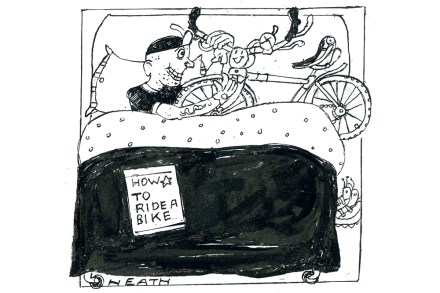
An impossible 45 years ago, I decided the moment had come to get back on my pushbike. I had long hated the way the motor car was taking over the world and wanted to play my part in changing this. I also had a more selfish reason. After two years on the Fleet Street diet of lunchtime excess, I could already see my first heart attack was not far off. I was in my late twenties and getting almost no exercise. I knew of people in the newspaper business who did so little walking that the uppers of their shoes wore out before the soles did. Something had to be done. In those days, bikes had not moved on since my childhood days, pedalling my heavy green Hercules over the Sussex Downs on summer afternoons. The brakes were as feeble, especially in the wet.

The trouble with wild campers

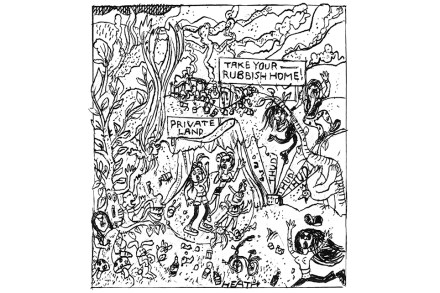
It’s not just bears that squat in the woods, as you’ll discover if you ever have the pleasure of a visit from wild campers. Other disfigurements to the land have included scorched patches of grass, which luckily didn’t become full-blown wildfires, branches severed from trees (presumably for wet firewood), stakes removed from young saplings (ditto), and the inevitable beer can and ‘disposable’ barbecue pyramid. I recently found a lacy, magenta-coloured bodice hanging from a tree, but that may have been left by an even wilder breed of camper.

What skinheads did for reggae

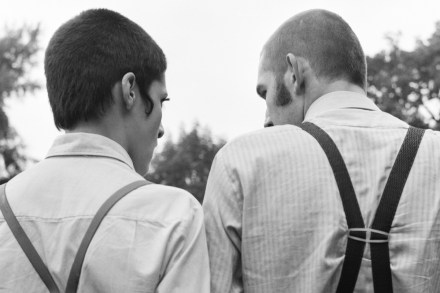
Let’s play a game of word association. I’ll start: ‘skinhead’. Hmm. I think I can guess which words instantly occurred to you: ‘thug’ perhaps, ‘hooligan’ probably and possibly even ‘racist’? Yet for anyone who remembers the original incarnation of skinheads, another word will always spring to mind: ‘reggae’. If you believe that Britain’s love affair with reggae began in the late 1970s with Bob Marley, I’m afraid you’re out by several years and several million record sales. It began in the late 1960s with a happy confluence of Caribbean immigrants, Trojan Records and skinheads.

Flavour of the month: August – rich dogs, secret marriages and the shortest war in history

Our monthly trivia round-up started with July, named after Julius Caesar – now we reach the segment of the year named after the emperor Augustus. It’s the month with the shortest war in history, the theft of the Mona Lisa, and the execution of William Wallace. You won’t believe what happened to his left leg… The Anglo-Zanzibar war takes place. It is commonly cited as the shortest war in history, lasting a mere 38 minutes 2 August 1932 – Birth of Peter O’Toole. The actor often wore two watches. Asked why, he replied that ‘life is too short to risk wasting precious seconds glancing at the wrong wrist’. 3 August 1919 – Birth of Helen Viola Jackson. She would live until December 2020, making her the last surviving widow of an American Civil War veteran.

Martin Amis and the hunters’ lunch

Dordogne, France Down here in southwest France, the ripple effect of the war in Ukraine has become oddly visible. Normally the fields around our house are planted with sunflowers and maize – but not this year. Wheat and barley stretch to the horizon. As you drive around, the roadside fields all bear witness to the marked change. The faltering supply of grain from Ukraine has made French farmers wake up. Grains are the new cash crops and for this summer, at least, the Dordogne will look subtly different. The great summer rite of passage here is the répas des chasseurs â€“ the hunters’ lunch The awful news of the death of Martin Amis in May prompted a rush of memories for me. Extraordinarily, I first met him when I was 17, in Paris, in 1969.

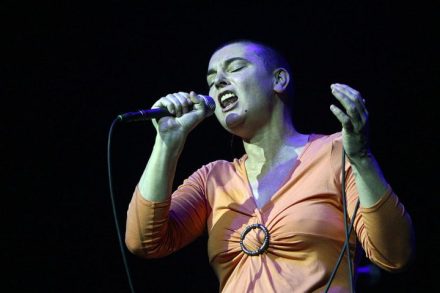
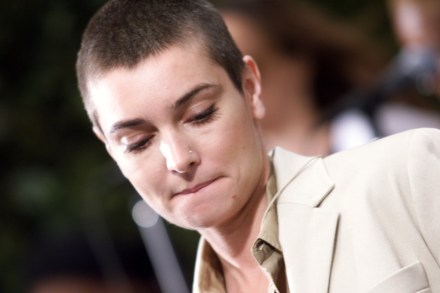
Sinéad O’Connor deserved better than the music industry

It started with That Song on the World Service in the early hours, the one I’ve always loathed; for me it symbolises the start of the state we’re in now whereby perfectly good toe-tappers are routinely strung out in slo-mo by interpreters for whom misery passes as creativity. OK, the Prince original wasn’t exactly a laugh a minute, but it wasn’t anywhere near as dragged out as the Sinéad O’Connor cover. So when I heard that the singer had died at the age of 56, my first thought was, selfishly ‘Oh no – they’ll be playing That Song all day!

My Sinéad O’Connor story

It must have been late 1993. She was at the height of her fame and I was in the earliest days of my journalism career. I was working for a small press agency in Clerkenwell whose stock in trade was day work for newspapers: court cases, press conferences and particularly door knocks and door steps. As a rookie, I did an awful lot of these. With my cover story now established, I went back to bed on that sofa Away from work I was in my twenties in London and had quite the party lifestyle – clubbing every weekend. The club of choice was Subterranea in Ladbroke Grove and I’d go most Saturday nights. But on this occasion, I was the rota reporter on the following Sunday, due in at 9 a.m., so when midnight came around I made moves to go home to bed.

Who needs Hollywood actors anyway?

For the past week Hollywood’s film and television actors have been on strike, plunging Los Angeles’s most famous industry into chaos. Performers joined screenwriters (who have been striking since May) on the picket line after talks broke down in what has become the first simultaneous strike in more than 60 years. The strikes have attracted plenty of headlines, not least when the cast of Oppenheimer walked out of its UK premiere last week. But do we really care if studios have to shelve Fast and Furious 15, or if the latest superhero movie fails to take flight – or indeed if the entire cocaine-encrusted edifice crumbles into the Pacific Ocean?

Can topical comedy survive?

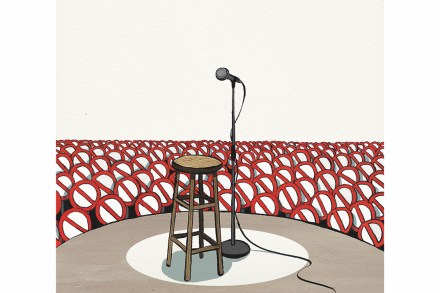
Seen any good stand-up recently? It’s a loaded question, but if you have, there’s every chance you didn’t view it via terrestrial TV. You might instead have laughed at some brash American on Netflix, or a deeply un-PC comic on YouTube – or more likely still, a comedian sitting in the palm of your hand. Over the past 12 months in particular, stand-up clips have been going down a storm on platforms such as TikTok and Instagram. The kind of clips which do well online have come as a surprise to some of the industry’s traditional gatekeepers. In a shock twist, it seems audiences still find stuff about the differences between men and women pretty funny (and we’re talking behavioural differences here, rather than biological or semantic ones).

The politics of sun loungers

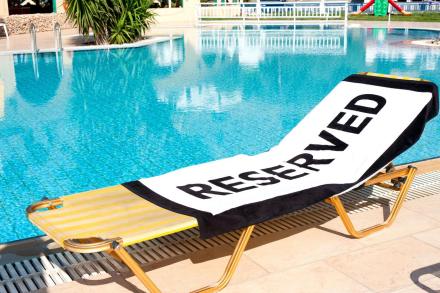
The poolside was deserted when we passed on our way to breakfast. This time, I thought, as we ate at the still-quiet restaurant buffet, we’d triumph. Yet arriving back at the pool after eating, all the sun loungers closest to it had already been claimed – by owners who were nowhere to be seen. Reserving loungers might have been against the hotel’s policy, but removing the towels and beach bags that their claimants had placed on top of them felt like an act of aggression. Instead I sulked silently from my bed near the bins as, an hour later, the family of four who’d taken the plum spot I’d had my eye on for my own family finally sauntered over, ready to spend some time in their premium seats.

I’m a middle-aged male Swiftie (and I don’t care who knows it)

I recently underwent a surgical procedure that according to the surgeon who performed it would cause either no discomfort at all or result in 'exceptional pain' for at least two weeks. No way to tell until I was on the operating table, apparently. She said this matter-of-factly, as if discussing bus routes, just as I was about to receive a general anaesthetic. As soon as I came to, I learned it was the latter. In the following days, bedbound and near-delirious with pain and medication, I listened to hour after hour of Taylor Swift. I didn't want to hear anything else. I found her music, with its vast emotional depth and stunning lyrical dexterity, terrifically soothing.

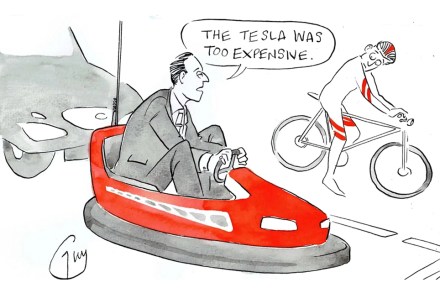
Light bulb moment: the flaw in the petrol car ban

This week, writing in the Daily Mail, Matt Ridley produced a devastating takedown of the government’s 2030 ban on the sale of new conventionally powered cars. He plans to pre-empt the ban himself by buying a brand-new petrol car in 2029. Innovation happens gradually and delivers its benefits unevenly – therefore it is stupid to impose it on everyone all at once  I thought he was right about almost everything, except perhaps that final prediction. He’s right to be sceptical about the environmental benefits of electric cars – especially in countries such as China (and, to a lesser extent, Germany) where electricity is largely generated from the filthier forms of coal.

Confessions of a tanorexic

In an interesting piece for Air Mail, Linda Wells writes of ‘The secret lives of tanorexics’, asking: ‘What drives these bronze obsessives – and why won’t they ever learn?’ She questions her sun-baked friends about why they are so intent on doing a thing which they are warned will ruin their complexions and make it more likely that they get cancer – and doesn’t get a satisfactory answer from any of them. Reading it, I realised that I too am a tanorexic. It kind of creeps up on you over the years, like any other bad habit: one minute you’re having a harmless half-hour in a sun-trap pub garden in Hove and the next your hair’s falling out in Crete, as happened to me when I failed to wear a sun hat in July some years back.

The English have always loved gossip

Our national conversation is overwhelmed by tittle-tattle, rumour and gossip. Last week, a salacious email listing George Osborne’s alleged improprieties was circulated among the Westminster bubble. Inevitably, it was then circulated to everybody else, too. Meanwhile, the internet is aflutter with rumours about the identity of a BBC journalist who’s alleged to have paid a teenager tens of thousands of pounds for sordid pictures – and this isn’t even the first sex scandal involving a broadcaster this year.  Foreign visitors were amazed at this insatiable desire to ridicule the private follies and foibles of high society Some might think our modern obsession with grubby tales shows a lack of seriousness. But a love of gossip is nothing new among the English.

Why modern life doesn’t make us happy

The greatest delusion ever sold to us by modern advertising is not that we need to buy water in bottles or that rocks make good pets. It’s the delusion that we should expect to be happy all the time. This idea certainly would have been news to our ancient ancestors. Over millions of years, they became the dominant hominid on the planet because their brains evolved to be survival machines, not happiness generators. The first peals of laughter around those early campfires were not because everyone was having a good time; laughter evolved as a social bonding signal to communicate to the rest of the tribe: ‘Phew, we’re safe now. Looks like we’ve seen off that saber-toothed tiger.

Starting a Threads account feels like adultery

As I hit the pillow, up popped a notification: ‘Threads’, Meta’s new offering, is available to download. My heart thumped – I’ve been excited about this launch since I first heard of it. As a frustrated influencer, and somebody who couldn’t care less what Mark Zuckerberg or Elon Musk are doing to each other, I don’t care about the politics. I just thought Threads could be just right for me. And social media is all about me, me, me, obviously.  It’s easy to take a photograph of myself. I do it a lot. But Twitter is a different kind of vanity – for people who aren’t necessarily obsessed with images. That’s why I’ve always felt tentative about it. Threads will be better, I say to myself, as the app downloads.  Is this what having a child is like?

How to avoid paying parking tickets

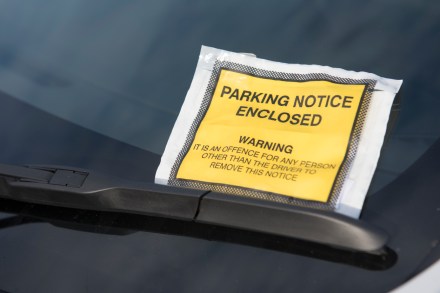
My year of motoring tourism didn’t begin auspiciously. Early on the morning of New Year’s Eve, in downtown Dieppe, I looked out of the window of our rented apartment with its magnificent view of the Église Saint-Jacques, painted by the likes of Pissarro and Sickert, and noticed that our car had disappeared.  What followed over the next three hours was a journey of discovery – of the government offices and gendarmeries of the historic maritime town (on foot, in the rain), by which process I was eventually informed that my car was now residing in a secure pound on an industrial estate some five kilometres out of town.  I tried to get a taxi there. Eventually I found a rank by the harbour with three cabs, but they were driverless. I rang the number on one of them.

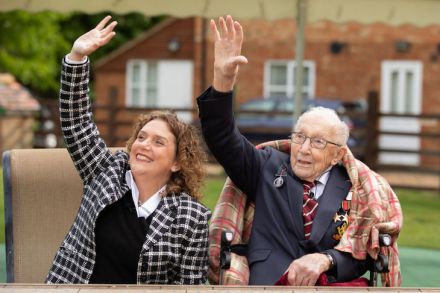
Leave Captain Tom’s daughter alone

Two years after his death, the army veteran and patron saint of the NHS, Captain Tom, is in the headlines again. Hannah Ingram-Moore, his daughter, has come under fire for allegedly using the Captain Tom Foundation's name to build a spa and swimming pool complex at her house.  The story of Captain Tom captured the jumbled imagination of the British public during the pandemic. In April 2020 at the height of the coronavirus fright and lockdown, Captain Tom decided to walk 100 laps of his garden to raise £1,000 for the NHS in honour of his 100th birthday. In under a month, he raised £39 million.  In a time of depressing, repetitive news cycles, Captain Tom was instantly catapulted to the status of national treasure.

Now I’m 64: my tips for a happy old age

On my 20th birthday, I locked myself in the bathroom of my bungalow in­­ Billericay and cried. Having achieved my dream – becoming a published writer – at the tender age of 17, I thought it was all downhill from there. Yes, some of this had to do with marrying the first man I had sex with; the idea that I was only ever meant to do the deed with him alone appalled me beyond words. But there was also a general feeling that my value was in some way intrinsically bound up with my extreme youth. Fast-forward to the day I turned 60, when I woke up in an Art Deco flat with the sea at the bottom of the street, married to a man (third time lucky) who could still make me laugh after a quarter of a century.