Spectator Life

Spectator Life

An intelligent mix of culture, style, travel, food and property, as well as where to go and what to see.

The Daughter of Time was worth the wait

That it has taken its sweet time getting here cannot be denied, but, at last, it has happened. More than 70 years after the novel by Josephine Tey became an overnight sensation in 1951, a stage adaptation of The Daughter of Time has arrived in the West End. Voted the greatest crime novel of all time by the Crime Writers’ Association back in 1990, The Daughter of Time is Tey’s most unusual but brilliant detective story. It’s her most unusual because its sees her Inspector Alan Grant – the central character in five of her detective stories – solving a crime from his hospital bed while recovering from a broken leg.

Make teenage summer jobs compulsory

I’m of an age where a summer’s evening often means a few gin and tonics on my balcony along with cheese, olives and an Etta James soundtrack. But it wasn’t that long ago that the slow descent of the amber orb meant trekking into Chester city centre to catch a minibus that would take me to a shampoo factory on the outskirts of Flint. There, from 9 p.m. until 7 a.m., my job was to screw the tops on to bottles of shampoo and conditioner to a soundtrack of scatological invective from my workmates, broken only by a 2 a.m. canteen break for cigarettes and a semi-melted KitKat.

Gary Shteyngart: Vera, or Faith

35 min listen

Sam Leith is joined for this week's Book Club podcast by Gary Shteyngart — whose new novel Vera, or Faith is set in a near-future America whose politics seems to be less science-fictional by the day. It tells the unexpectedly tender story of a bright but lonely ten-year-old girl contending with her parents' failing marriage and navigating the beginnings of a friendship. Gary tells Sam how parenthood changed him as a writer, how his feelings about his Russian heritage have shifted uncomfortably in light both of the Ukraine invasion and the US's fresh hostility to migrants, and why Writers' Tears is his students' drink of choice.

I’m writing a novel without using AI – and I can prove it

Everyone’s seen stories about the creep of AI into art of all kinds. Recently the people behind the music-fabrication website Suno have been making outrageous statements to the effect that people don't enjoy learning musical instruments and writing their own songs, so why not let AI do it for them? This is very new, very disturbing and very consequential. I could talk about graphic art and video and film-making, but you’ll know what’s been going on there. I’ll just cut to the chase and get to how AI tools are impacting and will continue to impact the writing of fiction.  I anticipate a future in which human authorship will need to be proven. A few years ago I simply wouldn’t have believed that this landscape could be possible.

The subversive genius of Tom Lehrer

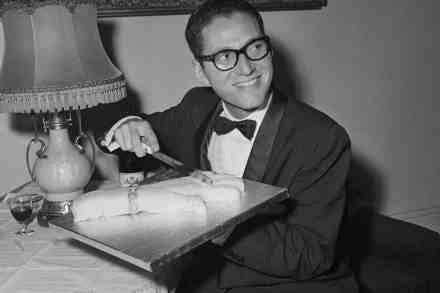
The greatest living American until this week has died at the age of 97. I refer to Tom Lehrer, the finest satirist of the 20th century. He’s the one who observed that satire became obsolete when Henry Kissinger was awarded the Nobel Peace Prize. He was the genius who put the entire periodic table of the elements to the tune of ‘I Am the Very Model of A Modern Major-General’ (Gilbert and Sullivan was his childhood obsession). He was a mathematician who could be as funny about maths and science as about poisoning pigeons in the park (yes he did) or contemporary pieties (‘National Brotherhood Week’).

The ballad of broken Britain

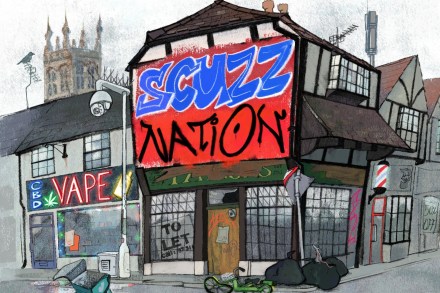
In my corner of Bristol, alongside drug dealers, shoplifters and street drinkers, we now have our very own pyromaniac. They started small – an abandoned office chair, a clothing bank and an old telephone box – before moving on to bigger things. Half a dozen cars have been torched over the past few months, including two on my road, and, most recently, a derelict pub. The other Saturday, hearing a commotion outside, my wife jumped out of bed and flung open the curtains. The scene that greeted us was apocalyptic. In daylight, on a narrow suburban street, the arsonist had set fire to three motorbikes parked in a row, which in turn had set alight a car and a hedge. It was pandemonium.

Forget Oasis – we should celebrate Pulp’s legacy

It begins with an electric swish sound that makes you feel like you are falling backwards, followed by an arresting synthesiser da-da-dum drumbeat. Then we get the voice, in double-time: ‘She came from Greece, she had a thirst for knowledge. She studied sculpture at St Martin’s College…’ With those words, singer Jarvis Cocker and his fellow members of Pulp caught the attention of a nation. And chances are, three decades on from the release of ‘Common People’, this musical intro will still send a tingle down your spine, particularly if you’re aged anywhere between 40 and 70.

London is due a lido renaissance

There are 1,000 spaces available for the 6-9 a.m. lane swimming session at Tooting Bec Lido in south London. On Sunday it was fully booked. After a few frantic lengths (at 91m, it is Europe’s longest), we are all shooed out at 8.50 a.m. by the lifeguards to make way for the daytime swimmers. Those slots are like gold dust and sell out within minutes of becoming available. Across London it’s the same story: swimming spaces are a precious commodity. After three heatwaves so far this summer and the warmest June on record for England, it’s easy to see why so many people are craving access to outdoor water. In total, the capital has just 15 lidos (if one includes a couple of ponds). Even the Serpentine is fully booked on good days.

The BBC’s mistreatment of the Proms

The Proms – the BBC Proms, to stick a handle on its jug – remains a good deed in a naughty world. Eight weeks of orchestral music, mainly, performed nightly at the Royal Albert Hall by artists from every continent, for as little as £8 if you are prepared to stand. One of those artists, the Georgian fiddler Lisa Batiashvili, supplied the highlight of this year’s ‘first night’ with a mighty performance of the Sibelius concerto. The concert ended with Sancta Civitas, a rarely heard choral work by Ralph Vaughan Williams, performed with love by the BBC Symphony Orchestra under its principal conductor, Sakari Oramo. Musically, it was a good start, despite the tiresome clapping between movements of the Sibelius. So why did the occasion, carried live on BBC2, fall flat?

Will AI kill off Captchas?

It was a line on Poker Face (the excellent US detective drama currently streaming on Now TV) that piqued my interest. Hunched over a laptop, Natasha Lyonne’s heroine, Charlie Cale, claimed to be working as a ‘Captcha technician’ – someone who solves those fiddly, occasionally infuriating internet puzzles for money. You know – the ones that ask you to ‘Select all the squares with traffic lights’, ‘Select all the squares with bridges’ or simply tick a box to say you’re human before you can log into a website. Given the series has satirised everything from New York City rent controls to multi-level marketing schemes, I originally assumed it must be a joke.

The thrill of tracking parcels

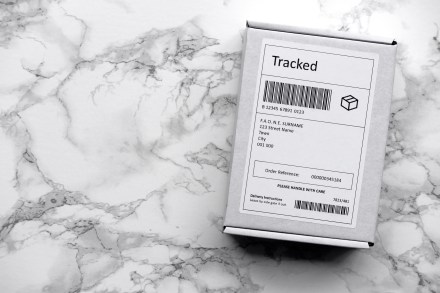
Ordering things online can be a lottery. You can’t touch, smell or taste the product you’re buying, so it’s hard to know whether you’ll actually want it when it arrives. But we keep clicking anyway because it’s more convenient than trudging to the shops and things are often cheaper. For me, another reason to order online is the dash of childlike joy it brings to my to life when I click ‘buy’ and instantly set up a future treat. In fact, it’s even better than childhood because now I can have a parcel to open any day I want, not just on birthdays and Christmas. But most of all, I shop online because I love tracking my parcel. Anytime I like, I can check in and see where my purchase is in the delivery process.

Don’t call me ‘Mr’

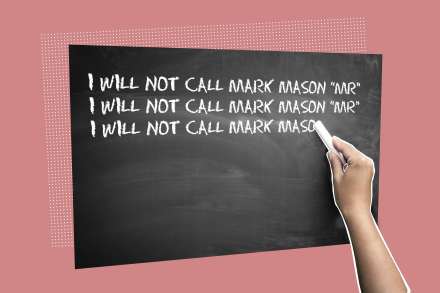
‘Please call me Mark,’ I’ve always said to the teachers at my son’s school. ‘If you call me “Mr Mason” it makes me feel 85 – and if I call you “Mrs Smith” it makes me feel seven.’ I know their first names, and always use them, in emails, phone calls and in person. A few return the compliment, but most keep it formal. It feels wrong, putting distance between us when we’re having a conversation, often an in-depth and important one, about my only child. The best teachers and staff have taught me fascinating things about how to deal with Barney. I’ve only been a parent once; they’ve encountered thousands of kids. It was the same at his primary school, starting with Sonja, when I was a volunteer helping with the class’s reading.

Now it’s getting late: on Neil Young, ageing and fatherhood

Neil Young once saved my life. Or at least, that’s how I remember it.  This was at an outdoor show in Finsbury Park in July 1993. I had pushed and squeezed my way almost to the front of a large crowd shortly after being passed something of dubious provenance to smoke. One moment everything was perfect: he was playing that romantic late career hit, ‘Harvest Moon’, the sun was setting, the moon, conveniently, rising, and I was swaying along, rapturous. But then, suddenly – bang… I fainted.  This is the only time in my 45-year gig-going career that this has happened. But I was gone. I was briefly unconscious, then I came to lying on my back on the grass, looking up at dozens of legs all around and above me, almost on top of me.

Trump’s right, there’s power in positive non-thinking

Though I’m no fan of Donald Trump, time and again I’m delighted by the alternately crazy and sane things he says, and the way he knows the difference; he’s the antithesis of our politicians, who say crazy things they sincerely believe are sane. This week he spoke to the BBC’s Gary O’Donoghue, who asked him about the Pennsylvania assassination attempt. As the BBC reported: When asked if the assassination attempt had changed him, the president conveyed a hint of vulnerability as he said he tries to think about it as little as he can. ‘I don't like dwelling on it because if I did, it would be, you know, might be life-changing, I don't want it to have to be that.’ Elaborating, he said he liked ‘the power of positive thinking, or the power of positive non-thinking’.

Captain Britain was an embarrassing superhero

The news that the latest Superman picture has been an enormous hit in the United States, but has been received rather more tepidly here, has been taken in many quarters to mean that there is an anti-American mood at large. Maybe this is dictated by America’s choice of president and administration, which means other countries are no longer as enamoured of that quintessentially all-American superhero. Alternatively, it could of course mean, as this magazine’s critic Deborah Ross has suggested, that the film simply isn’t very good and that we should all stick to the 1978 Christopher Reeve picture instead.

Who does Stewart Lee think he is?

Is Stewart Lee a comedy genius or just another smug leftie comic? The country’s 41st-best stand-up, as he likes to remind us in reference to a Channel 4 poll, has built up so many protective layers that he is almost beyond criticism – which I imagine suits him just fine. As if to prove the point, he’s posted dozens of negative reviews on his website, presumably to get one over on his more unenlightened critics: ‘See, not even your wrongheaded opinions affect me.’ He’s even included a quote from our own James Delingpole, writing in the Daily Telegraph, who describes Lee as ‘not funny and has nothing to say’. So who the hell does Stewart Lee think he is and what’s he going on about?

Are we the new hillbillies?

Have you ever heard of Duddies’ Branch? Chances are, you haven’t – because, firstly, its brief moment of fame came many years ago and, secondly, Duddies’ Branch does not actually exist. To explain: ‘Duddies’ Branch’ is the politely fake name given by an American anthropologist, Rena Gazaway, to a real and isolated settlement in a hollow of the Appalachian mountains (almost certainly in Kentucky). Herself born into ‘hillbilly’ culture, Gazaway spent many months of the 1960s living with the people of Duddies’ Branch. She later published her findings in a shocking 1969 book called The Longest Mile. What Gazaway encountered in that lost wooded ‘holler’ reads like dystopian fiction, even at a distance of decades. Most of the residents were functionally illiterate.

The brilliant, brave sister I never knew I had

My own episode of Long Lost Family doesn’t involve a hug from Davina McCall or a visit from Nicky Campbell, armed with a box of tissues and the kind of tight smile that tells you that you’re about to cry your eyes out. It begins with an unexpected call from my brother who lives in the United States. Had I got a minute? Perhaps I should sit down… We have a sister living in Matlock in Derbyshire, he said. She was born in August 1976 – making her a year and half my junior – and had come to light through the wonders of a genetic match on the family history website Ancestry.com, which my brother had put his DNA on. Was I surprised? Not massively.

Why shouldn’t we call children ‘naughty’?

As we approach the final countdown to the school summer holidays and I am faced with the prospect of lots more quality time with my almost-five-year-old, and absolutely no idea what I will fill the days with, it seems a good moment to evaluate my style of parenting and seek out some advice to help the family get through the summer with our sanities intact.  These days, there is a whole animal kingdom of parenting styles to choose from: could I be an elephant mother? A panda, a jellyfish? Or the better-known tiger mum – usually associated with parents pushing their children towards over-achievement.

What’s wrong with taking selfies in galleries?

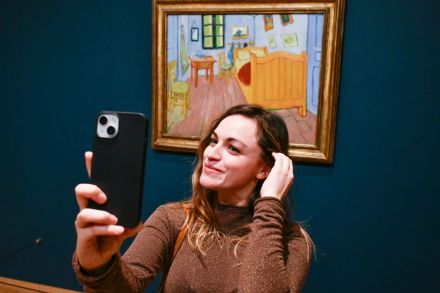
There is nothing more glorious than an art gallery selfie. In the same way that hearing someone mispronounce Van Gogh lets you know you’re dealing with an autodidact (the best!), so a gallery selfie suggests someone who doesn’t quite belong in that space: someone who is ignorant of the etiquette of the art world and who is enjoying themselves because of, not despite, that. Complaining about taking selfies in galleries is so obviously a class thing (not to mention an age thing). Which is why it’s so charming to see Tate Britain’s director Alex Farquharson (whose name does not make him sound like a class warrior) enthuse about encouraging visitors to take ‘Instagrammable pictures’ of the gallery’s work in an effort to entice tourists in.

Why are so many English people pretending to be Irish?

The Irish problem has existed for centuries, though the nature of that problem is not always easy to define. It used to be political, though relations between English and Irish people on a personal level have usually been harmonious. There are still political problems, because identity – the question of to whom we owe our loyalty – shapes lives and creates communities. But now there is a different problem, and it’s one-sided. Many English people are suddenly keen to present an ersatz Irishness to the world, as a form of civic virtue, to the point of claiming citizenship. Some claim to feel ‘European’, in a vague way. Others feel that being green offers the swiftest route to an ill-defined ‘romanticism’. Ah yes, it’s that old favourite, the Celtic twilight!

A memoir doesn’t always have to be true

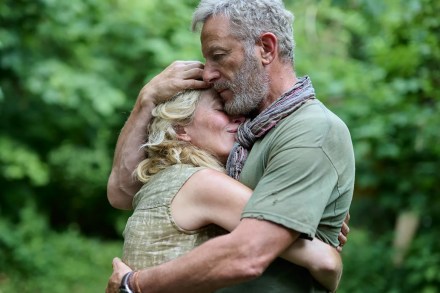
The news that Raynor Winn’s bestselling memoir The Salt Path may not have been the whole truth has been met with a mixture of outrage, hilarity and ‘I told you so’. Many readers have smugly informed the world that Winn’s journey along the Salt Path with her husband Moth (Moth!) was so obviously a work of fiction that they saw through it months before anyone else. The fact that they have waited until now to make their dissent public suggests they, like so many others, may have been wise well after the fact. Personally, I watched the news unfold with more than usual interest, because it took me back to my own dabblings with memoir.

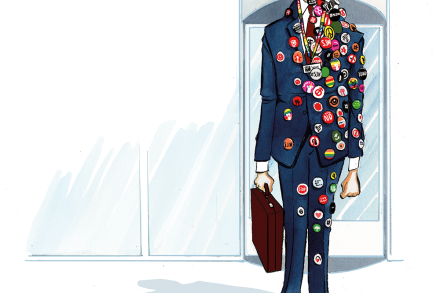
Meet the Stepford Employees

In my first ‘proper’ job after university, selling advertising space for a well-known motoring magazine in the early 1990s, one of the few things that alleviated the utter tedium was the banter. Some of the quickfire repartee was ingenious. We were nearly all graduates, intelligent and articulate. Someone would occasionally overstep the mark, but we were civilised people and so self-regulating. We knew what was acceptable and what wasn’t. But for the most part, anything went. We didn’t need an HR function, because, in those days, were weren’t ‘resources’, so we didn’t need someone to police our behaviour. Lunch was often liquid, nearly everyone smoked in the office, and on Friday evenings, we’d head straight to the pub and get wrecked.

Why we wanted to believe The Salt Path

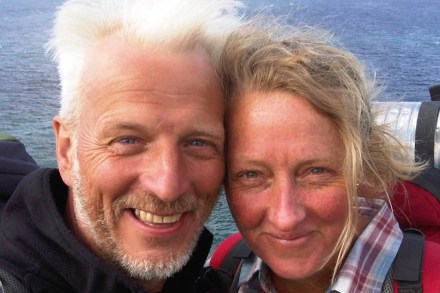
Like millions of others, I thoroughly enjoyed reading The Salt Path, an account of how a penniless and homeless middle-aged couple found their souls by walking the entire length of the rugged 630-mile South West Coastal Path around the Cornish peninsula. I also enjoyed watching the recent film of the book starring Gillian Anderson and Jason Isaacs, as we all like feel-good stories about plucky people battling against the odds and winning.

Why celebs hate their fans

I can’t say I was gobsmacked to read that Miley Cyrus and Naomi Campbell seemed more interested in each other’s company than in their fans when they held a ‘meet and greet’ in London to sign copies of their new single. Some fans complained, accusing Cyrus of ignoring them in favour of chatting with Campbell. Somewhat stung, Cyrus posted nine videos on social media of herself and Campbell pressing the flesh with the little people: ‘To everyone who came out to celebrate our single, we love you.’ Hmm. We’ve been here before. Celebrities promoting their product can be snooty enough when interviewed one-on-one, but put two of them together in front of a ‘civilian’ (as Liz Hurley memorably put it) and you really see how showbiz kids feel about those outside their tribe.

What happened to comic con?

As a child, superhero comics felt like a guilty secret – their devotees part of a secret society who found refuge in the musty, cardboard-scented havens of comics conventions. Back then, girls were absent, dressing up was unheard of, and even children weren’t especially welcome. So when a gang of teenage girls not only turned up to Avengers: Endgame but openly wept at Iron Man’s death, I felt something close to vindication – and perhaps a twinge of envy for today’s young fans, who can indulge their obsessions out in the open. Those same musty rooms of old cardboard and grown men was what I was anticipating when I booked my ticket to the self-styled ‘Brighton Comic Con’ at the Amex Stadium last month.

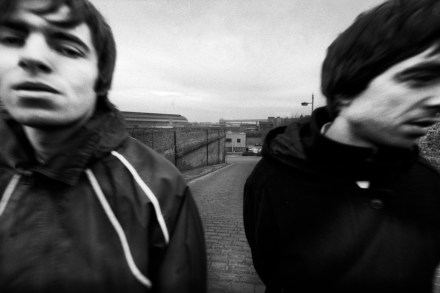
Oasis nostalgia is a form of mass delusion

Rolling Stone magazine once quipped that grunge was what happened when the children of divorce got guitars in their hands. If you take this theory and tweak it, then one can reasonably conclude that Oasis is what happens when children who grow up in a house devoid of books decide to form a band. The bilge that’s been written about Britpop and the wallowing in 1990s nostalgia since the Gallagher brothers announced their reunion tour last year (it kicks off in Cardiff this Friday) is approaching fever pitch. Tatler even has one of Liam’s children on its cover. You may have gleaned by now that I am not a fan.

Why we still lust after gold

On Tuesday, as the world teetered on the brink of war in the Middle East, the Financial Times’ front page focused on the possibility that holders of gold from France and Germany were considering moving their investments out of New York due to Donald Trump’s erratic policy shifts and general global turbulence. We are regularly told that the only safe way to preserve and save our wealth in the event of a total financial and economic collapse is to buy gold. Gold has long been the basis of national currencies, and even in the age of bitcoin it retains its age-old attraction, summed up in the phrases ‘gold standard’ or ‘gilt-edged’.

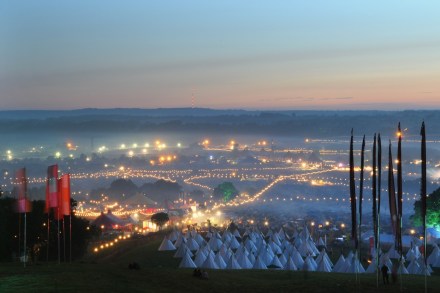
No, I’m not going to bloody Glasto

‘Are you going to Glasto?’ Just the name – in that smug, shortened form – is enough to set my left eyelid twitching, the way it does when I read emails from people who still include pronouns in their signature. ‘Glasto’, trailing the self-satisfied whiff of BBC executives high-tailing it from Hampstead on a taxpayer-funded jolly, of hedgies glamping in a five-grand-a-night yurt and the sort of inherited wealth that means you crash in a mate’s eight-bedroom Old Rectory within the free ticket zone, rather than camping cheek-by-unwashed-jowl with the masses. No, I am not going to Glastonbury. The last time I went – and I can tell you the exact year, because I found the programme while going through some boxes in the attic – was 2004.