Spectator Life

Spectator Life

An intelligent mix of culture, style, travel, food and property, as well as where to go and what to see.

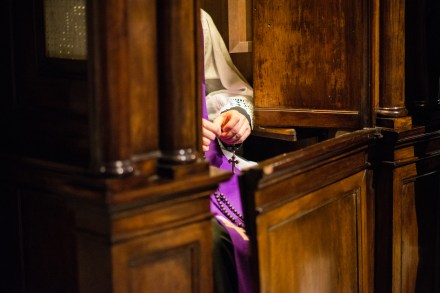
Forgive me father, for I have sworn

Perhaps it’s a sort of Original Guilt – Original Sin’s bastard offspring – that Catholics are born indoctrinated with a sense of the awesome sanctity of church, presumably predicated on the Real Presence. So for us there’s something viscerally shocking when it’s not observed. And yet... I remember being about seven, going to Mass one Sunday, and my father struggling not to laugh as a frightfully well-spoken old Jesuit tried to remove the tramp slumped in the porch with the words: ‘Will you please just fuck off?’ I knew that was really naughty language because a girl had recently been asked to leave my convent prep for deploying the word one break time.
The tyranny of mobility scooters

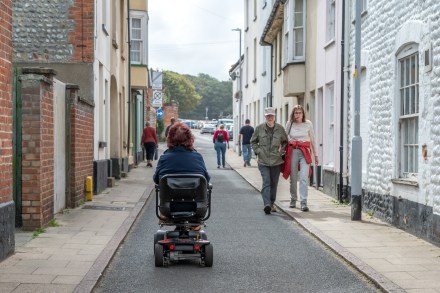
I live in a small cathedral city in southern England. The chances of having my mobile phone snatched from my hand by an opportunistic thief, or my Rolex watch wrenched from my wrist by a brutish thug are still mercifully small. But another menace to life and limb has recently emerged here: the mobility vehicle mob. It is almost 47 years since the first modern mobility vehicle was delivered to a customer in July 1978. In the past half-century, they have become a now ubiquitous nuisance on our streets and pavements. Originally intended to aid those genuinely unable to walk, such as the elderly or physically handicapped, mobility vehicles have become merely an easy means of transport for the lazy and terminally indolent.

Suburbanites vs the countryside

‘Same old boring Sunday morning, old men out, washing their cars.’ So begins the punk anthem ‘The Sound of the Suburbs’ by the Members. There are plenty of cars being washed (and waxed) on my road on any Sunday morning and the strimmers are buzzing, despite this being peak breeding season for insects. But here’s the thing. We live in deepest north Norfolk, not the achingly suburban Surrey town of Camberley that so provoked punk angst. When we bolted from south London after the lockdowns, our checklist included no streetlights, motorways (the nearest is 98 miles away), new-builds or nearby neighbours. To secure the rambling farmhouse we wanted, we had to compromise on the last of these. But we were moving to the English equivalent of la France profonde.

Bluesky is dying

In the middle of Cairo there’s a place called the City of the Dead. It is a dusty sprawl of mausoleums, sepulchres and crumbling Mameluke tombs, that has housed the corpses of the city for over a thousand years. On a dank winter’s dusk, it feels especially lifeless – deformed dogs vanish into shadows, random fires burn vile rubbish. But that’s when you notice children’s toys. Cheap clothes drying outside a tomb. And you realise, with a shudder: my God, some poor people live here. That, roughly, is the vibe on Bluesky today. Ironically, Bluesky is now much nastier than Twitter In case you’ve forgotten, Bluesky is the social media platform once seen as the great Twitter replacement.

I’m pseudy and proud

What does it mean to be a ‘pseud’? I hadn’t thought a great deal about it, until a passage from a piece I’d written about semicolons made it into Private Eye’s venerable Pseuds Corner. It appears just after a conversation between two AIs, and above a breathless quote from Meghan Markle (for it is she). Members of the public submit what they consider to be ‘pseudy’, and everyone laughs. I’ve always enjoyed it, and I was so delighted to be featured (I mean, Will Self’s been in there!) that the column is on its way to the framers as we speak. To share some pages with Craig Brown, whose satirical bite in his diary is so excellent at exposing the emptiness of contemporary culture, is heavenly. But should it have been in there?

The death of celebrity gossip

When I was in hospital for almost half a year, learning how to face life as a ‘Halfling’ – a person in a wheelchair, patronised and petted – the thing I looked forward to most was a normal, some would say banal, event. I longed to be in my local Pizza Express, in Hove, reading Heat magazine to my husband as he ‘savoured’ his American Hot. To put it mildly, I am a far faster eater than Mr Raven, and rather than chatter to him and expect an answer, thus hindering his progress still further, I read to him. To add to the fun, I framed the problems of the Beckhams or the Sussexes as those of people we actually know, doing the appropriate voices, which rendered it delightfully bitchy.

The blossoming career of Cedric Morris

In the winner-takes-all world of modern art, there’s every chance you might not have heard of Cedric Morris. Why should you? No matter how much you sweeten the tea, the Welshman, born in 1889, was no Pablo Picasso, Mark Rothko or Salvador Dali. Nor from our 21st-century outlook can it be said that the name itself inspires much confidence: ‘Cedric’ sounds about as on-trend as a character from a short story by Saki, and when paired with Morris, the combination offers up all the avant-garde promise of a baked camembert starter at an Aberdeen Angus steakhouse.

Lunches, kidnappings and coups: my Frederick Forsyth connection

Back in 2007, I went to war-ravaged Guinea-Bissau in west Africa to report on its rise as the continent's first narco-state. Latino cartels were using it as a staging post for shipping cocaine to Europe, bribing its rulers to turn a blind eye. So much product was being landed that local fishermen would catch stray bales of coke in their nets – a modern twist on Compton Mackenzie’s novel Whisky Galore. Guinea-Bissau’s new drug lords would go on to inspire a novel of their own. Back home on the Telegraph foreign desk in London a few months later, I got a call from no less a figure than Frederick Forsyth. His next novel, he told me, was going to be about the cocaine trade, set in coup-ridden west Africa: Narcos meets The Dogs of War.

The deadly curse of influencers

What’s the most hazardous occupation? Deep sea fisherman? Uranium miner? Tail-end Charlie in a Lancaster bomber (not a career currently available)? I challenge anyone to find a speedier way to meet one’s end than becoming an influencer. The sad death of 28-year-old University of Salford student Maria Eftimova, who tumbled off Tryfan, a 1,000ft mountain in Snowdonia during a hike organised on Facebook, is one of those all-too-regular headlines: an influencer who meets their end in their twenties, leaving tens of thousands of followers distraught. Policymakers fret over children falling under bad influences online – we have had an entire Online Safety Act to try to address the problem.

The pretentiousness of the pop critics

Pop music criticism, said Frank Zappa, was the work of people who can’t write, about people who can’t talk, for people who can’t read. Half a century later and he’s still right. Although pop is essentially a juvenile art form – its clearest strength and most obvious weakness – that doesn’t stop reviewers pumping up performers as though Johann Sebastian Bach had decided to form an all-star band with Beethoven and Brahms. The Three Bs! Sign ’em up! The current pop reviewers for the Times and the Telegraph, Will Hodgkinson and Neil McCormick, clearly think they bear witness to giants. Like Pinky and Perky, these mature teenagers can trill ‘we belong together’, batting balls over the net in a contest of perfumed superlatives.

Farewell to Frederick Forsyth, the master of the thriller

If Frederick Forsyth had not existed, you would have had to invent him. Yet no novelist could have come up with as convivial, swashbuckling and lively a character as the thriller writer, who has died at the age of 86. Many of his millions of admirers thought him almost immortal, and over the course of a half-century career – which began in earnest with the publication of The Day of the Jackal in 1971 and seldom slackened thereafter – Forsyth produced a series of bestsellers that sold tens of millions of copies in dozens of languages. After briefly serving as an RAF pilot, he went to work at Reuters and then as a BBC correspondent, where one of his assignments was to cover the attempted assassination of Charles de Gaulle in August 1962.

Children’s TV was better in the 1970s

One advantage to being born in the 1970s was the sheer abundance of good kids’ TV on offer. This was the golden age between clunky black and white offerings like Muffin the Mule, and the creeping vapidity of later shows like Teletubbies or The Care Bears. It gave us Camberwick Green, The Magic Roundabout, Captain Pugwash, Mister Benn (and the Mister Men), The Clangers, Playaway, Hector’s House, Fingerbobs, Tiswas, The Muppet Show, Ivor the Engine, and Basil Brush – not forgetting the holy trinity of Mary, Mungo and Midge. Did we hit the jackpot, or what? As my daughter, aged 11, prepares to leave her own childhood, I’ve been rewatching a few of them.

Glastonbury has become a very posh problem

I’m afraid that when I read that the posh glamping provider for wealthy Glastonbury fans was going into liquidation, I smirked. The company offered yurts that only look luxurious if you compare them with tents – with a beds, a sofa, a loo and a shower, as well as meals. Pretty basic, biatch. The only exclusive thing about it is that guests can access the hospitality area behind the Pyramid tent, like ageing groupies. The company organising the liquidation sent emails to clients who had already paid for this year’s Glastonbury to say that no tickets had been bought so, oops, sorry. Wealthy customers complained vociferously to the media. One woman said that her father had paid £40,000 this year for three yurts and six hospitality tickets.

Midwit machines are destroying thinking

First, a confession. Sometimes I go on a super-geeky site for dedicated weather watchers. It’s probably because I am quite manic depressive – and British – and definitely because I adore warmth and despise dank. That means I can be tipped into doom by anti-cyclonic gloom or lifted into ecstasy by a decent heatwave. Whatever the precise cause, this mild obsession has made me a long-term member of that weather forum, where we natter about polar vortices and the ‘Beast from the East’ like meteorological trainspotters. Over the years I’ve got to know the other forum members pretty well, despite never having met them; we banter and bicker and sometimes discuss biscuits. It’s like a kind of low-key pub with extra charts from Meteosat.

What could be better than an English county show?

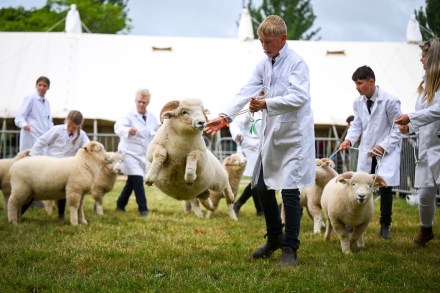
A smartly dressed, bowler-hatted man and a lady in a fascinator – both of whom would hardly look out of place at Royal Ascot – stride into the pigsty with clipboards, while a white-coated man (looking a little too much like a butcher) seeks the views of a small crowd of adults and children on the qualities of four physically impressive swine. This is the delightful eccentricity of the English county show – part agricultural competition, part funfair, part entertainment, part craft fair, part trade show, part society occasion, and part food and drink extravaganza – that provides an unrivalled insight into the complexity of modern Britain’s rural economy and culture.

The shoplifters are winning

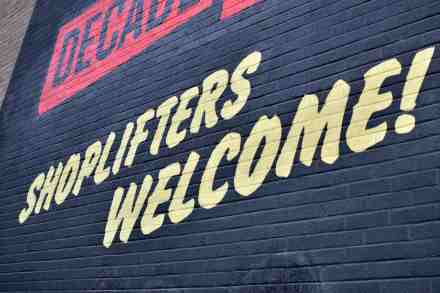
It was when I saw an entire crate of orange juice exit my local supermarket that I knew something had died. The Artful Dodger school of shoplifting has officially been boarded up, its artisan poachers and pilferers as redundant to the modern world of thieving as swag bags, eye masks and soft sole shoes.  There’s no longer any attempt at discretion or skill when it comes to shoplifting in my nearest Co-op in south London. The thieves don’t enter in trench coats and furtively peruse the aisles. They stroll in, take as much as they can carry and walk out again, knowing that the worst punishment they face is being given some scatological invective from the five-foot-nothing woman of venerable age who is usually locked inside her till cubicle.

Inside London’s transport time warp

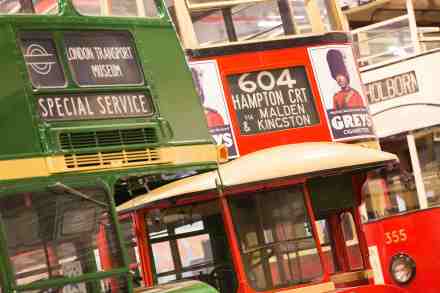
The illustration shows a smiling couple on a yacht, the wind ruffling their hair and the coastline receding into the distance behind them. Above it are the words: ‘Work out of London – get more out of life.’ Something from the post-Covid work-from-home era, perhaps, or Boris Johnson’s 2019 ‘levelling up’ election campaign? No – this is the work of ‘The Location of Offices Bureau’, set up by the Tory government in 1963 and abolished by Margaret Thatcher. The advert appears on the wall of a decommissioned Tube carriage that’s one of many frozen in time in a warehouse in west London. In the latest issue of The Spectator, Richard Morris writes that museums often have a ‘wealth of treasures… hidden away in storage’ and argues that more should open their vaults.

Welcome to the golden age of conspiracy theories

There’s never been a better time to be a conspiracy theorist: government funded plans to dim the sun; a pop star embarking on a questionable space flight; supermarkets stripped bare after Spain and Portugal were plunged into a catastrophic blackout; Robot policemen on the streets of China; the US admitting to the existence of UFOs.  Like a lot of people my age, my gateway drug to the murky world of cover-ups was The X Files. For an hour each week, my young mind was exposed to alien abductions, secret societies, cannibal cults and paranormal phenomena. And my interest in the other worldly – and the people who wholeheartedly believe that humanity is being misled en masse – has never abated.

The glorious elitism of Glyndebourne

There is nowhere in May more beautiful than England with the hawthorn out, the clear light and a thousand shades of green. And there is nowhere more beautiful in England than Glyndebourne, the Sussex opera house between the Downs and the coast. Every visit to the ancestral pile of the Christie family brings joy and we lucky folk who caught the new production of Parsifal were granted double rations. Wagner’s final music drama is a first for Glyndebourne and completes a triptych of the Master’s late work, following productions of Tristan und Isolde and Die Meistersinger von Nürnberg. As Larkin wrote of Sidney Bechet: ‘Oh play that thing!

Are rivers really people?

No man treads in the same river twice, wrote Heraclitus in the fifth century BC. No doubt that clever old bird was on to something, but nowadays it seems that we need to be careful about treading in rivers at all. It was reported last week that the River Loddon in Hampshire has been granted legal personhood by a local council, inspired by a document known as the Universal Declaration of the Rights of Rivers. The UDRR, created in 2017, was created by an organisation called the Earth Law Centre, and makes some pretty sweeping claims on behalf of our fluvial comrades, including the ‘right to flow’, the ‘right to feed and be fed by sustainable aquifers’, and ‘the right to regeneration and restoration’.

My friend the people smuggler

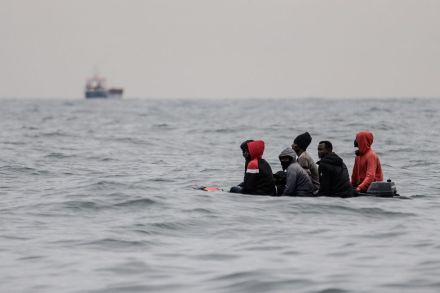
Usually when I start listening to a true-life podcast, I don’t know how it ends. That’s not the case with The Smuggler, BBC Radio 4’s new investigation into people smuggling. Across ten episodes, its Orwell Prize-winning presenter, Annabel Deas, tells the story of ‘Nick’, on the face of it an unlikely protagonist. Nick is white, English and a former soldier in the British Army. He’s also a friend of mine. We met in jail in 2021 and have stayed in contact ever since. So I know Nick’s story. I even know how it ends. Despite all this, I found myself absolutely gripped by The Smuggler. This is partly because it’s such a fascinating, and timely, topic. Migration is rarely out of the news. Keir Starmer keeps promising to ‘smash the gangs’ and ‘stop the boats’.

Why we need Virgin Megastores

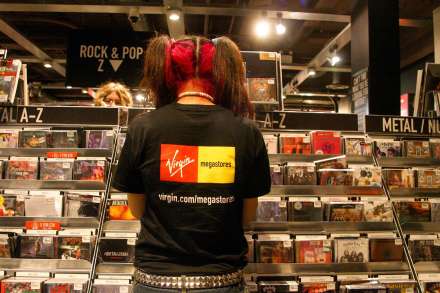
They were a stalwart of Britain’s towns and cities from the 1970s until their disappearance in 2007 – and now Virgin is set to bring its Megastores back to the high street. According to the Times, the Virgin Group has in mind at least one central London site as a possible location for a new Megastore. Its chief executive, Josh Bayliss, said he wants to return the ‘human connection’ to the Virgin brand. Quite right. We should applaud this news, not just on nostalgic grounds – but for financial, aesthetic and communitarian ones too. Like so many once-familiar high street names, Virgin Megastores may have succumbed to supermarket competition and the online shopping revolution, but that revolution has not only impoverished our towns, it has impoverished us as human beings.

Britain has lost the plot over Peppa Pig

We’ve been through a lot as a nation over the past few years. Watching politicians debate scotch eggs, finding out (without wanting to) how Prince Harry lost his virginity, Just Stop Oil’s tomato soup tantrums… so sometimes an event arises that makes you ask yourself: has this all taken a larger toll than we realised on our collective psyche? Are we, in fact, having some kind of national nervous breakdown?  The answer would appear to be a big, fat, pig-shaped yes, given the ‘breaking news’ announcement on ITV’s Good Morning Britain this week that Peppa Pig matriarch Mummy Pig had given birth to her third piglet, Evie. https://twitter.

The peculiar tale of the ‘internet babies’

They already had four children, four cats, four dogs, a number of horses and a pet pig called Philip. But for Alan and Judith Kilshaw, this wasn’t enough. When IVF failed, they decided to try to adopt another child. What happened next would lead to them being pursued by the FBI, as well as a media frenzy, a fraught transcontinental legal dispute and international notoriety. In the spring of 2000, they were simply an eccentric couple living in obscurity in a ramshackle farmhouse with their children and menagerie in the small town of Buckley, north Wales. Unable to conceive again, even with medical assistance, the Kilshaws began looking into the possibility of adoption – only to discover that they were unlikely ever to meet with any success in the UK.

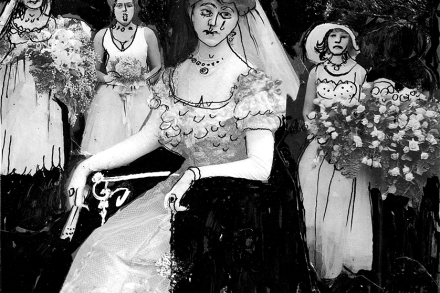
The brutality of being a bridesmaid

There stands the bride. Perfect hair, perfect nails, perfect fake tan. She may not have slept the previous night or eaten for six months but, still, she’s beaming. And there behind her stand the bridesmaids. All 95 of them. ‘My sister-in-law asked how much weight I could drop because the dresses only went up to a size 12’ When Kathryn McGowan got married in County Down this month, she couldn’t decide which of her pals should have the honour of holding her train and checking she didn’t have lipstick on her teeth. ‘It was quite stressful,’ she said of the dilemma, ‘and then one day the idea came to me.’ Instead of having the average number of bridesmaids (in the UK, this is three to five), she’d have 95 of them, aged between six and 40.

Low Life: The Spectator columns of Jeremy Clarke

28 min listen

To mark the second anniversary of the death of Jeremy Clarke – one of the Spectator’s most loved writers – we’ve compiled some of his Low Life columns, as read by Jeremy in 2016, for this special episode of Spectator Out Loud. Included in this compilation are: New Man (00:42); Virgin (5:16); Debauchery Competition (9:32); Buddhism (14:12); The Beach (18:58); and, Memory (23:40). Read by Jeremy Clarke, with an introduction from William Moore.  Produced by Patrick Gibbons.

The curious case of Bella May Culley

I was belatedly baptised last week in the Church of England, and though Christians are enjoined to show compassion to sinners and forgive them their trespasses, my eyes do not fill with tears at the plight of 18-year-old Bella May Culley from Middlesbrough. Bella currently finds herself in Prison No. 5 in the Georgian capital, Tbilisi after she was accused of smuggling drugs into the country. The prison is described in British media reports as decaying and dangerous, but which, from the pictures, looks tough, austere and simply furnished – no worse than one might expect of correctional facilities in the Caucasian republic.

The semicolon had its moment; that moment is over

Rend your cheeks and rub ashes into your hair; for that most elegant, elusive of punctuation marks – the semicolon – is, if not yet quite dead, at least fairly close to being on first name terms with St Peter. Research from Babbel, a ‘learning platform’, shows that usage of the semicolon in texts has plunged by 47 per cent over the past two decades. I would be more surprised if the Pope turned out to be Catholic. These days, students struggle with commas and apostrophes. How can the poor milquetoasts be expected to grasp the finer usages of semicolons? This is all a terrible shame. Good punctuation is a balm for the soul. As punctuation (or ‘pointing’, as it used to be called) orders sentences, so this relates to the order of mind, body and the universe itself.

Why is the BBC obsessed with rap?

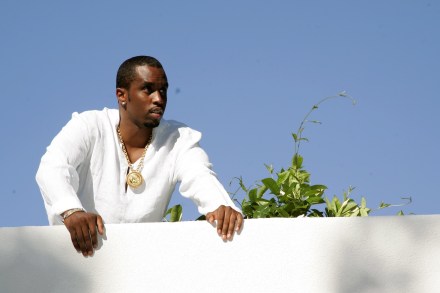
Two of the top ten stories on the BBC news feed yesterday concerned the travails of leading rap and hip hop stars in different kinds of trouble in the United States. In one case, the 55-year-old rap singer Sean ‘Diddy’ Combs – one of the biggest names in the business – is on trial in New York facing charges of assault and sex trafficking, which he denies. The trial is only the latest in a long line of legal actions Combs has faced over the years, in which he’s been accused of offences of sexual violence. In the second case, a 32-year-old hip hop star called Tory Lanez was rushed to hospital in California from a prison near Los Angeles after being stabbed 14 times by a fellow inmate.