Sam Dumitriu

Sam Dumitriu is Head of Policy at Britain Remade.

Why are women so anti-nuclear?

From our UK edition

When I was a teenager, I became mildly obsessed with The Darwin Awards. The Darwin Awards, in their own words, ‘salute the improvement of the human genome by honoring those who accidentally remove themselves from it in a spectacular manner.’ They include a man who tested a supposedly broken detonator in his mouth (it wasn’t broken)  and a bloke who stabbed himself to test if his new jacket was actually stab-proof (it wasn’t either). Darwin Awards almost always go to men: one study published in the British Medical Journal found that nine out of every ten Darwin Award winners were male.

Environmental regulations are killing nuclear power

From our UK edition

There is no greener form of power than nuclear power. It emits less carbon and uses less space per megawatt than any other form of power. Yet rules designed to protect nature have made it far more expensive than it needs to be and put it at a competitive disadvantage when competing against dirtier and more land-hungry forms of power. This is the reason why Hinkley Point C, when finished, will be the most expensive nuclear power plant ever built on Earth.  So, what’s that got to do with the price of fish? A lot, actually. The Nuclear Regulatory Taskforce, a group appointed by the PM to figure out how to get the UK’s extreme nuclear construction costs down, have published a scathing report.

Nuclear Anglesey is something to celebrate

From our UK edition

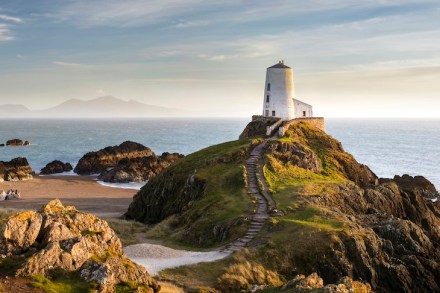
On the Isle of Anglesey in North Wales sits Wylfa nuclear power station. For 44 years, until its final reactor closed in December 2015, it provided over a thousand well-paid jobs and clean, reliable energy. At its peak, it generated almost half the electricity in Wales. If there’s one thing the locals want more than a third Menai Crossing – the nearest A&E is on the mainland and only accessible via two beautiful, but fundamentally not fit for purpose, bridges built in the first half of the 19th century – it is for nuclear generation to return to the island. It’s not hard to see why: after the last reactor at Wylfa shut down, median full-time pay on the island fell by 14 per cent in just three years.

Why is Britain trying to make our nuclear reactors ‘woke’?

From our UK edition

Sit on a roundtable of small businesses – as I have on many occasions – and it won’t be long before the topic shifts to the maddening number of rules and regulations that companies have to comply with if they want to sell to government. At one point, vendors are asked about employing ‘people seeking asylum’. This is a strange and, fundamentally, unachievable request: British law bans asylum seekers from working. Since the Social Value Act passed in 2012, companies bidding on public tenders are not only graded on value for money for the taxpayer (note: that’s you reader), but also on an amorphous concept known as ‘social value’. What this means, in plain English, is that it is no longer enough to provide a good product at a competitive price to win a tender.

We’ll all pay for Ed Miliband’s zonal pricing folly

From our UK edition

Philosophers have debated the concept of ‘fairness’ for centuries. Intellectual heavyweights like Immanuel Kant, Karl Marx, and Aristotle have all had their say. They need not have bothered. The world finally has a definitive answer and it has come from the most unlikely of places: the Department for Energy Security and Net Zero’s ‘Review of Electricity Market Arrangements: 2025 Summer Update’. Even if you have an unshakeable faith in Ed Miliband’s ability to plan a huge chunk of the economy from his desk in Whitehall, you must admit this is sub-optimal It just so happens history’s most influential thinkers were miles off the mark.

What’s taking Britain so long to build new nuclear power plants?

From our UK edition

When Putin attacked Ukraine and sent global gas prices soaring, Boris Johnson set out a plan to make Britain energy secure. It included a target to quadruple the amount of power Britain gets from nuclear. Instead of one plant every decade (if you’re lucky), Britain would start building a new plant every year just as we did in the 50s and 60s. This plan relied not only on building ‘giga-scale’ plants like Hinkley Point C (at £42 billion now the most expensive plant in the history of the world), but also new small modular reactors (SMRs) built off-site in factories and deployed in fleets. This should, at least in theory, be something Britain excels at. Our fleet of nuclear submarines are propelled by small nuclear reactors built in the Midlands by Rolls-Royce.

How long can Scotland’s nonsensical nuclear ban last?

From our UK edition

Just outside Dunbar, a short drive from Edinburgh, sits Torness nuclear power station. In its 40 or so years of operation, it has produced more than 300 terawatts hours of zero-carbon electricity – enough to power every single home in Scotland for 36 years. Torness was set to close in three years, but received a two-year stay-of-execution from the nuclear regulator. There are hopes that a further extension is possible, yet most industry experts expect Scotland’s last nuclear power station to close before 2035. When that eventually happens, Scotland will be without nuclear power for the first time since 1959. And when the wind isn’t blowing and the sun isn’t shining, to keep the lights on Scotland will have a choice: keep burning fossil fuels or import the power from England.

We need a chugger crackdown

From our UK edition

Why do we allow our public spaces to be taken over by chuggers? Whenever I exit my office above Charing Cross station in search of lunch, I am immediately confronted by no fewer than three charity muggers – each decked out in a garish uniform promoting whichever charity they are being paid for that day. It is best to avoid eye-contact – otherwise prepare to be bombarded with a flurry of phoney scripted sales patter. ‘Didn’t we go to primary school together?’ Unlikely, I suggest, given our age difference. ‘Still, it must be a big school given you said the exact same thing to the fella five paces in front of me.’ I consider replying, but think better of it.

Can Britain end its addiction to consultation?

From our UK edition

Britain used to be good at building nuclear power stations. Really good. We built the world’s first – and then another ten within a decade for good measure. As late as 1965, Britain had more nuclear power stations than the rest of the world combined. Britain used to be good at building nuclear power stations. We aren’t anymore. We haven’t finished one in three decades. And the one we are building is set to be, by some distance, the most expensive nuclear power station ever constructed. There is one area, however, where Britain is still world-leading: consultation. Between 2014 and 2022, there were no fewer than seven public consultations for the proposed Sizewell C nuclear power station.

Is Britain finally going nuclear?

From our UK edition

As late as 1965, Britain had more operational nuclear reactors than the rest of the world combined. Yet, Britain hasn’t built a new nuclear reactor in almost 30 years. France and South Korea now standout as the world leaders in building nuclear power stations. Indeed, when the wind isn’t blowing and the sun isn’t shining, we rely on France to send us some of their excess nuclear power to keep the lights on. Nuclear power is vital for our energy security. It runs whatever the weather. It makes us less reliant on the volatile gas market. It’s clean too – producing power without CO2 emissions. And unlike renewables, nuclear has a very small land footprint. To produce the same amount of power over a year as Hinkley Point C, you would need a solar farm twice the size of Oxford.

Could the Koreans save Anglesey’s nuclear power project?

From our UK edition

The funny thing about nuclear power stations is that few places actively want one, but almost anywhere that’s lost one is desperate to bring it back. When I visited the island of Anglesey, or Ynys Môn, last year I was struck by how much people wanted a new nuclear power station to replace the recently decommissioned Wylfa. In its heyday, Wylfa power station not only produced almost half of Wales’s electricity, it also provided dirt-cheap reliable power to the nearby Anglesey Aluminium smelting plant. Both meant decent paying skilled jobs for locals. Both have since shut down. A boom in tourism to the island has helped stem the loss of jobs, but it’s come at a cost.

Why Britain is building the world’s most expensive nuclear plant

From our UK edition

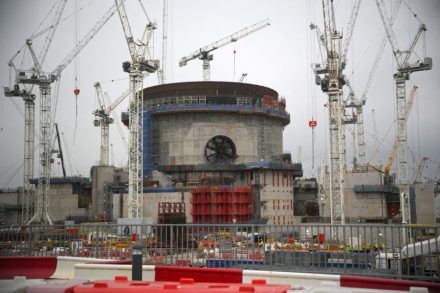
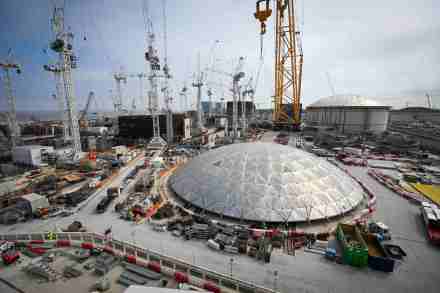
For over 20 years, Britain effectively gave up on building new nuclear power stations. But that’s changed now Hinkley Point C in Somerset is under construction. When completed it will provide around 7 per cent of the UK’s electricity. Hinkley Point C is set to be the most expensive nuclear power station ever built. In fact, it is more than four times more expensive on a pound-for-megawatt basis than the average nuclear power plant built in South Korea. Even Flamanville 3, a French plant that uses the same reactor (EPR-1750) and built by the same company (EDF), is set to cost at least 25 per cent less. Why has Hinkley Point C been so expensive and how do we make new nuclear power in Britain cheaper?

Why Britain can’t build infrastructure

From our UK edition

The Office for Budget Responsibility estimates that the government will spend (read: borrow) £43 billion this year to keep the average household’s energy bill at £2,500. Without the Energy Price Guarantee, bills would have hit an eye-watering £4,279 in January. It is certainly true that the blame for this bleak state of affairs should fall squarely at the feet of Vladimir Putin. Yet, it is also true that our energy bills would be much more manageable if Britain had built the necessary energy infrastructure over the past decades. So why haven’t we? First, some context. Since 2008, England and Wales have used a separate planning system for major infrastructure projects.

Michael Gove’s plan to scrap VAT is a big mistake

From our UK edition

When I read about Michael Gove’s plans to abolish VAT and replace it with a US-style Sales Tax, I thought: “Is he on drugs?” Gove’s views on experts have often been misrepresented. His infamous attack was aimed at a subset who haven’t been held accountable for failed predictions, not on the very idea of expertise. In fact, his scepticism of over-confident forecasts was influenced by the research of Prof Philip Tetlock, an expert on forecasting. Yet, while he isn’t the post-truth, anti-expert that his opponents paint him as, he happens to be promoting a policy opposed near-universally by tax experts.