Politics

Read about the latest political news, views and analysis

Diary – 22 November 2018

‘Away with the cant of “measures not men”! — the idle supposition that it is the harness and not the horses that draw the chariot along. No, Sir, if the comparison must be made, if the distinction must be taken, men are everything, measures comparatively nothing.’ George Canning said this in 1801 and recent events remind us that he was right. In the end the only way to change the policy is to change the person, as the individual determines the direction and is rarely willing to try a different route. As I have known this quotation for decades, it was naïve of me to expect the Prime Minister to change her policy. It is not how it works: the wrong policy means the wrong person.
The sinister rise of BlackRock asset manager

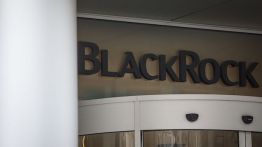
A few months ago, an aggressive US pressure group called the Campaign for Accountability declared that it had a new target: the Wall Street behemoth BlackRock. Quickly, the American press picked up on this campaign against excessive corporate power. Soon we were reading about how BlackRock, like Goldman Sachs before it, ‘rules the world’. Despite BlackRock’s supposed omni-potence, it is relatively unknown in Britain. It might be the biggest private manager of assets in the world but, in political terms, the company has existed in relative obscurity. That is, until last year, when it handed George Osborne a £650,000 contract for giving ‘advice’ one day a week. In recent months, the firm’s political profile has been rising.

Will May’s Brexit deal survive a vote in the Commons?

First things first. There has been a widespread misunderstanding of why Angela Merkel made it known yesterday that if the Brexit deal – Withdrawal Agreement and Political Declaration – wasn't done and dusted by today, she would not be bothering to turn up in Brussels to formally ratify it on Sunday. Her conspicuous intervention was not aimed at putting pressure on Theresa May to be more emollient in the last leg of negotiations. The German Chancellor was in fact asking the likes of the Spanish premier Pedro Sanchez to stop misbehaving and causing unnecessary bother (Sanchez has been playing to a domestic audience by saying he would block any agreement that deprived him of a veto on the future of Gibraltar). "The chancellor was doing the PM a favour" said an official.

May tries to sell her Brexit plan to the Commons – with limited success

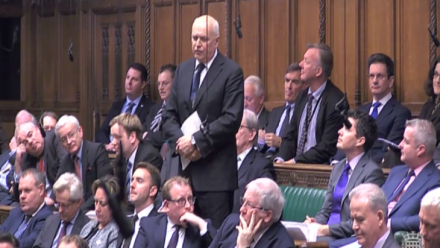
Tory MPs offered a warmer reception to Theresa May's statement in the Commons this afternoon than they managed during yesterday's Prime Minister's Questions. The Prime Minister herself seemed very confident as she explained today's political declaration to MPs. That's about as far as you can go when looking for signs of success in this afternoon's Commons Brexit drama. For instance, straight after the statement, we received confirmation from Iain Duncan Smith that he and other Brexiteers do still find the Brexit deal unacceptable and will kill it in the Commons.

Brexit negotiators need to focus on our fishermen

I listen in despair to Brexiteers’ dismissals of pleas from business for a settlement that allows them to plan beyond March next year. On last Friday’s Any Questions?, Jürgen Maier — who runs the £5 billion manufacturing business that is German-owned Siemens UK, and who may be the most respected industrialist in the north of England — spoke persuasively (in the accent of his Leeds schooldays) about the ‘dramatic’ fall-off of business investment and potentially ‘catastrophic’ impact of a no-deal outcome. The response of Tory MP John Redwood was so condescending, essentially ‘well done for coming here and building a business but stop scaremongering’, that I wanted to pour a boiling kettle over the radio.

Theresa May’s Downing Street Brexit statement: full text

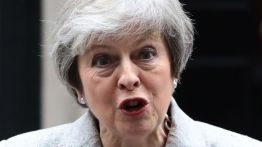
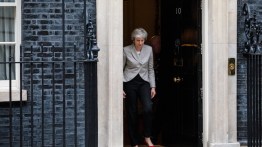
Throughout these difficult and complex negotiations with the European Union I have had one goal in mind: to honour the vote of the British people and deliver a good Brexit deal. Last week we achieved a decisive breakthrough when we agreed with the European Commission the terms for our smooth and orderly exit from the EU. Alongside that withdrawal agreement we published an outline political declaration setting out the framework for our future relationship. Last night in Brussels, I had a good, detailed discussion with President Juncker in which I set out what was needed in that political declaration to deliver for the United Kingdom.

The Spectator’s Evening Blend email passes 50,000 subscription mark

We found out this morning that The Spectator's Evening Blend email briefing has just passed 50,000 subscribers, making it the best-read email in Westminster. When I set it up shortly after arriving at The Spectator, six years ago, we expected it might be read by a few thousand. It turns out to be rather more popular, its size having almost doubled in a year, and seems to have become essential reading for everyone from the Prime Minister down. We regularly break stories, provide exclusive gossip and - perhaps most importantly in these rather bewildering times - explain what on earth has happened that day in Westminster.

The Brexit political declaration confirms we are heading to a blind Brexit

With the leak of a 26-page political declaration this morning – an enhanced version of last week’s briefer document – we now know the shape of the future EU-UK relationship which May and the EU negotiators want to achieve in the long run – if, and this could turn out to be a big if – the UK ever manages to escape from the purgatory of the backstop. It is not a bad document in itself. Neither does it bear much of a resemblance to Chequers. The big difference is that it envisages a future trade deal which encompasses services as well as goods – Chequers envisaged Britain pretty well staying in the single market for goods while diverging on services.

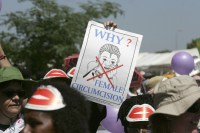
Does America oppose female genital mutilation – or not?

Twenty years ago almost no one in the West had heard of Female Genital Mutilation. Then in the 2000s, thanks to a few brave and vocal campaigners like Ayaan Hirsi Ali, knowledge of this barbaric practice began to spread. Originally there was some queasiness about taking up the subject at all. Lawmakers and opinion formers took a while to work out their line. There was an early question mark over whether FGM wasn’t just the same as male circumcision. Most people swiftly learned that the difference was, gynaecologically speaking, almost everything. There were some hold-outs among people who thought that since FGM was practiced among Muslims there might be something ‘Islamophobic’ about objecting to the mutilation of young girls’ genitals with knives.

May’s deal: a legal verdict

The most important point about the draft Brexit withdrawal agreement is that, once it is ratified, the United Kingdom will have no legal route out of it unless the EU agrees to let us out and replace it with another agreement. This makes it unique among trade treaties (including the EU’s), which always contain clauses allowing each party to withdraw on notice. Politicians who claim that this is just a bad treaty — one we can get out of later — are being ignorant or disingenuous. Halfway through the 585-page document, we find Art. 185, which states a Northern Ireland Protocol ‘shall apply as from the end of the transition period’. Once the Protocol is in force, the UK cannot leave it except by ‘joint’ decision of the UK and the EU.

What does it mean to be moved?

Catching a train last week at London’s St Pancras I encountered a man playing a piano. You can do this at St Pancras: there’s an old Yamaha chained to the ironwork just by the lift serving the upper platforms for Sheffield and Nottingham. The instrument is somewhat out of tune but serviceable, and placed there for anyone who wants to play. The facility is generally respected: it’s not for buskers collecting money but just for pleasure — the player’s pleasure, and that of the random, changing audience who pause, hurry or amble by. I was hurrying yet in no hurry: there was plenty of time. But you just get a bit tense in London sometimes, and hurry for the sake of hurrying. And of late, politics has got me down.

Nissan’s Carlos Ghosn was a tall nail but was he really a bent one?

The arrest of Carlos Ghosn and the move to oust him as chairman of Nissan in Japan has stunned the auto industry of which he’s a global megastar — serving simultaneously as head of Renault in France, and having bolted together the Renault-Nissan-Mitsubishi alliance that built more than ten million cars last year. Nissan has accused the Lebanese--Brazilian engineer of violating Japanese securities law by understating his remuneration in the company’s public documents, and of ‘numerous other significant acts of misconduct… such as personal use of company assets’. That allegedly includes using Nissan funds to buy properties for his own use in Beirut and Rio de Janeiro. We must of course wait to hear the evidence.

Irish troubles

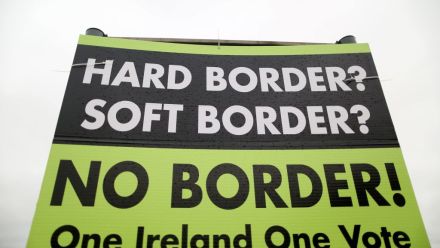
How did we get into this Brexit mess? Why is it proving so difficult to leave the EU? Was it Theresa May’s botched 2017 election, which vaporised her Commons majority? Or perhaps her general incompetence and lack of vision? How about the fierce determination of Europhile civil servants to save stupid Leave voters from themselves, cooking up a half-in-half-out withdrawal guaranteed to split the Tories? Maybe it was the cynical ambivalence of HM’s Opposition, with Labour simultaneously backing both Brexit and a second referendum, having always intended to cause chaos and spark a general election by voting down the UK’s exit, contradicting its own manifesto?

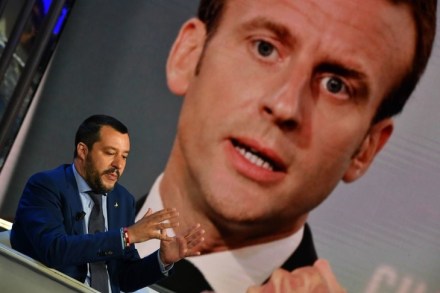
The rivalry between Macron and Salvini is a battle for Europe’s soul

When Emmanuel Macron won a resounding victory over far-right nationalist Marine Le Pen in the 2017 French presidential elections – claiming 66 per cent of the vote – Matteo Salvini was a little known Italian politician largely scoffed at as a clown by the status-quo parties. While Salvini was posting selfies on Facebook and making outlandish comments about North African migrants, the eurozone, the European Union, and the Italian political establishment, Macron was in Paris measuring drapes in the Élysée Palace. Stories in the Washington Post, the New York Times, and the Guardian gushing about Macron being Europe’s saviour from the dark forces of populism were as prevalent as stories deriding Salvini as a buffoon.

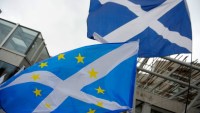
Where were the Brexit no deal warnings during the Scottish independence debate?

Four years ago, 45 per cent of Scottish voters favoured leaving the UK. Many of the warnings about the negative impact of independence on the Scottish economy were justified. But they did not extinguish a yearning for independence – and the same could be said of the EU referendum, with the caveat that this time a majority voted to leave, and many of the warnings were unjustified. An ineradicable desire to get our country back triumphed over the Project Fear campaign conducted by the Treasury and the whole of the nomenklatura that sought to preserve position, power and privilege for itself and to suppress any notion that ordinary people, in Britain or in any other European country, could have a say in how they are governed.

The Books Podcast: geopolitics, the new Silk Roads, and the falcon-shaped airport in Turkmenistan

In this week's books podcast I'm talking to Oxford's Professor of Global History Peter Frankopan about his follow-up to his bestselling history The Silk Roads. In The New Silk Roads, Peter brings his story up to date, and argues that with our Trump and Brexit obsessions, and a divided and fissiparous West still obsessed with itself, we are missing the bigger picture of what's going on in the world today. Once again, the Silk Roads -- those lines of connection between East and West running through what he calls the "heart of the world" -- are where the action is.

Extinction Rebellion is a wannabe Marxist revolution in disguise

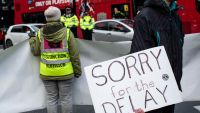
Anyone trying to get about London over the past few days may have come across the activities of a group called Extinction Rebellion, which blocked Westminster and several other bridges on Saturday, blocked Lambeth Bridge today and plans to repeat the exercise later this week. Its tactics are simple – it gathers raggle-headed eco warriors, together with some terribly nice middle class students, buses them up to London and then disgorges them to sit in the middle of the road, where they then get arrested for blocking the traffic. But no matter the illegal tactics. The world is in the middle of ecological crisis, and so, of course, the normal rules of political protest do not apply.