Johannes de Jong

It’s unlikely that the EU will agree to a short extension

From our UK edition

Sometimes Remainers mirror Brexiteers in not really considering the EU side of Brexit. Last night, when the Cooper bill passed with one vote, was such a moment. 'Hurray, we ruled out a no-deal Brexit!' seemed to be the general feeling from Remainers in the media. Similarly, those advocating for a no-deal Brexit fumed as the Cooper bill moved to the Lords. But they all ignored a tiny little detail: that Brussels will need to agree to an extension. At the moment, however, this is really not certain. There are both ideological and practical stumbling blocks on the EU 27 side, which are massively complicated by the continued lack of clarity from the UK. The most recent thinking is that the UK has two options.
Theresa May’s departure won’t help the Brexiteers’ cause

From our UK edition

Faced with the prospect of a softer Brexit, or no Brexit at all, Jacob Rees-Mogg is considering holding his nose and voting for Theresa May's deal. Boris Johnson also appears to be considering doing the same. This shift among Tory backbenchers towards signing up to the deal seems to be contingent on May setting a date for her departure. The idea here is that with May gone, a new Prime Minister will make a big difference once the Withdrawal Agreement has passed the House of Commons. May's successor, the thinking goes, will take a much tougher stance in the next round of negotiations with the EU. In doing so, they will be able to steer Britain on course towards a ‘real Brexit’. But take it from me: this idea is an illusion.

Why the EU fears a long Brexit delay

From our UK edition

In the past I've explained why the EU would be happy if the Commons accepted May's deal. In essence, the Withdrawal Agreement would allow the EU to impose its integration project on the UK, and the UK wouldn't be able to do anything about it. In contrast, EU federalists have made it pretty clear they fear a Brexit delay. This is consistent with the tough rhetoric coming out of Brussels at the moment demanding a ‘price’ for any long delay. The PM has avoided that by proposing a short delay. There are noises coming out of Brussels that suggest next week there will be an EU Council decision on delaying Brexit. In that case, it seems likely that May will try to circumvent Erskine May, so MPs can have a Meaningful Vote 3 on her deal before that meeting.

Why a Brexit extension spells trouble for the EU

From our UK edition

Now that Theresa May's deal has been decisively defeated again, the message from Brussels has been clear: the Brexit impasse is your problem, not ours. But for all the bluster, don't believe it: the Brexit deadlock is bad news for the EU. Perhaps understandably, there is anger and frustration on the continent over Westminster's rejection of the withdrawal agreement. As a result, the EU is attempting to suggest that an extension to the transition period might not be on offer. This was the implied message in Donald Tusk's reaction to the vote on Tuesday night. The president of the European Council said there must be a 'credible justification for a possible extension'. 'The smooth functioning of the EU institutions will need to be ensured,' he said.

Why the EU is so keen for Theresa May’s Brexit deal to pass

From our UK edition

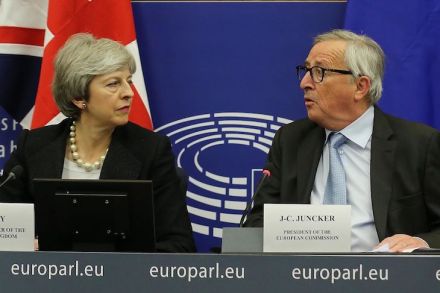
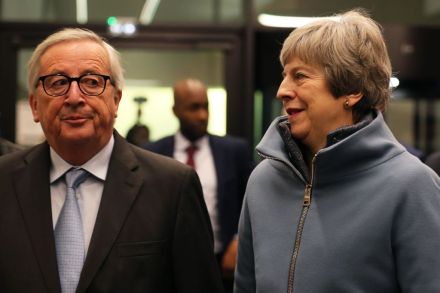
In recent weeks, two big beasts in the European political arena pushed forward their respective ideas for the future of the European Union. France's president Emmanuel Macron repeated his dream of a big EU. And the leader of Germany's Christian Democratic Union Annegret Kramp-Karrenbauer responded in kind with a vision of an EU that is larger than it is now but smaller than the EU ‘a la Macron’. In both visions, the reality of Brexit was conspicuously absent. The decision to ignore Brexit in these visions of the future EU is easily understood if one gets the updated ‘deal’ that Theresa May struck with the EU overnight. ‘This is it’, declared Jean-Claude Juncker. There wouldn’t be a third chance for the UK.

Shamima Begum’s baby shouldn’t pay the price for his mother’s treachery

From our UK edition

What should be done with Shamima Begum? Her husband Yago Riedijk, a Dutch jihadi fighter, has now said he wants to bring Begum home after her British citizenship was revoked. 'We should live in Holland', he told the BBC. In the Netherlands, the response has been clear: they are not welcome. The Dutch government takes a similar approach to the British when it comes to the question of dealing with citizens who travelled to Syria. Where a foreign fighter has dual citizenship, their Dutch passport can be taken away. If this isn't possible, there is little the Dutch are willing to do to rescue their citizens from the limbo of the refugee camps or jails of the territory where Isis once reigned in terror. So Begum's possible escape route to the Netherlands looks like a non-starter.

For the Dutch, Brexit is a mistake – and a big opportunity

From our UK edition

An advert in the Netherlands features a hairy beast warning about the looming departure of Britain from the EU. Move over Project Fear, this is Project Fur: a campaign aimed at urging businesses to brace themselves for a no-deal Brexit. So what do the Dutch make of the big blue Brexit monster? While the British media has been busy laughing at photos of the muppet-like creature straddling a desk as the Dutch foreign minister watches on, the truth is that this campaign has actually passed many people by. This is a shame: there are good reasons for Dutch folk to worry about the impact of an acrimonious Brexit. Such an outcome would be in no-one's interests.

Technology won’t solve the Irish border question. Here’s why

From our UK edition

Amongst some Brexiteers, there is an eternal faith in technology to solve the Irish border question. This is mistaken. Yet still the idea refuses to go away. Now Theresa May is using this belief to try and get wavering Tory MPs to back her Brexit deal with Brussels. Yesterday, the Prime Minister’s spokesman said the solution for the question of the Irish border 'could involve technological solutions'. He went on to say: 'I think there was discussion in cabinet about the fact that the withdrawal agreement recognises and keeps open the potential for alternative arrangements to avoid a hard border on the island of Ireland.' No 10 is implying that if the UK would put this idea on the table then the EU would be obliged to accept it and allow the UK to escape the backstop.

Why Theresa May’s Brexit deal is bad news for Europeans

From our UK edition

Theresa May's current Brexit deal will tie the UK more closely to Brussels than if it had stayed in the EU. The agreement, which is supposed to take back control and restore British sovereignty, will actually have the opposite effect. This is bad news for Britain – and bad news, too, for Europeans like myself who are desperate to see the EU reformed for the better. Jo Johnson was right to claim, when he resigned as a minister, that the choice now facing the UK is between ‘vassalage’ and ‘chaos’. On both sides of the debate, among Brexit supporters and those who want Britain to remain in the EU, the fact that Britain will have to adopt EU legislation on a wide range of issues for an undefined period has sunk in.