Jacob Rees-Mogg

Sir Jacob Rees-Mogg was the MP for North East Somerset from 2010 to 2024.

My P.G. Wodehouse summer

From our UK edition

Normally I model myself on one of the more retiring of the Desert Fathers, as much as a man living in England with six children can, so I rarely venture out. But this summer I could have given Galahad Threepwood a run for his money in the socialising stakes. Not that a Desert Father would have objected to my visit to Wimbledon to the papal nunciature, where the nuncio was celebrating the papacy of Leo XIV. It is reassuring to have a Pope who believes in the papal office and, with luck, the traditional liturgies will no longer be persecuted. The hatred for the Latin Mass is a peculiarity of a few ageing liberals. Fortunately, young Catholics, including my nephew David who is a seminarian, are flocking to the Old Rite. Wimbledon, as P.G. Wodehouse aficionados know, is Ukridge territory.

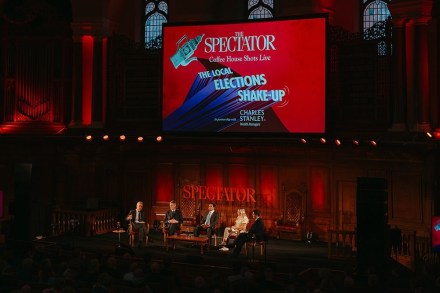
Coffee House Shots Live with Zia Yusuf and Jacob Rees-Mogg

From our UK edition

The post-mortem has begun on a historic set of local elections – but where does each party go from here? Is Reform unstoppable? Is Kemi the one to lead the Conservative rebuild? Do Labour really ‘get it’? Michael Gove, James Heale and Lucy Dunn are joined by special guests Zia Yusuf and Jacob Rees-Mogg to unpack these questions – as well as the broader ramifications of the local elections on British politics. Listen for: Zia’s understanding of why Reform did so well; Jacob’s concession that a Tory/Reform pact of some description could be the only way for the Conservatives to avoid extinction; and Michael’s assessment of whether Labour will force us closer to the EU. This podcast was originally recorded live at the Emmanuel Centre in Westminster on Wednesday 7 May.

Christmas Special 2024 with Rod Liddle, Lionel Shriver, Matthew Parris and Mary Wakefield

From our UK edition

71 min listen

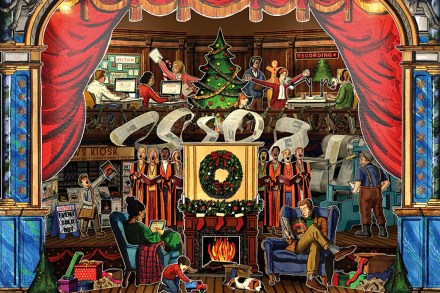
Welcome to a special festive episode of The Edition podcast, where we will be taking you through the pages of The Spectator’s Christmas triple issue. Up first: our review of the year – and what a year it has been. At the start of 2024, the outcome of the US election looked very different, the UK had a different Prime Minister, and The Spectator had a different editor! Luckily, The Spectator’s regular columnists are on hand to declare what they got right – and wrong – throughout the year, and whether they’re optimistic for 2025. Rod Liddle, Matthew Parris, Mary Wakefield and Lionel Shriver take us through everything from Trump to trans (03:24).

Coffee House Shots live: election aftermath

From our UK edition

59 min listen

Join Fraser Nelson, Katy Balls and Kate Andrews, along with special guest Sir Jacob Rees-Mogg, for a live edition of Coffee House Shots recorded earlier this week. A week on from Sir Jacob losing his seat, he declares 'I can speak freely now'. So, why does he think the Conservatives lost the election? The team also answer a range of audience questions, including: how will the Conservatives win voters back? Is Nigel Farage here to stay? And what's their verdict on Labour's first week? Produced by Patrick Gibbons and Megan McElroy.

My future as a reality TV star

From our UK edition

Magpies have long been thought to be birds of omen. I am not superstitious. Yet during the election campaign I could not help but notice single magpies all the time. Perhaps you only notice what you are looking for, as from the beginning of the campaign the polls were clear that I would lose North East Somerset and Hanham. I wrote to my boarding school children when the election was called to warn them of the impending defeat, but unfortunately they cannot read my handwriting. Throughout the campaign, the mood on the doorstep was excellent and the team full of beans. Many visitors came to help and I regularly had people staying overnight. This always makes elections fun, but there is less time for reading than you might expect.

Shamima Begum shouldn’t have lost her British citizenship

From our UK edition

Parliamentary sovereignty is the bedrock of the constitution, and the courts ought to accept it, even when bad laws are passed. It is not the job of the courts to make the law, but to adjudicate on it. Thus the Appeal Court ruling against Shamima Begum is right, even if the decision of Sajid Javid, as Home Secretary, to strip Begum of her citizenship is wrong and ought never to have been made. This is not because Begum was groomed, trafficked and raped. These are serious considerations, and in all normal circumstances, a 15-year-old treated in such a barbarous way would not be held culpable for her actions.

It’s good to be back on the back benches

From our UK edition

After the shale gas vote, I was literally sent to Coventry – to visit the UK Battery Industrialisation Centre. It is a remarkable facility that helps take batteries from development through to production. It means companies only need the hundreds of millions of pounds in investment once they have shown that their product works and is saleable. It was funded by the Faraday Battery Challenge, and I was there to announce a further £221 million of taxpayers’ money. This is one of the rather better ways the Department for Business, Energy and Industrial Strategy spends money, while some of our policies seem designed to ruin industry. I am particularly concerned about steel, where the price of energy is, in normal times, about 60 per cent more than our competitors.

Parliament matters more than ever after Brexit

From our UK edition

My contention in this speech is that it is our constitution that makes us prosperous and that returning powers to Westminster from Europe will boost our economic growth. But explaining why our nation has been so successful over the centuries relies first on recognising the existence, and then identifying the nature, of an unseen dark matter which lies at the heart of British governance. I fear this missing link, this secret ingredient, has not received sufficient acknowledgement - despite its presence being detected by many members of the Study of Parliament Group over the years.

Diary – 8 August 2019

From our UK edition

It is rare that losing a day at Lord’s for a Test match is welcome. I had expected to be watching England play Ireland with my wife and two of my children on the Thursday before last. Instead, much to my delight, Boris Johnson asked me to become Leader of the House of Commons and Lord President of the Council, so I had my first cabinet meeting, my first outing at the Despatch Box and first Privy Council meeting. Anselm, my fourth child, went to the cricket in my place so was equally pleased. The joy in joining the government is, naturally, in part personal but mainly because we will now leave the European Union on 31 October. Something that would not have happened with any other possible prime minister.

Jacob Rees-Mogg: Changing strategy means changing leader

From our UK edition

‘Away with the cant of “measures not men”! — the idle supposition that it is the harness and not the horses that draw the chariot along. No, Sir, if the comparison must be made, if the distinction must be taken, men are everything, measures comparatively nothing.’ George Canning said this in 1801 and recent events remind us that he was right. In the end the only way to change the policy is to change the person, as the individual determines the direction and is rarely willing to try a different route. As I have known this quotation for decades, it was naïve of me to expect the Prime Minister to change her policy. It is not how it works: the wrong policy means the wrong person.

Diary – 22 November 2018

From our UK edition

‘Away with the cant of “measures not men”! — the idle supposition that it is the harness and not the horses that draw the chariot along. No, Sir, if the comparison must be made, if the distinction must be taken, men are everything, measures comparatively nothing.’ George Canning said this in 1801 and recent events remind us that he was right. In the end the only way to change the policy is to change the person, as the individual determines the direction and is rarely willing to try a different route. As I have known this quotation for decades, it was naïve of me to expect the Prime Minister to change her policy. It is not how it works: the wrong policy means the wrong person.

Jacob Rees-Mogg: why I no longer have confidence in Theresa May

From our UK edition

Dear Sir Graham, A few weeks ago, in a conversation with the Chief Whip I expressed my concern that the Prime Minister, Mrs. Theresa May, was losing the confidence of Conservative members of Parliament and that it would be in the interest of the party and the country if she were to stand aside. I have wanted to avoid the disagreeable nature of a formal vote of no confidence with all the ill will that this risks engendering. Regrettably, the draft withdrawal agreement presented to Parliament today has turned out to be worse than anticipated and fails to meet the promises given to the nation by the Prime Minister, either on her own account or on behalf of us all in the Conservative party manifesto.

The Brexit White Paper is a bad deal for Britain

From our UK edition

This (Brexit White Paper) is the greatest vassalage since King John paid homage to Philip II at Le Goulet in 1200. This White Paper has not needed age to turn yellow. There are very few signs of the Prime Minister's famous red lines. It is a pale imitation of the paper prepared by David Davis, a bad deal for Britain. It is not something I would vote for, nor is it what the British people voted for. In particular, this paper sets out that the UK will be subject to EU laws while having no say in their creation. The Common Rule Book will not be Common, it will be EU law, interpreted by the EU Court with the UK subjected to EU fines for non-compliance. The UK has accepted it cannot diverge from 'ongoing harmonisation' without activating repercussions for Northern Ireland.