Politics

Read about the latest political news, views and analysis

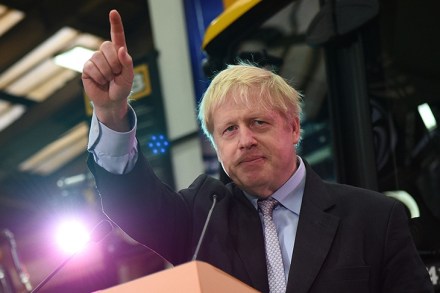
Boris is just the man to bury Brexit

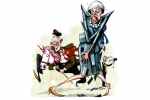
Sit down, my swivel-eyed Brexiter friend, and pour yourself a stiff whisky. I’ve something to tell you that’s going to be a bit difficult for both of us. Sitting comfortably? Your swivel-eyed Remainer columnist has discerned just the tiniest glint of a silver lining to the dark cloud of a possible Boris Johnson premiership. And the reason? It’s this. The most important ability the next Tory leader must possess is the ability to break bad news. To get away with this and bring the voters with you, real leadership is required: not just eloquence, not just empathy, but the command, the confidence and the sheer guts to face the inevitable, grab the bull by the horns, and spit it out.
Istanbul Notebook

‘It’s official. Turkey is a banana republic!’ My friend Mustapha, a serial entrepreneur, sends me a flurry of doom-laden WhatsApp messages on hearing the news that Istanbul’s mayoral election is being re-run. One of them is a cartoon of President Recep Tayyip Erdogan standing in front of the national flag, crescent turned into a banana. In March, his ruling AKP lost Istanbul, the engine of what remains of the Turkish economy, together with Izmir and Ankara. It was a historic breakthrough for the opposition CHP and its victorious mayoral candidate Ekrem Imamoglu. But it was also a massive threat to Erdogan, a former mayor of Istanbul, who hasn’t lost an election since 1994. He alleged dirty tricks and leant on the election authority to order a re-run.

This latest British Steel crisis isn’t all about Brexit

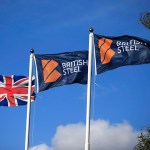
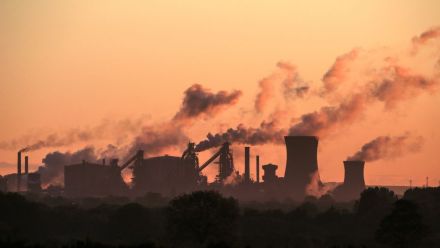
There’s a strong sense of déjà vu in this week’s steel crisis. The whole Brexit saga seems to have been bookended by trouble in what’s left of the British steel industry, beginning in 2016 when Tata of India announced plans to sell its entire UK steel business — the remnants of the privatised British Steel, later called Corus. The focus then was on the future of the blast furnaces at Port Talbot, but a buyer was found for the Scunthorpe ‘long products’ plant, at a price of £1, in the private equity firm Greybull Capital. Now 4,000 Scunthorpe jobs are at risk as Greybull prepares to throw in the towel: unless ministers come up with a last-ditch rescue loan, administrators were expected to be appointed by midweek.

The Tories angry about May’s deal are missing the point

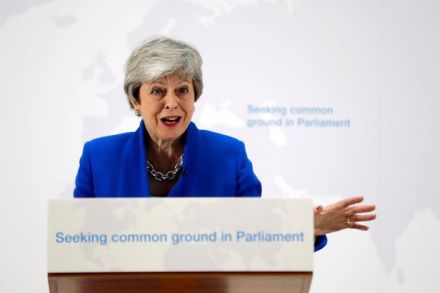
The Prime Minister’s speech yesterday, in which she announced a 'ten-point offer' to parliament for a 'new Brexit deal' has gone down like the proverbial cold cup of sick with many Conservative MPs. The rage isn’t just confined to the 28 Brexiteer hold-outs who voted against the deal on 29 March either – so far, another 40 MPs who previously voted for the deal have indicated they will not vote for the proposed Withdrawal Agreement Bill. Overall, with little sign of movement towards the deal from Labour, it seems the Prime Minister is going backwards.

What the Tories can learn from Australia’s election upset

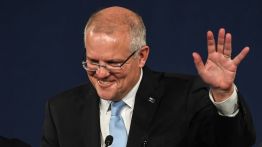
It is hard to exaggerate the level of shock caused by Scott Morrison’s Australian election victory. The re-election of the country's Liberal party prime minister – and the defeat of left-wing Labor leader Bill Shorten – took the polls and plenty of Aussies by surprise. Earlier this year, Shorten told a bemused Arnold Schwarzenegger “I’m going to be the next prime minister of Australia”. The Australian people had a different idea. In his victory speech, Morrison thanked “quiet Australians” for supporting him. A similar dynamic was, of course, at play among shy Tories in the 2015 election in Britain, shy Brexiteers in 2016 and then shy Trump voters later that same year.

Andrea Leadsom resigns – will others now follow?

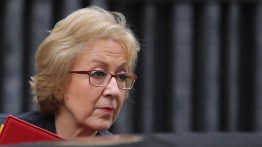
After the 1922 executive of Conservative backbenchers decided this evening to wait until Friday to speak to the Prime Minister about announcing an exit date, there had been a view that Theresa May was safe in her position – at least for 36 hours. That is now in doubt. Andrea Leadsom has tonight announced her resignation as Leader of the House. In her resignation letter, the Brexiteer minister says that she has made the decision to leave government due to concerns over May's position on Brexit. Of the deal as it now stands, Leadsom says she is concerned that May's latest pitch means the government is 'facilitating' a second referendum and says there has been a 'breakdown' in the way the government approves Brexit policy: https://twitter.

Could Theresa May avoid making a statement tonight?

I am told, in completely unambiguous terms by a source very close to the Prime Minister, that there will be no statement from Theresa May tonight on anything – either setting out a timetable for her departure or agreeing to pull the vote on the Withdrawal Agreement Bill (WAB). ‘Why would we do any of that the night before an election?’ said the source. BUT in a way this planned silence is more amazing than if she were making a statement. Because several members of the cabinet have told me in no uncertain terms that they expected her to set out her timetable for departure tonight. The gap between the Prime Minister and her cabinet is wider than ever in modern history. No minister thinks she can remain in office for more than a few days.

PMQs: May and Corbyn sound like a sketch about a deaf shopkeeper

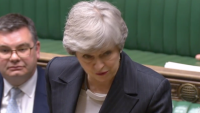
Tories who still support Theresa May are as rare as bumblebees in Antarctica. Her backbenchers were too polite to mention her imminent departure at PMQs but her opponents couldn’t resist poking fun. The PM began with her ritual announcement about ‘meeting ministerial colleagues and others’. Up stood John Woodcock. ‘She may not have long left, and good luck with those "meetings later today”’. Mike Amesbury said his question about lease-holders would interest her, ‘now that she’s about to move house.’ Toby Perkins asked her to increase SEN funding ‘in her final days.’ Jeremy Corbyn led on school budgets too. They’re down, he claimed. As he always does. No, no, they’re up, said the PM.

Theresa May’s time is almost up

Things are moving fast in Westminster. Theresa May’s position is now more precarious than it has been at any point in her premiership and that’s saying something. Three things have changed. First, it is clear that May’s last roll of the dice hasn’t worked—the Withdrawal Agreement Bill isn’t going to pass second reading. As a consequence of that, Tories who want a deal – as well as those who favour no deal – are now moving towards the belief that May should go. The third thing that has happened is that cabinet ministers, who up to now have thought that a delay to a leadership contest was in their interests, are now realising that association with this package is toxic in party terms.

Nigel Farage: we’re attempting a peaceful political revolution

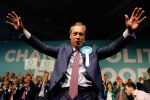
This article is an edited transcript of Nigel Farage's speech at the Brexit party rally in London on 21 May.  Do you know we only launched this party five and a half weeks ago. In that space of time we’ve managed to assemble this fantastic team of candidates. We’ve managed to go to the top of the opinion polls in five and a half weeks - that’s not bad, is it? We’ve managed, in five and a half weeks, not just to frighten the establishment. Oh no, they’re not freighted  – they’re absolutely terrified. Perhaps most important of all...

Watch: Labour MP pretends to have read the new Withdrawal Agreement Bill

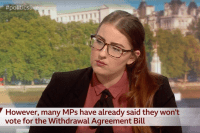
Laura Pidcock has been a rising star in Jeremy Corbyn's Labour party ever since she became an MP in 2017. But the shadow minister for labour was somewhat caught out today when she appeared on Politics Live. Presenter Jo Coburn challenged Pidcock's dismissal of Theresa May's new Withdrawal Agreement Bill, when most of the concessions it made were to the Labour party, and made the point that Pidcock hadn't even read it yet, saying: 'So you haven't even read it, you haven't read it though have you?' Clearly worried her lack of preparation had been rumbled, Pidcock protested that: 'Yes I have.' Only for Coburn to point out that the bill hadn't even been published yet. At which point Pidcock backtracked. Oops. Watch here: https://youtu.

The utter irrelevance of the Tories and Labour

Call me old fashioned, but I find it impossible to see how any Tory leader could survive crashing to fifth place in a national election and picking up just 7 per cent of the vote - which is what YouGov predicts in the Times. Of course it's only one survey. The real vote tomorrow may yield a better outcome. And Labour is also set for a humiliating night, with just 13 per cent of votes cast, say the pollsters. But 7 per cent for the supposed natural party of government, for just the past couple of centuries, is the kind of humiliation that few institutions would shrug off. May should count herself very fortunate she isn't a football manager, because she'd have been back managing Port Vale some time ago.

Nigel Farage is not ‘far right’

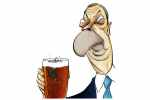
It is now fashionable to describe Nigel Farage as an 'extremist', 'far right' or 'fascist' politician. Last month, Dame Margaret Beckett denounced his 'brand of extreme right-wing politics'; this week, Armando Iannucci tweeted: 'Any vote for Farage on Thursday won’t be seen by him as a protest but as support for his brand of far-right UK politics.' And on Monday, the author and journalist Ben Goldacre described the Brexit Party leader as a 'far right ideologue who wants to abolish the NHS.' So what prompts otherwise intelligent people like Iannucci and Goldacre to describe Farage as 'far right'? And is that description really fair? A quick glance at Farage's politics suggests it isn't. Farage has spoken out against interventionist wars abroad.

What will Farage-onomics look like?

It might be 30 per cent. It might be 35 per cent. It could even be 40 per cent or higher. Until the results of the European elections come in late on Sunday night, we won't know what percentage of the vote Nigel Farage’s new Brexit party will get. But we do know that it will be the clear winner, and that it will have established itself as a major new force in British politics. So far, the party has deliberately said very little about its policies, although most of us are getting the vibe it might be in favour of leaving the European Union. Once the dust settles on Monday morning, however, that will have to change. It will be in the driving seat. It will be time for some Farage-onomics. So what would that look like?

Vince Cable: I welcome people with dark faces

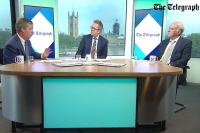
This morning, new polling by YouGov ahead of the European elections on Thursday put the Brexit Party on top (at 37 per cent) and the Liberal Democrats in second place (on 19 per cent), ahead of Labour. So it was perhaps fitting that as the two new major parties in British politics, it was the Brexit party's Nigel Farage and the Lib Dems' Vince Cable who locked horns this morning in a Telegraph debate. As the standard-bearer of Remain, Vince Cable had a lot riding on his performance, as he tried to rally Remainers behind his party and combat Farage's desire for a no-deal Brexit. But Mr S has to wonder if Cable's unusual choice of language will really go down well with his Remainer base.

Could France’s far left and far right come together again?

As the European elections approach, Europe’s oldest liberal democracies – Britain and France – are in turmoil. Taking the long view, Britain’s problems are circumstantial and exceptional. France’s, by contrast, are renewing with more extreme political traditions that have risen and fallen, but never disappeared, over the last two centuries. Gavin Mortimer's blog on Coffee House describes the seemingly paradoxical synthesis of far-left and far-right voters contemplating casting their ballot for the same party – the former National Front, now Marine Le Pen's Rassemblement National. Yet as with so much in French politics this is far from novel.

Full text: Theresa May’s speech calling for a second referendum

I became Prime Minister almost three years ago – immediately after the British people voted to leave the European Union. My aim was – and is – to deliver Brexit and help our country move beyond the division of the referendum and into a better future. A country that works for everyone. Where everyone has the chance to get on in life and to go as far as their own talent and hard work can take them. That is a goal that I believe can still unite our country. I knew that delivering Brexit was not going to be simple or straightforward. The result in 2016 was decisive, but it was close.