Dominic Walsh

Boris Johnson’s Brexit deal: eight key changes

From our UK edition

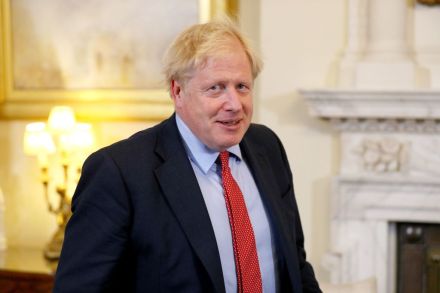
The UK Government and the European Commission today published the text of a revised Protocol on Northern Ireland, coming just in time for the start of today’s European Council Summit. The Government also released a unilateral declaration concerning the operation of the ‘consent mechanism’ contained in the new Protocol on Ireland and Northern Ireland. The new deal is different in both concept and substance to Theresa May’s deal - and to the EU’s original proposal for a Northern Ireland-only backstop.
The key changes in Boris Johnson’s Brexit deal

From our UK edition

Boris Johnson has agreed a new Brexit deal with the EU. Here are the key differences between the old and new protocols for Ireland and Northern Ireland. Strikethrough = text removed; Red = new text - Green = moved to a different place ARTICLE 1 Objectives and relationship to subsequent agreement This Protocol is without prejudice to the provisions of the 1998 Agreement regarding the constitutional status of Northern Ireland and the principle of consent, which provides that any change in that status can only be made with the consent of a majority of its people. This Protocol respects the essential State functions and territorial integrity of the United Kingdom.

The EU’s Brexit unicorns

From our UK edition

The Brexit talks are at a critical stage as we approach this week’s European Council summit. The rumoured landing zone for a deal – essentially a version of the ‘Chequers’ proposals for customs, but applied to Northern Ireland only – is promising. But to get there, both sides will need to compromise – and that applies to the EU as much as it does to the UK. In the Brexit debate, both politicians and governments in the UK are routinely accused of putting forward 'unrealistic' or 'non-negotiable' proposals. The word 'unicorn' is thrown around and often, the criticism is fair. Simplistic demands from UK politicians to 'simply take out the backstop', for example, have become so commonplace that they have become a semi-ironic meme on Brexit Twitter.

The Tories angry about May’s deal are missing the point

From our UK edition

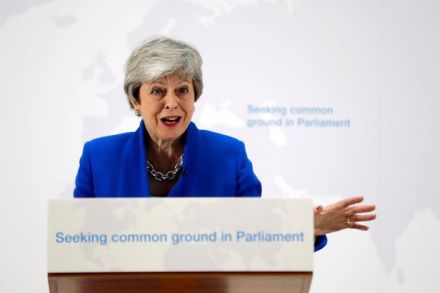
The Prime Minister’s speech yesterday, in which she announced a 'ten-point offer' to parliament for a 'new Brexit deal' has gone down like the proverbial cold cup of sick with many Conservative MPs. The rage isn’t just confined to the 28 Brexiteer hold-outs who voted against the deal on 29 March either – so far, another 40 MPs who previously voted for the deal have indicated they will not vote for the proposed Withdrawal Agreement Bill. Overall, with little sign of movement towards the deal from Labour, it seems the Prime Minister is going backwards.

Would adding a customs union to the Brexit deal really be so bad?

From our UK edition

It has been nearly a month since cross-party talks between the government and Labour began, and there is still no sign of white smoke. If the two sides do reach a deal, it is likely to involve movement from the government towards Labour’s key demand – negotiating a 'permanent' customs union with the EU after Brexit. Both the Telegraph and the Mail report this morning that the Prime Minister is inching towards a customs union, which she increasingly sees as the only way to get a version of her deal through parliament. There has already been a pre-emptive backlash against the idea. Foreign Secretary Jeremy Hunt has warned that 'there is a risk that you would lose more Conservative MPs than you would gain Labour MPs.

Britain needs to back down on the backstop – but the EU must help

From our UK edition

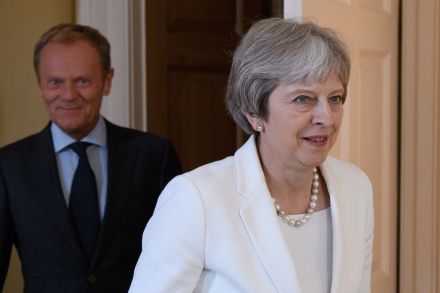
Theresa May's attempt to alter her Brexit deal is going down badly in Brussels. The anger is partly understandable: after all, this is the agreement May's own government negotiated. Donald Tusk's barbed comment today – that there is a "special place in hell" for those who promoted Brexit without a plan – can be explained by this frustration. But the EU also needs to face up to the political reality: May's deal suffered a crushing Parliamentary defeat by 230 votes. It’s all very well having an agreement that works in Brussels theory, but it still has to get through the Commons. If Brussels really wants a deal, it too needs to move; MPs may need to climb down, but the EU can help to provide them with ladders.