Matthew Lesh

Matthew Lesh is director of public policy and communications at the Institute of Economic Affairs

Is Starmer’s King’s Speech really a recipe for growth?

From our UK edition

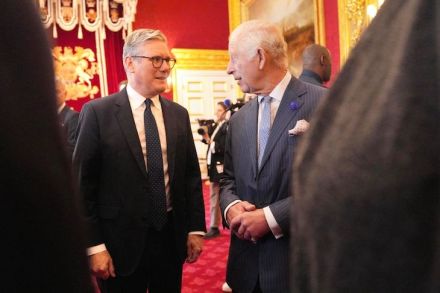
Labour’s first King’s Speech in almost 15 years is expected to be quite meaty. According to reports, His Majesty’s new government will propose 35 parliamentary bills for the coming year.  Labour is proposing dozens of red tape measures that will put the breaks on businesses To be entirely realistic, many of these will fall by the wayside. Parliamentary time is limited, and there are always unexpected events that derail existing legislative plans and call for new ones. Nevertheless, the King’s Speech will be quite revealing about the new government. What they choose to include – and not – sends a signal about early priorities and dispositions. Prime Minister Keir Starmer has said ahead of the speech that the government will 'take the brakes off Britain'.
We are all paying the price for May’s desperate bid to define her legacy

From our UK edition

Theresa May’s final weeks in Downing Street have been much like the rest of her tenure: ungracious, uninspiring and unprincipled. May's latest departing gesture is a gigantic £500 million loan guarantee to Jaguar Land Rover to help with the development of electric cars. This follows on from the government’s £120 million loan to British Steel (which is now in receivership). But how does dishing out huge sums of money to corporate giants fit in with May's claim to stand up for the “Just About Managing”? The simple answer? It doesn't. But in a desperate bid to help JAMs, May has created an "Office for Tackling Injustices” in order to “gather data” on socio-economic, ethnic, and gender disparities.

Did red tape worsen Britain’s inflation problem?

From our UK edition

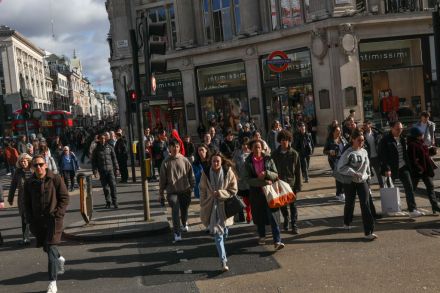
It has been a miserable few years for our quality of life. People have gotten used to that sinking feeling every time you read a price tag at the supermarket, receive an electricity bill or – particularly for younger generations – think about someday buying a house.This squeeze comes from prices rising faster than wages, and has resulted in the biggest slump in living standards since records began. According to the Office for Budget Responsibility’s latest forecasts, household incomes will still be 3.5 per cent below pre-pandemic levels over the coming year. The immediate causes of this crisis are well-known. The Bank of England printed too much money during Covid, pushing up inflation while Russia’s invasion of Ukraine disrupted global energy markets.

George Osborne’s smoking ban is deluded

From our UK edition

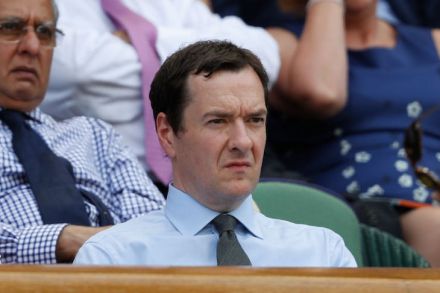
Former Chancellor George Osborne has become the latest British politician to call for a smoking ban. The architect of the sugar tax wants the UK to follow the lead of New Zealand, which will prohibit anyone born after 2008 from purchasing cigarettes.  'You basically phase it out. Of course you’re going to have lots of problems with illegal smoking, but you have lots of problems with other illegal activities,' Osborne said. 'It doesn’t mean you shouldn’t try and ban them and police them and make it less readily available. I thought that was a compelling public health intervention.' You have to admire his flawless logic. Prohibition has proven so successful for recreational drugs; so successful that even senior politicians have admitted to using Class A substances.

Why WhatsApp could quit the UK over the Online Safety Bill

From our UK edition

WhatsApp, Signal and five other messaging services have joined forces to attack the government's Online Safety Bill. They fear the bill will kill end-to-end encryption and say, in an open letter, that this could open the door to 'routine, general and indiscriminate surveillance of personal messages'. The stakes are high: WhatsApp and Signal are threatening to leave the UK market if encryption is undermined. This intervention comes as the Lords begins their line-by-line committee stage scrutiny of the Bill today. Encryption provides a defence against fraud and scams; it allows us to communicate with friends and family safely; it enables human rights activists to send incriminating information to journalists.

The Online Harms Bill still threatens free speech and privacy 

From our UK edition

The Online Safety Bill became a lightning rod for criticism during the Conservative party leadership contest over the summer. A wide array of candidates, from Kemi Badenoch to Liz Truss and Rishi Sunak, promised to take another look at how the legislation, and its attempt to crack down on online harms, could interfere with free speech.  The ‘legal but harmful’ duties, now being removed, required the largest digital companies to address state-determined categories of legal speech – like ‘disinformation’ or ‘hate speech’ – in their terms and conditions. But in practice ‘legal but harmful’ was never the most problematic part of the proposed legislation. While the impetus was for more user content to be removed, technically the platforms could have opted to do nothing.

Are falling house prices really a tragedy?

From our UK edition

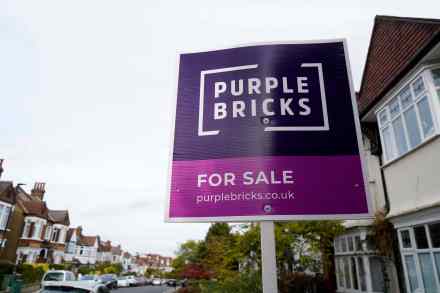
Higher interest rates are making borrowing less affordable, so the average buyer has less to spend on a new property. Halifax found that the house price reduction has already begun, with a 0.1 per cent drop last month. Falling house prices can be a harbinger of economic doom – this kind of decline usually signals the imminent start of a recession. Many will treat lower house prices as a tragedy. Oxford Economics has described the current predicament as ‘the most worrying housing market outlook’ since just before the 2008 financial crash. Homeowners will see their wealth shrink, at least on paper. Recent buyers with loans larger than the value of their property could end up in negative equity. But let’s look at this with some perspective.

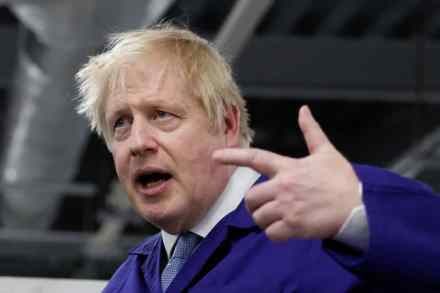
How Boris can really tackle the cost of living crisis

From our UK edition

When it comes to addressing the cost of living crisis, the government has, so far, responded with a range of bad solutions. The energy price cap is being increased by £700 per household, interest rates have gone up for a second month in a row and the Bank of England is forecasting a two per cent drop in household incomes in real terms, the worst since records began in 1990. In response, the Government has announced a package of confusing and ill-targeted measures. This includes council tax rebates, that will extend to some homes valued over £1 million, and a £200 discount on energy bills through loans to energy firms – funds that are meant to be clawed back from customers later when (or if) energy prices decline.

The EU rules creating an armada of empty ‘ghost flights’

From our UK edition

This week it was reported that Lufthansa Group – which also owns Brussels Airlines, Austrian Airlines, Eurowings and Swiss International Airlines – expects to operate 18,000 ‘ghost flights’ with no passengers on them between December and March this year. Other airlines will be following Lufthansa’s lead over the year. At a time when the world is meant to be tackling climate change why are airlines spending a fortune shuttling thousands of empty planes, each spewing tons of carbon emissions into the atmosphere, between airports? The answer, perhaps unsurprisingly, is European Union red tape. ‘The EU surely is in a climate emergency mode,’ Greta Thunberg sarcastically tweeted in response to the news.

There’s nothing wrong with foreign owned football

From our UK edition

Many are blaming the failed European Super League on foreign owners, presenting it as a greed fuelled attempt by overseas banks and businessmen to ruin the beautiful game. The BBC’s political correspondent Ian Watson framed the disagreement as ‘a battle between football fans on the one hand and the predominantly overseas owners of big clubs on the other’. Similarly, the Football Supporters Association has said the proposals were being pushed by ‘foreign owners who are basically asset managers who can see a way of making massive amounts of money out of this’. There’s nothing inherently evil about foreign owners of football clubs, or foreign owners of any other business for that matter.

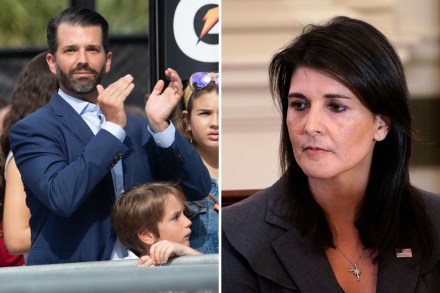
What would Haley vs. Trump Jr. in 2024 look like?

The battle for the soul of the Republican party after President Trump has begun. Last week former United States ambassador to the United Nations, Nikki Haley, gave a provocative speech to the Hudson Institute setting herself up for a 2024 run on a largely free market platform. The speech has been published by Stand for America, an advocacy organization founded by Haley after standing down as ambassador in December 2018. Haley argues that capitalism has lifted billions out of poverty, improved the environment, and created immense prosperity – including the electricity, cars, airplanes, the internet and much more.

haley

Why the UK should support free movement with Australia

From our UK edition

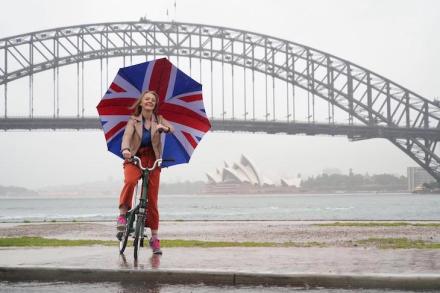
If Britain and Australia agree a post-Brexit trade deal, Liz Truss the international trade secretary has said that free movement between the two countries could form part of an agreement. In a press conference this morning in Canberra, Truss explained that 'Australians want to come and live and work in Britain, and Brits want to come and live and work in Australia'. In response to a question about free movement and the relaxation of current checks, Truss said that this was 'certainly something that we will be looking at as part of our free trade negotiations'. This potentially could take the form of pure free movement (like Australia has with New Zealand) or a visa that allows anyone who can find a job to stay (like Australia has with the United States).

Why the next Tory leader should listen to Philip Hammond

From our UK edition

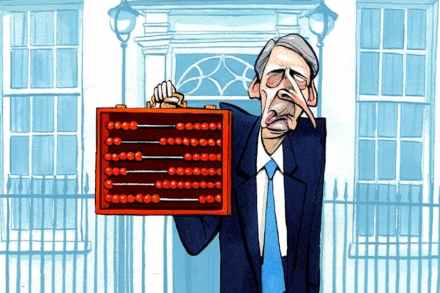
Philip Hammond is up to one last trick before bowing out – and it’s a good one. The Chancellor has called on each of the Tory leadership candidates to commit to ensuring Britain’s debt falls as a share of national income every year. Hammond reportedly asked in a letter to leadership candidates: 'If we do not commit to getting our debt down after a nine-year run of uninterrupted economic growth, how can we demonstrate a dividing line between the fiscal responsibility of our party and the reckless promises of John McDonnell and Jeremy Corbyn?' Playing Labour-lite – promising just a little less spending than socialists Jeremy Corbyn and John McDonnell – is not only fiscally irresponsible but provides political cover for their reckless plans.

Tell us what we want

From our UK edition

We live in a logic-obsessed world, from computer modelling of the economy to businesses run by spreadsheets. But we also know, from decades of behavioural economics and evolutionary psychology research, humans are not robots. The social world is not a machine but a complex system. In Alchemy: The Surprising Power of Ideas that Don’t Make Sense, Rory Sutherland, vice chairman of Ogilvy and columnist for The Spectator, explains how to crack the magic underlying our humanity. Humans evolved to justify their instinctive decisions to others, not to prove what is right and wrong. Those who could defend their actions were more likely to survive. We use reason sparingly, selectively and self-servingly. We search for evidence to support our existing world view.

What the Tories can learn from Australia’s election upset

From our UK edition

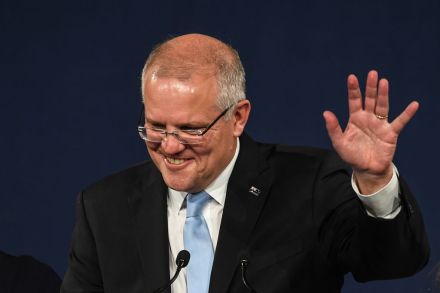
It is hard to exaggerate the level of shock caused by Scott Morrison’s Australian election victory. The re-election of the country's Liberal party prime minister – and the defeat of left-wing Labor leader Bill Shorten – took the polls and plenty of Aussies by surprise. Earlier this year, Shorten told a bemused Arnold Schwarzenegger “I’m going to be the next prime minister of Australia”. The Australian people had a different idea. In his victory speech, Morrison thanked “quiet Australians” for supporting him. A similar dynamic was, of course, at play among shy Tories in the 2015 election in Britain, shy Brexiteers in 2016 and then shy Trump voters later that same year.

Sadiq Khan is wrong about rent control

From our UK edition

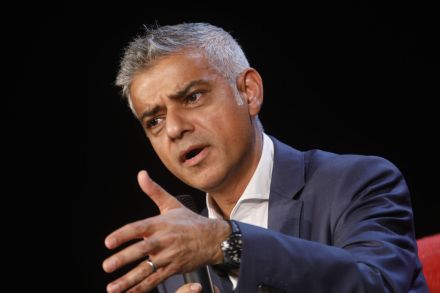
Rent control would worsen London’s housing crisis while hurting the poor, immigrants, and minorities. Yet Sadiq Khan wants to make it the central plank of his bid to win re-election as London Mayor. Khan has said the case for rent control is 'overwhelming' and that 'Londoners overwhelmingly want it to happen'. But while some may see rent control as a way of capping the money going into the pockets of landlords, it would actually make London's problems worse. Rent control would lead to less home building—what London actually needs. On top of that it will mean lower quality housing and discrimination against the most vulnerable. From San Francisco to Stockholm, Berlin and New York, rent control has proven disastrous in every place it has been tried.