Politics

Read about the latest political news, views and analysis

Jeremy Corbyn: why the cross-party Brexit talks have broken down

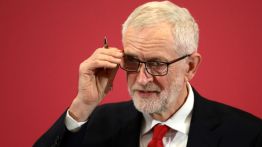
Jeremy Corbyn has just announced that the cross-party Brexit talks between Labour and the Conservatives have broken down. Below is the full text of his letter to the Prime Minister, Theresa May, explaining why:   Dear Prime Minister, I am writing to let you know that I believe the talks between us about finding a compromise agreement on leaving the European Union have now gone as far as they can. I would like to put on record that the talks have been conducted in good faith on both sides and thank those involved for their efforts to find common ground. The talks have been detailed, constructive and have involved considerable effort for both our teams.

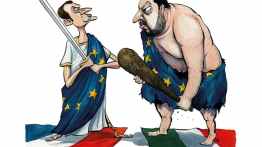
What Macron and Salvini get wrong about the future of Europe

French president Emmanuel Macron and Italy's deputy prime minister Matteo Salvini don't have much in common, but on the importance of the upcoming European elections they agree. For Macron, the vote will be “decisive for the future of our continent”. And for the leader of Italy's right-wing populist Lega, “May 26 is a referendum between life and death. Those who are still sleeping should wake up.” Yet Macron and Salvini are wrong. Both have misinterpreted these elections and their significance for Europe's future. And the argument that these votes are a binary and existential struggle between pro-EU forces, led by Macron, and right-wing populists, led by Marine Le Pen and Salvini, is simplistic and self-serving.

Watch: Theresa May can’t say she will deliver Brexit

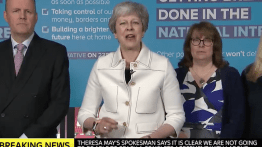
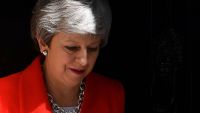
After weeks of dragging its feet and giving the distinct impression it would rather walk through broken glass than take part in the upcoming EU elections, the Conservative Party finally launched its campaign for the European elections this afternoon. To celebrate the launch, which the other parties began preparing for several weeks ago, Theresa May and a handful of Tory MEP candidates headed to a tiny, drab function room in the Bristol City football stadium, with no Tory supporters present. In her speech announcing the start of the campaign, Theresa May assured the viewing public that a vote for the Conservatives was also a vote for Brexit.

The Spectator Podcast: is Boris the man?

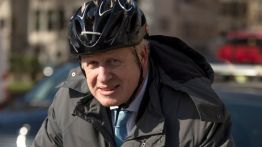
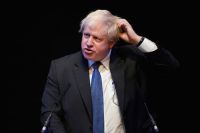
Cometh the hour, cometh the man. Is that man Boris? And if it is, what still stands in his way? In this week's cover article, James Forsyth writes that Boris is the only one who can save the Tories from Jeremy Corbyn and, more pressingly, Nigel Farage (he's backed up by the latest polling from Friday). But the biggest thing standing in his way is himself. In the aftermath of the 2016 referendum, Boris Johnson found himself unorganised, undisciplined, and crushed by public opinion, unable to recover from the vitriol that went his way following the Leave result, and panicked by Michael Gove's last minute backstabbing. But the 2019 Boris Johnson is different, James argues. He's leaner, has better hair - and looks to have absorbed the lessons from his last go at leadership.

France’s far-left are looking to Le Pen as their saviour

Two years ago, Marine Le Pen was a laughing stock, not just in France but around the world. She was never likely to beat Emmanuel Macron in the presidential election but her barrack room performance in the live televised debate with her rival shredded her reputation. While Macron embarked on his campaign to conquer the world that summer, Le Pen disappeared from public life, reportedly plunged into a fit of depression by her humiliating defeat. Although she emerged again in the autumn of 2017 it was without her two most trusted lieutenants, Florian Philippot and Marion Maréchal.

The truth about David Cameron and the ‘mad, swivel-eyed loons’

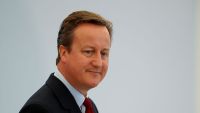
Six years ago this week, I went to dinner with four friends. Three were journalists: James Lyons, Sam Coates, Tim Shipman. The fourth does something else; I’m not going to drag him into this tale. Dinner was in the Blue Boar, a cornerstone of Westminster entertaining and then, as now, the sort of place you bump into all sorts of political people. Which is exactly what happened that night. A senior person in the orbit of David Cameron passed our table. Spotting us, the person stopped to chat, gossip and trade information. Business as usual for Westminster, though what happened next was a little out of the ordinary. First, a bit of context. This was May 2013 and Cameron was struggling with backbench Tory discipline.

Jeremy Corbyn and the Project Fear we should all be afraid of

Factories would move abroad to escape punitive tariffs. The ports would be blocked up. The hospitals would run out of medicines and fruit would remain unpicked on trees. Over the last three years, we have become used to wildly over-the-top predictions about all the terrible things that would happen to the British economy if we ever get around to leaving the European Union. But if you thought that was bad, and global investors were nervous about putting money into the UK markets, wait until you see what happens as they start to get to grips with the plans should Jeremy  Corbyn and John McDonnell ever move into Numbers 10 and 11 Downing Street. The FTSE is already one of the cheapest major indices in the world but that doesn't mean it can't get a lot cheaper still.

Letters | 16 May 2019

Labour’s fence-sitting Sir: James Forsyth writes that Mrs May and Mr Corbyn are ‘not, in fact, that far apart’ (‘May’s compromising position’, 11 May). To many, the Labour left is simply playing its very old game of sitting on the fence over the EU. The electorate have spotted it, and Labour paid for it in the local elections. Some of us are old enough to remember Harold Macmillan’s withering mockery of the Labour attitude to the then Common Market in the early 1960s. It recalls the words of the old song: ‘She didn’t say yes and she didn’t say no; she didn’t say stay and she didn’t say go!’ The reason for Labour’s contorted behaviour was the same then as now.

Corbyn’s half-baked plan to raise the minimum wage for under 18s

My fellow sixteen year olds can’t vote, but that doesn’t stop us being the target of Jeremy Corbyn’s magnanimity. His latest idea: to make sure we are paid the same as adults. So he proposes raising the minimum wage for everyone, including those under the age of 18, to £10 an hour. You can see the superficial appeal. Gone are the days of £5 an hour work. Thanks to Corbyn, a £20 top will take two hours of work to buy, as opposed to four. Which 16 or 17 year old could complain at that? But in reality, the idea isn't so good. When applying for work, we’re not just competing with other 16 or 17 year olds but with middle-aged men and women who have an array of life experiences making them far better suited to most jobs.

Theresa May’s successor should be careful what they wish for

Let’s assume this really is the start of the last act of Theresa May’s premiership. Let’s assume too that her Withdrawal Agreement dies a fourth and final death in the Commons in early June. The Conservatives will then go looking for a new leader and prime minister. There are already no end of candidates.  But I have a question: why would anyone want the job in those circumstances? If the WA dies, there are only two options left for Britain: leave with no deal on October 31, or revoke Article 50. Anyone who tells you there is a third option is trying to sell you something.  Yes, I know that various people suggest that a better form of exit deal is possible. It’s not.

Theresa May will be gone by August

Today's joint statement by the 1922 Committee and the PM may seem opaque but it means something very simple and unambiguous: the Tories will have a new leader – and we will have a new prime minister – by August. That is what a majority of Tory MPs want. But for reasons of decorum, they have not spelled out the exact timetable ahead of the European Union parliamentary elections, which take place on Thursday, or before the fourth and final attempt to have the PM’s Brexit deal ratified, in the week beginning June 3rd. Theresa May is being allowed the flimsiest fig leaf of control over her destiny.

Theresa May is clinging on – but not for much longer

Theresa May’s promise to bring the withdrawal agreement bill to the Commons next month has proved enough for the 1922 Executive. A statement just released by its chairman Sir Graham Brady following their meeting with the Prime Minister says simply that he and her ‘will meet following the 2nd reading of the bill to agree a timetable for the election of a new leader of the Conservative and Unionist Party’. If second reading of the bill fails, Theresa May will be out of options. At that point, she will have little choice but to stand down. Some loyalist MPs fear that a desire to hasten her departure will lead to MPs voting the bill down. Today’s statement attempts to head that off by saying that the timetable will be set regardless of what happens with the vote.

Watch: Change UK MP’s David Brent moment

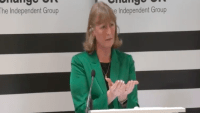
Change UK are faring dreadfully in the polls with the party's support down to just one per cent, according to a recent survey. But Joan Ryan – the Labour MP who defected to the fledgling outfit earlier this year – has a new strategy to try and turn things around: firing voters up with a motivational pep talk. Speaking to activists at a rally in Bath, Ryan told those gathered to 'look at your hands please'. Once they had done so she then said: 'That's it, it's there, it's in your hands. So take your hands and get out there.' Mr S wonders whether Ryan is trying to channel David Brent. If so, she is doing a good job...

Anyone but Boris

If Boris Johnson is, once again, the answer it is worth asking what the question can be. The simplest response must be that he is, at least as far as some Conservative MPs are concerned, the man most likely to save their jobs at the next election. But a better question, for the country anyway, would be to ask if Boris Johnson is fit to be prime minister?  And the answer to that is obvious. We are asked to believe that, despite being a conspicuous failure at the foreign office, Johnson could be a plausible prime minister. But what, precisely, in Johnson’s history gives anyone confidence he might be a fit and proper prime minister? That the same question might be asked of Jeremy Corbyn and receive precisely the same answer in no way advances Johnson’s claims.

How Nigel Farage could save the Tories

Is the Brexit Party the enemy or friend of the Tory Party? Is Nigel Farage its destroyer – or could he turn into its redeemer? This is not as crazy a question as it may sound, even though right now Farage’s new venture is set to humiliate the Conservatives in the forthcoming EU parliamentary elections. The answer is contingent on other events, and in particular who wins the power struggle within the Conservative Party after Theresa May stands down (which every Tory MP I ask believes will be before the June 15th extraordinary vote by Tory local association chairs and grassroots officials on whether she is fit to remain in office – strikingly Andrew Bridgen and Ed Vaizey, from the polar opposite wings of the party, endorsed that scenario on my show last night).

Gavin Barwell’s new number

The switchboard operators at 10 Downing Street are well-known for their precision and professionalism, as they dutifully connect callers to the Prime Minister, and the Prime Minister to senior officials, dignitaries and foreign leaders around the world. But it appears that they had an uncharacteristic slip-up the other day. The Daily Mail's Sebastian Shakespeare reports that when a senior civil servant in a major Whitehall department recently rang the line and asked for Gavin Barwell, Theresa May's chief of staff, they clearly were misheard by the Number 10 switchboard. After a short pause, the senior civil servant, no doubt expecting to discuss important matters of state, was instead connected to Take That star Gary Barlow. It's easy to confuse the pair after all.

Liz Truss’s numbers problem

With Theresa May on the way out, the Prime Minister's Cabinet colleagues are gearing up for the upcoming Tory leadership contest. While several of the would-be candidates have openly declared their intention to run – Andrea Leadsom, Rory Stewart and Esther McVey – others prefer to run a covert campaign operation behind the scenes. Of the favourites to succeed May, both Jeremy Hunt and Dominic Raab are thought to have significant support when it comes to the number of MPs who will back them. Meanwhile, James Brokenshire has been stealing the headlines thanks to a paper interview in which it was revealed that he owns four ovens.

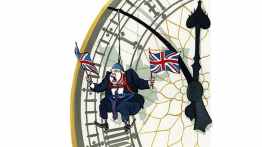
Cometh the hour

The worse things are for the Tories, the better for Boris Johnson. If the Tories were ahead in the polls, he’d have little hope of becoming leader. MPs would choose someone more clubbable, less divisive, and more interested in them personally: who didn’t annoy so many of them so much. But Tory MPs are now contemplating an existential crisis. Tory voters are defecting en masse to Nigel Farage’s Brexit party. The Conservative party’s survival may well turn on winning these voters back, and the former foreign secretary — the tribune of Leave, the buccaneering Brexiteer, the darling of the grassroots — is the most obvious person to do that. Suddenly, Boris is back and in contention for the leadership again.