Politics

Read about the latest political news, views and analysis

Brexit means Boris: we need a leader who can cheer us up

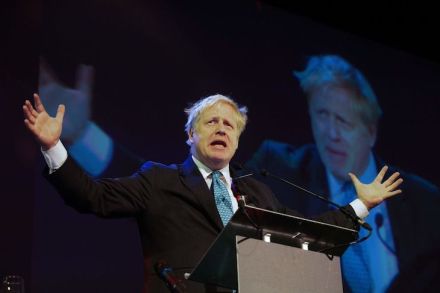
A few months before he died in 2007, Bill Deedes asked if I would come to see him at his home in Kent and bring Boris Johnson along with me. I was writing a biography of Bill at the time, and I knew he was miserable because he had broken his hip and could no longer come up to London. Boris jumped at the idea and I remember our lunch as the last time I saw Bill exuberantly happy. Boris knew instinctively what a 93-year-old journalist who was struggling to write his weekly column needed, and filled him in hilariously on the London political and media gossip. The only slight awkwardness came when Bill stressed his admiration for David Cameron, and Boris’s impenetrable eyes momentarily turned just a little beady.

In defence of Theresa May

Pretty much all the bad things that people are saying today about Theresa May are true. She’s bad at politics, bad at communicating, bad at dealing with colleagues. She created the conditions that made her job as prime minister handling Brexit almost impossible. Her 'red lines' in the autumn of 2016 gave Britain almost no room for manoeuvre and made the sort of cross-party consensus approach to Brexit that is the logical response to a 52:48 referendum result practically impossible. Her 2017 general election cost her the Commons majority that might just have made that hardline approach viable. Her response was quintessentially Theresa May: she compromised on policy but not on politics. When you hear people today scoffing that May didn’t do compromise, they’re wrong.

The favourites to succeed Theresa May: Tory leadership odds

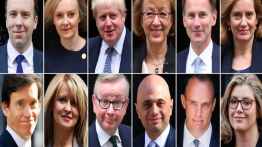
Now that Theresa May has officially announced she is resigning as Prime Minister and leader of the Conservative Party, the various leadership contenders hoping to take her place will be furiously canvassing their colleagues and stepping up their campaigns. But who are the favourites to succeed her so far? According to the betting exchange $Markets, the current chances for the would-be Tory leaders stand at: Boris Johnson: 40 per cent Dominic Raab: 19 per cent Michael Gove: 10 per cent Andrea Leadsom: 6 per cent Jeremy Hunt: 5 per cent Rory Stewart: 5 per cent Penny Mordaunt: 4 per cent Leading the pack by a wide margin on 40 per cent (no doubt due to his popularity among grassroots members and wide support among Brexiteer MPs) is Boris Johnson.

Theresa May passes on the poisoned chalice of Brexit

It is official. Theresa May will resign as Tory party leader on 7 June and will continue as caretaker prime minister for a few short weeks. An emotional moment, possibly for much of the nation, certainly for her: she gulped and her eyes became tearful at the close. Her three years in office have been turbulent, totally dominated by a Brexit she has failed to deliver. Time to pass on the chalice; and what she did not say is that the chalice is just as likely to be poisonous for her successor as it has been for her. Given the absence of a majority for her party, there is unlikely to be any resolution of the Brexit crisis or indeed any progress on fixing Britain this side of a general election.

Conservative ministers and MPs react to Theresa May’s resignation

After a tumultuous premiership, Theresa May has finally announced her resignation. She will step down as leader of the Conservative Party on June 7. Here is how Tory MPs have been reacting: Former Brexit Secretary Dominic Raab, seen as a Brexiteer favourite, tweeted: https://twitter.com/DominicRaab/status/1131855341287804929 Boris Johnson, frontrunner in the leadership race, praised the Prime Minister's 'stoical service': https://twitter.com/BorisJohnson/status/1131857415538925569 Foreign Secretary Jeremy Hunt, a potential leadership contender, tweeted: https://twitter.com/Jeremy_Hunt/status/1131852239650394114 This from Andrea Leadsom, who ran against Theresa May in 2016 for leadership of the party and resigned as Leader of the Commons on Wednesday.

Full text: Theresa May’s resignation speech

Ever since I first stepped through the door behind me as Prime Minister, I have striven to make the United Kingdom a country that works not just for a privileged few, but for everyone. And to honour the result of the EU referendum. Back in 2016, we gave the British people a choice. Against all predictions, the British people voted to leave the European Union. I feel as certain today as I did three years ago that in a democracy, if you give people a choice you have a duty to implement what they decide. I have done my best to do that. I negotiated the terms of our exit and a new relationship with our closest neighbours that protects jobs, our security and our Union. I have done everything I can to convince MPs to back that deal. Sadly, I have not been able to do so.

May becomes the latest Conservative prime minister to be brought down by Europe

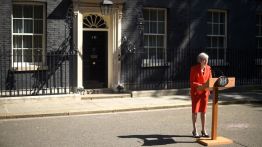
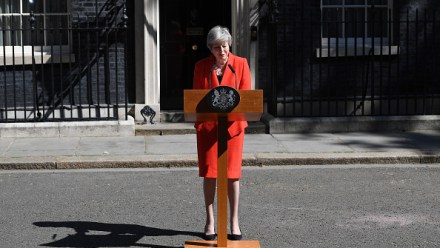
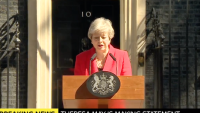
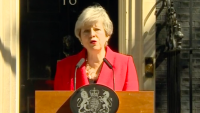
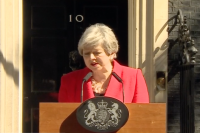
Theresa May has become the latest Conservative prime minister to be brought down by party divisions on Europe. Speaking outside 10 Downing Street, the Prime Minister gave a statement in which she confirmed that she will step down on June 7 to pave the way for a leadership contest to find her successor the following week. She admitted that her Brexit strategy had failed – having tried to pass her deal three times – and said this was something she deeply regretted. However, she suggested that she did not regret her approach – stating that 'compromise is not a dirty word'. At the end of the speech, May had a rare show of emotion as she declared that it had been an honour to 'serve the country I love': 'I will shortly leave the job that has been the honour of my life to hold.

BREAKING: Theresa May announces her resignation

Theresa May has announced that she will be stepping down as Prime Minister on 7 June. In a statement outside 10 Downing Street,  May said that although it was a 'deep regret' that she had not been able to deliver Brexit, she had failed three times and: 'So I am today announcing that I will resign as leader of the Conservative and Unionist Party on Friday 7 June, so that a successor can be chosen.' She continued that: 'I have kept Her Majesty the Queen fully informed of my intentions and I will continue to serve as her Prime Minister until the process has concluded.' The announcement follows a meeting the Prime Minister had with Graham Brady, chairman of the 1922 committee of backbench Tory MPs, where he was expected to call for her to stand down.

Letters | 23 May 2019

Nigel’s nakedness Sir: Rod Liddle is right to be wary of the hubris that Nigel Farage, the Brexit party leader, is beginning to show (‘The Brexit party delusion’, 18 May). His wish to smash the mould of British politics clearly shows that he expects his disciples to follow him into the promised land. The Andrew Marr interview and a recent Question Time appearance showed that under close questioning Farage gets rattled and resorts to dismissing his opponents and shouting them down. When will the public realise that this emperor has no clothes? Stan Labovitch Windsor, Berks Nato expansion Sir: Alan Judd writes of the ‘allegedly broken promise not to enlarge Nato following the collapse of the Soviet Union’ (‘Disputes over Putin’, 18 May).

The end of May

This week’s European election was always going to be pointless, at least from a British perspective. It is possible that the elected candidates will never even take up their seats. In one important sense, however, the election campaign has been useful: as a reminder of where public opinion stands on Brexit. A few weeks ago, many believed that Change UK, the party founded by Labour and Conservative dissidents spoiling for a revocation of Article 50, would capture the public mood. Instead, another new political party would appear to have triumphed — a party set up with the sole purpose of expressing anger at the failure of Parliament to effect Britain’s departure from the EU on the date which had been set into law.

The Spectator’s Notes | 23 May 2019

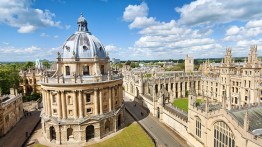
Almost everyone agrees it is a pity that so few pupils from ‘disadvantaged socioeconomic backgrounds’ get into Oxford. But no one has successfully proved that it is Oxford’s fault that they do not. (I went to Cambridge, by the way, so I do not have a dog in this fight, except that I imagine the same arguments apply.) One reason that some universities, including Oxford, are classified as ‘world-class’ is that they admit the best. The definition of ‘best’ cannot refer only to native ability, but must also take some account of how well prepared a pupil is.

The deal on Theresa May’s resignation is done

Put 10th June in your diary. Because that is when the contest to elect a new Tory leader, and therefore a new prime minister, will begin, I am told. Why am I confident of that? Well it is the last possible date for the contest that the shop stewards for Tory MPs, the executive for the 1922 committee, deem acceptable. And – perhaps more importantly – it is the date that the PM has signalled to her closest allies that she can tolerate. How so? Well she does not want the state visit of Donald Trump and the D-Day celebrations of the preceding week to be undermined by the unseemly spectacle of Tory MPs and ministers scrabbling and scrambling to replace her.

Boris Johnson is the agent of Theresa May’s downfall

In the end, Boris Johnson has proved to be Theresa May's unassailable nemesis (if that's not a tautology); he is the agent of her downfall. Which is not to say he will succeed her as Tory leader and prime minister. He may be the favourite to do so, but – as Sunder Katwala has pointed out – only once in the past half century has the initial frontrunner actually seized the Tory crown. Boris could yet blow it. But his manoeuvres with his backbench colleagues have made it impossible for the PM to have her Brexit plan approved – were she to put her Withdrawal Agreement Bill to a vote, as she still promises to do – because he has persuaded them there is an escape from the Brexit deadlock that is destroying their party but not while she is in 10 Downing Street.

What will happen if Theresa May tries to cling on?

On Friday, Sir Graham Brady, chairman of the 1922 committee, will go and see Theresa May. It is expected that she’ll tell him and then the country the date of her departure as Tory leader. If May tries to hang on, Brady will have to open the sealed envelopes which reveal whether the '22 executive has voted to change the rules and allow an immediate no confidence vote in May—even those on the executive who oppose a rule change accept that there is a majority for one. Number 10 know this too, which is why I don’t think there’ll be any attempt by May to argue that she’s not going anywhere. But May will not resign immediately. Rather she’ll name a date in the next few weeks.

Why I’m voting for the Conservatives today

It would not normally be an act of great courage to vote Conservative in true-blue Sussex, but I feel I have to screw myself up to do so in the European elections this week, so great is the ill feeling here against the Tories for not achieving Brexit. Yet do it I will. In extenuation, I would plead that I do sincerely wish the Tories ill in these unusual elections. My vote is not intended to help them in any way. It is just that Daniel Hannan is first on the Conservative candidates’ list, and so there is a chance, if opinion polls are right, that he will be the only one of his party elected. It would be most unjust if he were kicked out. I want him to be the righteous remnant.

Keeping up with Farage

‘Labour are in so much trouble here you can’t even believe it,’ says Nigel Farage as we sit in a parked blue bus in Dudley in the pouring rain. Outside, a group of campaigners in anoraks wave Brexit party banners and sing ‘Bye bye EU’ to the tune of ‘Auld Lang Syne’. A mix of locals and supporters from out of town have assembled to hear Farage. A Japanese camera crew rush to film the circus around him. Reporters from New York are following the pack. Keeping up with Farage is exhausting. When Farage was last in Dudley, the town went on to vote overwhelmingly to Leave, by 67 per cent. Back then, he tells those assembled, the sun was shining. The change in weather, he says, reflects the change in our politics.

Corbyn isn’t working

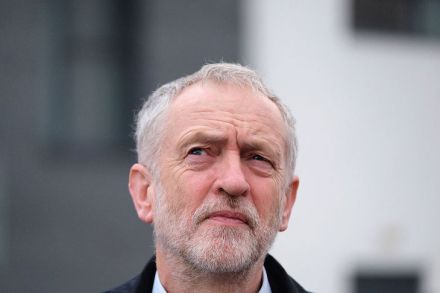
Protestors on the anti-Brexit marches have sensed an eerie absence. ‘What is it?’ I thought back in March as I stood on a soapbox to address an audience so jammed by the weight of numbers on Park Lane that it could not escape. Then it hit me. ‘What the hell have they done with the left?’ There were no Socialist Workers Party placards or George Galloways. The people who hijacked every demonstration I could remember had vanished. I saw plenty of left-wingers. On the neighbouring soapbox, a succession of socialists spoke well on the need to protect migrants and workers’ rights in a reformed Europe.

May’s grave mistake

The European elections were a gift for Britain’s two new political parties, Change UK and the Brexit party. But only the latter seized the opportunity. Change UK have had myriad problems. They have been unable to settle on a name and a logo. Their MPs, exiles from the two main parties, have struggled to understand how minor parties get noticed. But the biggest problem seems to be that their strategy almost assumes Brexit has happened: how else to explain their failure to propose some kind of Remain alliance for this contest? In order to get lift-off, Change UK need Labour to have ‘betrayed’ Remain voters. But the Labour leadership has consistently tacked towards a second referendum to avoid a full-on breach with its Remain base.