Economy

  • AAPL

    213.43 (+0.29%)

  • BARC-LN

    1205.7 (-1.46%)

  • NKE

    94.05 (+0.39%)

  • CVX

    152.67 (-1.00%)

  • CRM

    230.27 (-2.34%)

  • INTC

    30.5 (-0.87%)

  • DIS

    100.16 (-0.67%)

  • DOW

    55.79 (-0.82%)

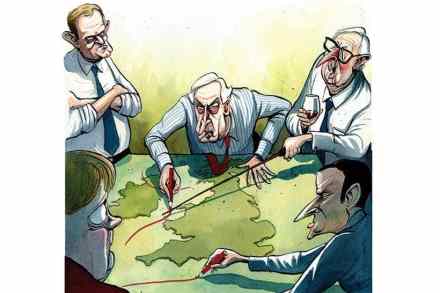
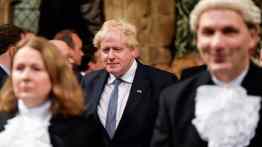
Miliband’s fight against North Sea drilling is far from over

What have North Sea oil and gas production and grammar school education got in common? Both are subject to a fiddle by which they can be expanded while the government pretends they are not expanding. After David Cameron changed his mind on grammar schools and said he wouldn’t allow new ones to be created, a deal was done whereby existing schools could open a ‘satellite’ on another site in another town. Hence Tunbridge Wells Grammar School opened a new site in Sevenoaks – a separate school in all but name, and yet the government could claim that it had stuck to its promise of no new grammars. The cabinet battle

Spotlight

Featured economics news and data.

Cutting Britain’s giant welfare bill would be an act of kindness

Does having money really matter that much? There are those, usually with quite a bit of it, who want us to care less about materialism. But, unequivocally, money really does matter – not because of any status it supposedly brings, but for the freedom it buys: freedom to choose how we live and how we look after others. Considering this, it seems that the deep disillusionment with mainstream politicians in recent years stems from a protracted and ongoing period of stagnant living standards over which they have presided. But the truth is that the average person has not got poorer since the global financial crisis. They have got a little

Life in an age of hyperinflation

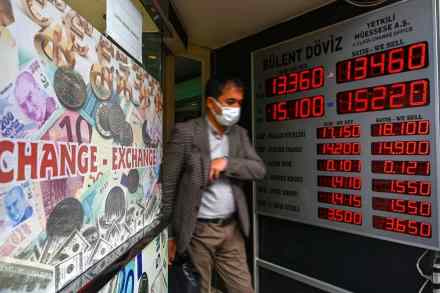
Istanbul, Turkey On Saturday mornings, Istanbul’s markets and greengrocers are packed with housewives in search of a bargain. Anxious women compare cabbages while chefs haggle over bunches of parsley, passing across thick wads of ten Lira notes – equivalent to about £5 a decade ago, now worth just 50 pence. The rising cost of food has become a national obsession in Turkey. Menemen, a staple breakfast dish of scrambled eggs with tomato, onion and fried green peppers, has seen the cost of its basic ingredients shoot up by 132 per cent in a year. Some shops in the big cities have invested in digital price tags – those little grey electronic

The good economic news about people’s finances

If you believe the media coverage of the latest consumer confidence surveys, household spending is set to collapse under the weight of the cost of living crisis, dragging the UK economy into a deep recession. But how reliable are these signals? As always, it is worth digging past the headlines. The GfK measure of consumer confidence did indeed fall to a record low in May. But people were less pessimistic about their own finances than they were about the economy as a whole. This distinction is crucial. It is no surprise that people are worried about the general economic situation: we are constantly being told that the country is going

How far will house prices fall?

‘Forecasting is a mug’s game’ is a truism attributed to everyone from fantasy author Douglas Adams to former Bank of England governor Mervyn King. It reminds us that commentators should never be smug when they call the near future right, or quick to crow at others who turned out to be wrong. I may have been a step or two ahead of the pack this season on inflation and recession risks and I’ve always said crypto, which we’ll come to in a moment, was the road to perdition. But I confess my record on property trends is frankly lamentable. Way back in the ‘negative equity’ era of the mid-1990s, I

Mervyn King: Needless money-printing fuelled inflation

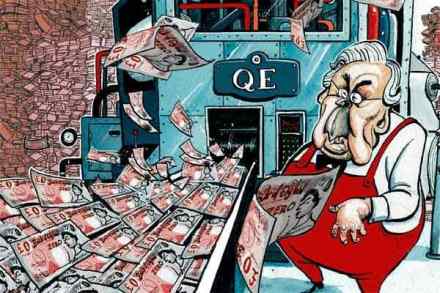
Some £500 billion was printed by the Bank of England during the pandemic – a staggering sum that caused very little public debate. Those sceptical about so-called ‘quantitative easing’ argue that it causes inflation – and with today’s news that inflation rose 9 per cent on the year in April, is anyone linking the two? Step forward Mervyn King, former governor of the Bank of England, who was surprisingly critical when speaking to Andrew Marr on LBC last night. One of the major problems, Lord King said, was that the Bank went too hard and too fast with its money printing. ‘Governments stepped in and put in a lot of

Sunak, not Bailey, is to blame for inflation

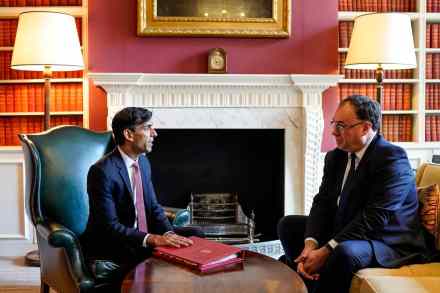
Inflation has hit a 40-year high. The cost of household utilities rose by an average of £700 last month. We are now facing inflation of 9 per cent and the figure is still careering upwards. In response, politicians and ministers have attacked the Bank of England. Some commentators have even started to call for Governor Andrew Bailey to resign. The Governor himself and Chancellor Rishi Sunak say there is nothing that can be done about prices rising. They’re both wrong. First, let’s understand why it is unfair to attack the Bank of England. Under our system, the Bank is not independent, as some like to claim. Rather, it has what is called ‘operational independence’.

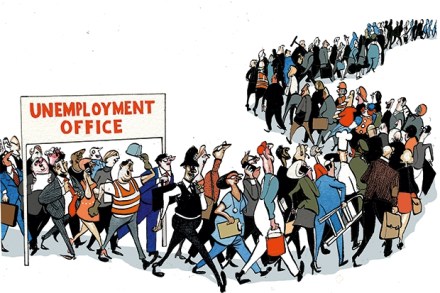
Unemployment is low – so why aren’t wages improving?

For the first time ever, the number of UK job vacancies – now almost 1.3 million – has overtaken the unemployment count. Normally, this would lead to people in work feeling much better off, and lead to pay hikes and bonuses as employers compete to recruit and retain employees. But in fact, regular pay in real terms (that is, after inflation and before bonuses) is down 1.2 per cent – fuelling the cost-of-living crisis that is now the central fact of British politics. What’s going on? In short, today’s ONS labour market overview is yet another example of how inflation can ruin otherwise good news. Total salaries are up 7

The protocol is hurting Northern Ireland

With every sausage war or fish fight over the past 18 months, the chances of survival for the Northern Ireland protocol have narrowed. But the fallout from the NI Assembly elections, which saw Sinn Féin become the largest single party, has made it increasingly likely that the UK will take unilateral action to override parts of the Brexit deal. The protocol has few supporters. Arguably its only redeeming feature was that it allowed Boris Johnson to break the deadlock and conclude the withdrawal agreement. Because a porous land border between the UK and the Republic would have threatened the single market – and a hard border between Northern Ireland and the Republic

Andrew Bailey’s inflation excuses have been exposed

This afternoon the Bank of England’s governor Andrew Bailey appeared, as he has done many times before, in front of the Treasury Select Committee to answer questions about its recent decision-making. Yet the tone of the Committee was radically different to other sessions. Its chair Mel Stride opened by asking Bailey if he and the Monetary Policy Committee – made up of nine members who vote to set interest rates – had been ‘asleep at the wheel’ as prices soared throughout the country. It was arguably one of the easier questions put to him during today’s session: from then on, Bailey and the MPC members who joined him were pit

Tinkering with the energy price cap won’t fix it

In principle, the UK’s energy price cap is supposed to provide a buffer for consumers who might otherwise see their energy bills go through the roof. But governments can’t control international energy prices: a lesson that has been learned the hard way over the past six months, as dozens of energy companies have gone bust, unable to raise prices for customers to reflect increasing wholesale costs. Meanwhile the cap has not stopped bills from skyrocketing: Ofgem’s last price cap went up by 54 per cent, taking the total cost for an average household to just under £2,000 per year. Still, if there were any silver lining to this distortive policy

Are sanctions on Russia failing?

Sanctions are the West’s key weapon in the fight against Putin, but there are signs that Russia’s economy and financial system is weathering the storm better than expected. The rouble has already bounced back and Russia has been able to continue to service its debts, with only minor hiccups. A closer look however reveals that sanctions are biting hard – and that Russia is losing the economic as well as military war. Take the rouble’s resurgence, which is not what it seems. The ability of Russia’s currency to bounce back reflects the fact that Russian imports have fallen by more than the country’s exports, as local consumers and businesses have cut spending. This means there

The nihilistic rise of ‘loss porn’

It’s been a terrible few weeks for that guy you know. Bitcoin dropped to a ten-month low (apparently thanks to something called ‘stablecoins’), while $1 trillion has been wiped off the largest tech companies on the stock markets. ‘Retail investors’ – non-professionals with little more than an internet connection – are struggling. You might expect many of them to put their heads in their hands and log off. But that would be to misunderstand the nihilism of online culture. Losing is the same as winning, only better. The thing to do is to post evidence of your catastrophic losses. It’s called ‘loss porn’ and if you look at the ‘WallStreetBets’ page on

Are we heading for recession?

Fears that Britain could soon be in recession are growing, as the economy appears to have even less power behind it than previously thought. Today’s update from the Office for National Statistics shows Britain’s economy grew by 0.8 per cent in the first quarter of the year (consensus was 1 per cent) – and actually fell by 0.1 per cent in March when zero growth was predicted). February’s growth was downgraded as well, from a minimal 0.1 per cent growth to being completely stagnant. Had it not been for increased construction output in March (up 1.7 per cent), the fall would have been bigger: the services industry fell by 0.2 per

The tech bloodbath won’t last forever

To paraphrase the American senator famously talking about government spending, a trillion dollars here or there and very soon you are talking about serious money. Over the last week, a massive $1 trillion has been wiped off the value of the major American technology companies, and, if measured since the start of the year, the carnage is far worse. But is it all as bad as it seems? Sure, some of the excesses of lockdown are being trimmed, and rising interest rates are starting to hurt some wildly over-valued companies. But nevertheless, tech is still where the growth is. And in reality the bloodbath will soon be over. It would

Could Haldane have helped save us from inflation?

Would Andy Haldane, the economist who left the Bank of England to run the Royal Society of Arts, have made a better governor than Andrew Bailey? You might be thinking that Daffy Duck would have made a better fist than Bailey of combatting the cost of living crisis. But seriously, Haldane was an outsider (backed by this column) in the race won by Mark Carney in 2012, and Dominic Cummings reportedly wanted him to follow Carney in 2020. He’s a brilliant real-world observer and it’s poignant to know that, though he warned Monetary Policy Committee colleagues early last year to brace for inflation, it has ‘surpassed my worst expectations’. He

Fraud victim? Don’t bank on getting your money back

Lloyds Bank has been running a new advertising campaign which updates its long-standing black horse corporate branding. The horses no longer thunder along a beach, but interact with people who we assume are actual or potential customers. The soothing payoff slogan goes: ‘Lloyds Bank. By your side.’ The latest episode features a girl who slightly puts me in mind of our 17-year-old daughter. She happens to bank with Lloyds, but there the happy parallel ends. On a Saturday afternoon in March, a person unknown withdrew £440 from our daughter’s account via an ATM. At that precise time, our daughter was playing her clarinet during an audition for a London orchestra.

Is the bond bubble about to burst?

First, the good news: US inflation is down. Now the bad news: US inflation isn’t down by as much as a lot of people were expecting. Cue quite a lot of confusion on the markets. First, the S&P 500 plunged by 0.5 per cent, then it rose by 1 per cent, then it was more or less back to where it started the day. The FTSE100 has performed a similar gyration: first erasing its daily gain and then regaining it, to finish nearly 1.5 per cent up on the day. So, is it positive or negative news that US consumer inflation has fallen from 8.5 per cent in March to

The perils of ‘Bidenflation’

Has inflation peaked in the United States? Today’s update from the Bureau of Labor Statistics shows the annual rate of inflation has fallen slightly, from 8.5 per cent in March down to 8.3 per cent in April. There are signs of slowdown in the monthly figures, too: prices rose 0.3 per cent between March and April, after rising 1.2 per cent between February and March. The Democrats will struggle to hail this relatively small dip as any kind of meaningful victory Still, markets don’t seem particularly encouraged by the news. US stock futures immediately took a dip when the figures landed. Emphasis seems to be on the fact that inflation

When will Boris face up to the real challenges facing Britain?

It’s rarely a good sign when, moments after a major set piece event such as yesterday’s Queen’s Speech, the government’s PR machine kicks into overdrive to defend it. Though Labour’s claims that Boris Johnson isn’t doing enough to support squeezed households were wearyingly predictable, the Tory narrative about turbocharging the economy and slashing EU red tape has quickly fizzled out. And Michael Gove’s surreal media performance this morning won’t do much to allay concerns that Boris’s government is up a creek without a paddle. Brits are currently facing rising energy bills, inflation is forecast to hit ten per cent and wages are failing to keep up with the increase in prices.

BlackRock is right to abandon eco-activism

Is this the end of climate activism from pension providers and other institutional investors? BlackRock, which manages $10 trillion in assets, has toned down its enthusiasm for blocking company boards that are not sufficiently committed to a carbon-free future. In January 2020, BlackRock’s CEO Larry Fink shook up the world of investment by writing an annual letter to the CEOs of companies in which he invests, warning them that in future BlackRock would take a more critical view of their climate change policies. He wrote on that occasion: Last September, when millions of people took to the streets to demand action on climate change, many of them emphasised the significant