Economy

  • AAPL

    213.43 (+0.29%)

  • BARC-LN

    1205.7 (-1.46%)

  • NKE

    94.05 (+0.39%)

  • CVX

    152.67 (-1.00%)

  • CRM

    230.27 (-2.34%)

  • INTC

    30.5 (-0.87%)

  • DIS

    100.16 (-0.67%)

  • DOW

    55.79 (-0.82%)

Miliband’s fight against North Sea drilling is far from over

What have North Sea oil and gas production and grammar school education got in common? Both are subject to a fiddle by which they can be expanded while the government pretends they are not expanding. After David Cameron changed his mind on grammar schools and said he wouldn’t allow new ones to be created, a deal was done whereby existing schools could open a ‘satellite’ on another site in another town. Hence Tunbridge Wells Grammar School opened a new site in Sevenoaks – a separate school in all but name, and yet the government could claim that it had stuck to its promise of no new grammars. The cabinet battle

Spotlight

Featured economics news and data.

Cutting Britain’s giant welfare bill would be an act of kindness

Does having money really matter that much? There are those, usually with quite a bit of it, who want us to care less about materialism. But, unequivocally, money really does matter – not because of any status it supposedly brings, but for the freedom it buys: freedom to choose how we live and how we look after others. Considering this, it seems that the deep disillusionment with mainstream politicians in recent years stems from a protracted and ongoing period of stagnant living standards over which they have presided. But the truth is that the average person has not got poorer since the global financial crisis. They have got a little

How high might interest rates go?

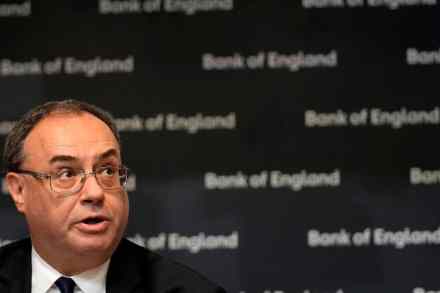
To nobody’s surprise, the Bank of England has hiked its base rate, and, equally unsurprisingly, it has chosen to do so by a relatively modest 0.25 per cent, bringing rates to 1.25 per cent. In 25 years of its existence, the Monetary Policy Committee (MPC) has never raised rates by more than 0.25 per cent at a time. That stands in contrast to the Fed’s decision to raise rates by 0.75 per cent on Wednesday. If the modesty of the rise was supposed to calm markets, however, it doesn’t seem to have worked. The FTSE100, already down nearly 2 per cent on the day, plunged further on the announcement. The

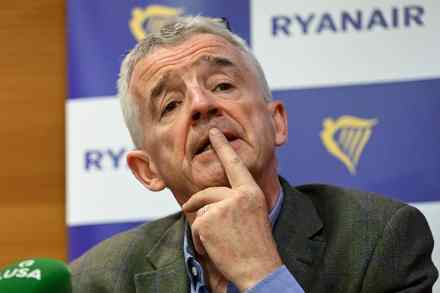
How Michael O’Leary can stop the flying blame game

Stock markets are tumbling, but given the tide of economic news, that’s hardly surprising. The S&P 500 index dived into bear market territory – 20 per cent down since January – after a rise in US inflation for May. Our own FTSE indices reacted badly to an unexpected 0.3 per cent drop in UK GDP for April. Interest rate rises predicted on both sides of the pond this week will make investors jumpier still. So expect further falls in markets that have been driven by weight of cheap money to stay unnaturally high despite an increasingly bleak backdrop. And wait for the turn. When might that be? When investors think

Is the western boycott of Russian oil backfiring?

Ukraine’s ability to defend itself against the Russian invasion has surprised almost everyone outside the country, none more so, presumably, than Vladimir Putin. As for the West’s efforts to harm Russia through sanctions on its fossil fuel exports, that is a very different matter. Sanctions have not been entirely useless. According to a report by the think tank Centre for Research on Energy and Clean Air (CREA), they have led to Russia losing over €200 million (£173 million) a day relative to what it was earning at the start of the year: €880 million (£692 million) per day in May compared to €1.1 billion (£951 million) per day in January

The eurozone crisis is back

Stock markets are crashing. Bond yields are soaring. And the cryptos are evaporating. There is so much going on in the financial markets right now it would be hard to miss the most significant event. The eurozone crisis, which almost broke apart the single currency back in 2011 and 2012, is back. And this time around, there is no very obvious way of fixing it. With inflation soaring across the world, the era of plentiful printed money coming to an end and interest rates starting to rise, every kind of financial market is in turmoil. Investors are adjusting to a new set of circumstances, and doing so very quickly. So

Levelling up is failing

First the good news: the Office for National Statistics figures released today show that pay is rising at its fastest rate in two decades, with regular pay up by 4.2 per cent in the three months for February to April compared with a year earlier. Now the bad news: such is inflation that, in real terms, regular pay was actually down 2.2 per cent – lower than at any time in the past two decades except for a brief period in the autumn of 2011. So, yes, it isn’t just an illusion: we really are getting poorer. That is a big problem not just for households trying to make ends

Is Britain getting back to work?

The economic lesson of the week is that headlines are often deceiving. Yesterday’s GDP update for the month of April showed a 0.3 percent contraction – but that was largely due to the rollback of state-funded programmes designed to tackle Covid-19. Now today’s employment updates show the headline employment rate up – to 75.6 per cent – and the headline unemployment rate largely unchanged for the three months leading up to April. But is the labour market as ‘tight’ as these numbers suggest? In the short-term, Britain’s workforce seems stable. While prices spiral and growth remains largely stagnant, there are no immediate signs of rising unemployment. And the chunk of

Why is Apple getting into lending?

It’s the highest form of flattery, but is Apple really trying to copy Klarna? That’s the allegation made by the Swedish firm, which has led the way with so-called ‘buy now, pay later’ credit. Last week Apple announced that it too would be offering deferred payments via Apple Pay, as well as the option to split repayments over several instalments. It’s something that Klarna has been flogging for over a decade. And it’s already pretty popular: nearly a quarter of British shoppers have used Klarna’s services. Now its founder ​​Sebastian Siemiatkowski has accused Apple of nicking his concept. In reality, Klarna isn’t the only, or even the first, company to

There is more to the UK’s latest GDP figures than meets the eye

Today’s economic growth figures serve as a reminder that it’s important to be specific about what’s actually being measured. Headline GDP numbers show a contraction of 0.3 per cent in April: worse than what was expected (the forecast consensus was a fall of roughly 0.1 per cent), suggesting a fall in economic activity and output, pushing the UK further towards recession territory. This is another example of why the technical definition of a recession may not help us much in the coming months either. But break down the headline number and another narrative emerges. A large driver of negative growth was the ‘significant reduction in NHS Test and Trace’ and

Did Rishi Sunak really make an £11 billion blunder?

Could Rishi Sunak really have saved the taxpayer £11 billion by insuring against higher interest rates last year? That was the extraordinary claim made by the National Institute of Economic and Social Research (NIESR) and in the Financial Times on Friday. The NIESR claims that the government could have saved the money had the Chancellor taken up the institute’s own suggestion last year and forcibly converted £600 billion worth of reserves held by commercial banks at the Bank of England into two year fixed-rate bonds. By failing to foresee rising inflation and interest rates, the FT asserts, the Chancellor has blown even more money than Gordon Brown did by selling

How Uruguay held out against South American socialism

Of all the epithets for Latin America, the most frustrating and demoralising must be the ‘forgotten continent’. Latin America is not so much forgotten as overlooked. Part of the reason for this may lie in its cultural proximity but geographical distance to the West: what Alain Rouquié, the French political scientist, called ‘far-western’. Familiarity, even on these fringes, has bred indifference. Last month, however, Britain remembered its historical ties to Latin America when Boris Johnson welcomed the President of Uruguay, Luis Lacalle Pou, to Downing Street. The invitation had been extended and not sought, which the President was quick to point out to the Uruguayan press. This was a meeting

FT’s Treasury ‘scoop’ shredded by FT readers

Has the Financial Times just been sold another pup? Its economics editor Chris Giles (who predicted that the Brexit vote would lead to recession) has written what could be a Labour Party press release today. He reports as fact a claim by the NIESR, a left-leaning economics think tank, that Rishi Sunak could have saved £11 billion had he taken their advice and taken out insurance against rising interest rates. A startling claim, interesting hypothetical and worthy of a report. It might fall down upon further scrutiny: could the Treasury really ordered the Bank of England to force commercial banks to swap reserves for gilts? Would this not have been a massive

Why Biden’s inflation plan will fail

It sounded impressive at the time. On the last day of May, a whole ten days ago, president Biden laid out a three-part plan for bringing inflation back under control. It consisted of making sure the Federal Reserve was allowed to do whatever it took to control prices, releasing oil and gas reserves to try to bring down the soaring costs of energy, and fixing supply chains to try to make industry and retailing more competitive. ‘I have made tackling inflation my top economic priority,’ he announced grandly. To listen to the rhetoric from the White House, you might think that this was an issue that could be fixed with a

Soaring fuel prices could be lethal for Boris Johnson

As if Boris Johnson was not in enough political trouble already, the latest surge in oil prices is threatening to overwhelm the government. This week, petrol prices in some filling stations have crossed the symbolic threshold of £2 per litre. This would be a problem for any government, but, for a Conservative administration which owes its last election victory to the votes of relatively low-paid manual workers, it is an existential threat.  People who rely on their cars to get to work face being priced out of the workplace. Decades of sky-high property prices – and high moving costs thanks especially to stamp duty – have changed the pattern of

Boris Johnson’s half-baked economic reset

As part of his revival (and survival) strategy, Boris Johnson is trying his hardest to convince the public and fellow MPs that he can get the cost of living crisis under control. But did today’s speech help him make that case? His wide-ranging speech in Lancashire covered a vast array of economic, policy and trade topics, which he struggled to pull into a cohesive theme. ‘We do not grow many olives in the UK,’ he pointed out. ‘Why do we have tariffs on bananas?’ Both excellent points when it comes to liberalising trade, but not obviously at the top of people’s priority lists when it comes to tackling energy bills

What Boris’s right-to-buy gets wrong

It isn’t hard to understand why the government should want to revive the spirit of Margaret Thatcher’s right-to-buy, which was credited for creating a whole new class of homeowners – and in the process Conservative voters. While the right to buy has never gone away – and survived the Blair and Brown years – it is a shadow of its former self. In 2020/21, 6,994 social homes were sold, compared with 167,123 in the peak year of the scheme, 1982/83. Last year’s figure was markedly lower even than the 17,756 homes sold in 2006/07 – the heyday of the Blair housing boom. What does today’s announcement do to widen the

Who dares ask how far Brexit is to blame for UK inflation?

After the Jubilee dream of a lovely lost Britain, back to reality with a face-slap: the reality of the £8 pint of beer, the £8-plus gallon of diesel and the death throes of a Downing Street regime that has no discernible answers to the cost-of-living crisis. All of which takes me back to some questions I’ve been pondering for a while: whether the UK faces higher inflation and a deeper downturn than the rest of the western world, if so why, and who we should blame. By way of caveat, let’s recall the shifting pattern of Covid statistics over time: just because the UK topped April’s G7 inflation table –

Rishi Sunak promises more tax cuts… just not yet

After Boris Johnson faced a confidence vote by his own MPs, the Prime Minister has come under pressure to bring in changes to his government. This ranges from talk of a reshuffle to shaking up the No. 10 operation yet again. But the issue which has the broadest support among MPs calling for change is a desire for Johnson to cut taxes. MPs from across the party – from the One Nation wing’s Damien Green to the ERG’s Steve Baker – have suggested this ought to be done sooner rather than later. However, it appears they will have to wait a little while longer. This evening Rishi Sunak spoke to

Boris can’t wish the tax burden away

After an uncomfortably close confidence vote for the Prime Minister on Monday, Boris Johnson’s premiership still hobbles along. But for how much longer? It seems the PM’s latest strategy is to find favour with his party again by promising bread-and-butter Tory policies: mainly tax cuts. Speaking to Tory MPs just hours before this week’s confidence vote, Johnson was making all the right noises: to boost the economy post-pandemic, he said, it was time to ‘drive supply side reform on Conservative principles and to cut taxes and to drive investment in the UK.’ Since the vote, Johnson has continued to harp on about cutting taxes, reportedly telling the Cabinet that cuts

The EU’s phone charger rule will stifle innovation

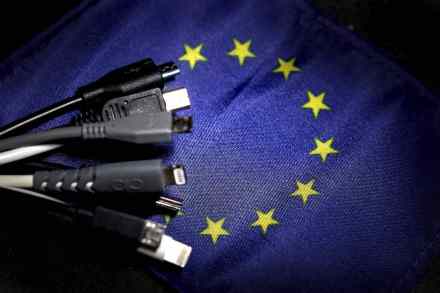
Who could argue with the words of the EU’s internal market commissioner Thierry Breton when he says: ‘a common charger is common sense for the many electronic devices in our daily lives’? No longer, it seems, will we have to fiddle around with several different cables, and curse when we have brought the along the wrong one on holiday. M. Breton has just succeeded in introducing a directive which, from 2024, will oblige the manufacturers of all electronic devices on sale in the EU to use the same model of charger. The directive – yet to be rubber-stamped by the European parliament – will ‘increase convenience and cut waste’, as well

Things are about to get even worse for Boris Johnson

A round of tax cuts? A splurge of infrastructure spending? Or perhaps a whizzy way of subsidising housing? Boris Johnson could even decide to forgive student debts, and hand out a massive Christmas bonus for pensioners, craftily dressed up as a cost-of-living rebate.  There are no doubt lots of such ideas being kicked around in Downing Street today to relaunch the Johnson premiership and save Boris’s skin after a huge rebellion by Tory backbenchers. But here’s the problem for the PM: the economy is about to turn toxic. The dismal reality is that Boris isn’t going to be able to spend his way out of this scrape. But here’s the problem for the PM: