Economy

  • AAPL

    213.43 (+0.29%)

  • BARC-LN

    1205.7 (-1.46%)

  • NKE

    94.05 (+0.39%)

  • CVX

    152.67 (-1.00%)

  • CRM

    230.27 (-2.34%)

  • INTC

    30.5 (-0.87%)

  • DIS

    100.16 (-0.67%)

  • DOW

    55.79 (-0.82%)

Miliband’s fight against North Sea drilling is far from over

What have North Sea oil and gas production and grammar school education got in common? Both are subject to a fiddle by which they can be expanded while the government pretends they are not expanding. After David Cameron changed his mind on grammar schools and said he wouldn’t allow new ones to be created, a deal was done whereby existing schools could open a ‘satellite’ on another site in another town. Hence Tunbridge Wells Grammar School opened a new site in Sevenoaks – a separate school in all but name, and yet the government could claim that it had stuck to its promise of no new grammars. The cabinet battle

Spotlight

Featured economics news and data.

Cutting Britain’s giant welfare bill would be an act of kindness

Does having money really matter that much? There are those, usually with quite a bit of it, who want us to care less about materialism. But, unequivocally, money really does matter – not because of any status it supposedly brings, but for the freedom it buys: freedom to choose how we live and how we look after others. Considering this, it seems that the deep disillusionment with mainstream politicians in recent years stems from a protracted and ongoing period of stagnant living standards over which they have presided. But the truth is that the average person has not got poorer since the global financial crisis. They have got a little

Why Brussels fears Elon Musk

Thierry Breton, the European Commission for the internal market, lost no time in rattling his sabre at Twitter as soon as it was announced that the company had accepted Elon Musk’s offer to buy it. Even though Musk had made no announcement on how he intends to run the company, beyond stating his belief in free speech, Breton felt it necessary to warn Twitter that if it ‘does not comply with our law, there are sanctions – 6 per cent of the revenue and, if they continue, banned from operating in Europe.’ There is a reason, of course, for the failure of Europe to produce a tech giant Is Breton’s

Why Russian sanctions won’t topple Putin

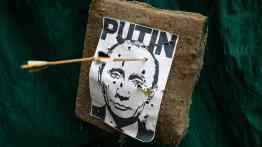
Are sanctions against Russia working? Two months on from the first targeting of Russian banks and oligarchs, Putin’s grip on power remains as firm as ever. This shouldn’t come as a surprise: restrictions on Iran, Venezuela and North Korea have impoverished their populations, but haven’t led to political revolutions. So how successful can sanctions be against Russia today? And even if they do work, will the cost to the West be too much to bear? The full impact of sanctions on the Russian economy isn’t yet clear. In the short-term, they have created severe food shortages in shops. This, combined with a high rate of existing inflation at 16.7 per cent (expected to reach 30-40

How Russia is splitting the EU

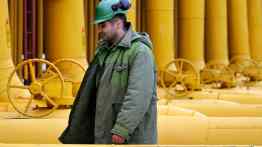
Russia is turning off the gas to Poland; the country’s state-owned gas supplier has refused to pay Gazprom in roubles. Bulgaria has also said that Russia would shut off their gas supplies. This is a serious escalation and raises questions about how other countries will respond to the demand. The risk of EU unity fracturing is growing. For Vladimir Putin, the rouble demand serves an important geopolitical purpose: splitting the West. What Germany and its energy buyers will do is critical. Circumventing the sanctions, as it seems Germany is doing, especially while other EU countries are having their gas shut off for adhering to sanctions rules, will break EU solidarity. And

The NHS is failing us all

While MPs compete to shout the loudest in their support of the UK’s health services (‘save our NHS!’), the British public has fallen out of love with it. More people are now dissatisfied with the NHS than are happy with it. This is true across all ages, income groups, sexes and voters of different political parties. Support for the NHS is now at the lowest level for a quarter of a century. The public is right, the NHS is just not that good. Compare it, as I have done in a new report published today, with the health systems of 19 similarly well-off countries and it is hard to come to any other conclusion.

Why does the City still use quotas?

It sometimes feels like every regulatory body in Britain today misuses its influence to advance progressive causes. A welcome exception is the Financial Conduct Authority, which last week decided to allow firms to choose whether they use sex or gender as the definition of ‘woman’ for reporting on their representation on corporate boards. It is clearly not the role of a financial services regulator to attempt to define ‘man’ and ‘woman’. Out of 540 responses to a consultation on the matter, all but one said they did not want trans women to be automatically included in the targets and data. As the group Sex Matters has pointed out, there is

How North Korea’s crypto hackers are funding Kim’s missile habit

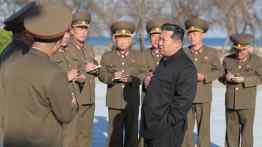
North Korean leader Kim Jong-un vowed last night to ramp up his country’s nuclear arsenal. Such weapons don’t come cheap, especially for a state targeted by stringent sanctions and with a stagnating economy. So where does the money actually come from? Kim Jong-un appears to be using cyberspace – and stolen cryptocurrency – to pay for his expensive habit. Pyongyang’s global army of hackers are often labelled as technologically backward. The reality is rather different. Unfortunately for the country’s victims in the West, Kim’s cyber crooks are as sophisticated as they come. A UN report earlier this year concluded that the country has used stolen cryptocurrency to fund its weapons programmes. But

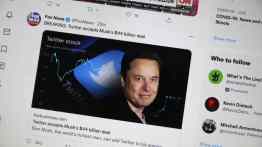
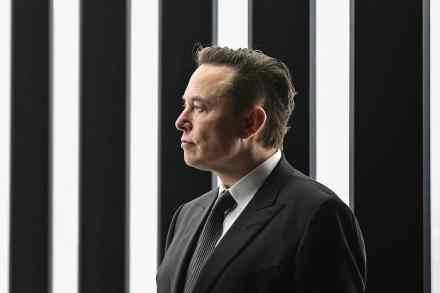
Can Elon Musk make Twitter profitable?

Why does Elon Musk really want to buy Twitter? Is it vanity, political activism, or a shrewd financial move? Musk’s reputation lies in building companies from scratch, yet Twitter is a mature business. It is hard to see why that should excite him anything like transforming the car industry or creating a market for space tourism. Twitter is currently a business without any obvious prospects for substantial growth. The company, which was formed in 2006 and floated in 2013, has never set the world alight like other businesses in the tech sector. Even after Musk’s $44 billion (£34 billion) offer, the share price is only modestly higher than it was

The perverse joys of Elon Musk buying Twitter

The predictable yet somehow still hilarious news that Elon Musk is to acquire Twitter for $44 billion has been greeted with the usual chorus of anguished hand-wringing. The left seems appalled that such an unconventional and apparently ungovernable figure now has control of the most volatile social media platform in the world. (It’s hard to imagine that Musk purchasing, say, Instagram would have led to anything like this level of excitement and upset.) Yet even as one acknowledges that Twitter in its current state is hardly run by a commune of basket-weaving, soya-milking Brooklyn hippies, the flamboyant Mr Musk remains one of the oddest men to have emerged in public

Labour are right – let’s do away with ‘non-dom’ status

Any Conservative who doubts that Labour’s promise to abolish non-dom status could seriously damage the government needs to look at the fate of Rishi Sunak. So recently the heir apparent to the Tory leadership, Sunak has this week plunged to bottom in a poll of the most popular cabinet members. It comes, of course, just a couple of weeks after the revelation that Sunak’s wife was living in Britain as a non-dom – a status which according to one estimate could have saved her up to £20 million in tax over the years. And this was a poll of Conservative party members, so goodness knows how much the revelation has

A football regulator is bad news for the beautiful game

It will stop shady oligarchs and brutal autocracies buying up clubs simply to whitewash their reputations. It will ensure financial stability and fair play between the teams. And it will protect local fans, many of whom have been standing on windswept terraces for years, from seeing their teams turned into mere units of anonymous global corporations. In the wake of the Super League fiasco, and the sanctioning of Chelsea owner Roman Abramovich, it is not hard to understand why the government has today announced the creation of an Independent Football Regulator with sweeping power to oversee the national game. But hold on. Like all regulators, while it is no doubt well

China’s demographic time-bomb is ticking faster

The latest warning was stark – that China’s population will shrink this year, more than a decade faster than forecast, and the country will become a ‘super-aged’ society by 2035. The economic implications will be a ‘huge thing’. This came not from what Beijing has dismissed as ‘western doomsayers’, but from Zheng Bingwen, director of the Center for International Social Security Studies at the Chinese Academy of Social Sciences, and one of China’s most respected observers of population trends. He said the ratio of pensioners to workers will rise to 25 per cent in 2030, is expected to exceed 43 per cent in 2050, and is happening much faster compared

Will economic pressures weaken the West’s alliance?

This morning’s retail sales update isn’t pretty. Sales volumes fell by 1.4 per cent last month, following a 0.5 per cent drop in February (revised, and worse, than the original estimate of 0.3 per cent). The biggest fall came in non-store retail shopping: almost an 8 per cent month-on-month fall. However, the Office for National Statistics points out that overall sales volumes are still roughly 20 per cent higher now than they were pre-pandemic. But the recent drop indicates that the cost-of-living crisis is already worsening, as inflation – now at 7 per cent – is taking its toll on real incomes and is already prompting changes in consumer behaviour.

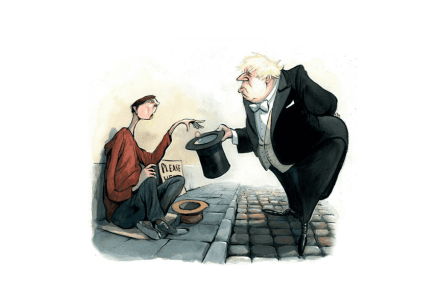
Boris is choosing to make you poorer

If Boris Johnson is forced from office by his own MPs, partygate will only be part of the story. Another huge part of it will be his failure to appreciate the full scale of the cost of living crisis now washing over millions of households – especially his reluctance to address the issue of energy bills. Asked on his Indian trip whether he would consider removing the levies which make up around 25 per cent of electricity bills and around 4 per cent of gas bills he replied:  I want to do everything we can to alleviate the cost of living, but there is a lot of prejudice against the

Why Elon Musk should forget Twitter and stick to Tesla

I spent Easter agonising over whether to throw the considerable weight of this column behind Elon Musk’s maverick $43 billion bid for Twitter. One thing I didn’t do, however, was consult the multitude of opinions on the matter available via Twitter itself, because I’m afraid I regard it as a satanic cacophony of misinformation and vanity. If that puts me in the position of the late-15th-century scholar who said ‘Printing presses? Pah! The only news I trust is handwritten by monks’, so be it. But when I read Musk’s claim that ‘civilisational risk’ would be decreased by his sole ownership of the ubiquitous microblogging site, I laughed out loud. Not

Have we hit peak Netflix?

This time last year, Netflix was fêted as the future of television. Its subscriptions grew by 30 per cent over 2020 as people bought in entertainment during lockdown. Netflix always warned that its growth would slow afterwards and the market seemed to accept that. But its shares have halved since their mid-November peak after a radical reappraisal of its fortunes. What’s going on? Those shares plunged 27 per cent in pre-market trading when Netflix said that, rather than see growth slowing to a mere 2.5 million more subscribers as it had expected for the first three months of this year, it has entered decline – actually losing 200,000 subscribers. A small dent on its

Sri Lanka’s descent into chaos

Colombo, Sri Lanka Some 13 years after the end of a civil war that saw 100,000 deaths, Sri Lanka is once again on the cusp of serious violence. Earlier today, the police opened fire on protesters in the town of Rambukkana. One person has died and at least ten people are said to be in critical condition. It’s the first use of deadly force against demonstrators who seem to have filled the entire island in recent weeks. Grainy footage shows half-conscious bodies being carried into hospital, bullet casings littering the quiet palm-lined streets. This was meant to be a time of celebration. Buddhists are marking the new year while the

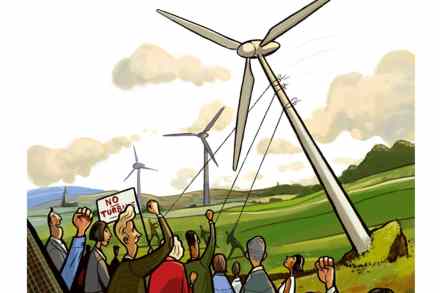
The problem with onshore wind farms

Remember how David Cameron’s government was going to end Nimbyism by having local communities vote for new housing developments on their doorsteps? That didn’t end so well. Last October, following a shock defeat in the Amersham by-election, the Prime Minister gave up on building more new homes in the shires in favour of reverting to the line of least political resistance: the old favourite of trying to solve the housing shortage by building more new homes on brownfield land in the North. Why, then, does the government think it will be any more successful trying to persuade us to accept wind farms on our doorsteps? Last week’s Energy Security Strategy

Ignore the dollar doomsayers

So, it’s official. The global rating agency S&P has determined that the Russian government has defaulted on part of its international debt. In itself, this is not as big a deal as it may sound. Nonetheless, the circumstances have revived concerns about the future of the US dollar as the reserve asset of choice for central banks around the world. Russia is now judged to be in ‘selective default’ because it has attempted to repay holders of two US dollar-denominated bonds with Russian roubles. At the very least, this is a technical breach of the terms of the debt. It will also probably lead to some material losses for bondholders,

Who can put the toothpaste of inflation back in its tube?

The UN Food and Agriculture Organisation’s food price index rose 13 per cent last month to stand a third higher than a year ago. Within the index, cereals rose by 17 per cent – driven by interrupted Ukrainian and Russian wheat supplies – and vegetable oils by 23 per cent, Ukraine being the world’s biggest sunflower farmer. In the UK, wholesale milk is up 20 per cent, as farmers face rising fuel and feed costs. Supermarkets squeeze suppliers to suppress retail prices: but soon, around the same time as our next quarterly gas bills, we’ll feel the full impact at the checkout. And then what? We may be on the

Inflation is the real lockdown scandal

No. 10 was an endless series of parties. The Chancellor was more interested in socializing than sorting out the economy. And the Prime Minister was imposing rules on everyone else that he cavalierly ignored himself. It remains to be seen whether Boris Johnson and Rishi Sunak can survive the fines handed out for breaking the lockdown rules and the public anger over their behaviour. And yet, in reality, there is a far larger lockdown scandal and one that will cause far more lasting political damage: inflation. The ‘partygate’ scandal, and its fallout, has distracted attention from yet another sobering set of inflation statistics. Today we learned that prices are now rising