Andrew Lilico

Should Reform commit to lowering the minimum wage?

From our UK edition

The unemployment rate has risen to 5.2 per cent, the highest non-Covid level since 2015. Unemployment is now up by a quarter since Labour took office. Youth unemployment is also at its highest level (16.1 per cent) since 2015 and has likewise grown since Labour were elected. Over the past year the rise in unemployment in the UK has been (by some margin) the fastest in the G7. Reform might not fancy going into a general election with a slogan aimed at young people of: ‘Vote for us and we’ll cut your wages.’ Youth unemployment rising is particularly sensitive because at the 2024 general election Labour had a manifesto commitment to have the same minimum wage for younger workers as for adults.

Rachel Reeves’s days are numbered

From our UK edition

In her Budget speech today, Chancellor Rachel Reeves will have four goals. Two political – keeping her own job and keeping Keir Starmer in his as PM – and two economic – avoiding a financial crisis and getting the economy going. Her chances look poor on all of them. In the latest polling by Lord Ashcroft Polls, 76 per cent of voters expect the Budget to make them personally worse off, versus only 2 per cent who expected it to make them personally better off. Even amongst Labour voters, only 8 per cent expect the Budget to make them better off. As to making the country as a whole better off, only 11 per cent of voters expect the Budget to do that, with 72 per cent expecting it to make the country worse off. According to Opinium, 78 per cent of voters expect the Budget to be unfair.

Starmer’s EU ‘reset’ risks playing into Reform’s hands

From our UK edition

Keir Starmer's 'reset' talks between the UK and EU are continuing. Having agreed in principle to renewing the post-Brexit diplomatic and economic relationship in May, there is now negotiation over the details. Naturally enough, some of these negotiations concern money – and specifically how much the UK will pay to Brussels. Many EU programmes require funding for complex administration – the processes and institutions agreeing, detailing and enforcing common rules – and set-aside funds to deal with contingencies. Obviously the UK isn’t seeking to rejoin the EU as a whole, so its participation in these programmes will be circumscribed and, accordingly, any financial contribution it makes will be likewise less than that of EU member states overall.

What Lewis Goodall gets wrong about inheritance tax

From our UK edition

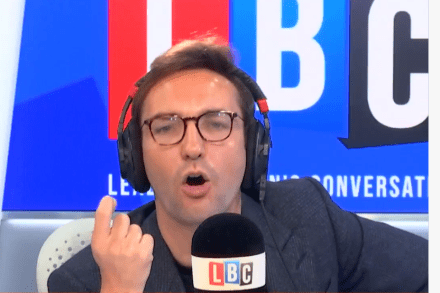
Do you want to live in a world in which you are forbidden from giving things, such as your time, your money or your labour, to other people? It has become increasingly common in recent years for those on the left of British politics to argue that it is illegitimate for people to receive a gift after someone has died – what we call ‘inheritance’. For that is all that ‘inheritance’ is. A dead person gives you some things and you receive them. Should people be forbidden from buying a car for their children or supplying the money for a house deposit? On Thursday, clips of Lewis Goodall’s LBC show showed him saying people have no right to inherit from their parents and that he’d be happy if inheritance tax were 100 per cent.

Trump doesn’t understand how trade deficits work

From our UK edition

After Donald Trump’s Liberation Day, the US now imposes far and away the highest tariffs of any developed country in the world. In the process of doing so Trump has completely rejected the cornerstone of the World Trade Organisation: the ‘most favoured nation’ principle whereby tariffs have to be the same on all countries you don’t have an explicit trade agreement with. He has also cast aside the US’s system of free trade agreements – for example, imposing tariffs on Australia despite there being a decades-old Australia-US agreement removing tariffs. His reasons for doing this reflect his dissatisfaction with the way the international financial order has worked for many years.

Should Huw Edwards be stripped of his BBC pension?

From our UK edition

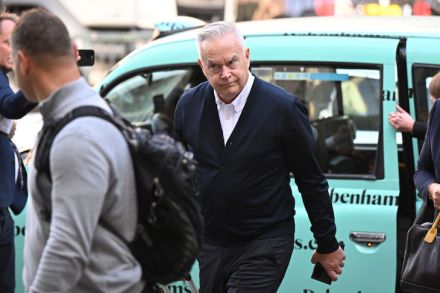
With the Huw Edwards court case complete – and the disgraced BBC News presenter given a six-month prison sentence, suspended for two years, after he admitted charges of making indecent images of children – attention has returned to the fact that he could still receive a £300,000-a-year BBC pension. Many are horrified by this. There have been demands that some way should be found to withhold payment from Edwards. I disagree. Imagine if we did decide that those convicted of crimes such as Edwards' have no property rights A pension is part of the remuneration we receive for work done. It isn’t some extra perk or discretionary bonus handed to us if we have behaved well. Payment of a pension is a contractual obligation.

Labour’s flirtation with price fixing won’t end well

From our UK edition

Almost everyone is aware of the concept of peak hours pricing. If you buy a train ticket to travel during rush hour it costs more than at other times. Few people object to this. Indeed, most of us think it helps. It means that people who don’t need to travel in that period will pick another time instead, so there’s space on the train for the people that do need to travel then. Peak hours pricing is just one very simple example of what economists call ‘dynamic pricing’ or ‘surge pricing’ – a system in which the prices paid vary according to how much demand there is. Dynamic pricing has become the latest object of suspicion following its high-profile use in the allocation of tickets for the Oasis reunion tour.

Does the UK really need an immigration deal with the EU?

From our UK edition

There is talk, yet again, of the UK and EU agreeing some kind of youth mobility scheme, increasing the opportunities for under-30s from the EU to work in the UK. This has been proposed repeatedly over the past couple of years, especially because of similar schemes being agreed between the UK and Canada and Australia.  In opposition, Labour was adamant that it had no interest in such a scheme, seeing it as too close to the return of free movement. But now it is in government, seeking a ‘reset’ in relations with the EU, something has to give. And it appears that a youth mobility scheme – along with the Erasmus education and sport scheme, and something on fishing – are what the EU wants. Is there really a case for the UK making it even easier for foreigners to come here?

The problem with clamping down on ‘fake news’

From our UK edition

In the aftermath of misinformation spread via tech platforms during the recent riots, there is talk of the government requiring tech platforms to remove ‘fake news’ – as well as introducing a duty to remove ‘legal but harmful’ content as part of a review of the Online Safety Act. ‘Fake news’ could presumably take a number of forms. There could be specific ‘crisis-triggering’ fake news, such as malicious false claims about the identity of a murderer (risking lynch mobs or riots), about bank runs (triggering financial crises), about vaccine side effects (deterring urgently-required vaccinations – such as during a pandemic) or about terror attacks (triggering panic).

Should voters punish Labour for its lockdown stance?

From our UK edition

One perfectly valid reason for voting is to reward past success and punish past failures. We have no guarantees about what politicians will do in future, whatever they promise. We know what they did in the past. For millions of right-wingers, this punish-reward perspective is central to their decision about how to vote in 2024. They may differ a bit on what it is that they want to punish the Tory party for – whether it’s for partygate; ousting Liz Truss; net zero; inflation; Brexit; not making enough of Brexit; high public spending and taxes; too much wokery; too much immigration; or too many lockdowns. Whatever the precise reason for their rage, it is largely looking at the past. The Tories have done wrong and they have to pay the price.

It isn’t true that elections are always won from the centre

From our UK edition

Last week, the Chancellor Jeremy Hunt argued that the Tories shouldn’t pitch to the right in response to Nigel Farage and Reform, because ‘elections are always won from the centre ground.’ It is one of the most widely-repeated ideas in political analysis that elections are won from the centre. It isn’t really true, but it isn’t a silly idea and it’s interesting to understand why so many people believe it and the reasons it’s wrong. Its origins lie in economics, and in particular a model produced by an American economist called Harold Hotelling. That model is usually illustrated using the thought experiment of two ice cream sellers on a beach. The people on the beach are either distributed fairly evenly or tend to crowd towards the middle.

Why the Bank of England must cut interest rates

From our UK edition

As the Bank of England's Monetary Policy Committee (MPC) announces its interest rate decision today it has the chance to reverse the damage caused by its interest rate hikes. Rates have been fixed at 5.25 per cent since last August and the Bank has stubbornly refused to cut them. We're all paying the price. Those final rate rises were clearly an error The truth is that inflation is lower and has fallen much faster than the Bank used as its justification for raising rates. In August, the Bank’s model indicated that, even with interest rates raised to 5.25 per cent, inflation would be 5 per cent last year. It was actually 4 per cent. As late as November last year, the Bank forecast that it would be the end of 2025 before inflation returned to 2 per cent.

How Labour can reap the benefits of economic growth

From our UK edition

The week’s Autumn Statement was quite pessimistic about the growth outlook of Britain. The accompanying OBR analysis forecast growth will be below 1.5 per cent on average over the next five years, and even by the end of the period the growth in potential output is only up to 1.75 per cent. And on this the OBR is much more optimistic than some other forecasters, most notably the Bank of England. I think that’s wrong and growth is likely to pick up. That presents an opportunity for an incoming Labour government. Labour has spotted the potential here, announcing its own plan for growth. But it could be a lot better. Let me explain how. First let’s see why current analyses are too gloomy. Growth has been slow in the UK since the Great Recession.

Why should the NHS be protected from spending cuts?

From our UK edition

The new Prime Minister has said this week that NHS funding will be ‘prioritised’ when it comes to spending decisions, while NHS bosses seek up to £7 billion in extra funding. That is wrong. In 2000, government health expenditure in the UK was equivalent to about 14 per cent of total public spending. By 2009, as the Labour government came to its end, that had risen to 16 per cent. Then came the period of Tory austerity, from 2010 onwards. Other departments were cut dramatically, but the NHS was ringfenced and NHS expenditure continued to rise. Total health expenditure reached the equivalent of 17 per cent of public spending by 2013, 18 per cent by 2018 and 19 per cent by 2019, an inexorable ratchet.

What’s Rishi Sunak’s pitch?

From our UK edition

Rishi Sunak has passed the 100 publicly-declared supporters which, it if is converted to nominations when Sunak officially declares, will meet the threshold required to make Monday’s MPs vote. Boris Johnson (like Sunak, not yet officially declared a candidate), is somewhat behind at around 70. Penny Mordaunt, who officially declared on Friday, is further back, in the mid-20s. There are a lot of MPs yet to declare, but as things stand it is looking plausible that either Sunak is the only candidate to make the nominations threshold or that it is a Johnson vs Sunak run-off. In that event, it seems very likely that Boris would win.

What Liz Truss should do now

From our UK edition

Markets are nervous and they are right to be. The government has announced a huge, open-ended package of energy subsidies expected to cost over £100 billion but that could cost over £200 billion if energy prices rise and stay high. At the same time, the Bank of England is making large losses on its QE bond-holdings as government bond prices fall as an automatic result of current and future-expected interest rate rises – by some estimates costing potentially another £200 billion. This leaves a possible £400 billion hole in the nation’s finances. The government says it will spell out how that will be paid for in November.

Kwasi Kwarteng’s growth gamble is a risk worth taking

From our UK edition

New Chancellor Kwasi Kwarteng’s first ‘fiscal event’ was always going to be quite provocative and exciting. But in the end it went quite a lot further than expected. Far from pulling back when faced with the practicalities of being in office, Truss’s new administration did everything it had signalled, controversial or not, then threw in some even more controversial policies just for good measure. The centrepiece is the huge energy price package. The government estimates that this will cost £60 billion over the first six months.

Vaccines disguised the errors of our lockdown policy

From our UK edition

Liz Truss’s statement that she would never authorise another lockdown and The Spectator’s interview with Rishi Sunak have triggered a new debate about whether the lockdowns of 2020 and 2021 were justified. The most widely discussed positions are that lockdown occurred too late or that there should never have been any lockdowns at all, alongside the view that what happened was about right. But there is another position here – in many ways perhaps the most obvious position – that rarely gets an airing. When lockdown was first introduced, Boris Johnson said the point was to ‘squash the sombrero’ of cases, so that the peak number of hospitalisations each week did not overwhelm the NHS.

Politicians should let the market solve the energy crisis

From our UK edition

What policies should the government adopt in response to the energy crisis? When thinking about any policy, the correct place to start is to consider what kinds of solutions the market would produce absent any government intervention. Markets will always produce some kind of answer, and the market answer will often be very good in many respects. Policymakers should not assume they are intervening in a void, where almost any well-intentioned action might be better than nothing.

There is no point nationalising the energy sector

From our UK edition

Household energy bills are rising very rapidly, and are now expected to be over £4,000 per year by October and possibly over £5,000 per year by early 2023. Many commentators, including most notably Gordon Brown, are saying that we should now nationalise the energy companies and bring bills down. Would that help? It’s rather unclear what is being proposed by those that advocate nationalisation. We can think of the energy sector as having three layers. First, there are those that create or collect energy. These are firms that run wind farms, hydroelectric plants, solar panels or nuclear power stations, or mine coal or drill for oil or gas. At this layer there are many, many firms operating in a highly competitive international market.