Economy

  • AAPL

    213.43 (+0.29%)

  • BARC-LN

    1205.7 (-1.46%)

  • NKE

    94.05 (+0.39%)

  • CVX

    152.67 (-1.00%)

  • CRM

    230.27 (-2.34%)

  • INTC

    30.5 (-0.87%)

  • DIS

    100.16 (-0.67%)

  • DOW

    55.79 (-0.82%)

Miliband’s fight against North Sea drilling is far from over

What have North Sea oil and gas production and grammar school education got in common? Both are subject to a fiddle by which they can be expanded while the government pretends they are not expanding. After David Cameron changed his mind on grammar schools and said he wouldn’t allow new ones to be created, a deal was done whereby existing schools could open a ‘satellite’ on another site in another town. Hence Tunbridge Wells Grammar School opened a new site in Sevenoaks – a separate school in all but name, and yet the government could claim that it had stuck to its promise of no new grammars. The cabinet battle

Spotlight

Featured economics news and data.

Cutting Britain’s giant welfare bill would be an act of kindness

Does having money really matter that much? There are those, usually with quite a bit of it, who want us to care less about materialism. But, unequivocally, money really does matter – not because of any status it supposedly brings, but for the freedom it buys: freedom to choose how we live and how we look after others. Considering this, it seems that the deep disillusionment with mainstream politicians in recent years stems from a protracted and ongoing period of stagnant living standards over which they have presided. But the truth is that the average person has not got poorer since the global financial crisis. They have got a little

Are we heading for a Platinum Jubilee recession?

Occasionally I despair of my own profession. Even economists should be able to enjoy a long weekend. Yet some of us are stuck debunking commentary on the economic impact of the Queen’s Platinum Jubilee celebrations – much of which justifies the old tag of the ‘dismal science’. The long Jubilee weekend will indeed mean that economic activity, as usually assessed, is lower than it would otherwise have been. The output and income lost due to the temporary shutdown of most businesses will only partially be offset by increased spending in other areas, or recouped later. We have, of course, been here before. The monthly measure of UK gross domestic product

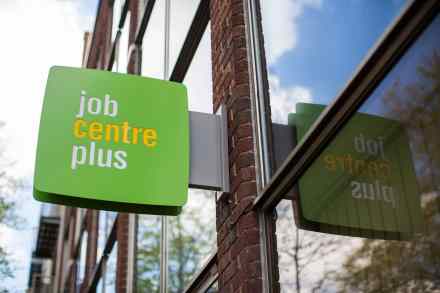
How are five million Brits without work?

Last week, I came across a figure so staggering that I was convinced it was wrong: 5.3 million Brits (almost the population of Scotland) are on out-of-work benefits. How could this be, with ministers so regularly boasting that unemployment stands at a 40-year low? How could it be, when a national shortage of workers has been declared – and the aviation industry has been begging the government to relax immigration rules, saying that we’re out of workers? I’ve spent this week looking into it, with the help of my brilliant colleagues in The Spectator data team, and look at this in my Daily Telegraph column today. What is an “out-of-work”

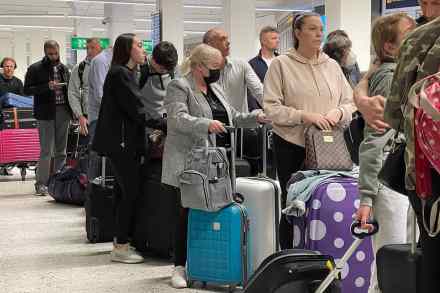
Who’s to blame for the air travel crisis?

I sincerely hope you’re not reading this on a holiday flight that’s sitting on the tarmac with no indication as to when it might take off – or a sad train home after your flight was suddenly cancelled. Brace for three-hour delays at security, we’re told; don’t even try checking bags in, and at worst, as happened to Tui passengers at Manchester who thought they were going to Kos, watch out for a text after you’ve boarded telling you you’re going nowhere at all. How and why? When the pandemic set in, airlines and airports – thinking, not unreasonably, that their industry was doomed – made mass redundancies rather than

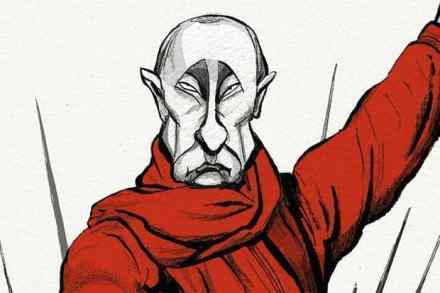
‘Famine is part of Russia’s strategy’: Zelensky’s economic adviser on Putin’s tactics

Alexander Rodnyansky has a desk waiting for him back at Cambridge, where he’s currently on sabbatical from his role as a junior economics professor. But he won’t be returning for some time. He’s working from Kyiv, prioritising his other job: as economic adviser to Volodymyr Zelensky. Rodnyansky was in Ukraine when the war broke out and he could easily have returned to the UK. ‘That wasn’t really much of a thought,’ he says. ‘I’m sixth-generation Kyiv. I was just going to stay.’ He became a full-time presidential adviser two years ago, hired to help reform Ukraine’s financial institutions, including the privatisation of state-owned commercial banks. ‘About 55 per cent of

The EU’s oil ban is a damp squib

When Putin’s tanks rolled into Ukraine on 24 February there was a conceit that this might be the first war which the West could fight – and win – by sanctions alone. The EU’s latest efforts to stop importing Russian oil show just what a folly this was. Donations of military equipment to Ukraine are certainly helping to keep Russian forces at bay, but economic sanctions? That is another story. Europe’s dependence on Russian oil and gas is the product of years of ill-conceived energy policy Sanctions may be helping to lower living standards among Russian citizens, but they are still a long, long way from cutting off the lifeblood

The energy windfall tax will harm net zero

There’s no pleasing some people. Back when the government still believed windfall taxes were a terrible idea, the Scottish National Party was insisting one be imposed to help tackle the cost of living. In March, the SNP’s Stephen Flynn asked in the Commons: ‘Is it right that those who have benefitted from the pandemic… are able to benefit while our constituents are struggling? Absolutely not.’ The previous month, Nicola Sturgeon tentatively voiced support, arguing oil and gas firms should ‘absolutely’ be asked to pay more to alleviate the crisis. How unexpected, then, to see the SNP’s work and pensions spokesperson Kirsty Blackman launch repeated attacks on the levy in the days

The irrational cruelty of the SNP’s nationalism

They can’t build a ferry, organise a census or keep the railways operating, but when it comes to organising a grievance campaign, nobody does it better than the SNP. This week saw perhaps the most impressive effort yet from team grievance as the SNP tried to turn the Chancellor’s announcement of a windfall tax on big oil companies into a Scotland-versus-the-rest-of-the-UK bun fight. Speaking on Sunday, SNP MP Kirsty Blackman complained:  It feels very unfair that Scotland is having to pay for the entirety of the UK. If Scotland was an independent country, the windfall tax would generate £1,800 for every household in Scotland. With most of the UK’s oil

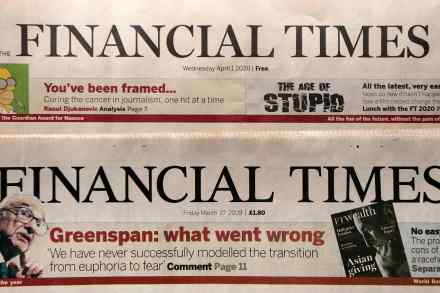
Is the Financial Times ashamed of capitalism?

It seems no-one has a good word to say about capitalism these days. For now, even the Financial Times – that bible of our captains of industry – seems to have gone off the filthy rich. Once, the newspaper’s ‘How To Spend It’ supplement was an unashamed paean to conspicuous consumption; a veritable smorgasbord of plutocratic excess. The FT itself still describes it in near-orgastic terms, writing that the 28 year-old pull-out is ‘the benchmark for luxury lifestyle magazines’ with an ‘affluent readership’ of whom one in five ‘has or would consider using the service of a private jet’. But it seems such tributes to the tastes of the rich

Rishi Sunak’s slippery slope

There are two ways to see Rishi Sunak’s rescue package. One is an obviously needed and politically unavoidable boost to the economy and a relief for the cost-of-living crisis. The other is worrying jump towards the tax and spend policies that he once promised to avoid – and a sobering note for those who expected anything different from him. James Forsyth is inclined to the former, Kate Andrews and I are inclined to the latter. We all discuss in today’s Coffee House Shots podcast. There are many ways a Tory government could have helped households this week. Fuel costs are soaring but about 25 per cent of all electricity bills are

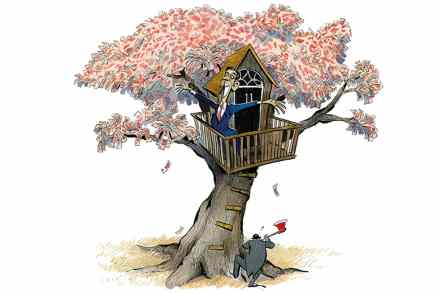
Did Jeremy Corbyn win the general election?

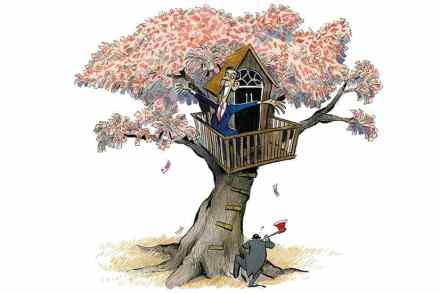
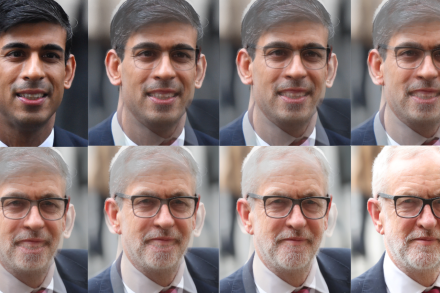
Almost five years ago to the day, Amber Rudd had her finest hour in politics. Standing in for the frit Theresa May at the BBC leaders’ debate on May 31, 2017 – even though her father had died only two days earlier – Ms Rudd rescued a Conservative election campaign that appeared to be collapsing. Fixing Jeremy Corbyn with a confident stare, she declared: ‘There isn’t a magic money tree that we can shake that suddenly provides for everything that people want.’ The phrase was such a hit that Mrs May repeated it a week or so later after she had finally emerged from the wreckage of her ‘nothing has

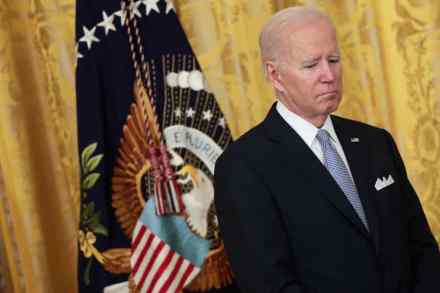
Will Joe Biden be impeached?

Before inflation began to eat the American economy alive, impeachflation had already undermined the office of the presidency. Donald Trump was only the third president to have been impeached. Yet he was impeached twice: in December 2019, for abuse of power and obstruction of Congress; and in January 2021, for ‘incitement to insurrection’ following the riots on Capitol Hill on 6 January. People argued about whether these impeachments were right or wrong, but that’s not all that relevant now. What matters today is that Republicans saw that their political opponents were willing to use impeachment as a cudgel to hurt the nation’s Commander-in-Chief. And now they want revenge. As Joseph

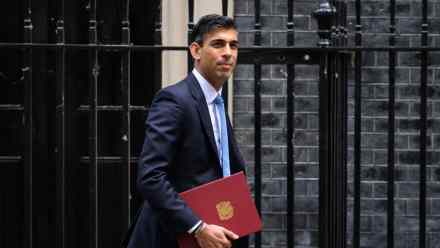
We’ll all pay the price for Rishi Sunak’s handouts

A £400 rebate on electricity bills. A cash handout to the poorest households. And a windfall tax on the energy companies that generate the power to keep the lights switched on to try and pay for it all. Chancellor Rishi Sunak was back to doing what he likes to do best today: handing out vast quantities of free money, while making the UK a less and less attractive place for businesses to operate. It was billed as a fix for the ‘cost of living’ crisis. Yet very soon it will become clear it was nothing of the sort. After all, you can’t tax your way out of inflation; taking the approach

Are sanctions making Russia richer?

Before the invasion of Ukraine, it was by no means certain that there would be a united response from the West. The sanctions imposed on Russia after Vladimir Putin’s annexation of Crimea in 2014 were fairly limited, especially from the European Union. Germany pressed on with the Nord Stream 2 gas pipeline to Russia. But now, America, Europe and much of Asia have been united in applying severe sanctions against Russian banks, companies and oligarchs. Three months on, it’s time to ask: are the sanctions working? The answer from the Bank of Russia’s balance of payment data for January to April isn’t reassuring. It showed that the sanctions are emphatically

How profitable are Britain’s biggest oil companies?

A slip of the tongue George W. Bush condemned a political system where one man could wage a ‘brutal and unjustified invasion of Iraq’ before correcting himself and saying ‘Ukraine’. Some other Freudian slips by US politicians: – In the 2012 US election Senator John McCain, who had been the Republican candidate four years earlier, made a speech in which he attempted to look forward to a Mitt Romney presidency, but somehow managed instead to say: ‘I am confident that with the leadership and the backing of the American people, President Obama will turn this country around.’ – At another event in the same election, Romney himself introduced his running

Inside Taiwan’s plan to thwart Beijing

Taipei   Nowhere is watching Russia’s faltering attempt to crush its democratic neighbour more closely than Taiwan. The Ukraine war is seen in Taipei as a demonstration of how determined resistance and the ability to rally a global alliance of supporters can frustrate a much larger and heavily armed rival. Taiwan has spent the past few years planning how it would cope if China attacked. It is developing a doctrine of defence warfare right out of the Ukrainian playbook. China was carrying out military exercises off the east coast of the island last week when I met Joseph Wu, Taiwan’s foreign minister. ‘They keep circling in that area,’ Wu says.

Is the Elizabeth line worth the cost?

It’s 8.16 on Tuesday morning and I’m actually writing this on a moving Elizabeth line train. Moving in the sense that we’ve just zipped from Paddington to Liverpool Street in 13 minutes – which if nothing else will be a boon for City commuters from west of London. Moving also in the sense that I’ve been writing about the project formerly known as Crossrail, first in optimism but later in frustration and rage, since its then chairman Terry Morgan gave me a personal tour of the Bond Street diggings back in June 2013. Now that the central section is open at last – even with its Bond Street station still

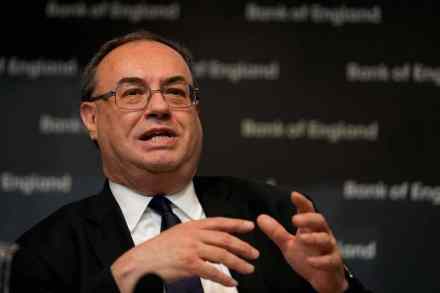
Andrew Bailey is floundering in the face of soaring inflation

Prices are rising at the fastest pace for 40 years. Real wages are falling rapidly. The cost of servicing the government’s vast debts is escalating, and companies are struggling to keep up with the rising price of raw materials. Still, not to worry. Fortunately, a quarter of a century ago Gordon Brown wisely decided to hand over management of inflation to a supremely competent group of expert technocrats, so that we could have stable prices and steady growth forever – or indeed an ‘end to boom’n’bust’ as Brown would have inevitably put it. Oh, but hold on. It turns out it is not quite going to plan. In fact, while

The unspoken argument behind a windfall tax

The Financial Times story on Rishi Sunak looking at a possible windfall tax on energy firms captures how difficult such a tax is for any government, especially a Tory one. Because it begs questions why, when electricity suppliers suffered unsustainable losses in autumn and winter, when under the price cap they suffered huge and unsustainable losses – what you might call a reverse windfall – they were allowed to go bust. If you believe in capitalism and competition, you believe in swings and roundabouts: windfall profits in good times are the obverse of extreme losses in the bad. Kwasi Kwarteng repeated that mantra as failing electricity suppliers would not be

There’s never been a better time to ditch the net zero agenda

The cost of living crisis is confronting Westminster elites with the stark reality of some of the dubious policy choices they’ve recently made. Last week, the government was forced to postpone its ban on buy one get one free deals on ‘junk food’. The foolishness of outlawing cheap food – a policy Boris Johnson adopted after his spell in intensive care – has been laid bare now that inflation has risen to a 40-year high. Soaring energy bills ought to give proponents of eco-austerity similar pause for thought. Dozens of retail energy companies have gone bust in recent months. We are shipping fracked gas from the US while banning the