Rupert Darwall

Rupert Darwall is a senior fellow at the National Center for Energy Analytics.

Starmer must fight Miliband’s fracking Luddism

From our UK edition

On Monday, concrete will be poured into Britain’s last two shale gas wells in Lancashire. Cuadrilla Resources, which owns the license at the Preston New Road site, is being forced to destroy the wells by the North Sea Transition Authority (NSTA), which has ordered that the wells be ‘plugged with cement and decommissioned’ by 30 June. This is not for safety or environmental reasons. Cuadrilla has offered to keep the wells secure at its own expense. It is to ensure that the wells can never be used to extract natural gas at any point in the future. In other words, the NSTA requirement is an act of economic vandalism, reflecting the extreme anti-fracking position of Ed Miliband, the Energy Security and Net Zero Secretary.

Labour has walked into a net-zero trap of its own making

From our UK edition

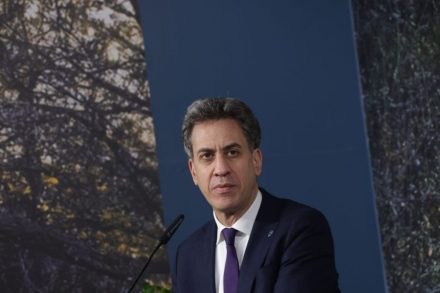
The government’s net-zero noose draws tighter. At energy questions in the House of Commons on Tuesday, the Conservative MP Charlie Dewhirst asked the Energy Security and Net Zero Secretary Ed Miliband if the recent report by the National Energy System Operator (Neso) projected higher or lower bills under his policies. Miliband replied that Neso forecast lower overall costs. 'It is completely logical to say that that will lead to a reduction in bills,' he said. Logic and historic data point in the opposite direction. Between 2009 and 2020, the average price of electricity sold by the Big Six energy companies rose by 67 per cent from 10.71p per kilowatt hour (kWh) to 17.92p per kWh. This wasn’t caused by any increase in the cost of natural gas.

Cop is dying

From our UK edition

In the near three-decade history of the annual round of UN climate conferences, the Baku Cop29 stands out. There have been disastrous Cops before. For those with long memories, there was Cop6 in the Hague after George W. Bush narrowly won the 2000 presidential election, which was disrupted by protestors and the outgoing American climate negotiator had a cake thrown at him. Then there is the Copenhagen Cop15, when the Global South, led by China, India, Brazil and South Africa, sunk a binding climate treaty that would have required them to cap their emissions. But never before has there been the indifference and mass absenteeism that marks the Baku Cop. The choice of Azerbaijan to host the talks was always going to be challenging.

Unlike 1997, Labour has failed to finish off the Tories

From our UK edition

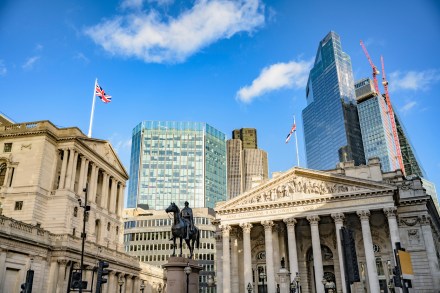
Although Sir Keir Starmer’s Labour government has been in office less than a month, similarities between this year's election and Tony Blair’s 1997 victory end with the size of Starmer’s House of Commons majority – just 13 seats shy of Blair’s in 1997. Just four days into Blair’s government, Gordon Brown stunned the country with his announcement that he was going to make the Bank of England independent. Two of Brown’s four Conservative predecessors as Chancellor, Nigel Lawson and Norman Lamont, had used their resignation speeches to advocate Bank independence. The other two, John Major and Kenneth Clarke, had been strongly opposed. Brown came into the Treasury with a fully worked out plan for Bank independence.

The Tories are stuck in a Net Zero trap of their own making

From our UK edition

The Prime Minister’s pronouncement that Britain needs investment in new gas-fired power stations to keep the lights on is a rare moment of realism in the fog of Net Zero delusion. The government’s analysis shows that 'we will need gas generation in the immediate term to meet rising demand', Rishi Sunak wrote in the Telegraph last week. With a general election due at some point in the next nine months, Sunak couldn't resist playing politics too, accusing Labour of taking a 'fantasy approach' to energy security. This accusation was reinforced in a speech on the same day by the Energy Security and Net Zero Secretary Claire Coutinho.

Net Zero’s days are numbered

From our UK edition

If a week is a long time in politics, then 2023 belongs to a different age in the politics of Net Zero. Less than eleven months ago, the government was saying that 'Net Zero is the growth opportunity of the 21st century. Earlier this week, former IMF chief economist Oliver Blanchard effectively poured water on that claim when he told the House of Lords Economic Affairs Committee that there would be a 'substantial fiscal cost to achieve anything close to Net Zero'. 'The public does not believe, or has not been made to understand, that [it] is going to be costly for them,' Blanchard cautioned. He then went on to suggest that Net Zero should be funded by higher public borrowing.

The stupidity of Biden’s liquefied natural gas export pause

Last week's White House announcement that it was pausing new permits for exports of liquefied natural gas, or LNG, is a desperate move by a desperate president. Its principal beneficiaries are likely to be Vladimir Putin and Hamas-harboring Qatar, rather than Joe Biden’s faltering re-election campaign. The president’s political calculation is overt. “We will heed the calls of young people and frontline communities who are using who are using their voices to demand action,” Biden says. “The pause on new LNG approvals sees the climate crisis for what it is: the existential threat of our time.”  From a national security perspective, the pause is extraordinarily damaging.

liquefied natural gas

What’s the true cost of Britain’s biggest offshore wind farm?

From our UK edition

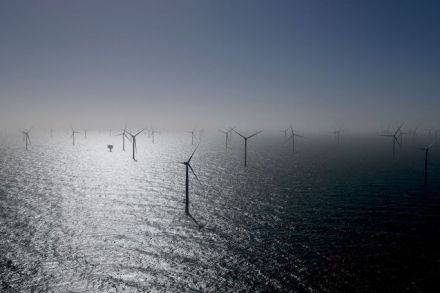
The world’s largest offshore wind farm is coming to Britain but there will be only one winner from the scheme – and it isn’t electricity consumers. Wind energy giant Ørsted had raised doubts about the Hornsea 3 offshore project earlier this year. But after securing more generous subsidy arrangements from the government, the Danish firm is pressing ahead with the project. Soon, another 230 turbines will fill the North Sea due east of Hull. The news this week is being hailed as a boost for Britain’s net zero strategy but don’t be deceived: the true cost of this scheme will be enormous. Last year, Ørsted won a contract for difference – which is designed to give a guaranteed price for energy – for the project with an inflation proof price of £37.

What is Sunakism?

From our UK edition

11 min listen

Rishi Sunak is being attacked by Conservative and Labour politicians for choosing to delay some of Britain’s climate commitments. But is his new approach to policy really a welcome one?  Katy Balls speaks to Fraser Nelson and Rupert Darwall, a senior fellow at RealClearFoundation.

Has the Bank of England’s net zero obsession fuelled inflation?

From our UK edition

The Bank of England was made independent to take monetary policy away from flighty politicians who are slaves to expediency and fashionable sound bites. Instead, central bankers imbued with objectivity, prudence and, most of all, economic expertise would be in charge. But when it comes to climate change and net zero, the Bank has shown that poor judgment is certainly not exclusive to elected officials. Only a month ago, Andrew Bailey, Governor of the Bank of England was touting net zero as a growth elixir. ‘The transition to net zero is a major structural change that needs substantial investment and can over quite a prolonged transition period help to raise the potential growth rate of the economy,’ Bailey declared.

The green movement faces a painful confrontation with reality

From our UK edition

Environmentalism is the ruling ideology of our times. Forget neoliberalism. That peaked around 2000 and was definitively dethroned by the financial crisis in 2008, the same year Parliament passed the Climate Change Act which paved the way for Net Zero. Since then, environmentalism has won victory after victory, so it might appear paradoxical that one of the founders of the British green movement struck a defeatist note. Speaking at an event to celebrate the Green Party’s 50th anniversary, Michael Benfield suggested that the 'battle for the world's environmental survival is, at this moment, lost.' The Greens had succeeded in raising consciousness, Benfield said, 'but we have failed in dealing with the battle for environmental survival.

Is this a Black Wednesday moment for the Tories?

From our UK edition

Kwasi Kwarteng delivered his mini-Budget one week after the thirtieth anniversary of Black Wednesday, when the markets forcibly ejected sterling from the Exchange Rate Mechanism (ERM). There’s one measure that makes recent market turmoil seem modest and even manageable by comparison with Black Wednesday. According to the Bank of England’s database, the pound fell 2.16 per cent against the euro on the day the Chancellor delivered his fiscal statement. By last Thursday, the pound was down only 1.91 per cent against the euro. Black Wednesday and its immediate aftermath saw sterling fall 13.9 per cent against the Deutschmark. In all other respects, however, the economic and political situation is more dire now than thirty years ago.

China, not America, has the real emissions problem

Hailed as America’s first comprehensive climate law, the Inflation Reduction Act was signed by President Biden earlier this summer. It had been thirty years and sixty-five days since President George H.W. Bush signed the United Nations Framework Convention on Climate Change in Rio de Janeiro. The UNFCCC’s objective was to stabilize concentrations of greenhouse gases in the atmosphere “at a level that would prevent dangerous anthropogenic interference with the climate system,” a threshold that the convention left undefined. In 1992, the average concentration of carbon dioxide in the atmosphere was 356.54 parts per million by volume (ppmv).

The next Tory leader should commit to ditching net zero

From our UK edition

‘We’re all Keynesians now,’ Richard Nixon reportedly said in 1971 before ushering in a decade of high inflation. In the twilight of his premiership, Boris Johnson’s chief political legacy to the Conservative party is likely to be cakeism – the political philosophy that denies the existence of trade-offs and asserts you can have it all. And nowhere does that apply more than his embrace of net zero, which has been embraced by virtually all the Tory leadership candidates. Cakeism is the antithesis of Thatcherism, which was about the politics of making hard choices. Cakeism also represents the negation of strategy. In his famous 1996 paper ‘What is strategy?

The EPA’s loss is a win for democracy

Thursday’s decision by the Supreme Court that the Clean Air Act does not give the Environmental Protection Agency (EPA) authority to proceed with President Obama’s Clean Power Plan is much more significant than the narrow grounds on which it was decided. The Clean Power Plan was already dead. It had been repealed and replaced by the Trump administration, decisions that were later struck down by a court of appeals. Moreover, there is history between the EPA and the Supreme Court. In 2014, the Court ruled against the EPA’s rewriting of the Clean Air Act to facilitate its use as a tool of climate policy, which was already seen as “poor and probably unworkable” by officials in the Obama administration.

Rishi Sunak’s net zero u-turn

From our UK edition

How time flies when there’s a real crisis. Just six months ago at the Glasgow climate conference, the Chancellor Rishi Sunak was pledging to rewire the entire global financial system for Net Zero. Sunak boasted that he was going to make London the world’s first ‘Net Zero Aligned Financial Centre’. It would mean forcing firms to publish plans showing how they will decarbonise and meet net-zero targets to be overseen by a transition taskforce. There was little fanfare when the transition plan taskforce was launched last week.

There is no climate crisis

“No climate crisis” is, of course, not the spin the Intergovernmental Panel on Climate Change (IPCC) is putting on its new 3,676-page report released last month. “The choices we make in the next decade will determine our future,” the IPCC says. “Any further delay in concerted global action will miss a brief and rapidly closing window to secure a liveable future.” It could hardly be plainer. The report is political advocacy barely masquerading as science. The IPCC Working Group II report is not meant to be about policy; that’s the job of Working Group III, which has yet to produce its contribution to the sixth assessment report. “The focus of our new report is on solutions,” the IPCC says of the Working Group II report.

Biden’s big energy bust

"For too long, we’ve failed to use the most important word when it comes to meeting the climate crisis,” President Biden declared in his presidential address to Congress in April 2020. “Jobs. Jobs. Jobs.” Investments in jobs and infrastructure, the president pleaded, have often had bipartisan support in the past. In November, he got nineteen Republican senators to vote for his $1 trillion infrastructure bill, but the main planks of Biden’s climate plan were in the $2.2 trillion Build Back Better Act. The House passed it in November, only for it to fail in the Senate, thanks to opposition from the most powerful man in Washington, at least when it comes to passing legislation.

energy green biden

Are we heading for a net zero crash?

From our UK edition

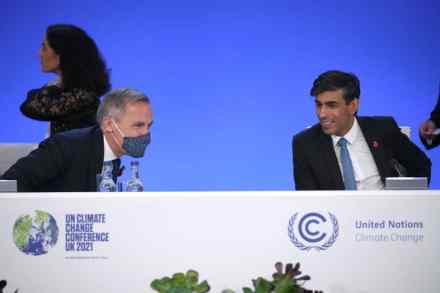
So far, the big message from the Glasgow climate conference is the role of finance in decarbonising the global economy. It’s a dangerous development. In his speech to COP26 last week, the Chancellor, Rishi Sunak, pledged action to 'rewire the entire financial system for Net Zero.' Finance has taken centre stage in large part because of inadequate government policies. According to the United Nations Environment Programme, around two-thirds of global emissions are linked to private household activity. Reducing them requires major changes in people’s lifestyles, UNEP says.

America isn’t leading the fight against climate change

President Joe Biden is set for his rendezvous with climate destiny at the Scottish Event Campus in Glasgow on Monday. The president left Washington on Thursday empty-handed after congressional Democrats abandoned an attempt to put his infrastructure and climate package to a vote. “I need you to help me. I need your votes,” Biden implored them. “I don’t think it’s hyperbole to say that the House and Senate majorities and my presidency will be determined by what happens in the next week.” At least he wasn’t invoking anything as serious as the future of the planet to get their backing. Nancy Pelosi weighed in, according to Politico’s Laura Barrón-López, telling her colleagues that overseas parliamentary leaders had asked whether American democracy can survive.

climate change