Julian Jessop

Julian Jessop (@julianhjessop) is an independent economist, and a fellow at the Institute of Economic Affairs.

Why are UK debt costs still so high – and does it matter?

From our UK edition

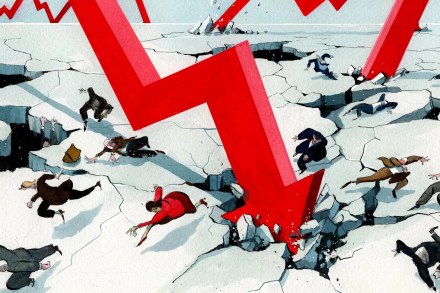
The yields on UK government bonds, commonly known as ‘gilts’, are now consistently the highest among the G7 group of advanced economies. Why is this, and why should the rest of us worry? Yesterday’s No.10 reshuffle has done little to help but there’s a lot more going on.  The numbers alone are disturbing. The cost of new government borrowing for ten years is now around 4.7 per cent in the UK, compared to 4.2 per cent in the US, around 3.5 per cent in France, Italy and Canada, 2.7 per cent in Germany, and just 1.6 per cent in Japan. This is all the more remarkable because UK public debt is not particularly high by international standards.
A bitcoin windfall won’t save the Chancellor

From our UK edition

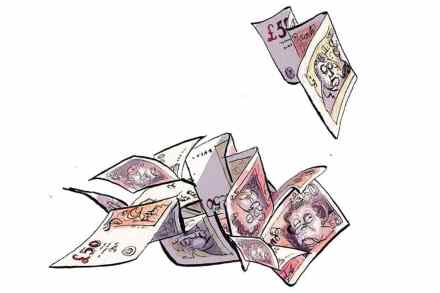
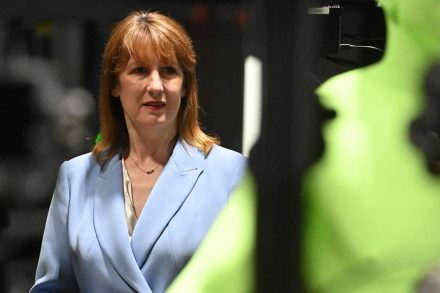
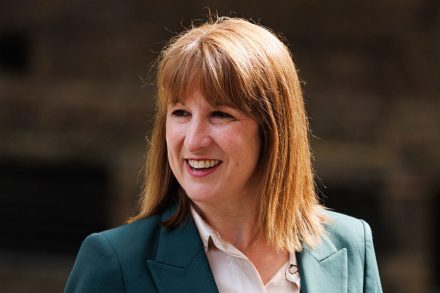
This weekend, the Sunday Telegraph reported that Rachel Reeves is eyeing a '£5 billion bitcoin sale' to ease the pressure on the public finances. Some commentators have grasped the wrong end of the stick here – these sales could not be used to fill a 'black hole' under the current fiscal rules. Others have argued that it would be foolish to dump cryptoassets that may still increase significantly in value. Unfavourable comparisons are inevitably being drawn with Gordon Brown’s sale of gold reserves starting in 1999. But that may be wide of the mark too. So, what to make of all this? Unlike true ‘safe havens’, the price of bitcoin tends to slump when riskier assets are out of favour Perhaps surprisingly, the UK government already holds a large amount of cryptoassets.

Is Britain really fated for economic decline?

From our UK edition

Another day, another flurry of bad news on the fallout from October’s Budget. The BDO Monthly Business Trends indices – which pull together the results of all the main UK business surveys – show that confidence has fallen to the lowest level in almost two years, with output and employment down, and only inflation up. Meanwhile, KPMG and REC have published their UK Report on Jobs, which reveals a sharp fall in permanent recruitment in November. It seems many firms are reassessing their ‘staffing needs’ amid reports of a growing number of redundancies. It is a reminder that Labour’s first Budget was certainly grim.

Rachel Reeves ‘£4,800’ mortgage claim is a house of cards

From our UK edition

Labour’s Rachel Reeves has scored some political points this week by claiming that the Conservatives have made £71 billion of ‘unfunded policy pledges’, and that this will ‘mean £4,800 on your mortgage’. These calculations are simply absurd and easy to knock down. Let us start with the ‘£71 billion’. This figure first appeared in a Labour document, called ‘Conservatives Interest Rate Rise’, published in May. It was claimed then that annual borrowing would be £71 billion higher in the final year of the next parliament (2029-30), based on Labour’s costings of the Conservatives’ alleged plans. However, this analysis unravelled when the Conservatives actually published their manifesto.

How much should we fear the return of the ‘bond vigilantes’?

From our UK edition

BlackRock’s UK chief investment strategist, Vivek Paul, has warned this week that pre-election promises of large tax cuts or spending increases could unsettle the bond markets again. There are clear echoes here of the turmoil that followed the Liz Truss and Kwasi Kwarteng mini-Budget back in 2022. How worried should we be? These warnings should not be dismissed lightly. BlackRock is a huge global player, with more assets under management than any other firm. Sentiment can be fickle and market selloffs are often self-reinforcing.

Is printing too much money the real cause of inflation?

From our UK edition

Every month, the Bank of England publishes new data on the flows of money and credit around the UK economy. Most commentators focus on the ‘credit’ part – particularly the amount of mortgage and credit card borrowing. In contrast, the ‘money’ part rarely gets a mention.  This is understandable. After all, good luck explaining what ‘M4ex’ is down the Dog and Duck. (If you must know, it is essentially the notes, coins, sterling deposits, and short-dated bonds held by UK households and non-financial companies). But the failure to discuss ‘money’ is worrying. Even the Bank of England acknowledges that money growth is an ‘important indicator of developments in the economy’.

Drama queens: the return of Harry and Meghan

From our UK edition

36 min listen

In this week's episode: We look ahead to Harry and Meghan’s UK tour next week, how will they be received? Freddy Gray and Tanya Gold join the Edition podcast to discuss (01:01). Also this week: In the Spectator magazine, our Economics Editor Kate Andrews sat down with the three economists, or 'Trussketeers', that are informing the would-be PM’s economic plan. She joins us along with Julian Jessop, one such economist that has been advising Liz Truss (13:51). And finally: can successful writers be friends with less successful ones? Cosmo Landesman asks this question in the magazine this week and is joined by the author Ian Rankin (27:07). Hosted by Lara Prendergast and William Moore. Produced by Oscar Edmondson.

Crash test: the new era of economic uncertainty

From our UK edition

40 min listen

On the podcast: The Spectator's economics editor Kate Andrews looks back on a week of economic turbulence and asks whether we should be worried, for her cover piece in the magazine. She is joined by the economist – and former 'Trussketeer' – Julian Jessop, to discuss whether we are entering a new era of economic uncertainty (01:06). Also this week: In the magazine, The Spectator’s deputy features editor Gus Carter says that the culture of toxic masculinity has gone too far, and that young men are being marginalised in schools and online as they are repeatedly told that they are a danger to women. He is joined by the Times columnist Hugo Rifkind, to explore how today's sexual politics is impacting young men (13:21).

What economic crisis comes next?

From our UK edition

As we come to the end of an era in which money was practically free, the big question is what the fallout will be from rising interest rates. It isn’t difficult to spot possible problems. Many governments look vulnerable. There are concerns about the UK, where the national debt is now equivalent to roughly 100 per cent of economic output. But what about Italy, where national debt is 150 per cent of national income? Might it succumb to a new vicious circle of rising debt and borrowing costs? How long can its bonds be propped up by low interest rates in the eurozone and backstops provided by the European Central Bank? For Japan, government debt sits at 260 per cent.

Have we become too dependent on the state?

From our UK edition

I have to tip my hat to Civitas. The ‘Tufton Street’ think tank made quite a splash on Monday, including bagging the front page of the Daily Mail, with two striking claims. One was that more than half of UK households now receive more in benefits from the government than they pay in tax. The other is that the top 10 per cent of earners pay more than half of all income tax. Both headlines are correct, but a bit more analysis is needed to interpret these figures properly. For a start, this is not new information. The Civitas report acknowledges that it is simply repackaging data which was first published by the Office for National Statistics (ONS) in July last year.

Liz Truss: my part in her downfall

From our UK edition

Now that the final curtain has fallen on Liz Truss’s brief and tumultuous premiership, it is time for reflection. A chance to set the record straight and also to own up to mistakes – especially for those of us who tried to advise her. What went wrong? Yes, the tipping point was Kwasi Kwarteng’s mini-Budget. But three problems were by then already brewing. First, the leadership campaign over the summer had become very focused on tax cuts. Even Rishi Sunak ended up saying he would cut the basic rate of income tax from 20 per cent to 16 per cent by the end of the next parliament, while Jeremy Hunt (now Chancellor) would not settle for cancelling the planned increase in corporation tax to 25 per cent, but instead wanted it cut to 15 per cent.

The Energy Price Guarantee may cost much less than is feared

From our UK edition

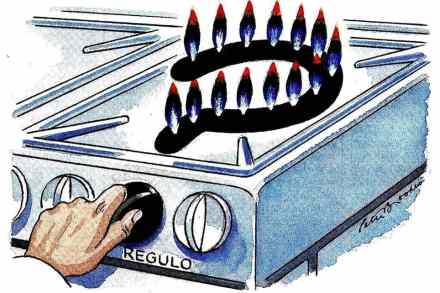
Critics of ‘Trussonomics’ – and there are many – have been quick to claim that the new energy price plan puts its economic credibility at risk. Indeed, early estimates suggested that the ‘Energy Price Guarantee’ could cost the taxpayer £150 billion or more over two years, making it the most expensive economic policy in history. More than the furlough scheme, more than even the bank bailouts. Fortunately, the bill looks like it will be a lot smaller and sceptics are set to be proved wrong. The Prime Minister proposes to cap the unit price of energy for households for two years, starting next month, with the government compensating suppliers for any additional costs.

An energy price freeze is a very bad idea

From our UK edition

The confirmation of the huge jump in the Ofgem cap on domestic energy bills in October, and forecasts of even worse to come, have fuelled more calls for prices to be frozen at current levels. This is not a completely daft idea, but it is not a good one either. There is no shortage of suggestions for how to solve the energy crisis. Labour has proposed a six-month bills freeze, financed by higher taxes on energy producers, the redirection of the £400 energy discount, and assumed (but largely mythical) savings on the debt interest bill due to lower RPI inflation. An alternative, being promoted by the energy suppliers, is to freeze bills for up to two years, with any shortfall covered by a ‘deficit fund’.

Cutting taxes isn’t irresponsible

From our UK edition

Everyone is supposed to have their 15 minutes of fame. Perhaps I have just had mine, after the contenders for the Tory leadership were invited to endorse the ‘charter for tax cuts’ that I co-wrote for Conservative Way Forward. It was certainly pretty cool to be namechecked at the launch event on Monday both by the new Chancellor, Nadhim Zahawi, and by a strong candidate to be the next prime minister, Suella Braverman. The thinking behind the charter was simple. I wanted to summarise the case for tax cuts and respond to some of the arguments against; including that we cannot afford them, or that they would be inflationary. The timing, as it turned out, could not have been better. The changes at the top of the Tory party are a golden opportunity to rethink economic policy.

Of course we can afford to cut taxes

From our UK edition

The latest data on the UK’s public finances have provided more ammunition for those arguing that the government cannot afford to cut taxes. However, the economic reality is far more nuanced – especially when it comes to interest payments. The bad news is that the government borrowed another £14 billion in May, £3.7 billion more than forecast by the Office for Budget Responsibility (OBR). This reflected both lower-than-expected tax receipts, despite the increase in National Insurance contributions, and higher spending, including £7.6 billion in debt interest costs. This means that the government has already borrowed £35.9 billion in the first two months of the new fiscal year, or £6.4 billion more than forecast.

Are we heading for a Platinum Jubilee recession?

From our UK edition

Occasionally I despair of my own profession. Even economists should be able to enjoy a long weekend. Yet some of us are stuck debunking commentary on the economic impact of the Queen’s Platinum Jubilee celebrations – much of which justifies the old tag of the ‘dismal science’. The long Jubilee weekend will indeed mean that economic activity, as usually assessed, is lower than it would otherwise have been. The output and income lost due to the temporary shutdown of most businesses will only partially be offset by increased spending in other areas, or recouped later. We have, of course, been here before. The monthly measure of UK gross domestic product (GDP) fell by 2.2 per cent in June 2002 (during the Golden Jubilee celebrations), and by 1.

The good economic news about people’s finances

From our UK edition

If you believe the media coverage of the latest consumer confidence surveys, household spending is set to collapse under the weight of the cost of living crisis, dragging the UK economy into a deep recession. But how reliable are these signals? As always, it is worth digging past the headlines. The GfK measure of consumer confidence did indeed fall to a record low in May. But people were less pessimistic about their own finances than they were about the economy as a whole. This distinction is crucial. It is no surprise that people are worried about the general economic situation: we are constantly being told that the country is going down the plughole. But when it comes to people’s own finances, things do not look quite as bad.

Are sanctions on Russia failing?

From our UK edition

Sanctions are the West's key weapon in the fight against Putin, but there are signs that Russia’s economy and financial system is weathering the storm better than expected. The rouble has already bounced back and Russia has been able to continue to service its debts, with only minor hiccups. A closer look however reveals that sanctions are biting hard – and that Russia is losing the economic as well as military war. Take the rouble's resurgence, which is not what it seems. The ability of Russia's currency to bounce back reflects the fact that Russian imports have fallen by more than the country’s exports, as local consumers and businesses have cut spending. This means there is less demand to sell roubles to buy foreign currencies.

Ignore the dollar doomsayers

From our UK edition

So, it’s official. The global rating agency S&P has determined that the Russian government has defaulted on part of its international debt. In itself, this is not as big a deal as it may sound. Nonetheless, the circumstances have revived concerns about the future of the US dollar as the reserve asset of choice for central banks around the world. Russia is now judged to be in ‘selective default’ because it has attempted to repay holders of two US dollar-denominated bonds with Russian roubles. At the very least, this is a technical breach of the terms of the debt. It will also probably lead to some material losses for bondholders, even though the Russian currency has partially recovered from its initial collapse following the invasion of Ukraine.

What happens if Russia defaults?

From our UK edition

Well down the list of things to worry about as the ghastly Ukrainian tragedy unfolds is the high probability that the Russian government will stop paying its international debts. But this risk should certainly be somewhere on that list – as the fallout from past defaults has shown. We have been here several times before. Moscow also defaulted on its debt in 1998, exacerbating a sell-off across all emerging markets. It led to the collapse of a huge US hedge fund, Long-Term Capital Management, which had to be bailed out to prevent a worldwide meltdown. This came too late to save many other investors from large losses. Ten years later, apparently isolated problems in the US mortgage market did cause a global financial crisis.