Economy

  • AAPL

    213.43 (+0.29%)

  • BARC-LN

    1205.7 (-1.46%)

  • NKE

    94.05 (+0.39%)

  • CVX

    152.67 (-1.00%)

  • CRM

    230.27 (-2.34%)

  • INTC

    30.5 (-0.87%)

  • DIS

    100.16 (-0.67%)

  • DOW

    55.79 (-0.82%)

Miliband’s fight against North Sea drilling is far from over

What have North Sea oil and gas production and grammar school education got in common? Both are subject to a fiddle by which they can be expanded while the government pretends they are not expanding. After David Cameron changed his mind on grammar schools and said he wouldn’t allow new ones to be created, a deal was done whereby existing schools could open a ‘satellite’ on another site in another town. Hence Tunbridge Wells Grammar School opened a new site in Sevenoaks – a separate school in all but name, and yet the government could claim that it had stuck to its promise of no new grammars. The cabinet battle

Spotlight

Featured economics news and data.

Cutting Britain’s giant welfare bill would be an act of kindness

Does having money really matter that much? There are those, usually with quite a bit of it, who want us to care less about materialism. But, unequivocally, money really does matter – not because of any status it supposedly brings, but for the freedom it buys: freedom to choose how we live and how we look after others. Considering this, it seems that the deep disillusionment with mainstream politicians in recent years stems from a protracted and ongoing period of stagnant living standards over which they have presided. But the truth is that the average person has not got poorer since the global financial crisis. They have got a little

In defence of Liz Truss’s retro economics

One of the many curious things about Foreign Secretary Liz Truss is that she has the capacity to drive some people around the twist. There are the Trussites, hovering over her Instagram posts in political adoration, and then there are others who consider her a menace who is about to be made Prime Minister in a sinister conspiracy by Brexiteers. At least she is willing to challenge the groupthink of the Bank of England and the Treasury, both of which are full of clever people who have manifestly failed to manage the inflationary shock currently knocking us all off our perches. At the weekend, it was reported that Ms Truss

Crypto is dead

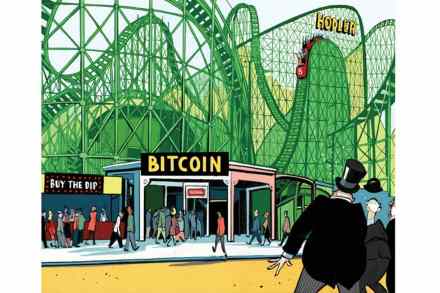
When Britain voted for Brexit, Macron boasted that Paris would eat the City of London’s lunch. It didn’t quite work out that way, with most league tables continuing to put London as the number one or two financial centre, with not a single EU city in the top ten. Emmanuel Macron’s government has now announced that it has invited Binance, a crypto exchange site, to set up a European HQ in Paris. You have to ask: has Macron leapt on a bandwagon which has already started to lose its wheels?  The warning sign for cryptocurrencies is not so much that they have crashed – Bitcoin is down 50 per cent from its peak last

What reason is there for young people like me to vote Tory?

With a sense of reluctance, I went into a voting booth this week and ticked the boxes corresponding to my local Labour candidates. My rationalisation was simple: I wasn’t voting for Labour, but against the Conservatives.  There is a tangible stench of decay surrounding the Tory party at present. At best, it is incapable of maintaining moral standards. Barely a month passes without some MP’s embroilment in a grubby scandal involving sex, money, or both. The party has no vision for the country, no agenda beyond targeting the young to pay for the old. And if you judge them on results, well, there’s even fewer reasons to vote Tory. The Conservatives

Why the local election results should trouble the Tories

The overnight results in the local elections are bad, but not disastrous for the Tories. They do not presage a 1997 style wipe-out. And they do not suggest that the public is yearning for a Labour government with Keir Starmer as Prime Minister. In normal times, the Tories could regard them as fairly standard mid-term fare. But the worry for the Tories is that there is so much bad news to come between now and the next election.    The other Tory worry is that no party will go into a coalition with them The Bank of England’s forecast yesterday suggests that there’ll be very little economic growth between now and

Are we heading towards a recession?

The US Federal Reserve yesterday announced its biggest interest rate rise in 22 years. Today, the Bank of England follows suit, raising rates at the fastest pace for a quarter of a century. But the biggest question remains: how successful will these hikes be at tackling inflation? The Bank’s Monetary Policy Committee has voted six to three to raise interest rates from 0.75 to one per cent. This incremental 0.25 per cent rise was broadly expected by economists – though there had been speculation in recent weeks that the Committee might move faster, after March’s headline inflation rate hit seven per cent. Notably, Committee members in the minority were calling

How Hungary torpedoed the EU’s sanctions crackdown on Russia

‘Hungary’s stance on oil and gas sanctions on Russia remains unchanged,’ Hungarian government spokesperson Zoltán Kovacs said on Monday. ‘We do not support them.’ Cue panic in Brussels as European Union ministers discussed a potential embargo on Russian oil imports, plans for which were presented to the European Parliament on Wednesday morning. Claims swirled that Hungary might be allowed to continue buying Russian oil for a year longer than other member states to stop it from vetoing the bloc’s new sanctions package, but Kovacs quickly torpedoed this idea too. Hungary does not ‘see any plans or guarantees on how a transition could be managed based on the current proposals, and

The new White Russians: the fate of émigrés fleeing Putin

It’s spring in Tbilisi. The fruit trees are in full blossom, the nights are warm. The Purpur restaurant near the Gudiashvili Gardens and Vinzavod No. 1 on Rustaveli Avenue – favourites of visiting Moscow hipsters and creatives for years – buzz with Russian conversation. ‘Everyone I know is here now,’ says Katya, 43, a museum curator visiting from Moscow. ‘It’s like Kvartira 44 [a Moscow café popular with the intelligentsia] on an outing.’ But instead of excitement, the mood among the thousands of Russians who have fled their country for the Georgian capital since the beginning of the war is one of anxiety and barely suppressed desperation. ‘People are putting

The truth about Roe vs Wade

As we get back into Roe vs Wade, prompted by the leak of what is said to be the US Supreme Court’s draft decision to throw out that famous judgment, prepare for an avalanche of misinformation. On BBC Radio 4 on Tuesday, the news said that the court’s 1973 decision had ‘legalised abortion’. Not so. Abortion had long been legal in many states of the Union. But until the judgment, different states had been free to adopt different policies. Roe vs Wade decided that within the 14th Amendment to the Constitution and its implied right to privacy lay a constitutional right to abortion and that the amendment’s ‘due process’ clause

No, BP’s profit hasn’t boosted Starmer’s windfall-tax call

BP’s ‘underlying’ first-quarter profit of $6.2 billion, compared with $2.6 billion in the first quarter of 2021, was a direct reflection of the surge in global energy prices. Coming 48 hours before polling day, it also looked like a gift-wrapped on-time delivery for Sir Keir Starmer and his claim that a windfall tax on ‘excess’ profits of North Sea oil and gas extractors would knock £600 off the energy bills of ‘those who need it most’. Perhaps anticipating the BP announcement, Rishi Sunak last week seemed to trim his opposition to a windfall tax, telling Mumsnet ‘of course that’s something I would look at’ if energy companies fail to invest

Has the Fed restored its credibility?

The Federal Reserve is playing catch-up. Today’s interest rate hike is only the second rate rise since 2018 – but it’s the first half-point rise in 22 years. As expected, the federal-funds rate – the interest rate banks use to lend to each other on a short-term basis – will rise from a target range of between 0.25 and 0.5 per cent, to a range between 0.75 and 1 per cent. After many months of insisting price hikes would be transitory, with inflation soaring to a 40-year high in the meantime, the Fed is finally acting to curb it. By historical standards, today’s hike keeps interest rates very low –

Why is Boris Johnson suppressing the incomes of the poor?

As the Prime Minister pointed out this morning, looming recession and soaring inflation are not uniquely British problems – though right now the UK economy is slowing faster than many of our rich country competitors. In the US for example, the IMF’s former chief economist Ken Rogoff has warned just today that the Federal Reserve’s official interest rate may have to go as high as five per cent to suppress rampant inflation. Which is one of the reasons I was nonplussed when the PM told Susanna Reid on ITV’s Good Morning Britain that he’s reluctant to increase universal credit and benefits and protect poorer people from the ravages of inflation

Why Meghan Markle’s Netflix show was cancelled

In their post-royal careers, Harry and Meghan have learned two lessons in quick succession: firstly, that membership of the royal family opens the door to media deals less well-connected celebrities could only dream about. Secondly, they have learned that even royal fame will not, ultimately, help one of the biggest media organisations in the world sell a product that the public finds unappealing. No doubt Meghan thinks mightily of the concept of Pearl, her proposed animated Netflix series in which a 12-year-old girl is inspired by great women in history. But it seems potential viewers are rather less enamoured. Netflix has cancelled the series before it was even made. Considering

The nanny state is making us poorer

As household budgets face their worst squeeze for decades, one wonders whether the public health establishment feels any remorse for their role in driving up the cost of living. The kinds of taxes – on food, alcohol, tobacco, and soft drinks – that nanny statists have dedicated entire careers toward delivering are proven to have taken a greater share of income from the poor than the rich. An average family that indulges in drinking and tobacco will now spend £891 in cigarette levies and £216 in alcohol duty every year. Advocates for sin taxes argue that their tactics are progressive if they improve the health of the poor more than the rich. Others

Right-to-buy won’t fix Britain’s housing crisis

The biggest long-term threat to the Conservatives is neither partygate nor even the cost of living crisis – but declining rates of home ownership. As Mrs Thatcher understood, when people are able to afford their own home, they become more conservative in outlook. They put down roots in their local area and they gain a vested interest in capitalism – just look how Mrs Thatcher won and held on to aspirational areas such as the new towns. That the rate of home ownership plunged from 70.9 per cent to 62.6 per cent between 2003 and 2017 (it has since recovered slightly) goes quite a long way to explaining why Jeremy

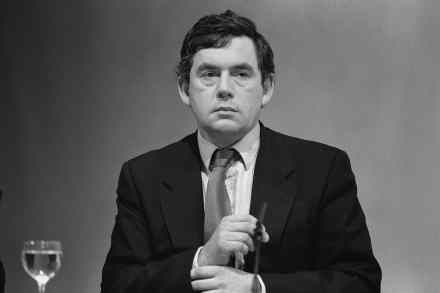
After 25 years it’s time to finally break with New Labour economics

The state would be prioritised over everything else. Taxes would be constantly, if stealthily, raised. Spending would be reclassified as investment, and shifted off the balance sheet wherever possible. And macro stability would be out-sourced to the Bank of England, while the Treasury would take total control of domestic policy. A quarter of a century ago this weekend, as New Labour was swept into power in a landslide election victory, Gordon Brown, then a relatively fresh-faced Chancellor, completely overhauled economic policy. In a whirlwind week, he put in place the most far-reaching reforms in a generation. And yet, 25 years on, that consensus is still in place. Twelve years of

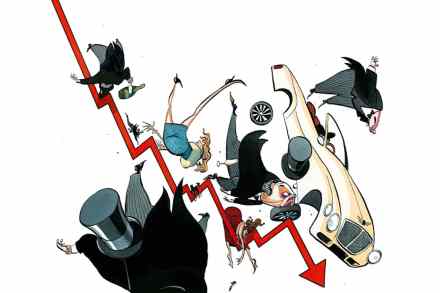
Is stagflation coming for the UK?

This week, a US economy that had been expected to grow in the first quarter of the year was recorded as having shrunk 0.4 per cent – a stunning fall, raising awkward questions about what might come next. This morning, it emerged that the Eurozone grew by just 0.2 per cent over the same period, with inflation in both the US and Europe topping seven per cent. America is ahead of Britain when it comes to the global economic slowdown For weeks now, investors in America have been spooked by the ‘inverted yield curve’: a technical term, but one which carries certain implications. When this happens (i.e., short-term government bonds

Why is Rishi Sunak flirting with windfall taxes?

Rishi Sunak has had a few quiet weeks after an explosive one, in which the Chancellor had to deal with an avalanche of questions concerning his wife’s tax status and a partygate fine. But Sunak was back this week talking policy. And his most recent contribution is unexpected to say the least. In an interview with Mumsnet, the Chancellor indicated that he might start considering a windfall tax on oil and gas companies if they didn’t invest more profits back into their businesses to ‘support the economy’ and improve productivity. ‘If we don’t see that type of investment coming forward, if companies aren’t going to make investments in our energy

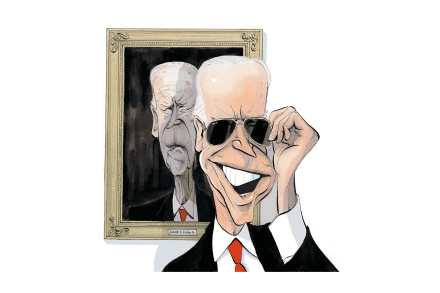
The Biden Bust is here

A wave of government spending would reboot the economy. Fairer taxes would pay for restored infrastructure. Skills would be improved, productivity raised, and new digital champions would emerge. When Joe Biden was elected, he promised the most radical programme of economic reform since Franklin Roosevelt’s New Deal in the 1930s, and, to his army of cheerleaders at least, the American economy was about to be completely transformed. But hold on. Only a year into his term, the reality is very different from the promises. In reality, the Biden Bust has arrived. Donald Trump may have been personally obnoxious, but he bequeathed an economy in perfectly good shape The US GDP figures

The one thing Netflix could do to keep me subscribing

Anecdotes and statistics should never be confused, but let’s do just that to build a composite picture of today’s UK economy. As the ‘cost of living crisis’ – barely out of its starting blocks – began to eat spending power and erode confidence, high street sales fell 1.4 per cent in March while non-store retail (largely online) dropped 7.9 per cent. Office occupancy, blighted by working from home, is stuck below 30 per cent of capacity. The City of London is a ghost town on Mondays and Fridays, while West End footfall remains a fifth below 2019 levels. But in case you’re planning a resumed commute or an in-town shopping