Economy

  • AAPL

    213.43 (+0.29%)

  • BARC-LN

    1205.7 (-1.46%)

  • NKE

    94.05 (+0.39%)

  • CVX

    152.67 (-1.00%)

  • CRM

    230.27 (-2.34%)

  • INTC

    30.5 (-0.87%)

  • DIS

    100.16 (-0.67%)

  • DOW

    55.79 (-0.82%)

Miliband’s fight against North Sea drilling is far from over

What have North Sea oil and gas production and grammar school education got in common? Both are subject to a fiddle by which they can be expanded while the government pretends they are not expanding. After David Cameron changed his mind on grammar schools and said he wouldn’t allow new ones to be created, a deal was done whereby existing schools could open a ‘satellite’ on another site in another town. Hence Tunbridge Wells Grammar School opened a new site in Sevenoaks – a separate school in all but name, and yet the government could claim that it had stuck to its promise of no new grammars. The cabinet battle

Spotlight

Featured economics news and data.

Cutting Britain’s giant welfare bill would be an act of kindness

Does having money really matter that much? There are those, usually with quite a bit of it, who want us to care less about materialism. But, unequivocally, money really does matter – not because of any status it supposedly brings, but for the freedom it buys: freedom to choose how we live and how we look after others. Considering this, it seems that the deep disillusionment with mainstream politicians in recent years stems from a protracted and ongoing period of stagnant living standards over which they have presided. But the truth is that the average person has not got poorer since the global financial crisis. They have got a little

Putin’s energy war has changed German-Russian relations for good

After months of speculation and handwringing, it has finally happened: Germany and the rest of Europe are now receiving no natural gas through Nord Stream 1. Aside from how the continent manages to survive this winter, Russia’s moves to shut off supply through its pipeline will have serious long-term ramifications. One of the most significant strategic relationships in the last half-century of European politics has been that between Germany and Russia over energy. That now looks to be over, with no clear prospect of it ever returning. As with before, Gazprom made technical excuses. This time, they claimed that an oil leak had led to Rostekhnadzor, the Russian state network

Liz Truss will come to regret her ‘bonfire’ of workers’ rights

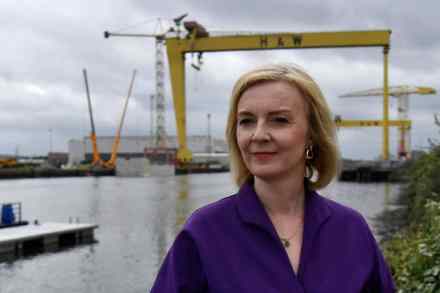
Liz Truss is right about sex and gender. But if she is to get the country through the next winter she needs to think again about her ‘bonfire’ of workers’ rights. ‘I’m a plain talking Yorkshire woman,’ Truss said at a hustings in Cardiff, before announcing, ‘I know that a woman is a woman.’ Circular reasoning perhaps, but the audience knew exactly what she meant. There was not only applause, but a sense of relief, even laughter. She took a poke at certain sectors of society – ‘parts of Whitehall’ and ‘parts of the public sector’ – who didn’t seem to get it before making her point: ‘I will make

The key difference between Liz Truss and Boris Johnson

‘It’s fair to give wealthiest more money back – Truss’. That’s the headline on a BBC News story following Liz Truss’ interview with Laura Kuenssberg today, where she was asked about the merits of cutting National Insurance. Don’t worry if you missed the headline though. You’ll get plenty more chances to see it when Labour MPs repeat it over and over again, offering it as proof that the Tories are the party of the rich, a tag that Conservative leaders have sought to drop for the last two decades. So striking is the prospect of a would-be Tory leader clearly defending a policy that benefits the rich more than the poor,

Only an ‘un-conservative’ measure can solve the energy crisis

The UK economy has so far held up reasonably well in the face of the rise in energy prices. But the latest data suggest a weakening has begun and the economy faces an enormous potential further shock. For households, the latest price cap announcement means a rise in energy bills of around 80 per cent to £3,549 per year — a bill totalling £99 billion. This is equivalent to a rise in the standard rate of income tax of nine pence in the pound. And this is by no means the full extent of the shock, with projections that the price cap might rise much further, to around £6,000 per

The case for energy nationalisation

We are living through an energy crisis unlike anything since the oil shocks of 1973 and 1979. The average household energy bill is set to reach over £3,500 a year. Businesses are already going bankrupt as they face ruinous costs. And inflation, driven in part by high energy prices, is expected to hit 10 per cent with the threat of more drastic price increases in the new year. In these circumstances, it is surprising that no leading politician has yet made the case for nationalisation of our energy sector – even though new polling shows half of Tory voters believe energy should be brought back into public ownership. Some have

What Rishi Sunak gets wrong about lockdown

Rishi Sunak presents an alarming picture of what happened during lockdown in last week’s Spectator interview – one echoed by lockdown sceptics who claim that Covid policy was a disaster, stoked by fear and based on questionable scientific advice. Worst of all, they cry, the trade-offs were not even discussed. But none of this is true – it is Covid revisionism. I know because I sat around the cabinet table as politicians, scientists, economists and epidemiologists agonised over the extent to which lockdown would devastate lives and livelihoods. It was not an easy decision for anyone. We locked down because we knew the cost of ‘letting Covid rip’ was far

Who is Sunak kidding with his warnings about sterling?

There will be a run on sterling. The gilts market will be in freefall. And the FTSE will tumble as global investors take fright and sell off every form of British asset. It might take only a few days, or the government might stagger through until the end of September, but before long Liz Truss and her new Chancellor Kwasi Kwarteng will have been forced to call in the IMF to stabilise a collapsing economy. That is, at least, according to the former Chancellor Rishi Sunak. With just a few desperate days left in his doomer leadership campaign, he has declared his opponent’s tax and spending plans so wild and reckless

It’s time to kickstart North Sea oil

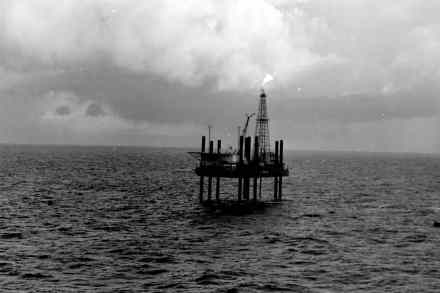
It is reported this morning that one of Liz Truss’s first acts as prime minister, assuming she wins the Conservative party leadership election, will be to grant new licences for North Sea oil and gas extraction. But will it be enough – and quick enough – to alleviate the energy crisis? There are still substantial known oil and gas reserves in the North Sea left to be exploited. According to a report produced by the Oil and Gas Authority last September, known reserves of oil and gas in the North Sea at the end of 2020 amounted to 4.4 billion barrels of oil equivalent (BOE). This is just a tenth of

We still love our failing NHS

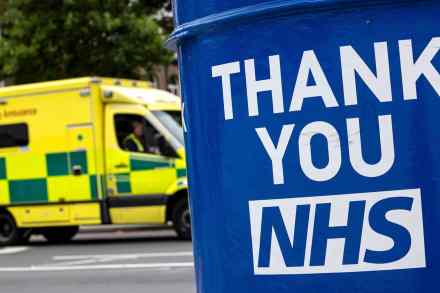
A new poll about the NHS, the Sunday Times tells us, has discovered ‘a decline in support’ for the National Health Service. The story spoke of ‘wide dissatisfaction about the state of the health service’, under the headline: ‘Britain falls out of love with the NHS’. The figures from the poll itself tell a slightly different story. The headline finding was that three people in five are now not confident that they would receive timely treatment were they to fall ill tomorrow. But these three people in five aren’t necessarily saying they’ve ceased to approve of the NHS. It seems to me that they are simply affirming what they’ve read

An energy price freeze is a very bad idea

The confirmation of the huge jump in the Ofgem cap on domestic energy bills in October, and forecasts of even worse to come, have fuelled more calls for prices to be frozen at current levels. This is not a completely daft idea, but it is not a good one either. There is no shortage of suggestions for how to solve the energy crisis. Labour has proposed a six-month bills freeze, financed by higher taxes on energy producers, the redirection of the £400 energy discount, and assumed (but largely mythical) savings on the debt interest bill due to lower RPI inflation. An alternative, being promoted by the energy suppliers, is to

Sunak: Treasury predicted energy price hitting £5,000

When I spoke to Rishi Sunak on Tuesday, his theme was the importance of being honest about trade-offs in politics. The big problem of lockdown, he said, was that these trade-offs (i.e. the side effects of closing down the economy and society) were never made clear to the public. Should this information have been shared with the public? Or might this have undermined the resolve needed to send a message to Putin? But it wasn’t just in lockdown; he felt the same was true over Ukraine. I didn’t manage to fit this into the interview, but I can say a bit about it now. When the Prime Minister called for sanctions and

How high will energy prices go?

When dozens of energy companies started going bust in 2021, the government knew it had a crisis on its hands. The rise of the energy price cap from £1,277 to £1,971 in April – an increase of nearly £700 – led to not one but two emergency support packages. By the end, £15 billion worth of subsidies and support broadly covered the price rise for Britain’s eight million poorest households. This, it now seems, is just the start of what’s needed to get them through winter. Starting in January, the price cap will be updated every three months instead of every six months to better reflect the wholesale price of energy This

Money won’t keep the Union together

Despite its name, Gers Day is not an annual celebration of the Ibrox side that makes up one half of Glasgow’s notorious Old Firm. If only it were that uncontentious. In fact, Gers stands for ‘Government Expenditure and Revenue Scotland’, the Scottish government’s yearly report on public finances. In a normal country, the publication of 76 pages of data tables and accountancy prose would go largely unremarked upon, so naturally in Scotland we have to turn it into another front in the independence wars. Because we really have nothing better to do. This year’s figures, like last year’s, reflect the unprecedented Treasury interventions during the Covid pandemic. However, they paint

The problem with Biden’s student debt plan

In Europe it is handouts to help pay our energy bills – even for people who could easily afford to pay them. In the US, it is student debts being written off. With remarkable speed the West is emerging into a new age of big – no, make that huge – paternalistic government. Today, Joe Biden announced that graduates who earn less than $125,000 a year, and who live in a household whose joint income is less than $250,000, will have $20,000 worth of student debt written off. For those who work in the non-profit sector, the military, or federal or local government, the write-off will be 100 per cent.

Are Russian sanctions working?

Soaring gas and electricity prices are giving us an idea of the cost of imposing sanctions on Russia – a cost which may be worth bearing if it helps to defeat Russian aggression, but a cost nonetheless. But how complete and effective are the sanctions? Trade figures released by the Office for National Statistics (ONS) today reveal that Britain, at least for now, has achieved one of its chief objectives: it has weaned itself off Russian oil and gas. In June there were no imports of fuels from Russia. In the 12 months to February, by contrast, 5.9 per cent of Britain’s crude oil imports, 24.1 per cent of our

What’s to blame for the crash of the euro?

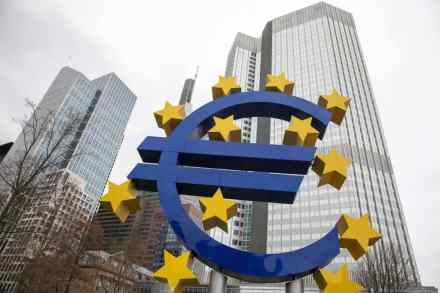
Since June 2016 we have settled into a pattern. Whenever the pound plunges, it is followed by cries of ‘I told you so’. It is all the fault of Brexit and a result of international investors fleeing Britain and taking their money elsewhere. And when the euro plunges? We hardly hear a thing. Yet today, the euro has passed a milestone which ought not to be ignored: it has fallen below parity with the dollar for the first time since 2002. It is quite a tumble given that in 2008 it was trading at $1.5. Against the pound, the euro is now back to where it was in 2012, long

We’re at pandemic levels of death. Why is no one talking about it?

At the peak of the lockdowns, thousands were dying every week. Newspaper front pages demanded action. But in the latest week’s data, covering the week to 12 August, some 1,082 more people than would be expected in a normal year died in the UK. These so-called ‘excess deaths’ have averaged 1,000 for 15 weeks of this year. Yet unlike Covid deaths, they are met with near silence. But it isn’t Covid that’s causing these deaths anymore. In the latest figures, published by the ONS, just 6 per cent of English and Welsh deaths had anything to do with Covid. Of nearly 10,000 weekly deaths in England, just 561 mentioned the virus

Could inflation hit 18.6 per cent?

When last month’s headline inflation figure was released, showing a rise to 10.1 per cent on the year, a little bit of optimism broke through the general discourse of outrage and horror: despite hitting double digits, might inflation be close to its peak? The main source of this optimism came from falling oil prices, which recently have been on a downward trajectory. But that narrative is by no means the consensus. This morning, investment bank Citi reports its most recent inflation forecast – which it estimates will hit 18.6 per cent on the year in January. This is more than 5 percentage points higher than the Bank of England’s most

Sunak and Truss are wrong about solar

Rishi Sunak has joined Liz Truss in grumbling about solar panels in fields. This is all rather dismaying, and revealing. It suggests that Conservative leadership contenders – and the party faithful they’re appealing to – lack faith in the transformative power of markets and free enterprise. Those solar panels that Sunak and Truss deplore are nothing less than an economic miracle, delivered by private companies seeking profit. Anyone who proclaims themselves supporters of markets should be shouting from the rooftops about this miracle, since it shows how people and organisations freely allocating capital makes our world better, fast. Private enterprise works because the incentive to make a profit by selling

Will inflation kill Truss’s tax cut plans?

This week, the Institute for Fiscal Studies offered tough words for those hoping for tax cuts: with inflation taking its toll on both government and household finances, the next prime minister would be forced to prioritise the most vulnerable and debt-servicing payments. This would require more revenue for the Treasury, not less. As the Office for National Statistics publishes the latest public sector finance data for July, are these warnings too pessimistic – or already proving apt? Inflation continues to ramp up debt interest payments – a grim reality for any government which wants to spend money on delivering new and better services, not on money it’s already spent. Last