Economy

  • AAPL

    213.43 (+0.29%)

  • BARC-LN

    1205.7 (-1.46%)

  • NKE

    94.05 (+0.39%)

  • CVX

    152.67 (-1.00%)

  • CRM

    230.27 (-2.34%)

  • INTC

    30.5 (-0.87%)

  • DIS

    100.16 (-0.67%)

  • DOW

    55.79 (-0.82%)

The IMF growth downgrade is more bad news for Rachel Reeves

Rachel Reeves lands in Washington tonight to be greeted with bad news. The International Monetary Fund (IMF) – whose spring meeting the Chancellor is attending – has just handed Britain the largest GDP downgrade of any G7 country.  In the freshly released update to their world economic outlook, the IMF forecast growth for the UK this year of just 0.8 per cent – down from the 1.3 per cent they’d previously projected. Things don’t get much better next year either, with just 1.3 per cent growth forecast, again downgraded from 1.5 per cent.  This downgrade singles out Britain and our European neighbours. While the IMF calls the overall effect of

Spotlight

Featured economics news and data.

Cutting Britain’s giant welfare bill would be an act of kindness

Does having money really matter that much? There are those, usually with quite a bit of it, who want us to care less about materialism. But, unequivocally, money really does matter – not because of any status it supposedly brings, but for the freedom it buys: freedom to choose how we live and how we look after others. Considering this, it seems that the deep disillusionment with mainstream politicians in recent years stems from a protracted and ongoing period of stagnant living standards over which they have presided. But the truth is that the average person has not got poorer since the global financial crisis. They have got a little

Is a weak pound bad for Britain?

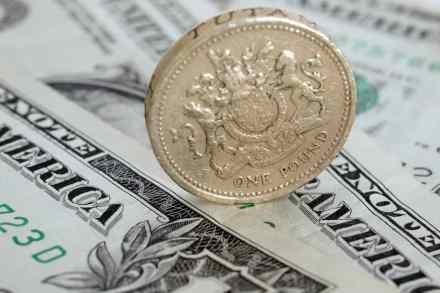
Should we despair that the pound has slumped again today, falling below $1.14 for the first time since 1985? Or should we rejoice? It was, after all, a collapse in the pound following Black Wednesday in 1992 – along with dramatically lowered interest rates — which precipitated a lasting economic recovery. It is all too easy to see the value of the pound as a national virility symbol, and think that the stronger it is, the better. In reality, a weak pound – or let’s say a pound set at a realistic level, which properly reflects the costs of wages, goods and services in Britain – can help stimulate the

It’s time to scrap the cap on bankers’ bonuses

Critics say that scrapping the cap on bankers’ bonus will encourage a return to excessive risk taking. It will provoke retaliation from the European Union, they warn. And perhaps, worst of all, it could prove fatal politically, rewarding a few rich Tory friends while the rest of the country struggles with the cost-of-living crisis. Chancellor Kwasi Kwarteng will get lots of criticism if, as predicted, he does decide to bin the cap in his upcoming financial statement. Even so, he should ignore the naysayers. It will certainly be a controversial move. The controls on City bonuses were imposed right across the EU in the wake of the crash of 2008/2009. These

Let’s see some energy policy action

At His Majesty’s Treasury, it’s all looking a bit like Year Zero in revolutionary Cambodia. Kwasi Kwarteng’s first act was to sack the respected but ‘orthodox’ permanent secretary Sir Tom Scholar. Now the FT reports the Chancellor ordering underlings to focus ‘entirely on growth’, presumably at the expense of financial discipline. I’m picturing a locked basement of fearful officials labouring under Kwarteng’s lash to translate his forthcoming ‘fiscal event’ – tax cuts on top of massive spending to cap energy bills and unlimited borrowing to pay for it – into the sort of Whitehall language that might make it sound reasonable. Meanwhile, businesses large and small remain completely in the

Has inflation peaked?

This morning’s surprise update from the Office for National Statistics shows headline inflation at 9.9 per cent on the year to August, down slightly from 10.1 per cent in July. While consumer inflation remains at a 40-year high, the drop from double digits back into single digits has the optimists whispering: might inflation have peaked? This update is no doubt good news, but this is likely to be a brief moment of calm in an ongoing storm. The slight fall in headline inflation has primarily been driven by easing fuel prices, as the cost of oil has been on a downwards trajectory. That at least is an early sign that global markets

Norway says ‘no’ to a gas price cap

One implication of the Russian gas shut-off is that Norway has now become the EU’s largest single supplier of natural gas. According to the country’s energy ministry, they are expected to export 122 billion cubic metres of gas south to the EU over the course of 2022. This compares with the 155 billion cubic metres of gas which the union imported from Russia in 2021. Getting gas from Norway is obviously preferable to Russia: Norway is a friendly country, and Nato ally, and has gone out of its way to facilitate as much exports to the EU as possible. Over the summer, the country’s government effectively put a stop to

Britain is teetering on the edge of recession

One of Liz Truss’s suggestions on the leadership campaign trail was that her economic agenda could avoid recession. But one of the (many) gambles attached to these comments was what had already happened to the economy before she entered No. 10. This morning we got some more insight about how the economy fared over the summer, as the Office for National Statistics revealed that GDP grew by 0.2 per cent in July: a small uptick, following a 0.6 per cent contraction in June. The small, but still positive, growth was mostly a result of a boost to services industries, which fell by 0.5 per cent in June, with the largest

Truss chooses price controls to tackle energy bills

When Liz Truss spoke from the steps of Downing Street on Monday, she declared proudly that she ‘campaigned as a conservative’ and would ‘govern as a conservative’. It was a dig at her leadership rival Rishi Sunak, who she beat by 15 percentage points, and who she accused throughout the campaign of having lost his way over tax hikes during his time in the Treasury. He insisted this was the path to fiscal responsibility; she insisted it was the path to recession. Yet Truss’s first policy announcement of her premiership – and quite possibly one of the biggest announcements she’ll make as Prime Minister – is not one you can

Can anything halt the pound’s fall?

My predecessor Christopher Fildes looked at exchange rates through a cocktail glass: three negronis for the Italian lira equivalent of a tenner, good; a $2 martini for £1, even better. That latter ratio applied briefly 30 years ago when, he wrote, the favoured tipple ‘brushed against my lips like an angel’s kiss’. It recurred during the financial crisis of 2007-08, when no one was really able to enjoy it, and has never been seen since. On Monday, as Liz Truss was crowned, the pound dipped below $1.15, in sight of its 1985 all-time low of $1.05. ‘The prospect of …parity versus the dollar,’ said Bloomberg, ‘is becoming ever less outlandish.’

Sturgeon’s rent controls will hurt Scots

It’s all getting a bit Latin American in Britain and not in a good way. Inflation is stuck stubbornly in the double digits, the current account deficit is at record levels, our new Prime Minister is preparing to spend the annual budget of the NHS on subsidising energy purchases, and regional separatists are tightening their grip on the Scottish economy by introducing price controls. At least the weather’s still good. Nicola Sturgeon’s plan to freeze all rents in Scotland would be a disaster for Scots. Economists almost universally agree that rent control is one of the worst possible ways the government can intervene in a housing market. The short-term consequences

Liz Truss revealed her weakness at PMQs

In her first Prime Minister’s Questions, Liz Truss said that before she was anything else she was ‘on the side of people who work hard and do the right thing’. In response, Keir Starmer showed that Labour’s first task was to make clear that she was nothing of the sort. And I suspect he will have the easier time of it. For a Prime Minister to portray herself as the faithful friend of Big Oil is – how to put this politely? – a ‘brave strategy’ at the best of times. It looks terrible when fuel prices and the national debt are in a race to see which can inflate

Liz Truss should increase Universal Credit

Liz Truss’s plans for a two-year energy bill freeze, estimated to cost £100 billion, underscore three points. One, the incoming Prime Minister expects the energy crisis to be with us for more than one winter. Two, she grasps how lethal it will be to the Tories’ hopes of re-election if the Treasury doesn’t intervene in a big way. Three, she is prepared to run up government debt even further in order to mitigate a crisis that threatens people’s quality of life. This third point is the crucial one. When a neo-Thatcherite like Truss concedes the merits of transformative interventions funded by borrowing, it opens up a broader conversation. If the Treasury

Liz Truss’s energy price freeze would be a mistake

It is not unusual for promises made during an election campaign to fail to survive a headlong impact with reality, but if, as expected Liz Truss, announces an energy price freeze tomorrow, it will leave many Conservative party members who voted for her feeling somewhat cheated. For most of the leadership campaign Truss denounced the idea of government help with energy bills and insisted she would tackle the problem with tax cuts instead. Taxing people and then giving them some of their money back in handouts, she said, was ‘Gordon Brown economics’. Yet it now seems that not only will she spend large amounts of money to bail out householders’

Are the markets scared of Liz Truss?

Look at the chart for interest rate expectations in isolation, and you might come to the conclusion that Rishi Sunak is right about Liz Truss’s fiscal policies. In June, markets were expecting rates to peak at around 3.5 per cent next year; now they are expecting them to reach close to 4.5 per cent. Moreover, as Truss’s victory came to be seen as inevitable, the FTSE 100 plunged from 7,550 on 19 August to 7,230 this morning – a fall of 4.2 per cent. The pound has fallen from $1.22 on 10 August to $1.15 now. Markets could be forgiven some apprehension But hang on a minute. Markets have been

Liz Truss doesn’t frighten Labour

Labour will attack the new prime minister from the left and the right. From Liz Truss’ exposed left flank, Labour and the majority of the electorate will hammer her for not extending the windfall tax to cover the estimated £170 billion in profits Vladimir Putin has gifted gas and electricity generators. Do not imagine for a moment that it won’t be effective. The attack from the right is less obvious but gets to the heart of the risk Liz Truss is running with the UK economy. ‘We need to paint her as fiscally irresponsible,’ one adviser to Labour’s Treasury team told me. ‘That’s as important as showing she has the wrong

How Liz Truss can solve the energy crisis

It will be expensive. It will last far longer than anyone expects. And it will distort the market even more than it already is. Barring a major upset, Liz Truss will move into No. 10 Downing Street later today. Once she’s there, Britain’s new prime minister will have little choice but to take control of soaring energy prices. How she does that will be the first big test of her premiership. If Truss can do it in a way that boosts output, and encourages investment, it will be worthwhile. But if she opts for just another bail-out she will get stuck in the same dismal groove as Boris Johnson and Rishi Sunak.  If

Putin’s energy war has changed German-Russian relations for good

After months of speculation and handwringing, it has finally happened: Germany and the rest of Europe are now receiving no natural gas through Nord Stream 1. Aside from how the continent manages to survive this winter, Russia’s moves to shut off supply through its pipeline will have serious long-term ramifications. One of the most significant strategic relationships in the last half-century of European politics has been that between Germany and Russia over energy. That now looks to be over, with no clear prospect of it ever returning. As with before, Gazprom made technical excuses. This time, they claimed that an oil leak had led to Rostekhnadzor, the Russian state network

Liz Truss will come to regret her ‘bonfire’ of workers’ rights

Liz Truss is right about sex and gender. But if she is to get the country through the next winter she needs to think again about her ‘bonfire’ of workers’ rights. ‘I’m a plain talking Yorkshire woman,’ Truss said at a hustings in Cardiff, before announcing, ‘I know that a woman is a woman.’ Circular reasoning perhaps, but the audience knew exactly what she meant. There was not only applause, but a sense of relief, even laughter. She took a poke at certain sectors of society – ‘parts of Whitehall’ and ‘parts of the public sector’ – who didn’t seem to get it before making her point: ‘I will make

The key difference between Liz Truss and Boris Johnson

‘It’s fair to give wealthiest more money back – Truss’. That’s the headline on a BBC News story following Liz Truss’ interview with Laura Kuenssberg today, where she was asked about the merits of cutting National Insurance. Don’t worry if you missed the headline though. You’ll get plenty more chances to see it when Labour MPs repeat it over and over again, offering it as proof that the Tories are the party of the rich, a tag that Conservative leaders have sought to drop for the last two decades. So striking is the prospect of a would-be Tory leader clearly defending a policy that benefits the rich more than the poor,

Only an ‘un-conservative’ measure can solve the energy crisis

The UK economy has so far held up reasonably well in the face of the rise in energy prices. But the latest data suggest a weakening has begun and the economy faces an enormous potential further shock. For households, the latest price cap announcement means a rise in energy bills of around 80 per cent to £3,549 per year — a bill totalling £99 billion. This is equivalent to a rise in the standard rate of income tax of nine pence in the pound. And this is by no means the full extent of the shock, with projections that the price cap might rise much further, to around £6,000 per