Economy

  • AAPL

    213.43 (+0.29%)

  • BARC-LN

    1205.7 (-1.46%)

  • NKE

    94.05 (+0.39%)

  • CVX

    152.67 (-1.00%)

  • CRM

    230.27 (-2.34%)

  • INTC

    30.5 (-0.87%)

  • DIS

    100.16 (-0.67%)

  • DOW

    55.79 (-0.82%)

Miliband’s fight against North Sea drilling is far from over

What have North Sea oil and gas production and grammar school education got in common? Both are subject to a fiddle by which they can be expanded while the government pretends they are not expanding. After David Cameron changed his mind on grammar schools and said he wouldn’t allow new ones to be created, a deal was done whereby existing schools could open a ‘satellite’ on another site in another town. Hence Tunbridge Wells Grammar School opened a new site in Sevenoaks – a separate school in all but name, and yet the government could claim that it had stuck to its promise of no new grammars. The cabinet battle

Spotlight

Featured economics news and data.

Cutting Britain’s giant welfare bill would be an act of kindness

Does having money really matter that much? There are those, usually with quite a bit of it, who want us to care less about materialism. But, unequivocally, money really does matter – not because of any status it supposedly brings, but for the freedom it buys: freedom to choose how we live and how we look after others. Considering this, it seems that the deep disillusionment with mainstream politicians in recent years stems from a protracted and ongoing period of stagnant living standards over which they have presided. But the truth is that the average person has not got poorer since the global financial crisis. They have got a little

Will the Bank of England say sorry?

Months ago I said the Bank of England would face a barrage of criticism and a challenge to its independence for failing to raise interest rates enough last year during the post-Covid economic rebound and then for putting them up big time now as we head into recession. So it has proved. And by the way, this does not mean that Bank independence has failed, or that allowing politicians greater sway over how much and when interests rise, would be better. It probably wouldn’t be. The Bank should stop pleading that its failure to call the inflationary turn early enough is irrelevant Nor does it mean Liz Truss would be

Is the Bank of England’s recession warning right?

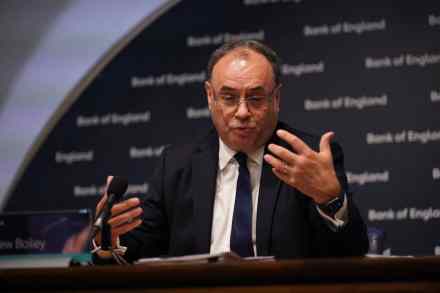
The Bank of England has warned that Britain will fall into a recession this year. Its Monetary Policy Report, released today, predicts that the economy will shrink from October, with the downturn lasting until the end of 2023. The Bank of England also hiked interest rates from 1.25 per cent to 1.75 per cent, the biggest rise for 27 years. The Bank of England’s Monetary Policy Committee has never previously raised the base rate by 0.5 per cent in its 25 years of existence. Previously it has only upped rates in quarter-point stages (and there haven’t been many of those, especially in recent years). The rise will, of course, affect

Why British Gas’s owner is right to restore its dividend

‘What’s worse, they’re paying the profits to shareholders,’ said a grey-haired woman ahead of me in the Co-op queue. ‘Bloody shareholders,’ her friend of similar age and class spat back. I guessed they were talking about Centrica, parent of British Gas, which at a time when domestic energy bills are rising 23 times faster than wages (as Frances O’Grady of the TUC puts it) has announced half-year operating profits of £1.3 billion, up from £262 million last year – and the restoration of a penny-per-share interim dividend after a three-year gap. Both ladies looked likely to be beneficiaries of pensions nourished by dividends from the likes of Centrica, Shell and

Recession could push millions of Britons into poverty

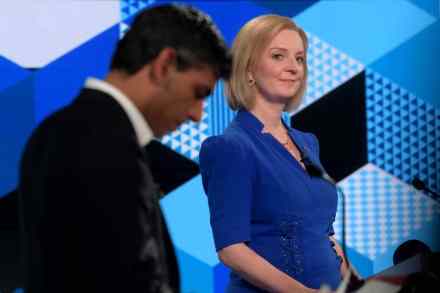
As the Tory leadership contest rumbles on, questions are being fired at Liz Truss and Rishi Sunak about what they’ll do to tackle the economic crisis facing Britain. The Foreign Secretary has promised to suspend green levies and Sunak said he would axe VAT on household energy – something he had ruled out as chancellor. But there are mounting fears neither of these strategies will go far enough to help a public facing the devastating combination of rising bills and soaring inflation. Analysis published today by the National Institute of Economic and Social Research think-tank paints a stark economic picture, warning of soaring inflation – forecast to hit 11 per

Why Liz Truss u-turned over public sector pay

That was quick. Less than 15 hours after pledging a robust reform of public sector pay, Liz Truss has performed a u-turn on plans to bring national pay bargaining to an end. It comes after criticism mounted that slashing pay for new frontline staff was not the most obvious way to handle an escalating cost-of-living crisis. In a sense, it’s a crime of poor timing rather than poor policy. National pay bargaining has long been questioned as a fair way to compensate staff on the government payroll. In part it’s due to the reasons laid out by Truss: there are obvious differences in the cost-of-living throughout the country, which might

Only one tax cut can save Rishi Sunak

Rishi Sunak’s promises on tax are lacklustre. He’s announced a fiddly one-off tax break on energy that will last for just a year which hardly anyone will notice due to inflation. There’s also income tax cuts up to seven years in the future, even though he is hardly likely to be Prime Minister by then (and he seldom keeps any promises on taxation for more than a few hours anyway).  Sunak’s promises and u-turns on taxes are making him look inconsistent at best, and a cynical opportunist at worst. The Tory members are right to regard his words with suspicion. But there is one tax cut that could still win the membership over: abolishing inheritance

The real difference between Sunak and Truss’s tax policies

The Tory leadership race is becoming a test of patience. Today Rishi Sunak has laid out his plan to slash tax: not in a matter of days or weeks, as Liz Truss has pledged to do, but by the end of the next parliament. He’s promised to reduce the base rate of income tax by 20 per cent, by taking 1p off income tax in 2024 (as already pledged) and an additional 3p over the next parliament. As Fraser Nelson notes on Coffee House, the timing of this announcement is working against him: it’s easily characterised as a u-turn on tax cuts, when in truth the former Chancellor is far

The trouble with Sunak’s new tax promise

Rishi Sunak should have started his campaign offering a 4p cut to the basic rate of income tax instead of going with a Cameronesque finger-wagging ‘stability before tax cuts’ message. His pledge to cut the rate to 16p, unveiled last night, now looks like a panicked U-turn when it is in fact consistent with his long-standing view of politics: that Britain is in danger of turning into a high-tax, high-spend European style social democracy because Tories keep forcing through extra spending without thinking how they’d pay for it. As chancellor, he sought to stand athwart such process by putting up taxes and hoping the pain would force his party to

The French buy-out that explains Macron’s strategy

It’s a platitude that France and Britain are rivals and have been for centuries. But, since the 1904 Entente Cordiale, the rivalry is more a question of competition than conflict. Always, in the darkest hour, each sided with the other, even if post-war they didn’t fully recognise the other’s contribution. Britain congratulated itself over the Dunkirk evacuation when in truth without French troops holding off the Germans, the ‘plucky’ armada would never have completed its mission; to this day the French believe that American troops were more numerous than British in the Normandy landings.  With the passing of the French war-time generation the postwar moral debt to Britain and residual goodwill

Will China blockade Taiwan?

Xi Jinping has made it very clear over the years that he is determined for China to reunite with Taiwan. He has staked his legacy and his legitimacy on it. The problem for Beijing is that the polls in Taiwan continually show that only one per cent of the population is in favour of reunification now. If Xi wants Taiwan then he will almost certainly have to take it by force. Although some western commentators argue that Russia’s travails in Ukraine have made an invasion less likely, there is no evidence to support a change in policy in Beijing. Even though Taiwan’s military is undertrained and equipped with tanks and

Sunak and Truss have no answer to the big problem facing the West

You will never measure the depth of our troubles if you listen to the contenders for the Tory leadership. Rishi Sunak and Liz Truss talk as if the 21st century never happened. They cannot see how the world has changed. Like the devotees of an ancient cult, they imagine that it is possible for a prime minister in the 2020s to follow the programme of Margaret Thatcher from 40-years ago. Their lines sound so antiquated because they have no plausible vision for creating a modern, united country. Then, who does? Rather than watch the contest, I have been reading the best modern historians as they struggle to find order amid

Is the eurozone in crisis?

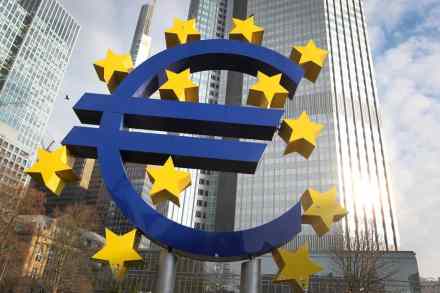
Is the eurozone heading for another 2010-style sovereign debt crisis? Today comes the news that inflation in the eurozone hit 8.9 per cent in the year to July. Although it is a record high, it is not as quite as towering as inflation in Britain – at 9.4 per cent. However, what it does do is expose the vulnerability of the eurozone – and how Italian public debt threatens to undermine it. This week, the yield on Italian ten-year government bonds rose to 3.5 per cent as investors began to wonder again if the country can honour its debts. Granted, it’s not quite as high at the rates of over

Truss and Sunak are arguing about the wrong things

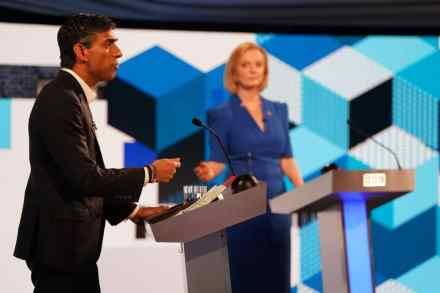
The Tory party needs to distinguish between the different types of blue-on-blue arguments. There is the peripheral stuff about shoes and earrings which would be no great loss to the debate if it was to end; then there are the substantive issues on which the party does need to thrash out what it thinks.  The biggest divide in this contest is over the economy In the Times today, I suggest five arguments that the Tories need to have in this contest. Having been friends with Rishi Sunak for decades, and having known Liz Truss since she became an MP in 2010, I think they are capable of having a constructive argument. The

Is the US in recession or not?

There’s an almighty debate ongoing in the US about what exactly a ‘recession’ is. Treasury secretary Janet Yellen said the US economy is not shrinking, saying it is in a state of ‘transition’, not recession. But in a clip from 2000 being circulated on Twitter that is comically apt, Bill Clinton said ‘a recession is two quarters in a row of negative growth’. Regardless of who’s right, the US is currently in Bill Clinton’s definition of a recession. Figures show that the economy shrank by 0.2 per cent in the second quarter of this year, following a 1.6 per cent fall in the first quarter. Over the year, the US economy is now 0.9

How to save Royal Mail

The government’s ‘cost-of-living tsar’, Just Eat co-founder David Buttress, was appointed last month as a Canutian gesture against the inflation tide. He says his role is to encourage retailers and utilities to offer discount deals that might relieve short-term pain for consumers. But wouldn’t it be good if he also had powers to shame companies or sectors for profiteering by whacking their prices up far ahead of inflation? Any firm for which energy or scarce raw materials are major cost elements has possible reason for scorching price rises; many others do not. Buttress could start by looking into hire-car rates, which have doubled (and more) across Europe since 2019 –

Trussonomics doesn’t add up

I’ve been lucky enough in my working life so far to hold a string of jobs that have allowed me – if not actively encouraged me – to be critical of government. Coming up through Westminster thinktanks in my twenties, I had great fun putting out press releases that tore apart bad public policy. When I had the opportunity to speak to MPs, they’d remind me of the ‘political realities’ that tied their hands and prevented change. In other words, check your policy privilege. Thinktank wonks, commentators and journalists can make all the punchy points they want; they don’t face re-election. But there was one politician who over the years

Biden’s word play can’t save the United States from a recession

Some denials are more worrying than their absence. A company insisting that its director will be vindicated by the forensic auditors is unlikely to succeed in calming investors; a sports team insisting it has total confidence in its coach is likely to receive a flurry of speculative applications; and a president insisting that ‘we’re not gonna be in a recession in my view’ is unlikely to do consumer confidence a great deal of good. The major difference here is that the White House has the advantage of being able to mark its own homework. No matter what today’s GDP data shows, Biden’s team will be able to claim the US

Is Rishi’s latest tax pledge a U-turn?

Is Rishi Sunak spooked? Today’s big tax announcement – his plan to temporarily slash VAT on energy bills this winter should he become Prime Minister, saving the average household £160 – is being viewed as a U-turn. This comes after the former chancellor used the first four leadership debates to double down on the importance of fiscal responsibility and not rushing tax cuts. With Sunak behind Liz Truss in the Tory membership polls by a ratio of roughly two-to-one, is this a desperate bid to improve his standing with grassroots voters? Or is something else going on? Whenever the cost-of-living crisis comes up, Sunak – on paper – has the

Rishi Sunak’s energy bill u-turn is too little, too late

A tweak to the landfill tax perhaps? A minor adjustment to the airport levy? Rishi Sunak no doubt stayed up late into the night sifting through all the most minor tax cuts he could offer before re-launching his campaign with a dramatic u-turn. In the end, he plumped for axing VAT on energy bills, promising to scrap it for a year. Sunak’s campaign insist it will save the average household an estimated £160 as prices go up. The trouble is, it is too little, too late: if Sunak wanted to cut taxes he needed something far bigger and bolder. Sunak has gone for the most minor tax tweak imaginable, making himself