Economy

  • AAPL

    213.43 (+0.29%)

  • BARC-LN

    1205.7 (-1.46%)

  • NKE

    94.05 (+0.39%)

  • CVX

    152.67 (-1.00%)

  • CRM

    230.27 (-2.34%)

  • INTC

    30.5 (-0.87%)

  • DIS

    100.16 (-0.67%)

  • DOW

    55.79 (-0.82%)

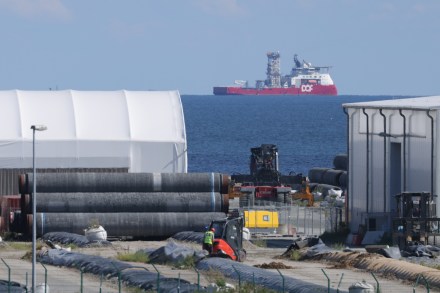
Miliband’s fight against North Sea drilling is far from over

What have North Sea oil and gas production and grammar school education got in common? Both are subject to a fiddle by which they can be expanded while the government pretends they are not expanding. After David Cameron changed his mind on grammar schools and said he wouldn’t allow new ones to be created, a deal was done whereby existing schools could open a ‘satellite’ on another site in another town. Hence Tunbridge Wells Grammar School opened a new site in Sevenoaks – a separate school in all but name, and yet the government could claim that it had stuck to its promise of no new grammars. The cabinet battle

Spotlight

Featured economics news and data.

Cutting Britain’s giant welfare bill would be an act of kindness

Does having money really matter that much? There are those, usually with quite a bit of it, who want us to care less about materialism. But, unequivocally, money really does matter – not because of any status it supposedly brings, but for the freedom it buys: freedom to choose how we live and how we look after others. Considering this, it seems that the deep disillusionment with mainstream politicians in recent years stems from a protracted and ongoing period of stagnant living standards over which they have presided. But the truth is that the average person has not got poorer since the global financial crisis. They have got a little

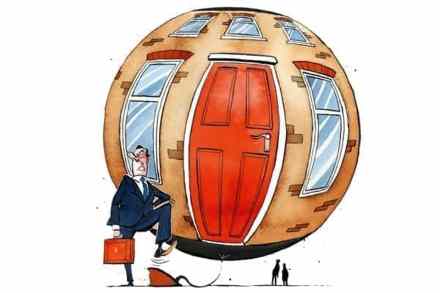
Is the housing bubble about to burst?

There are so many house indices that they can create confusion. Last week, the Halifax house price index showed a small monthly fall. This week the government’s own index, the HPI, shows that prices rose by 7.8 per cent in the year to June, down from 12.8 per cent in the year to May. That suggests a slowing market, but then that is hardly surprising. June 2021 marked the end of Rishi Sunak’s stamp duty holiday, which created a rush of completions as buyers sought to avoid a bill of thousands of pounds. This month’s HPI marks the first time that bulge in sales has dropped out of the annual

Is crypto back?

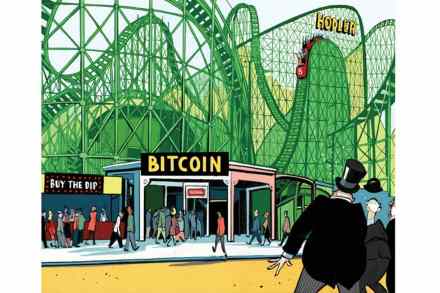
This time it was surely all over. As inflation started to rise towards a 40-year high, as central banks started raising interest rates for the first time in more than a decade, and as the monetary printing presses finally stopped running, the crypto-currencies crashed. What a crash it was. Bitcoin, the best-known crypto, fell all the way from $61,000 last November to less than $19,000 in June, a spectacular drop of more than two thirds. Ethereum, Solana and other, frailer ‘coins’ – as well as the even flimsier digital collectors’ items known as NFTs – all tanked. This appeared finally to confirm what the doubters had said all along. Cryptocurrencies

Blaming Saudi won’t make energy cheaper

How outraged should we be that Saudi Aramco has reported a world-record quarterly profit of $48 billion, representing a giant bonus from the global oil price spike provoked by the war in Ukraine? Well, that’s how the cookie crumbles when you’re sitting on oil reserves so abundant and so easily accessible that your marginal cost of producing the next barrel is less than $10 when the market price has just doubled to $130 – as it did in March, before settling back to around $95 today. And you might think that this recent price retreat is likely to continue as oil demand begins to shrink with the onset of recession

Crypto keeps bouncing back

This time it was surely all over. As inflation started to rise towards a 40-year high, as central banks started raising interest rates for the first time in more than a decade, and as the monetary printing presses finally stopped running, the cryptocurrencies crashed.  What a crash it was. Bitcoin, the best-known crypto, fell all the way from $61,000 last November to less than $19,000 in June, a spectacular drop of more than two thirds. Ethereum, Solana and other, frailer ‘coins’ – as well as the even flimsier digital collectors’ items known as NFTs – all tanked. This appeared finally to confirm what the doubters had said all along. Cryptocurrencies

Can inflation be brought under control?

That today’s inflation figures would come as an immense shock to anyone who has returned from a year in the wilderness goes without saying. A little over a year ago, in May 2021, the Bank of England was predicting that the Consumer Prices Index (CPI) would peak at no higher than its two percent target. CPI is now in double figures for the first time in 40 years, at 10.1 per cent – exceeding even the already-grim expectations of many economists. The Bank of England may yet again have to revise its forecast for the inflationary peak – which just two weeks ago it put at 13 per cent. The

Inflation hits double digits. Is it out of control?

Long gone are the days when politicians and experts dared to claim inflation was simply ‘transitory’. Now it’s hang-on-to-your-hats as prices spiral faster than anyone predicted. This morning the Office for National Statistics reveals that headline CPI inflation hit 10.1 per cent on the year in July. This double-digit figure takes inflation to a 40-year high, outpacing consensus yet again, which was 9.8 per cent. That figure means all those horrors that have been discussed for months have become more immediate: the instability that comes with spiralling prices, the risk of stagflation, increasing fears of recession as consumers grow more cautious, not to mention the very real fear that people

UK wages drop in the sharpest fall on record

Over the past six months, Britain’s unemployment figures have arguably been the economy’s saving grace. While the labour market has been extremely tight – with job vacancies reaching their highest level on record – the headline unemployment rate has settled back at record lows, keeping at bay the last factor that often ushers in dreaded ‘stagflation’. This morning’s labour market update still shows the unemployment rate sitting below 4 per cent – with data from June alone at just 3.6 per cent – as well as signs that the labour market is loosening, slightly, with the number of job vacancies appearing to have peaked. The plans for getting through the

Landlords are exploiting generation rent

As interest rates hit nearly 2 per cent and inflation tops 9 per cent, many Brits are feeling the pinch. But once again it seems that generation rent is worst off. Last month, my landlord hiked my rent by £450, or nearly 30 per cent. I’m far from alone: rents across the UK have gone up by as much as 17 per cent. Renters in the UK have been overlooked since the cost of living crisis began to grip the country earlier this year. With inflation soaring and the cost of energy, water, food, petrol and other essentials also rocketing, life is suddenly, alarmingly, getting more expensive. The Bank of England’s

Who is Gordon Brown to pose as the voice of fiscal sanity?

Gordon Brown is demanding Parliament be recalled for an emergency budget. By October, he says, quoting a study he commissioned from the University of Loughborough, half the population could be living in fuel poverty. ‘Not enough thinking is being done about the major social crisis,’ he told Radio Four’s The World at One on Monday. The former Chancellor and Prime Minister does, of course, have every right to make what representations he wishes to the government, and no-one can call him a hypocrite for wanting the Chancellor and MPs to sacrifice their summer holidays for an emergency budget. His first holiday as PM, in 2007, famously lasted half a day

Are we already in recession?

The Bank of England recently raised hackles by predicting that the economy would shrink in the final quarter of 2022, with Britain spending the whole of next year in recession. Liz Truss was especially critical, saying that a recession was not inevitable. In last night’s Cheltenham debate she again referred to the subject, saying that it was important we did not ‘talk ourselves into a recession’. But could a recession arrive actually earlier than the Bank of England predicted? This morning’s figures from the Office for National Statistics (ONS) suggest that the economy shrank by 0.1 per cent in the second quarter of this year. If the figures for the

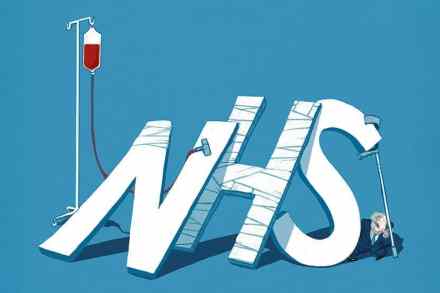
The NHS is collapsing. These figures prove it

Twelve-hour A&E waits are at a record high. Doctors fear that tens of thousands will die because of delays in treatment. Already some 10,000 people have waited more than three months for urgent cancer treatment, a consequence of turning the NHS into the national Covid-but-nothing-else-service during lockdown.  Excess deaths at home, the number of people dying above the five-year average, is nearly 17,000 in England and Wales. Meanwhile, fewer people seem to be dying in hospital. That suggests many patients aren’t even getting proper medical attention. We’re used to hearing about NHS crises in winter, but winter now seems to be all year round. The extra cash pumped in by the tories – a 17

How to save money: switch to cash and reprogram your boiler

We’ll find out shortly whether official statistics agree with economists surveyed by Bloomberg who say UK GDP probably shrank by 0.2 per cent in the second quarter. But at an uncomfortable moment when we know things can only get worse, looking backwards doesn’t help and nor does holding out hope for a miraculous ‘emergency budget’ in September. As for forecasting beyond that, it’s almost too scary to contemplate. Better to shun economists and politicians and focus instead on facts that tell us what’s happening now – such as data from Barclaycard – and things we can do keep our own budgets in balance. Spending on ‘essential items’ was up by

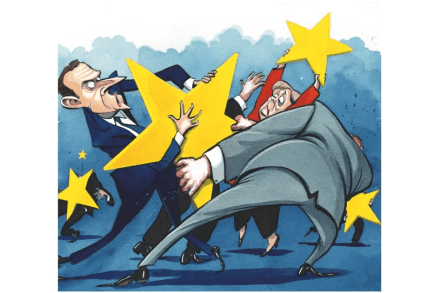
Europe’s looming energy wars

This summer marks a truce. But if, as expected, Liz Truss becomes prime minister, it is almost inevitable that tensions over the Northern Ireland protocol will resurface. Britain has been threatened with trade barriers if it tears up the protocol, with implications for import and export industries. But one possible consequence has been largely overlooked, in spite of the gathering energy crisis: the trade in gas and electricity. Imported power via undersea interconnectors is the forgotten but fast-growing element of our electricity system. In 2019, 6.1 per cent of our electricity was imported. Undersea power interconnectors, which have been a feature of the UK electricity system since 1986 when the first one plugged

Is cash back?

Whatever happened to the great surge towards a cashless society which the pandemic was supposed to bring about? As I wrote here in February 2021, the cashless lobby was ruthlessly exploiting the pandemic in order to push for its nirvana in which we would be forced to pay for everything electronically, either via cards or phones. But the campaign doesn’t seem to be going too well. This week the Post Office reported that £801 million worth of personal cash withdrawals were made from its branches in July, an 8 per cent rise on June and a 20 per cent rise on July 2021.  Of course, we shouldn’t read too much

The Tories don’t care about generation rent

For millennials like me, the prospect of owning a home is a pipe dream. Soaring rental costs and crippling bills make saving for a deposit impossible. The reality is that, as a friend said to me recently, our best chance of getting a foot on the housing ladder is when a home-owning family member pops their clogs. We’re far from alone. Yet the Tory leadership contenders have nothing to offer those who hope one day to buy a house. Perhaps it’s not much of a surprise that this is an issue the Tories are ignoring: Boris Johnson’s government was elected, in part, on a manifesto pledge to build 300,000 new houses –

Rationing and blackouts are a possibility this winter

The debate about energy in the UK has largely concentrated on just how high prices will go. This is understandable given how seismic the October and January increases in the energy price cap are likely to be. But today’s announcement from Norway that it will prioritise refilling domestic reservoirs over exporting hydropower to countries like the UK is a reminder that supply may soon become an issue too. In a crisis, borders reassert themselves as Covid showed. What happened with PPE and medical supplies during the pandemic may well happen with energy this winter. This is a concern for the UK given that it imports large quantities of energy during the

Truss and Sunak are blind to the coming crisis

In times of crisis in the 20th century, voters called for politicians from opposing parties to put aside their differences and unite in a national government. Such is the collapse of the Conservative party we now must beg Tory politicians to stop fighting and unite in a Tory government. Martin Lewis has said that Liz Truss, Rishi Sunak and Boris Johnson should be able to agree on a package to cover the expected 70 per cent rise in the domestic energy cap in the autumn (with more to come in January).  ‘You’re all in the same party,’ he cried. ‘You should be able to work out some unifying policy, something

How Truss plans to bring the Bank of England to heel

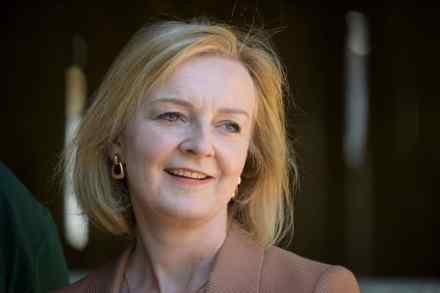
Liz Truss believes the Bank of England has lost control of inflation. If chosen as the country’s next prime minister, she plans to bring it back to heel: ‘I want to change the Bank of England’s mandate to make sure in the future it matches some of the most effective central banks in the world at controlling inflation’, singling out the Bank of Japan as one model to follow. In the rarified world of monetary policy discussion, this was a bit like chucking a live grenade into a ball pit. Michael Saunders, a member of the Monetary Policy Committee responsible for setting interest rates, noted ‘the foundations of the UK monetary policy

Why Liz Truss is right to say ‘forecasts are not destiny’

‘Forecasts are not destiny,’ said Liz Truss in last night’s debate: a remark that has drawn alarm in some quarters. If she genuinely believes that, says Robert Peston, she needs to say what her understanding is of the status and point of economics and economic forecasting. ‘Are we back to Gove’s “experts are discredited”?’ he asks. ‘This stuff matters.’ It certainly does. I’d go further and say that the approach to economic forecasts is one of the biggest differences between the candidates. Rishi Sunak’s campaign is rather fatalistic: he seems to think we cannot really avoid a big-state, high-tax, low-growth future described by these forecasts. Under his plan then he’d

Bring on the housing crash!

It has been a long time coming, given that shares and bonds have been falling for most of the year, but this morning there are the first signs of a slide in house prices. Don’t get too excited: the Halifax House Price Index fell by just 0.1 per cent month on month, and prices are still up 11.8 per cent year on year.  But it is an indication that things might finally be changing in a market which has seemed to defy logic ever since the arrival of Covid. Yes, the deepest recession in recorded history was accompanied by a boom in house prices. Even when interest rates began to