Economy

  • AAPL

    213.43 (+0.29%)

  • BARC-LN

    1205.7 (-1.46%)

  • NKE

    94.05 (+0.39%)

  • CVX

    152.67 (-1.00%)

  • CRM

    230.27 (-2.34%)

  • INTC

    30.5 (-0.87%)

  • DIS

    100.16 (-0.67%)

  • DOW

    55.79 (-0.82%)

Could your 50p coin be worth much more?

‘I have not found anybody yet who has a good word to say for the new coin,’ Sir Douglas Glover complained to the House of Commons in November 1969. ‘The great mass of the people are very hostile to the shape, size and look.’ So hostile, in fact, that retired colonel Essex Moorcroft formed the Anti-Heptagonists, calling the coin an insult to the sovereign. Crucially, nobody had called it a ‘jolly good coin’. Luckily, by 1973 heptagon-hate had waned. It was during this lull that the first commemorative 50p was issued, marking Britain’s entry into the European Economic Community. Designed by the sculptor David Wynne, it showed nine hands clasped


Spotlight

Featured economics news and data.

Cutting Britain's giant welfare bill would be an act of kindness

Does having money really matter that much? There are those, usually with quite a bit of it, who want us to care less about materialism. But, unequivocally, money really does matter – not because of any status it supposedly brings, but for the freedom it buys: freedom to choose how we live and how we look after others. Considering this, it seems that the deep disillusionment with mainstream politicians in recent years stems from a protracted and ongoing period of stagnant living standards over which they have presided. But the truth is that the average person has not got poorer since the global financial crisis. They have got a little

Musk’s SpaceX is worth every penny

As the hype builds for the reported $1.5 trillion (£1 trillion) IPO of Elon Musk’s SpaceX later this year, there will be plenty of critics who argue the company’s marketing has more hot air than one of its rockets. It has been claimed by some that the IPO will be worth more than the top seven companies currently listed on the London Stock Exchange – including century-old giants such as Shell, HSBC and AstraZeneca – combined. And yes, sure, there is probably an element of wishful thinking in these reports, as there often is with Musk. But SpaceX also has the potential to become one of the giants of the

The latest junior doctors’ strikes aren’t about pay

Junior doctors have voted to extend their strikes – by a whisker. Turnout for yesterday’s vote collapsed to less than 53 per cent – a whisker above the threshold needed to make it legal. Framed as a pay dispute, the strikes are the result of a needlessly ruined career structure, and a government perversely willing to leave British doctors unemployed. The strikes started after an early February 2023 ballot in which turnout was more than three quarters and 98 per cent were in favour. In the following strikes, support remained at or above 90 per cent, but turnout kept dropping. In March 2024 it was 62 per cent, last July

Why the housing crisis is far worse than Labour wants you to believe

8 min listen

Housing minister Steve Reed has been boasting about Britain’s housing market since Labour came into office – but is he right to celebrate? The country’s housing crisis seems to be delivering the worst of both worlds. Young people trying to get on the property ladder are being priced out by stubbornly high costs, while older homeowners looking to downsize find themselves trapped, with too few buyers able to afford their homes. Michael Simmons takes a look at the data.

Why the housing crisis is far worse than Labour wants you to believe

Don’t give up on gold just yet

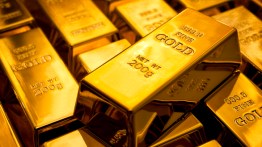
Anyone who thought that gold, the world’s oldest form of money, was a safe asset that they could tuck away and forget about has been through a rough few days. It has soared, then plunged, then soared again. Its price has been even more volatile than Bitcoin or one of the overhyped artificial intelligence stocks. Even so, amid all the noise, one point is surely clear: gold’s bull market is not over yet – and it is likely to recover very soon. It has been quite a ride. After surging to an all-time record of $5,580 (£4,085) an ounce last week, gold tumbled by 9 per cent on Friday. It

Colombia can't give Trump the cocaine crackdown he wants

When US president Donald Trump hurled abuse at Colombia’s president Gustavo Petro last month, branding him a ‘sick man who likes making cocaine and selling it to the United States’, it was strikingly audacious. Trump leant into bombastic provocation: there is no evidence to suggest Petro himself makes cocaine. And yet, Trump’s claim didn’t come as a shock – the two leaders have spent the past year locked in a volley of barbs with one another. Petro, Colombia’s first left-wing leader, likes to fire back with ideological, often sermonising lectures on imperialism and US hypocrisy. But tangled up in the rancorous exchanges – many of them about drugs – is

What Putin learned from Iran's crackdown

After losing his erstwhile allies and clients in Syria and Venezuela over the past 13 months, Vladimir Putin ought to be breathing a sigh of relief at the bloody suppression of the protests in Iran. Russia and Iran are natural bedfellows – a marriage of inconvenience, if you will. Both languish under Western sanctions, though Iran’s are stricter and have endured longer. Both economies depend heavily on China hoovering up their sanctioned oil at a discount and Beijing flogging them technology. Both deploy shadow fleets to export their oil. Neither has access to global financial markets. The brutal suppression of Iran’s protests ought to reinforce Putin’s calculus that if dissent

Labour is the nasty party now

Labour has long prided itself on being the party of compassion. Indeed, ever since Thatcherism, personified in the minds of many by the fictional television character Alan B’Stard – and ever since Theresa May gave her 2002 speech admitting that the Conservatives were the ‘nasty party’ – being compassionate has been a trademark and a selling point of the Labour party. Labour politicians constantly bleat about how caring they are. Sometimes it seems that the only people they care about are themselves This is why those who lead it are always reluctant to cut welfare spending, and why those further to the left on its parliamentary backbenches are ideologically hostile

The Waspis never deserved a payout

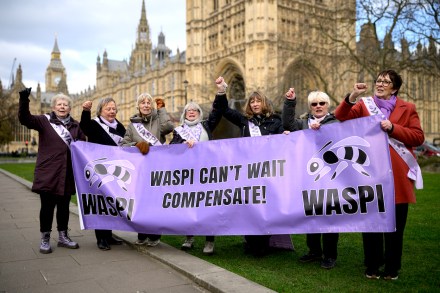
I want to congratulate the Department for Work and Pensions. They’ve made the excellent decision to – once again – refuse compensation to the Waspi women. The cohort of 3.6 million women born in the 1950s claim to have not been informed that their state pension age would rise – bringing it into line with the male retirement age. Their campaign group (Women Against State Pension Inequity) have led one of the most vocal but ridiculous campaigns in modern British history. Despite leaflets being individually written, information campaigns in doctors’ offices, and relentless TV and online adverts, the group claims that they were not adequately informed of the pension age change, and

Where have all the graduate jobs gone?

It’s a relief not to have been pressganged into joining the Prime Minister’s plane-load of business chiefs and reporters bound for Beijing this week. With Sir Keir Starmer are leaders of the likes of Astra-Zeneca, BP, HSBC, JLR and Rolls-Royce, and some billion-pound deals will no doubt be announced while they’re there – agreed in advance on the condition that Downing Street gave the green light for China’s Royal Mint Court mega-embassy-cum-listening-post on the edge of the City. The Chancellor is on the trip too, perhaps carrying a nice set of hunting prints as a housewarming gift for London ambassador Zheng Zeguang’s new office. But as is routine for senior

Is time up for Tesla?

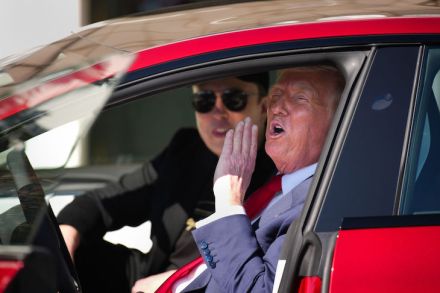
Has Tesla run out of road? The electric car firm put plenty of spin on its annual results, talking bullishly about the new projects that were coming to fruition. Elon Musk’s company plans to go big on robots, pivot to Artificial Intelligence, and develop its self-driving unit. Yet there was no disguising the real message from its figures. With falling revenues, and the decision to scrap its premium S and X models, Musk’s pioneer of EVs is in deep trouble – and it may be too late to rescue the company now. Fourth-quarter revenues slumped three per cent to $24.9 billion Fourth-quarter revenues slumped three per cent to $24.9 billion, Tesla said

Andy Burnham’s bond blip, scrapping the OBR & why Rishi Sunak deserves more credit – James Nation

30 min listen

When Andy Burnham put forward his bid to stand in the Gorton & Denton by-election, the bond markets wobbled. What does this say about the state of Labour and their reputation with the markets? Michael Simmons speaks to former Treasury and Downing Street advisor James Nation about Labour leaders and fiscal policy, why Rishi Sunak was right on inflation and what he has learnt in the private sector since leaving the Treasury.

Andy Burnham’s bond blip, scrapping the OBR & why Rishi Sunak deserves more credit – James Nation

The inside story of Reform’s business charm offensive

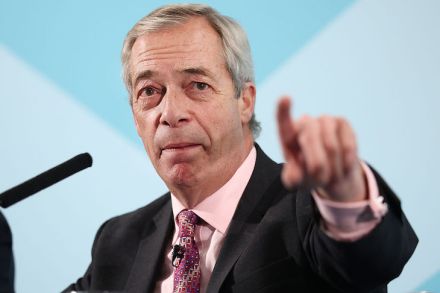
Nigel Farage didn’t need the help of corporate Britain to build Ukip, the Brexit Party and Reform UK into national forces. He didn’t need open letters from big business to help win the EU referendum. And he didn’t need big brands to take GB News off their advertising blacklists for his show to succeed. This time, though – as Reform’s leader strives to become Britain’s next prime minister – things are different: Farage needs businesses, and businesses know that they soon might need Farage. As ties grow stronger with the corporate world, Reform must tread carefully to avoid losing the attribute that draws many of its supporters Some have already

Trump is right: denying ourselves North Sea oil makes no sense

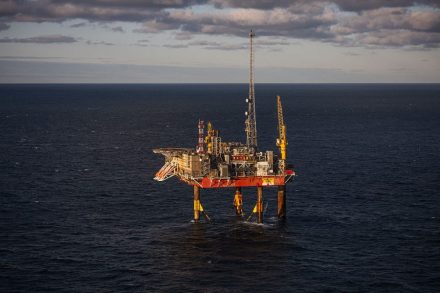
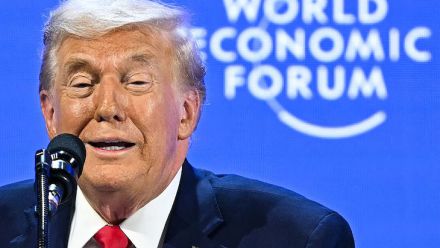
Donald Trump’s tendency to exaggerate and make up figures as he goes along is for some people a symptom of the ‘post-truth society’. But for the president himself it is a useful rhetorical tool which helps draws attention to things which might otherwise get less of an airing. Yes, it is a gross exaggeration to say, as Trump did in his speech at Davos yesterday, that Britain has ‘500 years’ worth of oil in the North Sea. The trouble for his critics, though, is that the essential point he was making – which is that Britain is denying itself valuable energy resources in the shorter term, to the detriment of the

A fogey’s guide to cryptocurrency

All innovations seem unseemly to fogeys. When bitcoin, the first of the cryptocurrencies, was launched in 2009, we dismissed it as a deplorable and transient phenomenon. Its inventor, who called himself Satoshi Nakamoto, would not reveal his real name. Perhaps he did not exist and whoever hid behind the pseudonym was having a joke at our expense. When Satoshi created the first bitcoin on 9 January 2009, he embedded within its code a headline from a recent Times: ‘Chancellor on brink of second bailout for banks.’ Crypto appeals to people who distrust banks, as well one may. ‘Never trust the bankers,’ Winston Churchill warned in old age. History suggests one

Under 50? You’re never getting a state pension

Last week the Bank of England was warned to prepare for a financial crisis triggered by the discovery of extraterrestrial life. But the really worrying scenario isn’t aliens. It’s us. A century ago the state pension as we know it was introduced. Taxes from employers and their staff were used to pay out benefits to the elderly once they hit retirement age. There was no means-testing, and this benefit for all removed the stigma associated with claiming welfare. It was a roaring success. But it won’t see another 100 years. It’s always been wrong to call it a pension. It’s a benefit paid out of current taxation like any other.

Want to get rich? Invest like an American

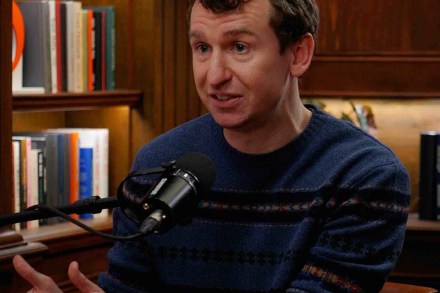
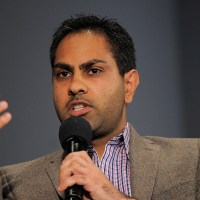
Ramit Sethi wants to make you rich. He is not a household name in Britain, but the Stanford psychology graduate is one of the biggest personal finance influencers in the US. He hosts a successful podcast, Money for Couples, has written bestselling books and even has a Netflix show, How to Get Rich. All his projects share the same message: by changing your mindset and taking a few practical steps, you can power yourself toward prosperity. To British ears, his style might seem brash. It is financial advice with a substantial side of life coaching. But beyond the difference in tone, Sethi spreads a simple message rarely heard in finance

Is any other investment as good as gold?

Last year might have proved a good time to own shares in the chip-maker Nvidia, along with the booming American tech giants. Or a piece of the defence manufacturers as the world re-arms. Or to hold a position in some of the rapidly growing economies of South America or Asia, or even one of the hyped-up crypto currencies. There were plenty of places investors expected to make money over the past year. As it turned out, however, there was one asset that outpaced them all, even though it generates no income: gold, and to an even greater extent, its junior sibling silver. With government debt soaring out of control, the

Bookshops deserve tax breaks

My Davos spy disguised as an Uber Eats driver sent word that this year’s World Economic Forum was rammed ahead of Donald Trump’s arrival. The Alpine resort was heaving with Saudis, Emiratis, AI snake-oil salesmen and US tech titans strongarmed into sponsoring USA House, the official showcase of America’s ‘unity, ingenuity and leadership’ that has its main venue in the town’s English church – ideal for Trump veneration. Attendance was so competitive that the market in fake VIP passes was hotter than precious metals and one African statesman was seen parting with €25,000 in cash for a rented apartment. But this year’s theme, ‘A Spirit of Dialogue’, looked ironic given