Economy

  • AAPL

    213.43 (+0.29%)

  • BARC-LN

    1205.7 (-1.46%)

  • NKE

    94.05 (+0.39%)

  • CVX

    152.67 (-1.00%)

  • CRM

    230.27 (-2.34%)

  • INTC

    30.5 (-0.87%)

  • DIS

    100.16 (-0.67%)

  • DOW

    55.79 (-0.82%)

Could your 50p coin be worth much more?

‘I have not found anybody yet who has a good word to say for the new coin,’ Sir Douglas Glover complained to the House of Commons in November 1969. ‘The great mass of the people are very hostile to the shape, size and look.’ So hostile, in fact, that retired colonel Essex Moorcroft formed the Anti-Heptagonists, calling the coin an insult to the sovereign. Crucially, nobody had called it a ‘jolly good coin’. Luckily, by 1973 heptagon-hate had waned. It was during this lull that the first commemorative 50p was issued, marking Britain’s entry into the European Economic Community. Designed by the sculptor David Wynne, it showed nine hands clasped

Spotlight

Featured economics news and data.

Cutting Britain's giant welfare bill would be an act of kindness

Does having money really matter that much? There are those, usually with quite a bit of it, who want us to care less about materialism. But, unequivocally, money really does matter – not because of any status it supposedly brings, but for the freedom it buys: freedom to choose how we live and how we look after others. Considering this, it seems that the deep disillusionment with mainstream politicians in recent years stems from a protracted and ongoing period of stagnant living standards over which they have presided. But the truth is that the average person has not got poorer since the global financial crisis. They have got a little

Ed Miliband’s warm homes scheme is good news for cowboy builders

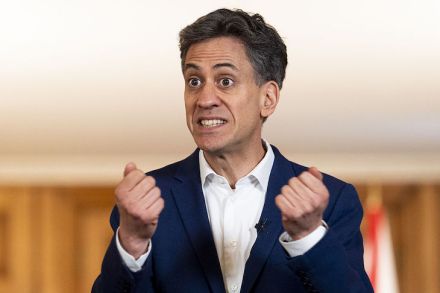
The cowboys must be licking their lips. Ed Miliband has come up with yet another green homes scheme to chuck public money at subsidised energy improvements. The Warm Homes Plan will allocate £15 billion to grants and low-cost loans for homeowners who want to upgrade their insulation, and fit heat pumps and solar panels. According to the Department for Energy Security and Net Zero, not only will it make our homes warmer, it will save homeowners £1,000 a year off their bills. Ed Miliband has come up with yet another green homes scheme to chuck public money at subsidised energy improvements Do our leaders never learn? We have had numerous such

Why inflation is up again

Inflation has crept back up. Figures released by the Office for National Statistics (ONS) show that the Consumer Prices Index (CPI) rose by 3.4 per cent in December. That’s up slightly from the 3.2 per cent rise in prices recorded in November – though it is roughly in line with what markets had expected.  The main drivers of the CPI rise – the first increase of the rate in six months – were Christmas plane tickets and the government’s hike in tobacco duty. Nevertheless, it’s a move in the wrong direction and worrying news for a government whose sole aim, we’re told, is tackling the cost of living.  Responding to the figures Rachel

Elon Musk would be a great new owner for Ryanair

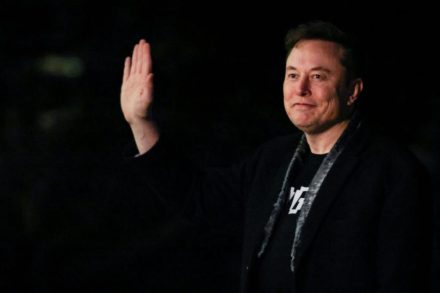
A Tesla would whisk you to the airport. The planes would be self-flying. And robots would serve the over-priced sandwiches, while, inevitably, every seat is hooked up to a live X feed. A full-scale takeover of Ryanair by Elon Musk may still be some way off, but with the billionaire polling his followers on X on whether he should make a bid for the budget airline, it is no longer impossible. Ryanair’s long-suffering passengers should welcome the prospect of a Musk takeover – because, while the airline revolutionised low-cost travel, Ryanair is stuck in a rut. The spat between Elon Musk, and Ryanair’s pugnacious CEO Michael O’Leary is certainly entertaining

Rachel Reeves: destroyer of jobs

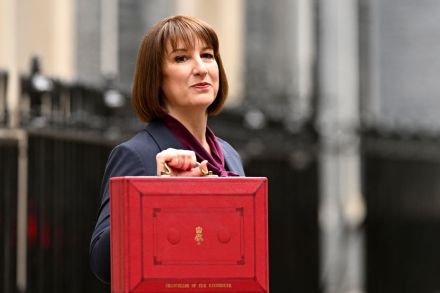
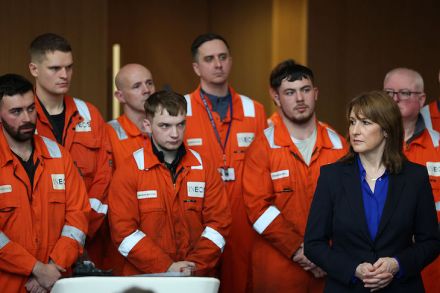
Rachel Reeve’s jobs collapse is trundling on. Figures just released by the Office for National Statistics (ONS) show that 155,000 payroll jobs were wiped out in the year up to November. Some 33,000 were lost in a single month. In total, over 200,000 jobs have disappeared since the Chancellor’s first Budget when she announced a £25 billion raid on employer National Insurance.  In response to that tax hike, and throughout the uncertainty in the run-up to Labour’s second Budget last year, business paused their hiring plans and stopped replacing staff as they left. They don’t appear to have begun rehiring. Flash estimates for December (which are very likely to be

Britain’s economy is standing still under Labour

Britain’s economy is standing still. Figures just released by the Office for National Statistics show GDP grew by just 0.1 per cent in the three months to November. The numbers were dragged down by the construction sector, which saw a contraction of 1.1 per cent – its largest fall in nearly three years. GDP grew by just 0.1 per cent in the three months to November There were much better figures for the month of November alone though, which saw growth of 0.3 per cent following a fall of 0.1 per cent in October. That was thanks to services growth of 0.3 per cent and production growth of 1.1 per

Who's to blame for Britain's water crisis?

24 min listen

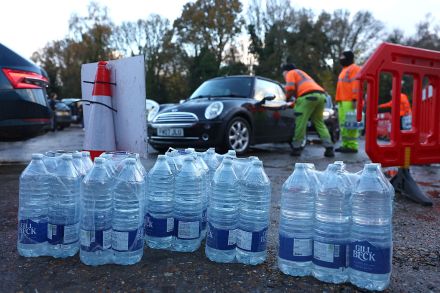
Thousands of homes across the South East have been without water for four consecutive days. South East Water’s record on water supply interruptions is one of the worst in the sector. Ofwat, the regulator, has placed it in the bottom three companies for disruptions each year from 2020 to last year. What has happened to the water industry in the past decade? And would nationalisation fix it? Michael Simmons is joined by The Spectator’s business editor Martin Vander Weyer.

The SNP’s Budget was nothing but cynical spin

Yesterday, Shona Robison, Scotland’s finance minister, delivered her tax and spending plans for the coming fiscal year. The headline message from the SNP was the following: the majority of Scots will pay less tax than those living in the rest of the UK. That’s thanks to a very slight lifting of the threshold freeze on the lower tax bands, resulting in whopping tax cuts of less than £1 per week for the lowest tax-paying earners. The result is that those taxpayers at the bottom of the rung will find themselves £24 a year better off than if they lived anywhere else in the UK. By contrast, those earning £70,000 are

Trump’s attack on the Fed is a pivotal moment of hubris

The phrase ‘trumped-up charges’ dates from the 18th century, I learn, and derives from the Old French tromper, to deceive. It has certainly acquired new resonance with the threat of criminal indictment against US Federal Reserve chairman Jerome Powell, somehow relating to the cost of Fed building renovations. The President says this Department of Justice action has nowt to do with him, but it’s plainly another exercise of what some commentators are calling ‘the Maduro option’: sod constitutional niceties, just drag your opponent into the dock. For all his foreign-policy fireworks, Donald Trump knows November’s US midterm elections will largely be driven by domestic cost-of-living concerns. He has castigated Powell

How much will net zero cost?

In the race to achieve net zero emissions by 2050, many Whitehall departments, Westminster thinktanks and independent bodies have produced cost estimates of the policy. These range from modest percentages of GDP to eye-watering trillions. Often, however, they rely on overly optimistic assumptions about the price of green technologies, and mask the potentially staggering financial burden on taxpayers. If we are to pursue net zero, transparency on this fact is essential. In 2019, then-chancellor Philip Hammond warned Theresa May against enshrining net zero in law. Citing estimates from the Climate Change Committee (CCC) and the Department for Business, Energy and Industrial Strategy (Beis), he pegged the total cost at over

The flaw in Labour’s Brexit delusion

The lexicon of Brexit has a new entry: the ‘Farage clause’. As part of Labour’s ‘reset’ talks with Brussels, EU negotiators have reportedly floated a termination provision that would require compensation if a future UK government walked away from a new deal designed to ease post-Brexit checks on food and agricultural trade. In plain English: if Britain signs up to reduce border friction now and then later blows the arrangement up, Brussels wants someone to pay the bill for putting the border back together again. Like lots of things involving Britain and the EU, however, this ‘Farage clause’ is not what it looks like. It isn’t really about the Reform UK leader. It’s

What is migration really costing Britain?

The worst forecasting error in British government history may be unfolding as we speak. While much attention is given to grand projects, such as HS2, which end up costing tens of billions of pounds more than they were supposed to, these at least have a start and finish date – and something tangible emerges at the end. The same can’t be said for forecasting errors involving even more complex, politically contentious issues – such as what migration might actually be costing Britain. When the full accounting is done, the fiscal impact of migration may well prove to be one of the biggest misestimates of all The notoriously wobbly Covid epidemiological

Am I really a tightwad?

Of all the heavyweight books I’ve ever been asked to review, one that most influenced my view of how the world works was Why Nations Fail (2012) by two American academics, Daron Acemoglu and James A. Robinson. Their theory, drawn from a broad sweep of history, is that all state regimes fit patterns that are either ‘extractive’ or ‘inclusive’. To be inclusive is to be egalitarian in access to resources and rewards, and responsive to the will of the people. To be extractive is to rule despotically in the interest of corrupt elites, often profiting from ruthless extraction of natural resources. Inclusive economies are prone to occasional crisis but capable

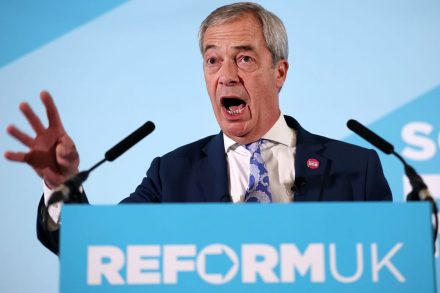
There’s a better way for Farage to win the motorist vote

It is easy to see the political attraction for Nigel Farage of promising to reverse Rachel Reeves’s decision to end the 5 pence cut in road fuel duty. The idea that we are in the midst of a cost of living crisis has not gone away – in spite of the fact that, notionally, average wages are rising well ahead of inflation. It will seem a very different picture for homebuyers who are coming off fixed-rate mortgages this year – rates which were fixed in the months of ultra-low interest rates during and immediately after the pandemic. But is it really such a good thing to suppress taxes on road

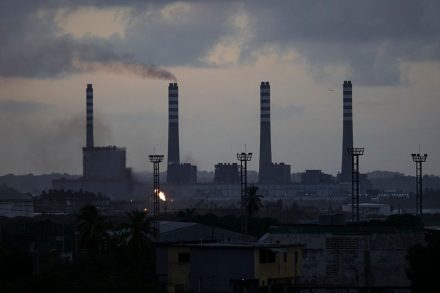
Venezuela could transform the global oil industry

No one really knows how the situation in Venezuela will unfold over the next few years following President Trump’s audacious kidnap of its former leader Nicolas Maduro. It may or may not be legal. It might restore democracy or it might just pave the way for another dictator. But one point is certain: America looks set to reinvent the country’s oil industry. It is hardly surprising that investors are already jumping on that bandwagon.  Oil shares have been soaring ever since the news broke over the weekend of America’s raid in Caracas, propelling the FTSE-100 – which is dominated by giants such as Shell and BP – to record highs.

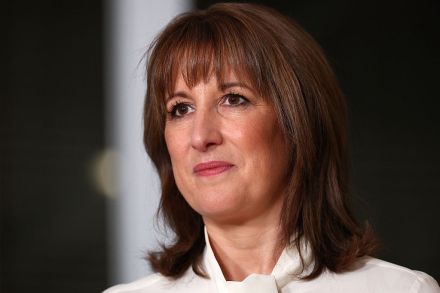
Will 2026 be Rachel Reeves’s year?

Rachel Reeves enters 2026 more unpopular than she has ever been before. YouGov polling from December has 71 per cent of Britons saying they have an unfavourable opinion of Britain’s first female chancellor. Reeves was meant to be a competent economist who could restore credibility to the Treasury and, in her words, ‘revive economic growth’. How’s that going? Reeve’s tenure in No. 11 has so far been more slapstick than good governance. Her CV unravelled under scrutiny; she broke manifesto commitments; she unveiled an appalling Budget, vowed never to repeat it, and then promptly did. Am I judging her too harshly? Am I being a misogynist? Reeves would probably say

Pubs, schools and water in crisis: my economic forecast for 2026

Forecasting is a mug’s game, as the Bank of England governor Mervyn King once said. But I’ll sketch a few trends for 2026 nevertheless, starting on a positive note in the stock market before moving on to some of the many choices on an à la carte menu of gloom. The FTSE 100 index will have ended 2025 almost 20 per cent higher than it started – slightly better than the US S&P 500 index – and the consensus of fund managers is that (having closed for Christmas at 9,870) it will carry on upwards, perhaps even towards 11,000. Why? In short because many UK blue-chips in traditional sectors such

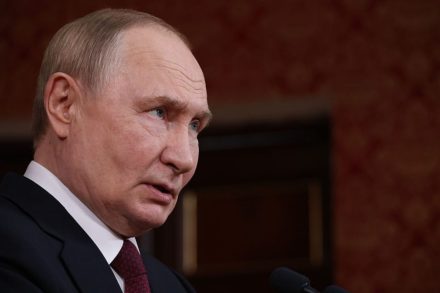
It’ll be anything but a happy new year in Putin’s Russia

The next year will be challenging for Russia. Yes, we’ve heard this for almost four years. We’ve been told that the Russian economy is about to collapse under Western sanctions and the cost of war, yet it stumbles on. There may be no breadlines or toilet paper shortages, but the bill for the Kremlin’s past political and economic decisions has finally landed, and it is ordinary Russians who will foot it. What a difference a year makes. Economic growth, fuelled by Vladimir Putin’s profligate spending on the defence industry, has virtually evaporated. Oil revenues, which provide a fifth of the government’s income, are down nearly a quarter owing to lower

A Green Christmas would be more awful than you could imagine

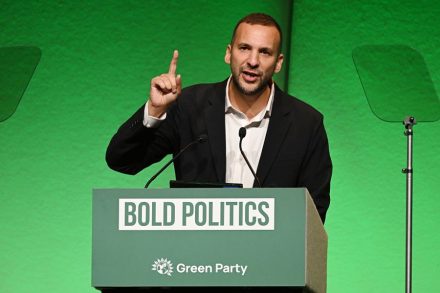
It is remarkable how a country can adjust to diminished expectations. Think of Japan post-Fukushima, or even post-war Britain under rationing. By December 2029, Britain, governed by the Green-Your Party coalition under prime minister Zack Polanski, will have quickly learned how to make do with very little. Let’s wind forward four years. Four years from now, Polanski’s new government has spent its initial months in power congratulating itself on an historic decision to decommission all North Sea oil and gas sites and accelerate the phase-out of nuclear power. ‘A Christmas gift to the planet,’ ministers call it as they do the rounds on Good Morning Britain, Newsnight and PoliticsJOE. Yet, energy, it