Economy

  • AAPL

    213.43 (+0.29%)

  • BARC-LN

    1205.7 (-1.46%)

  • NKE

    94.05 (+0.39%)

  • CVX

    152.67 (-1.00%)

  • CRM

    230.27 (-2.34%)

  • INTC

    30.5 (-0.87%)

  • DIS

    100.16 (-0.67%)

  • DOW

    55.79 (-0.82%)

Could your 50p coin be worth much more?

‘I have not found anybody yet who has a good word to say for the new coin,’ Sir Douglas Glover complained to the House of Commons in November 1969. ‘The great mass of the people are very hostile to the shape, size and look.’ So hostile, in fact, that retired colonel Essex Moorcroft formed the Anti-Heptagonists, calling the coin an insult to the sovereign. Crucially, nobody had called it a ‘jolly good coin’. Luckily, by 1973 heptagon-hate had waned. It was during this lull that the first commemorative 50p was issued, marking Britain’s entry into the European Economic Community. Designed by the sculptor David Wynne, it showed nine hands clasped


Spotlight

Featured economics news and data.

Cutting Britain's giant welfare bill would be an act of kindness

Does having money really matter that much? There are those, usually with quite a bit of it, who want us to care less about materialism. But, unequivocally, money really does matter – not because of any status it supposedly brings, but for the freedom it buys: freedom to choose how we live and how we look after others. Considering this, it seems that the deep disillusionment with mainstream politicians in recent years stems from a protracted and ongoing period of stagnant living standards over which they have presided. But the truth is that the average person has not got poorer since the global financial crisis. They have got a little

A homegrown Visa card won't save Britain in a crisis

It is finally dawning on the government and the banking industry that it is not such a good idea to put the entire economy at the mercy of a couple of large overseas corporations. Today, a consortium of banks are meeting to hammer out a plan to create a homegrown alternative to Visa and Mastercard, which at present have a virtual duopoly on the handling of card payments in Britain and much of the developed world. Their fear, in particular, is that Donald Trump could simply order Visa and Mastercard to switch off their services to any country which displeased him. This is what happened in Russia after the Ukraine

The dodgy data behind child poverty

Britain is set for another dodgy data scandal. In last Friday’s Reality Check newsletter I picked up on reporting from the Times which called into question the income data used to calculate Britain’s child poverty metrics. Now, the BBC reports that those figures are going to be revised. The result: half a million children who the government previously claimed were in poverty were in fact not. This is obviously good news. But let’s be clear: it’s also a total and utter scandal. The way we measure child poverty has always been a bit of nonsense. It uses ‘relative poverty’, which sets a breadline of 60 per cent of median income. The

Is Reform brave enough to take on the pensions triple lock?

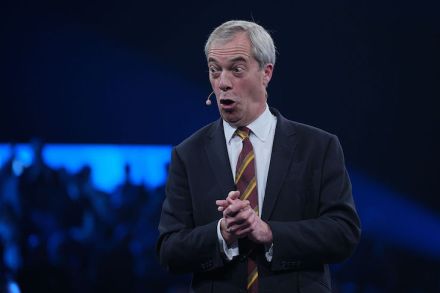
Will any political party ever take on the triple lock? The answer from Reform’s Robert Jenrick yesterday appeared to be no.  At a press conference where Jenrick, Reform’s Treasury spokesman, appeared to junk nearly everything Reform had previously said on economic and fiscal policy. He chucked overboard what was in many ways a left-leaning approach to both economic and fiscal policy and adopted a list of proposals that would be right at home in a Tory manifesto. That included committing to keeping the triple lock – which guarantees the state pension rises by the highest of earnings, inflation or a floor of 2.5 per cent.  Afterwards, however, Reform’s leader Nigel Farage appeared

It’s time to abolish the minimum wage

Forty-five per cent of 24-year-olds who are not in education, employment, or training – known as ‘NEETs’ – have never had a job. Not a Saturday shift at a café, not a summer stacking shelves, not an entry-level role that teaches you what an invoice or balance sheet looks like. Alan Milburn, former Labour health secretary and now chair of the government’s own young people and work review, delivered this verdict this week with the weary authority of a doctor who knows the patient is deteriorating but cannot persuade them to change the treatment. The latest figures from the National Institute of Economic and Social Research (NIESR) confirm what anyone with a

Is it last orders for BrewDog?

‘Nostalgia is not a strategy,’ declared Schroders chief executive Richard Oldfield after announcing that the investment firm, descended from a City banking house founded in 1804, is to be sold for £9.9 billion to Nuveen – which sounds like a brand of cooking oil but turns out to be a Chicago-based manager of retirement savings. The two together will hold £1.8 trillion of assets, placing them tenth in a global league headed by the giant American ‘passive’ investors BlackRock and Vanguard. Oldfield is right that there’s no point looking backwards in a tech-driven sector that’s rapidly consolidating to keep pace with those leaders. He’s also keen to point out that

Inflation is down – but for how long?

Britain seems to be turning a corner. Figures just released by the Office for National Statistics show the rate of inflation fell to 3 per cent in January, having risen to 3.4 per cent at the end of last year.  This downward trend is in line with forecasts from the Bank of England which expect inflation to hit its 2 per cent target in April. If that trend holds true, then the slowdown in prices won’t just be welcomed by struggling shoppers. This government – whichever ‘phase’ it is now in – has pegged its success and failure to addressing the cost-of-living crisis.  Structurally the things that make Britain expensive

Ed Miliband’s delusional energy deal with California

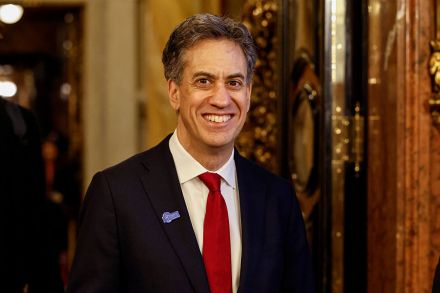
What a pair Ed Miliband and California governor Gavin Newsom make. Both seem to suffer from the delusion that they are national leaders, meeting up in London on Monday to sign a deal in which they aim to share green technology and finance. Both are committed to what they like to call a ‘global race for clean power’. And both are presiding over electricity grids which are heading for disaster. In this, California is a little ahead even of Britain. It provides a frightening picture of what is to come as Miliband tries to decarbonise the grid, mostly with intermittent renewables, by 2030. On Christmas Day, 130,000 homes and businesses in

Why unemployment is at a five-year high

Britain’s jobs market continues to struggle. Figures released by the Office for National Statistics (ONS) this morning show that the unemployment rate increased to 5.2 per cent, the highest rate in almost five years. Today’s release contains other worrying signals. The number of payrolled employees fell by 134,000 in the year up to January. Some 11,000 jobs were lost in January alone. Several factors lie behind the weak labour market. Government policy choices, such as the hike in employers’ National Insurance contributions and the looming increases in business rates, have undoubtedly hit hiring. A number of economists have also blamed the UK’s high minimum wage for declining opportunities for young

Rejoining the EU single market won't boost Britain's growth

In his speech in Munich on Saturday, the Prime Minister, Sir Keir Starmer, made it very clear that he was planning to rejoin the European Union’s single market, perhaps as early as this year. The argument in favour of this is that it will boost growth – and it will put Britain at the heart of a defence-fuelled industrial revival. But there is just one problem: joining the single market won’t do anything to improve Britain’s failing economy and may well make it worse. Sir Keir has gone further than any of his colleagues in embracing the EU. Instead of just joining the European customs union, he now wants to

Ed Miliband and Andy Burnham’s Britain doesn’t exist

With Sir Keir Starmer’s premiership in perpetual peril, it seems instructive to pay closer attention to his potential successors. On that, there have been two noteworthy interventions this week. The first from Ed Miliband who told the Today programme: ‘I tell you what angers Keir most about this country, it’s class. It’s the class divide.’ Not to be outdone, Andy Burnham then told a Resolution Foundation think-tank event that the focus of British politics needed to switch to lower earners. They present a Britain where capital exploits cheap labour, resulting in profound and widespread poverty. But that’s not the Britain we’re in Both men seem to want to focus on a country that

Trump’s America isn’t the outlier on greenhouse gases

Irresponsible Trump, responsible China; that is the message BBC climate editor Justin Rowlatt seemed to be sending us by juxtaposing the news that the US president had repealed Barack Obama’s ‘endangerment finding’ and that China’s carbon emissions fell slightly last year. Trump’s critics like to portray him as a rogue figure in a world which is otherwise committed to reaching net zero greenhouse gas emissions. But is there any truth in that? The endangerment finding does not appear to have had any obvious impact on US emissions The endangerment finding was a piece of legalese issued in a 2009 ruling by the US Environmental Protection Agency (EPA). It stated that six greenhouse

Britain’s managed decline can’t continue

Britain is on course for its weakest decade of growth in a century, according to the latest GDP figures. The headlines will duly register alarm, and politicians will promise fresh strategies, convening panels and relaunching initiatives under reassuring new names. Yet for all the activity very little will change. In a more forgiving era, this might have been survivable. But the international environment is hardening What has taken hold is something more insidious than crisis: a culture of managed decline. The numbers disappoint, the rhetoric adjusts and expectations are lowered once again. Instead of confronting the structural causes of stagnation, the political class calibrates around them. The result is not

Jim Ratcliffe has a point about Britain

Jim Ratcliffe is not a polished media performer, and neither does he have an accurate set of UK demographic statistics in his head. But how typical that the Prime Minister and his Labour colleagues, as well as the Guardian and many others, have chosen to latch onto a loose remark the billionaire Manchester United co-owner made about migration rather than address the very genuine concerns he has for the UK economy. Read between the heavily edited clips from Sky News’s interview with the chemicals entrepreneur and the point he was trying to make when he said that Britain is “being colonised by immigrants” is clear. You cannot grow an economy healthily when

Is there a silver lining in Britain’s dismal growth figures?

Wes Streeting was bang on when he told Peter Mandelson the government had ‘no growth strategy at all’. The Health Secretary’s claim seems to have been confirmed by figures, just released by the Office for National Statistics (ONS), which show Britain’s economy grew by just 0.1 per cent in the last three months of 2025. On a per capita basis the numbers were even worse: we’re in recession. What is worrying given the make up of our economy is that there was no services growth at all, and construction contracted by 2.1 per cent. The only area of the economy that expanded (by 1.2 per cent) was production. Taken together,

Net zero is forcing BP into irrelevance

It should have moved ‘Beyond Petroleum’ by now, with wind, solar and hydroelectric power powering its profits. If you rewind twenty years, BP had a clear plan to place itself at the forefront of the green energy transition. It hasn’t worked out as they had hoped. Instead, today the company announced it was suspending share buybacks to shore up its balance sheet, sending its shares tumbling. Its rival Shell is in better shape, but only just. As both of Britain’s oil giants struggle, it is becoming painfully clear that the obsession with net zero has destroyed what was one of our major industries – and it will be very hard

What Farage fails to understand about working from home

Of all the ways in which Reform is upending the rules of British politics, the most fascinating is its reliance on the support of a single demographic. Nigel Farage seems to address himself exclusively to pensioners. The audience for his speech in Birmingham on Monday told its own story: row upon row of retirees. And how they applauded as Farage vented against the fecklessness of Britain’s workers: Being chained to the desk, going to the pub and only getting home once the kids were asleep might have been acceptable in the Eighties ‘It is an attitudinal change that Britain needs. An attitudinal change to hard work rather than work-life balance.

Britain’s economic upturn won’t save Starmer

By the end of last week, it was clear the Prime Minister is a goner – the debate moved to the pace of his demise. That sped up yesterday with the resignation of Morgan McSweeney, his chief of staff. Starmer’s prospects looked very bleak indeed when I turned on the Today programme this morning to hear a defence of the PM being mounted by Baroness Smith of Malvern. I wouldn’t pretend to understand the government’s communications strategy, but it doesn’t exactly scream confidence when the most senior spokesperson offered up for the morning media round is a junior skills minister from the Lords. A few hours later, the man in

Cancelling council elections means taxation without representation

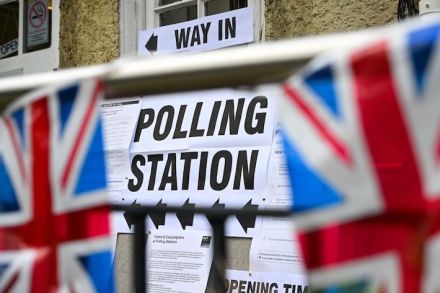
For 350 years it has been established in the British constitution that taxes can only be levied for the crown with the consent of parliament. Ever since the Bill of Rights this principle – articulated most famously by the American revolutionaries in their call for no taxation without representation – has been core to our understanding of what it means to be a democracy. Delaying elections, unless as a result of a national emergency, should be considered an extraordinary act That principle is clearly being breached with the delay of local elections in 29 local authorities across England. These councils, many of them delaying elections for the second time, from

Peter Schiff on the dollar: America's bust is the world's boom

25 min listen

Michael Simmons speaks to American economist Peter Schiff about the surge in gold prices, the weakness of the US dollar and why he believes the next major economic crisis is approaching. Schiff argues that recent dips in precious metals are a buying opportunity, warns that years of low interest rates and money printing have created a ‘bubble economy’ and explains why he thinks cryptocurrencies are ‘speculative mania’.

Peter Schiff on the dollar: America's bust is the world's boom

The Bank cuts growth prospects by a quarter

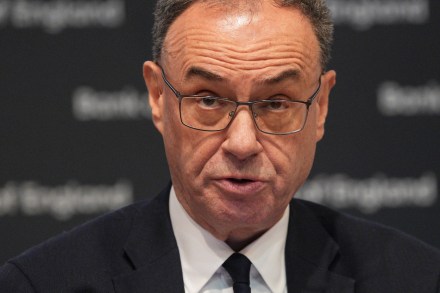
The Bank of England’s Monetary Policy Committee (MPC) has just voted to hold interest rates at 3.75 per cent. While market expectations and pundit’s predictions overwhelmingly foresaw a hold, the vote came in slightly tighter than expected at five against four. The decision came alongside new forecasts from the Bank that predict inflation falling back to the 2 per cent target from April, in what will be a relief to the government and indeed the rest of us. In even better news for Rachel Reeves, in the Bank’s ‘Monetary Policy Report’, also released today, it gave the government some credit for ‘developments in energy prices including from Budget 2025’.  Better