Economy

  • AAPL

    213.43 (+0.29%)

  • BARC-LN

    1205.7 (-1.46%)

  • NKE

    94.05 (+0.39%)

  • CVX

    152.67 (-1.00%)

  • CRM

    230.27 (-2.34%)

  • INTC

    30.5 (-0.87%)

  • DIS

    100.16 (-0.67%)

  • DOW

    55.79 (-0.82%)

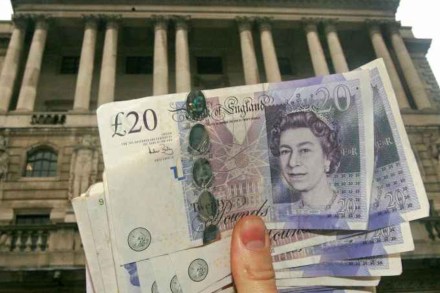
Could your 50p coin be worth much more?

‘I have not found anybody yet who has a good word to say for the new coin,’ Sir Douglas Glover complained to the House of Commons in November 1969. ‘The great mass of the people are very hostile to the shape, size and look.’ So hostile, in fact, that retired colonel Essex Moorcroft formed the Anti-Heptagonists, calling the coin an insult to the sovereign. Crucially, nobody had called it a ‘jolly good coin’. Luckily, by 1973 heptagon-hate had waned. It was during this lull that the first commemorative 50p was issued, marking Britain’s entry into the European Economic Community. Designed by the sculptor David Wynne, it showed nine hands clasped

Spotlight

Featured economics news and data.

Cutting Britain's giant welfare bill would be an act of kindness

Does having money really matter that much? There are those, usually with quite a bit of it, who want us to care less about materialism. But, unequivocally, money really does matter – not because of any status it supposedly brings, but for the freedom it buys: freedom to choose how we live and how we look after others. Considering this, it seems that the deep disillusionment with mainstream politicians in recent years stems from a protracted and ongoing period of stagnant living standards over which they have presided. But the truth is that the average person has not got poorer since the global financial crisis. They have got a little

Rachel Reeves’s Spring Statement ignored Britain’s biggest problems

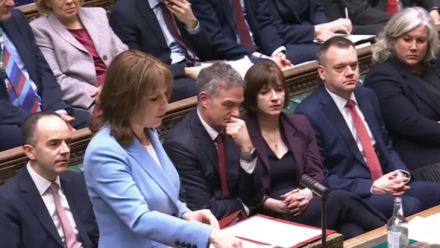
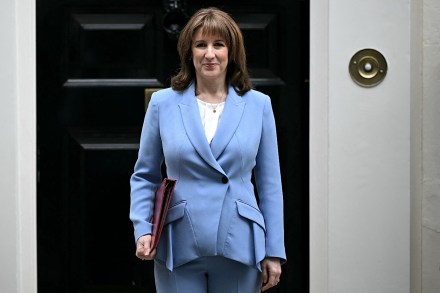
Rachel Reeves got what she wanted: an uneventful spring statement. It’s not even leading the homepage of the Financial Times. But that doesn’t mean it doesn’t matter. The forecasts the Chancellor read out from the Office for Budget Responsibility (OBR) do not paint a pleasant picture of Britain’s economy. Growth for this year was slashed compared with a year ago – coming in at just 1.1 per cent. Reeves seemed pleased that it then picks up to 1.6 per cent over the next few years, but that is not the kind of growth we need to turn around a country that has felt stagnant for years. By the end of the

Watch: Spring statement live

Before the first missiles landed in Tehran, Rachel Reeves had been looking forward to today’s spring ‘forecast’ statement, which was designed to be the lightest-touch intervention by a Chancellor since Philip Hammond in 2018: no Office for Budget Responsibility scoring of her fiscal rules, no tax announcements, no major policy changes and, crucially, no months of damaging speculation about black holes or gilt yields in Britain’s fragile economy. The strategy worked, with barely any debate ahead of time and the only real question being how small her measures would be. That is, until turmoil in the Middle East sent oil and gas prices surging, markets tumbling and bond yields climbing,

What to expect from Rachel Reeves’s spring statement

Before the first missiles landed in Tehran, Rachel Reeves was looking forward to today. Her spring ‘forecast’ statement was going to be a doddle. The plan – to have the smallest intervention by a Chancellor since Philip Hammond in the spring of 2018 – was a sensible one. Britain’s fragile economy could not have handled months of speculation about black holes, tax hikes and gilt yields. So, at the November Budget, the Chancellor made clear that there would be no scoring of her fiscal rules by the OBR this time round, no tax announcements and no major policy changes either. No rabbits inside hats or rats under rocks. The Treasury,

The bond markets aren’t done with Rachel Reeves

Never has Rachel Reeves been so glad to be so boring. The Chancellor will deliver today her spring update on the public finances at a time of unusual calm in the often overdramatic story of UK economic policy. One of the biggest actors in the story, the bond market, is currently happy and sleepy. In effect, the government’s plans assume a period of austerity just as the next election approaches After several years in which movements in government borrowing costs dominated the political conversation, calm has returned. Recent official data suggests that Reeves is under less fiscal pressure than she was in 2025. Tax receipts are up and the Treasury

Is Labour too close to the City – with Lionel Shriver & Robert Hardman

35 min listen

Britain’s banks have a hold over Rachel Reeves, declares Michael Simmons in the Spectator’s cover piece this week. Almost two decades on from the 2008 financial crash, the UK has failed to reform the system and – as ordinary people face a cost-of-living crisis – Labour is in hock to big business. Is the Chancellor too close to the City? For this week’s Edition, host Lara Prendergast is joined by economics editor Michael Simmons, columnist Lionel Shriver, and columnist from the Daily Mail Robert Hardman. As well as Labour’s relationship with the banking industry, they discuss: the hit BBC show Industry; how the Royals have frozen out (former Prince) Andrew – and

Is Labour too close to the City – with Lionel Shriver & Robert Hardman

MAGA-nomics is working

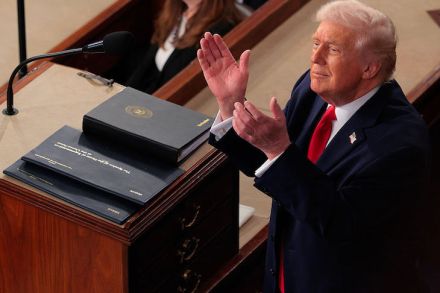
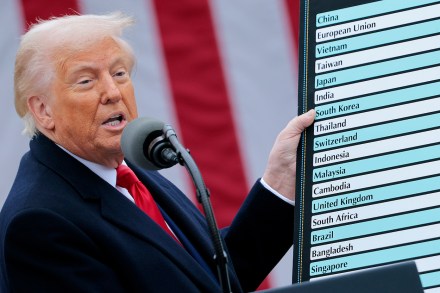
Donald Trump’s State of the Union address, the longest in history, served as a reminder of the relentless will and unstoppable energy he brings to the office of the presidency. In a coup de grace he humiliated Congressional Democrats, securing footage of them remaining seated en masse as they refused to accept that the role of the government is to prioritise American citizens. He gently chastised the Supreme Court judges, assembled in the front row, for declaring his tariff programme unlawful last Friday. Our political right should take heed: for all its roughness, this agenda isn’t going away The President’s opponents may be celebrating the judgment, but the Donald is

‘It’s a Faustian pact’: Rachel Reeves is giving bankers what they want

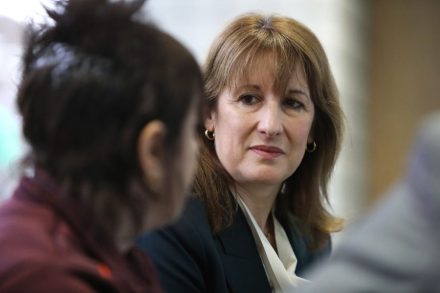
The Epstein files lift the curtain on how power is exercised and influence traded by our financial elite. It is not a cheering sight. Business and economic gurus like the former US Treasury Secretary Larry Summers asking for dating advice from a convicted paedophile does not build confidence in the masters of the universe. Distasteful as these details are, the most telling insights into the predatory behaviour of the private-jet classes relate to how they exploit all of us, not just the vulnerable young women who catch their eye. Institutional logic does not explain Reeves’s love-in with the banks. They seem to have made a Faustian pact Peter Mandelson may

The no.1 quango that deserves the axe

There are elements of economic life, such as the impact of President Donald Trump’s ever-changing tariffs, that are far beyond national control; others, including the supply of most consumer goods, that are best left to free markets; and others which naturally benefit from state intervention. New housing, wholly dependent on planning and building regulations, clearly falls into the last category. So we might well ask how the Labour government plans to solve a homebuilding crisis so extreme that its target of 1.5 million new homes within this parliament is likely to be undershot by 50 per cent or worse. As for London, the locomotive of national prosperity that needs a

SEND madness: Britain faces 'ruinous costs' from over diagnosing children

6 min listen

Why are one in five school children classified as special educational needs and disabilities (SEND) in 2026? The rates of children being diagnosed with neurodiverse conditions have scaled to disproportionate rates and the costs are a major concern for the government. Michael Simmons takes a look at the data and explores why devolution has provided some kind of a solution.

SEND madness: Britain faces 'ruinous costs' from over diagnosing children

Is there a simpler answer to the special needs crisis?

The Jesuits had it all wrong. They famously insisted: ‘Give me a boy at seven and I will give you a man.’ Schooling could change everything. Today, neuroscientists, educationalists and psychologists know that the clay is set much, much, earlier. Whether boy or girl, the brain and its neural pathways will be formed by the time the child is into their third year. This is even more true of children with special educational needs and disabilities (Send): early detection of speech defects or cognitive failures can often reduce, and sometimes altogether erase, developmental issues. If the government really wants to address Send issues, there is a better alternative In the

Has the Supreme Court just ‘SCREWED’ Trump’s administration?

‘If the Supreme Court rules against the United States of America on this…  WE’RE SCREWED!’ said Donald Trump on Truth Social last month. Well, the Supreme Court has finally now ruled, and it is indeed a very serious blow to Trump’s economic agenda. The International Emergency Economic Powers Act, which the White House used to impose his sweeping levies, ‘does not authorise the President to impose tariffs,’ said the court. Quite what this setback means for Trump’s tariffs remains unclear. There’s already much talk of the United States having to pay back duties to foreign companies, but that is a fraught legal question. Another highly contentious subject is what now

Is it time for Rachel Reeves to give Britain a tax cut?

The self-employed have paid up. And investors are paying record amounts of capital gains tax. The public finance figures for January have been published, showing record tax receipts and handing the Chancellor, Rachel Reeves, a surprise £30 billion bonus. It is great news that the public finances are stabilising. Manchester mayor Andy Burnham may not be able to complain about being ‘in hock to the bond markets’ for much longer. And yet, surely this also shows that Britain is being overtaxed? Is it perhaps time to hand some of the money back?  The UK’s public finances are suddenly in much better shape, with a record surplus recorded for January. The

What does the ONS mean by living in ‘good health’?

Living longer but spending more of our lives in ill health. That is the rather shocking picture presented by the figures for ‘healthy life expectancy’ published by the Office for National Statistics (ONS) yesterday. They show that while life expectancy continues to rise modestly, the proportion of our lives lived in ‘good’ health is falling sharply. Between 2022 and 2024 men enjoyed 60.7 years of good health and women 60.9 years. This was, respectively, 1.8 years and 2.5 years down on the previous period for which data was collected, 2019 to 2020. We now appear to spend less of our lives in good health than we did at any time

Debt bomb: the £100 Billion problem nobody talks about

21 min listen

There is an area of public spending nearly double what Britain spends on defence, more than policing borders or our streets. It’s servicing the costs of what Britain has borrowed in the past. The growing debt bomb is continuing to climb with real consequences for the taxpayer. Michael Simmons takes a look at the data and speaks to the economist Paul Johnson about what political measures the government will have to take to tackle Britain’s debt crisis, what it means for the taxpayer and why the reviving modern monetary theory movement is nonsense.

Debt bomb: the £100 Billion problem nobody talks about

Bring on Rachel Reeves’s boring Spring statement

For the Chancellor, Rachel Reeves, to tell everyone in advance that her Spring statement will be ‘boring’ is a little like Nigel Farage telling us he might be popping out for a pint, or Sir Keir Starmer telling us he might change his mind. It is useful information, but hardly a huge surprise. Still, the new ‘no drama’ Reeves will at least be an improvement on her former tax-raiding iteration – the British economy could use a break from her attempts to improve it.  With the Spring statement looming in just under a fortnight’s time, we will at least be spared the constant leaks of madcap ideas that led up