John Oxley

John Oxley writes a newsletter about politics, history and culture

Want to get rich? Invest like an American

From our UK edition

Ramit Sethi wants to make you rich. He is not a household name in Britain, but the Stanford psychology graduate is one of the biggest personal finance influencers in the US. He hosts a successful podcast, Money for Couples, has written bestselling books and even has a Netflix show, How to Get Rich. All his projects share the same message: by changing your mindset and taking a few practical steps, you can power yourself toward prosperity. To British ears, his style might seem brash. It is financial advice with a substantial side of life coaching. But beyond the difference in tone, Sethi spreads a simple message rarely heard in finance columns or consumer advice TV slots in this country: that the best thing you can do for your money is to rapidly increase your income.

The elderly don’t need more political representation

From our UK edition

Young people feel economically adrift. Homeownership has become increasingly unaffordable, and rents have escalated exorbitantly. Younger workers have borne the brunt of wage stagnation, with real pay largely frozen for the last decade and a half. Politicians, however, think the way to fix this rift is to focus more on the feelings of the ageing. The Women and Equalities Select Committee has waded in on the side of the greying. A new report has proposed a Commissioner for Older People and the establishment of a cross-government minister to champion the rights of the old. This has been announced with a broadside against ageism, with a particular objection to portrayals of the elderly as ‘frail, helpless or incompetent,’ or as ‘wealth-hoarding “boomers”’.

The Tories aren’t taking the Reform threat seriously enough

From our UK edition

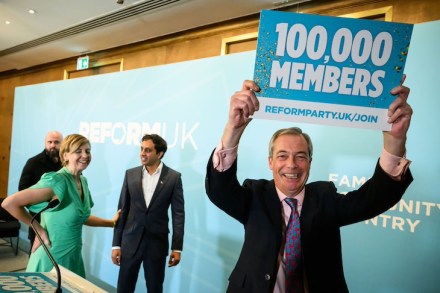
The threat to the Tories from Reform is one element of the Conservative party’s unprecedented crisis. The party has lost votes to the right before, but never in a way that has cost them so many seats. As well as picking up five of their own MPs, Reform took Tory votes elsewhere to let Labour through in dozens of seats this summer. Now, Farage’s outfit is looking at making that a permanent threat.  So far, a big criticism of Reform is that it has been a top-heavy organisation. The party has had money and a Westminster presence but little impact locally. That is changing. Membership is reportedly surging, perhaps even making the party bigger than the Conservatives. In May, Reform will pose a big threat in council and mayoral elections.

Will Britain let Keir Starmer govern?

From our UK edition

A few weeks after Keir Starmer’s landslide, it may not seem like Britain is a conservative country. The left has won an enormous victory and started to push forward on its agenda. Policies are being announced: today Ed Miliband, the energy secretary, says the government will start building offshore wind turbines. But, as Labour settles into government, there are signs it may be already be getting bogged down by an institutional and cultural conservatism that has long held Britain back from doing things. Threats to Starmer’s ‘change’ are starting to emerge. The arsenal deployed against Tory plans over the years – from endless consultations to judicial reviews and human rights challenges – now threatens Labour plans.

What did the Tories do with power?

From our UK edition

Fourteen years of Tory-led government is over. The second-longest period of dominance by one party since the war is done. For the left, that means relief and joy. For many on the right, there is a sense of frustration, a sense of waste: power has been squandered and little about the country feels more conservative, or even more successful than it did a decade ago. Much of it, bluntly, feels worse. Much of their legacy will be swept away by the stroke of a statutory instrument or a line in the next budget In some ways, this analysis is unfair. There have been some successes in the last 14 years of government. Education in the country has been transformed with the extension of academies, the rollout of free schools and rigorous new qualifications.

Labour shouldn’t squander the chance to fix council tax

From our UK edition

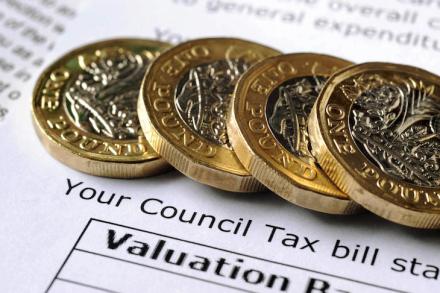
In the final election push, the Tories are trying to drag the Labour party into a game of taxation whack-a-mole. The Conservatives seem to think that the threat of tax rises is the one lifeline they have. After bungling their £2,000 per-family line with a row about where the numbers come from, they are now teasing out denials about specific raises from the left. First, it was over Capital Gains Tax, and then council tax, forcing Labour to deny they would re-band, as Welsh Labour have done. A tax levied according to what your property was worth (or, indeed, hypothetically worth) in 1991 feels a bit baffling Starmer and his team have batted most of these away.

The Tories have become the party of the pensioner

From our UK edition

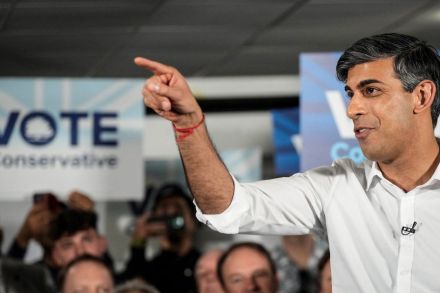
In several countries across Europe, ‘pensioners parties’ sit in parliament expressly to reflect the interests of older voters. The most successful is perhaps Slovenia, where the Democratic Party of Pensioners had a parliamentary presence from 1992 to 2022, and often made up part of the governing coalition. In the UK, attempts to create pensioners parties have faltered. Now, in a desperate grasp for survival, the Conservatives are attempting to become one.  Rishi Sunak has kicked off the first full week of the campaign with a policy to further entrench the Tory support of better-off older people. Where once the triple lock was enough, now he has unveiled the ‘Triple Lock Plus’.

Sunak’s national service may end up backfiring

From our UK edition

The idea of bringing back national service has been kicking around British politics for about five times longer than the policy itself lasted. Mandatory conscription was introduced by the Attlee government and dismantled gradually from 1957 to 1963. Those old enough to have experienced it will now be in their mid-80s. Following Rishi Sunak’s announcement last night, the Tories might introduce it to a new generation.  When voters see you as the political wing of the OAPs, this is how national service will be viewed Though the PM’s main attack line on Starmer is his lack of plan, the Conservative party’s national service suggestion is itself quite vague.

What we won’t learn from the Hartlepool terrorist attack

From our UK edition

Just a week after Hamas’ deadly raid into Israel on 7 October, the conflict in the Middle East inspired a terror attack in a northern English town. Ahmed Alid, today sentenced to 45 years in prison for the attack, directly invoked Gaza as he stabbed two people. He maimed Javed Nouri, a fellow asylum seeker with whom he shared Home Office-approved accommodation in Hartlepool before killing 70-year-old Terence Carney when he found him in the street. It was a brutal rampage by a man 'hell-bent' on violence. The judge described the murder as 'a terrorist act'. Alid burst into his housemate’s room, stabbing as he slept, yelling 'Allahu Akbar' as he did so The details of his rampage are horrifying. Alid first burst into his housemate’s room, stabbing him repeatedly as he slept.

The Tories are in free fall

From our UK edition

A couple of weeks ago we were told it was Rishi Sunak’s best week ever. Now, it is hard to even remember why. The Rwanda Bill was passed, and the Prime Minister had some important photocalls playing statesman with European allies. Now it seems nothing the party can do will shift the dial. The local elections suggest this is the case. Number 10 have pointed to the projected national share (PNS) of the results, which suggests there will be a hung parliament at the next election. This is statistically illiterate self-delusion. The PNS is a flawed metric which ignores differential turnout, regional variations and overweighs the success that minor parties have at a local level.

Will Keir Starmer be the Yimby prime minister?

From our UK edition

Keir Starmer seems intent on exploiting the rising divide between Nimbies and Yimbies as we move towards the general election. With polling showing many of Labour’s target seats are in the most pro-development parts of the country, the party is looking to reject the orthodoxy that blocking housing wins more votes than it loses. Instead, Labour is embracing those who see increased supply as the only way to ease the housing crisis. This year’s election is sure to see housing as a new and stark dividing line between the parties The electoral logic is clear. The cost-of-living crisis, combined with surging rents and house prices, has pushed housing towards the top of the electoral agenda.

The Tories have no excuse to whine about The Blob

From our UK edition

The last few weeks have served as a reminder of the sort of conspiratorial, self-excusing hole the Conservative party could well go down in opposition. Speaking in the United States, Liz Truss blamed her premiership collapsing on the ‘wokenomics’ of the ‘deep state’, giving succour once more to the idea that the Tory party could have done what it wanted, could have governed better, were it not for The Blob. It’s a seductive argument, but a dubious and self-defeating one if the party wants to gain power again. Blaming the levers of government for a lack of change is a poor argument that makes the party weak and pointless When the party is, almost inevitably, in opposition there is a chance this line of thinking will fully take hold.

Is there a house-building cartel?

From our UK edition

The Competition and Markets Authority report on the housing sector should be a boost to the Yimby policy machine. It expressed grave concerns about the housing market operating like a cartel, and said that much of this was enabled by the current planning system.  The CMA was tasked with looking at the housing market a year ago, because targets are consistently missed, prices are consistently rising, and there are allegations that tactics such as ‘land banking’ are used to drive up profits. The result was a strong indictment of the planning system as it currently stands.  The report found that under-staffed planning departments, combined with a veto-heavy system, made getting permission to build protracted and unpredictable.

Sunak is playing it safe with new housing plans

From our UK edition

Rishi Sunak seems to have realised a trick for pushing more building without confronting Tory Nimbyism. Under plans unveiled today, he’s going to ease restrictions on building in urban areas, where prices are most pressured and where Tory votes are rarely found. Councils missing their housing targets will be restricted in when they can refuse permission, and it will become easier to convert existing buildings into housing.  It’s a canny dodge. The Conservatives understand that rising house prices are threatening their future, with fewer younger people getting on the housing ladder. At the same time, however, big steps to resolve the crisis would mean a fight with ageing homeowners who already back the party. These latest moves avoid this dilemma.

The Tory party’s empty legacy

From our UK edition

It was Evelyn Waugh who dismissed the Tories as having ‘never put the clock back a single second’. Now, even the party’s own MPs seem similarly sceptical, with Danny Kruger lamenting the last 14 years of power as leaving the country ‘sadder, less united and less conservative’. It’s one thing for a parliamentarian to bemoan the party for dropping in the polls, but unusual for one to be so scathing of an entire period of government. From austerity to Brexit, the party has failed to find and articulate an overarching vision In fairness to the Conservatives, their record is not as hopeless as current polling might suggest. As Kruger himself acknowledges, education has been radically reformed.

There’s nothing ‘long-term’ about ignoring the housing crisis

From our UK edition

There was much to talk about in Rishi Sunak’s conference closing speech. In around an hour on the stage he scrapped HS2, announced a replacement for A-levels, and found the time to ban 14-year-olds from ever buying cigarettes. Yet there was still a huge policy hole in the Prime Minister’s speech – a housing-shaped one. Outside of the conference hall, you were barely able to move without coming into a conversation about housing. Think tank panels routinely covered it, discussing the rights of renters, the cost of housing and the impact it will have on Tory fortunes. MPs grappled with the tough choices between local Nimbyism and an increasing awareness of the need to build more houses.

Gove is right to tackle EU pollution laws blocking housing

From our UK edition

Michael Gove has announced today that the government will scrap EU-era pollution laws which are preventing homes being built. The move to liberalise the so-called ‘nutrient neutrality’ rules – which say that any new development can’t add additional nutrients into the environment – is designed to ease some of the bottlenecks around building and comes with the bonus of sweeping away EU-era regulation.  The current position for nutrient neutrality is a complex one. A combination of EU law, strict judicial interpretation and cautious domestic implementation has turned a well-intentioned piece of regulation into a millstone around builders’ necks.

The Tories are heading for electoral evisceration

From our UK edition

‘Whoever wins in September, the party will be stuck. Even in power it remains incapable of generating and delivering credible policies, incapable of using its resources to tackle the challenges ahead. In an uncertain world it struggles to decide what it wants to do, and struggles to implement the few ideas it has. The party has become a machine for garnering headlines and votes but is now starting to stall. Insulated by a media which also focuses on the day-to-day rigmarole of politics as soap opera, our leaders are missing the signs of short- and long-term crisis which will soon hit. They are failing to adapt, failing to plan. The sirens are ringing, the ground is coming.’ So ended this piece, a year ago today. Since then, a lot has happened, but little has changed.

Fining landlords over illegal migrants will make renting even worse

From our UK edition

As part of a slew of measures to freeze illegal immigrants out of the economy, the Tories have announced tougher penalties for landlords who let out properties to those with no right to be in the country. This extension of the hostile environment could, however, simply worsen the lives of legitimate renters in an era where costs and competition for housing are increasing. The plans are designed to make it harder to exist in the country without a right to be here, as well as punish those who exploit and facilitate illegal immigration. Under the proposals, fines for renting out properties unlawfully will rise from £80 per lodger and £1,000 per tenant for a first offence to up to £5,000 per lodger and £10,000 per tenant.

Michael Gove can’t solve the housing crisis by ignoring the suburbs

From our UK edition

Michael Gove, one of the few ministers with a track record of getting stuff done, set out the government’s new housebuilding plans this morning. But will his policies actually help solve the housing crisis?  The British Dream is largely a suburban one, and Gove’s plan fails to address it Gove’s plans have focused on streamlining the planning system in certain areas. The levelling up secretary is planning to create a dozen more Development Corporations, which take planning decisions away from local politicians and have speeded up building in areas such as Canary Wharf and the London Olympic games site.

Housing crisis