China

How Mark Carney sold Canada to China

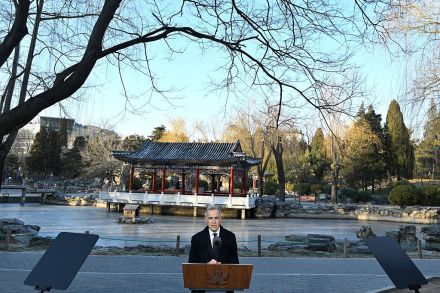
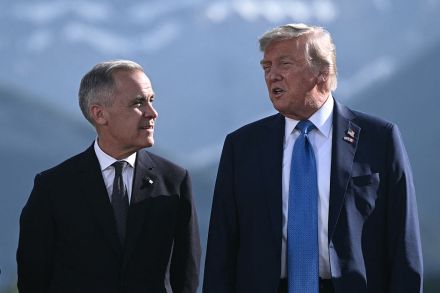
As Can Force One moved toward Chinese airspace, the delegation’s electronic devices were powered down and secured in signal-blocking bags. Burner phones were passed out: the only machines the public servants, staff and journalists would be allowed to use for the duration of their stay. The Canadian Prime Minister’s security team was taking no risks. But Mark Carney himself was on his way to do something many back home would consider very risky indeed: signing agreements with Chinese President Xi Jinping on trade, global governance, energy, media access and law enforcement. The country Carney had called, only one year ago, Canada’s “biggest security threat,” was about to accomplish a magical

Carney

Will Alberta become the 51st state?

Albertans are very good at keeping things that damage their prosperity out of their province. Take rats, for instance. The vermin were designated an agricultural menace in the1950s and after 18 months of chemical warfare Alberta – which is the same size as Texas – was declared rat-free. Today a poison-laced buffer zone with Saskatchewan province and a vigilant population stops their return. The leaders of the resurgent Alberta independence campaign have identified a new set of damaging pests to keep out: the federal government in Ottawa and its new ally the Chinese government. While they believe that Ottawa is taking too much of their money – Alberta is by

Alberta

Will the war in Iran really weaken China?

Analogies in international politics are tricky and easily abused, yet they remain irresistible because they can illuminate patterns that are otherwise hard to see. Consider the present moment.  Just as Ukraine has become a growing burden for Washington and its Western allies, Iran is now a strategic burden for Moscow and Beijing. The US, particularly under the Trump administration, appears to be placing less emphasis on supporting Ukraine. Something similar may be happening in reverse with Iran.  Moscow continues to provide Tehran with assistance – most notably intelligence on US military targets – but the broader pattern suggests caution rather than deep commitment. Beijing, despite its close ties with Iran,

China Iran

Japan is refusing to tiptoe around the Taiwan issue

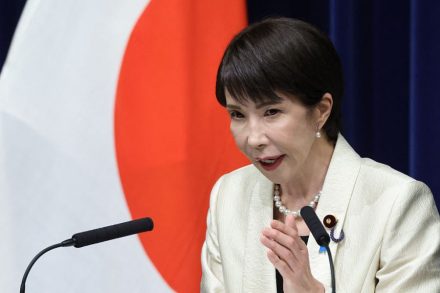
One of the most serious issues in the well-filled in-tray of freshly endorsed Japanese Prime Minister Sanae Takaichi is Taiwan, which China claims as its own sovereign territory, and the lamentable state of Sino-Japanese relations. Takaichi provoked fury with comments in the Japanese parliament in November when she stated that were China to attack Taiwan, it would be interpreted as a “survival-threatening situation” for Japan, implying a military response could follow. Under the terms of its constitution, Japan is severely limited in its military options but Takaichi appeared to be preparing more solid ground with her phrasing. A 2015 law changed the constitution allowing Japan to retaliate if the country

The deep state vs Nixon

Americans took a break from their partisan vituperation in February to mull over newly revealed testimony that Richard Nixon gave to grand jury investigators in 1975, a year after the Watergate scandal drove him from power. James Rosen, a veteran Washington journalist and the biographer of Nixon’s attorney general John Mitchell, revealed the episode in the New York Times. Nixon had argued that his program of wiretaps had been made necessary by another spying operation that senior American military commanders were carrying out against him and his top aides. The outline of this story has been known to historians since James Hougan laid it out in Secret Agenda (1984): a

nixon

The redemption of Richard Nixon

In the last five years of his life, when I knew Richard Nixon, nothing described him better than Milton’s “calm of mind, all passion spent.” During the most tumultuous political career in American history he had come back many times, but the greatest comeback of all was in full swing. His enemies had seized control of the puritanical conscience of America to slay him, unjustly, and he was manipulating the same national conscience, which was founded on Plymouth Rock and has survived all the corruption and hypocrisy and violence of American public life, and when aroused, is insuperable. Since his political fall, and later his death, polls increasingly indicate public

Trump is right about greenhouse gases

Irresponsible Trump, responsible China: that is the message the BBC’s climate editor seemed to be sending us by juxtaposing the news that the President had repealed Barack Obama’s “endangerment finding” and that China’s carbon emissions fell slightly last year. Trump’s critics like to portray him as a rogue figure in a world which is otherwise committed to reaching net-zero greenhouse gas emissions. But is there any truth in that? The endangerment finding does not appear to have had any obvious impact on US emissions The endangerment finding was a piece of legalese issued in a 2009 ruling by the Environmental Protection Agency (EPA). It stated that six greenhouse gases – carbon dioxide,

Why doesn’t the CDC care about Chinese biolabs in America?

If you rent a cheap Airbnb house in Las Vegas, you might not be altogether surprised to find dead crickets in the garage. But a thousand vials of medical samples in several freezers – and a centrifuge? After the cleaner and one guest fell ill at a property in the city’s Sunrise Manor neighborhood last week, federal agents raided it and found a whole laboratory’s worth of scientific kit of the kind more useful to medical scientists than, say, drug dealers. Curious. Curiouser still, the house belongs to a Chinese national named Jia Bei (Jesse) Zhu. He is currently in prison awaiting trial over a secret laboratory that (it is alleged) he was running in Reedley, California. In December 2022 an alert city official in Reedley noticed a garden hose leading

Biowarfare

Jimmy Lai cannot be left to die in jail

The decision to sentence Jimmy Lai to 20 years in jail in Hong Kong is no surprise, but it is no less shocking or heartbreaking. For his family, especially his courageous wife Teresa, son Sebastien and daughter Claire, who have advocated so tirelessly for their father over the past five years, one can only imagine the pain and grief they feel. Sebastien and Claire have walked the corridors of power in Washington, DC, London, Ottawa, Brussels, Paris and beyond, and sat in television studios for hour after hour, seemingly to no avail. For Hong Kong, this is yet another dark day, yet another nail in the coffin of the city’s

lai

US special forces’ secret weapons

By using a sonic weapon in the mission to capture Nicolás Maduro, as Donald Trump appears to have confirmed, Delta Force commandos not only triggered a paradigm shift in warfare, but served poetic justice. When asked whether such a weapon had been used, the President replied: “It’s probably good not to talk about it.” But then added: “Nobody else has it, we have some amazing weapons that nobody knows about.” The following morning, at Davos, Trump said: “They weren’t able to fire a single shot at us. They said, ‘What happened?’ Everything was discombobulated.” An unsubstantiated interview with a Venezuelan guard, who claimed he had been targeted with a sonic

sonic

Inside the Cambodian cybercrime compounds run by Chinese gangs

The scrappy Cambodian border town of Poipet, long associated with vice and criminality, was shaken shortly before Christmas by the sound of F-16 fighter jets screaming overhead. The Thai Royal Air Force was, astonishingly, bombing a series of casinos. At least five fortified compounds were damaged, which were part of a vast industry that has conned millions of people across the world out of billions of dollars. This was “a war against the scam army,” Thailand’s army said. Scamming is a mainstay of Cambodia’s economy. The country earns an estimated $12 billion annually from online scamming alone, around half the value of its formal economy. Poipet is just one small

Greenland and the new space race

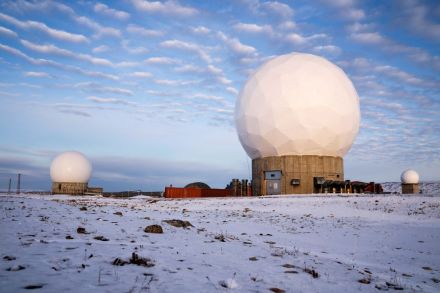
Donald Trump’s desire for Greenland is not just about access to oil, minerals and control of the new strategic and commercial corridors opening in the region. It’s also about data. Specifically, the most important data in the world. For decades, Pituffik Space Base – formerly Thule – in Greenland has been central to US space defense and Arctic strategy. It’s the US military’s only base above the Arctic Circle and their most northerly deep-water port and airstrip. It’s home to the 12th Space Warning Squadron. Its massive AN/FPS-132 radar has 240 degrees of coverage surveying the Arctic Ocean and Russia’s northern coast, especially the Kola peninsula where it has concentrated

greenland

Europe’s self-deception over Greenland

As Donald Trump weighs up taking control of Greenland, Britain and the EU has fallen back on a familiar strategy: talk tough, and do nothing. The UK joined France, Germany, Italy, Poland, Spain and Denmark yesterday in making a joint statement affirming that “Greenland belongs to its people.” Arctic security, it said, must respect “sovereignty, territorial integrity and the inviolability of borders.” Invoking it Article 5 the United States would expose NATO’s limits rather than overcome them If Donald Trump decides to take Greenland, Europe’s initial response would be loud, formal and legally impeccable. Europe and the UK would protest loudly, threaten, – and then do almost nothing at all.

The peril of playing with viruses

If a military team made a mistake during a nuclear war preparedness exercise and accidentally obliterated millions of people, you would not expect to find some of the very same people merrily admitting a couple of years later that they have carried out the very same kind of exercise with different live nukes and slightly fewer safeguards. Would you? That is roughly what I recently found out has apparently been going on in China. The Wuhan laboratory that conducted risky experiments on bat viruses at inadequate biosafety levels and almost certainly caused the pandemic has now revealed that it has done the same kind of risky experiments on another lot

Jung Chang: what the West gets wrong about China

No writer has done more than Jung Chang to bring the horrors of Maoist China to the attention of western readers. In her monumental memoir Wild Swans (1991), she recounted the Chinese Communist Revolution, the Great Famine and the Cultural Revolution through the stories of her grandmother, her mother and herself. Its influence was enormous: Wild Swans sold more than 15 million copies, making it one of the best-selling nonfiction books of all time. In Mao: The Unknown Story (2005), co-written with her husband, the historian Jon Halliday, she blew apart decades of Chinese Communist party propaganda to reevaluate Mao as one of history’s greatest monsters, as bad, if not

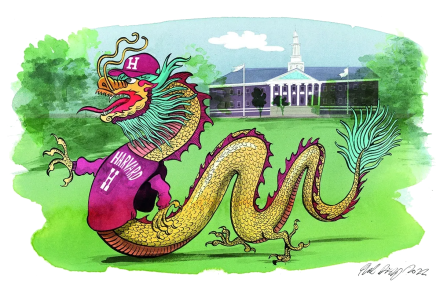
The battle to stop US universities aiding Chinese repression

It goes by an innocuous name – “Integrated Joint Operations Platform” (IJOP) – but it’s one of the most sinister components of China’s surveillance state, managing what has been described as a genocide against the Uighurs. The IJOP combines multiple systems of repression – location, messages, contacts, social media and other data from phones, together with information from checkpoints, cameras and biometric records. It then flags “suspicious” individuals for detention and forced labor. Now leading US universities have been accused of extensive collaboration with Chinese laboratories which develop technology that may be deployed or adapted for use in this system. The accusations come in a report from Strategy Risks, a