Ross Clark

Ross Clark

Ross Clark is a leader writer and columnist who has written for The Spectator for three decades. His book, Britain is Bust: The Coming Sovereign Debt Crisis and what it Will Mean for You, is out now

Burnham will regret dredging up the Brexit debate

From our UK edition

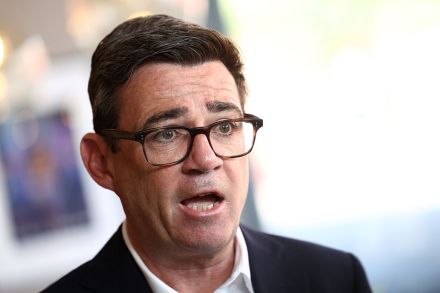
Andy Burnham tells us that he left the House of Commons in 2017 because he was disillusioned with the place. It was not at all because he had lost the 2015 Labour leadership campaign to Jeremy Corbyn and fancied his chances of building a power base in the Manchester mayoralty, just as Boris Johnson had successfully done in London. But did he have to go and hide his head under a stone after he left Westminster? Burnham now seems to think that he has an answer to Brexit. Let’s discuss a slate of options and then all rally behind the consensus choice. 'We could stay as we are,' he told the Labour party conference: That’s definitely an option, if people think this is the right place to stay.

Burnham’s National Care Service is a Tory vote winner

From our UK edition

Andy Burnham wants to thank the nation’s carers – except, possibly, the one he told us slipped his Granny Kitty’s engagement ring off her finger while she was in a care home a couple of decades ago. I don’t think the Prime Minister is ever quite going to eliminate light-fingered care workers, but he did confirm today that he wants to create a National Care Service which will be free at the point of delivery. This will come into being in the next parliament, assuming he wins it, and he assured us it will be fully-funded, not paid for through more borrowing.

Andy Burnham’s Great British Grid is doomed

From our UK edition

There was a very big hole in the Chancellor John Healey’s claim yesterday that he is going to generate a new age of industry. Why would anyone want to open a factory, or any other kind of industrial plant, in Britain when they would be paying far more for their energy than in other countries? UK non-domestic customers paid an average of 26.63 pence per kilowatt-hour for their electricity in 2024, more than any other member state of the International Energy Agency (IEA) and 60 per cent more than the IEA average. It is little wonder that our chemical plants, oil refineries and many other industries are rapidly leaving our shores in the search for cheaper power. But worry not, the government has a plan, or two plans.

Tactical voting is Burnham’s secret weapon

From our UK edition

For Andy Burnham the biggest challenge is to avoid going down like Gordon Brown, who passed up the chance of calling an election in autumn 2007, when he was newly in office and public opinion of him was still quite high, only to crash to defeat two and a half years later. The memory of that time, when Burnham himself was health secretary, has no doubt fed into the reports that Downing Street advisers are considering the case for an election next spring. Has the moment of the progressive alliance finally arrived? The bad news for Burnham is that the decision is even more difficult for him than it was for Brown. He would be giving up a massive majority, and for what? Almost no one thinks that he can win any kind of majority.

Could slavery reparation demands save Reform UK?

From our UK edition

Small boat arrivals are down a bit. Meanwhile, Reform UK has had a difficult year over its donations and seen its vote eaten into by Restore Britain. Compound this with the arrival of a prime minister more energetic and popular than the last one and it has become possible to imagine Labour winning the next election – and with a healthy majority. On the other hand, it is possible to see the cavalry arriving over the hill to bolster Nigel Farage’s troops – in the shape of the slavery reparations movement. The potential of slavery reparations to throw a hand grenade into UK politics should not be under-estimated.

Why green zealots want to drop ‘net zero’

From our UK edition

First, the good news. The Commons select committee on energy security and net zero has called on the government to drop net zero. Now the bad news: they only mean the term ‘net zero’ not the actual policy of trying to eliminate net carbon emissions by 2050. They complain that the term has become a ‘lightning rod for opposition to climate action’, and that it has become a ‘distraction’, even though it describes perfectly what the government is – ruinously – trying to achieve. They want the policy to continue, but under a different name – though possibly not ‘net stupid’, which is Reform UK’s preferred term. Presumably it would be known by some propagandistic euphemism or other. How about a Sovietesque ‘glorious transition’?

If Burnham won’t make cuts, the IMF will do it for him

From our UK edition

Even the weather has been playing along with the bizarre 1976 tribute act in which we seem to be trapped. We have had a mid-term change of Labour Prime Minister, a Chancellor called Healey, a government presiding over low growth and lingering inflation. We are back to punitive levels of taxation. Wealthy individuals, like hedge fund billionaire Chris Rokos this week, are fleeing. The unions are flexing their muscles, and on top of that we have had a prolonged heatwave and drought which, just as 50 years ago, burst with downpours over the August bank holiday weekend. Wealthy individuals, like hedge fund billionaire Chris Rokos this week, are fleeing Older readers may recall what came next.

Oil at $100 a barrel is a disaster for Trump

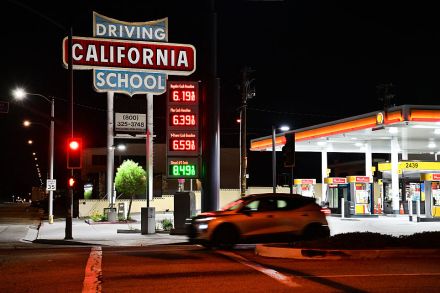
When Donald Trump's political obituary comes to be written, none of his colorful phrases over the years will seem quite as outrageous as his remark in June, when the Consumer Prices Index hit 4.2 percent: "I love the inflation." He later claimed that he meant he loved the inflation figures because they weren't as high as they could have been. But that isn't going to wash: he had scorned the very people who had voted for him, and for whom inflation is a very big deal, by dismissing inflation as something unimportant.  He won't be making the same mistake, presumably, now that oil prices have hit $100 a barrel once more, for the first time since July.

oil

Ryanair is right to fume about the chaos at Britain’s airports

From our UK edition

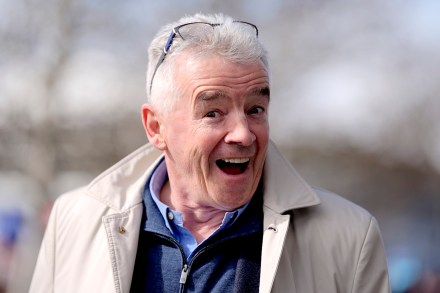
In a crowded market, the National Air Traffic Control Service (Nats) still has a good claim to be our most croaking public service. Yesterday’s collapse of the system, which has led so far to more than 2,000 flights being cancelled, is hardly the first such failure. Three years ago a similar collapse over the August Bank Holiday weekend led to 700,000 passengers being delayed or prevented from travelling altogether. Few of those delayed this week, however, seem quite as furious as Ryanair chief executive Michael O’Leary, who has renewed his feud with Nats CEO Martin Rolfe, demanding that he resign over the issue.

Are our maps colonialist?

From our UK edition

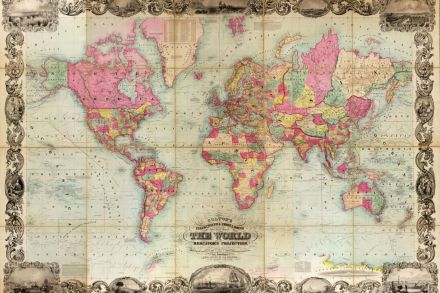
It has been clear for years that the UN has fallen under the influence of left-wing activists and rapacious developing countries who are using it as a vehicle to press to slavery and climate reparations. But the UN’s latest initiative is possibly the nuttiest of them all. The General Assembly will vote today on whether to try to eradicate world maps drawn on a Mercator projection on the grounds that they are ‘colonialist’ – and replace them with a favoured map which is much more honest in representing the size of individual countries. The campaign against ‘cartographic colonialism’ began with an online ‘correct the map’ campaign and has now been taken up by Togo, backed by the African Union countries.

UN map
UN map

Are our maps colonialist?

It has been clear for years that the UN has fallen under the influence of left-wing activists and rapacious developing countries, who are using it as a vehicle to press to slavery and climate reparations. But the UN’s latest initiative is possibly the nuttiest of them all. The General Assembly will vote today on whether to try to eradicate world maps drawn on a Mercator projection on the grounds that they are “colonialist” – and replace them with a favored map which is much more honest in representing the size of individual countries. The campaign against “cartographic colonialism” began with an online “correct the map” campaign and has now been taken up by Togo, backed by the African Union countries.

Sadiq Khan is the victim of a terrible miscarriage of justice

From our UK edition

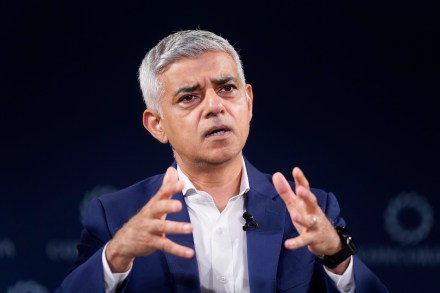
Who – at least among those of a Conservative mind -- didn’t feel a pang of pleasure at the news that Sadiq Khan has been convicted of failing to pay road tax? Won’t that serve him right, he who has been merrily handing out fines to people who fall foul of his Ultra Low Emissions Zone? Well no, actually. Whatever you think of Khan and ULEZ, it shouldn’t blind you to the outrage against justice that has just been committed against him. Khan was convicted by a magistrate’s court in Herefordshire two weeks ago and handed a £220 fine, plus £85 costs and demanded to pay the £35.84 in road tax which he failed to pay. But here is the outrage: Khan says that he doesn’t own the car.

Burnham is a big state man heading for disaster

From our UK edition

Should public utilities be in public hands? I am prepared to see both sides of that argument, especially as some privatised companies – Thames Water, for one – have hardly been great adverts for private enterprise over the years. Monopolistic private companies seem to me to be as bad as monopolistic nationalised ones. If we can’t have competition, then maybe state ownership in some cases is the lesser of the evils. But Andy Burnham doesn’t want to stop there: he is apparently going to tell the Commons today that public control of utilities is the only way to grow the economy. Really, the public sector, the fount of all economic growth?

Has Burnham gone shy on welfare reform?

From our UK edition

Will the government ever get around to reforming the welfare system? I ask because Andy Burnham seems to have bottled out. It seems that there will be no proposals in October’s Budget, and nothing before next year. The official excuse is that the government needs time to consider Alan Milburn’s review into youth worklessness and Sir Stephen Timms's report into Personal Independence Payments (PIP) before it can deliver a considered response. Both have, though, already produced pretty detailed interim reports. Milburn’s final report was to have been published before the Budget but has now been delayed until after it.

Net zero isn’t bringing down our energy bills

From our UK edition

We know all about climate change deniers; perhaps it is time we turned our attention to energy bill deniers. This morning Ofgem announced that its cap on energy prices will rise by 4 per cent in October, taking the average household dual fuel bill to £1,723 a year. This is £60 higher than it is at present, wiping out the £44 saved by the temporary removal of VAT from fuel bills announced by Andy Burnham last month. Far from Labour’s net zero policies saving us £300 a year, as Ed Miliband insisted they would during the general election campaign two years ago, average bills are currently up £150 on the level they were when Labour took office. And yet still government ministers continue to insist that their net zero policies are helping to bring down prices.

Lucy Powell would be mad to undo the Tories’ school reforms

From our UK edition

How lovely to hear Education Secretary Lucy Powell sending her ‘massive congratulations’ to children receiving their GCSE results. ‘More of you are hitting top grades in maths, and technical pass rates are climbing in every region,’ she said. But does she really believe in exam results? Powell did, after all, recently promise to end the ‘GCSE resits treadmill’, and has in the past described spelling tests as ‘draconian’. Powell laid out her philosophy in an interview with the Times Education Supplement in 2019 when she was a member of the Commons education committee. She did not seem at that point to be terribly interested in the idea of academic rigour.

Why is Rayner helping travellers build more sites?

From our UK edition

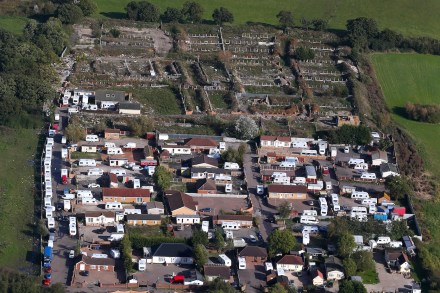
Here it is, finally: Labour’s ‘growth’ strategy. And what does it consist of? Reform of planning laws to make it easier for travellers to set up encampments in the countryside, in places where any other form of development would be banned. Under the previous rules, councils could consider ‘potential environmental damage caused by unauthorised encampments’ when looking at applications for traveller sites. The rules also said that sites should only be approved if they ‘provide a settled base that limits the need for long-distance travelling’. Both of these regulations have now been scrapped. This will make it considerably harder for local residents to object to applications for encampments.

Why won’t Reform’s welfare cuts apply to the triple lock?

From our UK edition

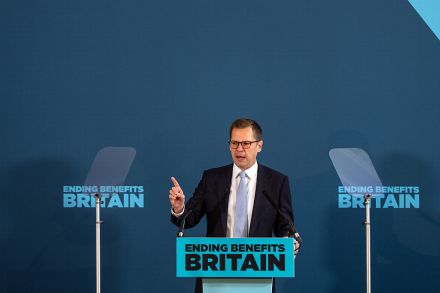
Well done to Reform UK for proposing to make chunky, £50 billion cuts to the welfare budget, more than twice the £23 billion cuts the Conservative have pledged to make. The left will scream about kicking away the crutches of the poor and sick, but the benefits system has become a voracious beast that is rapidly consuming the country. The bill has risen by 27 per cent in real terms since 2014/15. Try to reform welfare without touching the state pension and you are tying one arm behind your back We have opportunists claiming Personal Independence Payments for anxiety and food intolerances, and people hoodwinking officials who carry out online Work Capability Assessments into allowing them a public-funded life of leisure.

Clacton has strengthened Nigel Farage

There are two words you will hear endlessly today: 'hollow victory'. Nigel Farage is back as MP for Clacton, but by doing battle with a bin, he has achieved nothing but embarrassed himself. Look, his refusal to attend his own count just proves it. That is what we will be told by many political commentators, but is it true? I would say the people who have been most embarrassed by this bizarre by-election were those on the liberal left who had this fantasy that Count Binface would win and put an end to Farage’s political career. By thinking that they have exposed the narrowness of their world. In their minds, most of the country, deep inside, possesses the values of Islington; it is just that all those dim, old people who live by the seaside get easily led along by populists.

Is this the best Labour can do?

From our UK edition

Will Andy Burnham call an autumn general election and take advantage of his prime ministerial honeymoon, or will he go the way of his erstwhile boss, Gordon Brown, who flunked a decision on an election in the autumn of 2007 and went on to defeat in 2010? The latest polls have generated a swirl of speculation because they suggest that Labour has taken the lead for the first time in nearly 18 months. According to the Politico Poll of Polls, Labour is now commanding an average of 25 per cent of the vote, one point ahead of Reform on 24 per cent.