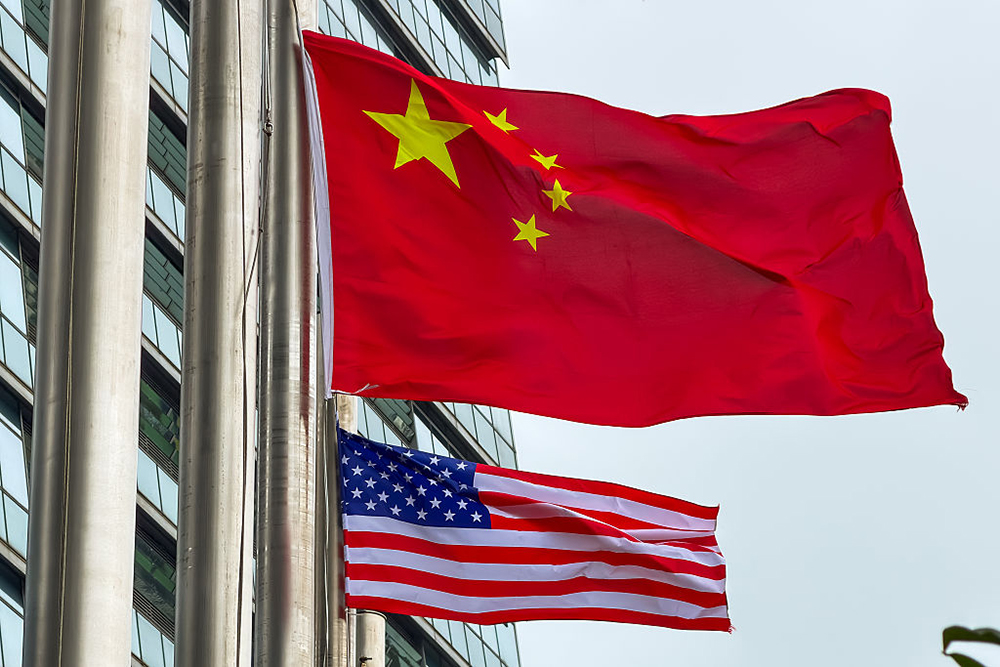
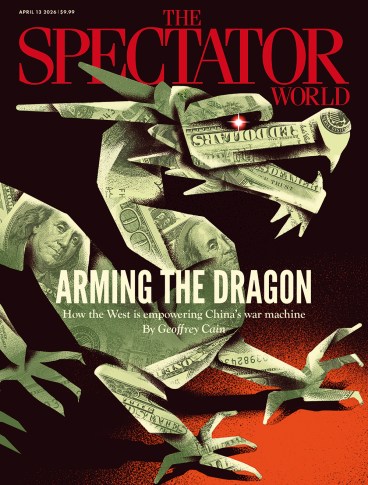
Donald Trump wants to bring back mining and mineral processing to the US – and he needs to do this if he’s to continue fighting wars. “You cannot claim to have a military strategy without a clear idea of your supply chains,” says economic journalist Wolfgang Münchau. “The specific advantage that both Russia and China have over the West is not simply their wealth of metals and minerals – it’s the fact that they can also process them. China’s expertise in processing its raw material is unparalleled.”
Trump has exhorted America’s traditional allies to take responsibility for their own mineral supplies as well as their own defense, and to ditch economically ruinous energy policies. But will it work?
Two Canadian scientists, Marta Rivera and Eduardo Zamanillo, have written a book called Mining is Dead. Long Live Geopolitical Mining, whichprovides an analysis of the capabilities of various countries. It makes for bleak reading if you’re American or European.
In the United States, the average time from mineral discovery to production is 29 years
The organized, practical, dogged Chinese have built integrated supply chains from mine to finished product. China wins on every front. It mines at home and abroad and it has become the world’s washer of dirty dishes, dominating global processing of key minerals. China is largely powered by coal and gas so electricity prices are low and it has been able to invest for decades in people and mining technology. These all make for a winning combination. Now that it controls mining, processing and manufacturing across a vast array of commodities and products, China holds all the cards. Like it or not, it can choose to sell vital, crucial metals to the West – or it can choose not to.
Meanwhile, the feckless West has fallen behind. And, oh boy, how it has fallen behind. In the US, the average time from mineral discovery to production is 29 years. This represents a dramatic increase from the average of just six years for mines entering production between 1990 and 1999.
Rivera and Zamanillo realize that there is an embedded inertia at a societal level. They write that there is “a profound institutional insecurity, reflecting western society’s increasingly ambivalent or even distrustful perception regarding mining’s strategic role in future development.” When it comes to mining, the “industry has lost control of its narrative, appearing in public perception as outdated, environmentally destructive, or politically exploitative.” Worse, “resistance is neither anecdotal nor marginal – it is systemic and rising.”
I blame the erosion of mining’s status on misguided cultural leadership from naive artists that condemn miners and metallurgists for the supposed destruction of a fictitious pastoral idyll. We have been fed a diet of ecofantasy by dreamers, from William Blake’s “dark satanic mills,” to Richard Wagner’s Alberich forsaking love for gold, Tolkien’s dwarves “delving too greedily, too deep” so they woke the Balrog, and to James Cameron’s Avatar and the destruction of a planet in the quest for Unobtanium.
Miners have been blamed for the destruction of our bucolic paradise, without anyone pausing to celebrate the industry for its contribution to the vast improvement in human lives. Where is the rejoicing around the reduction of starvation, child mortality, deadly disease, the relief from grinding poverty and horrible death from natural disasters? Artists themselves are usually delighted to use the tools of progress afforded by the advances of technology.

The artistic presentation of our world as an Eden despoiled by miners creates myriad problems, not least in recruitment. A report in Canada’s Financial Post sums it up nicely. The mining industry is, it says, “facing a shortage of skilled workers that could delay projects and further expansion. About 20 percent of Canada’s mining workforce is older than 55, so retirements will continue to drain experience from the sector. At the same time, mining is struggling to attract younger workers.”
Enrollment in mining engineering at US universities is at historic lows, and in the UK the mining universities have either closed entirely or now offer Earth and Environmental Science degrees expunged of words such as mining or petroleum.
Any Trumpian attempt to return to mining will face a barrage of legal challenges. In a country like the US where individual rights are enshrined in the Constitution and the Bill of Rights, and where there is a grand tradition of fighting tooth and nail in the courts, every ecowarrior and activist has a voice.
Not only that, but the legal pathway to opening mines is daunting. S&P Global recently published a comprehensive research report called “Copper in the Age of AI: Challenges of Electrification.” Figure 78 from the report is a sketch of the National Environmental Policy Act permit processing map, and it highlights a fearsomely complicated pathway from Plan of Operations through to First Production, with a vast number of opportunities for amendments, public consultation and challenges to the Environmental Impact Statement.
And then, in small print at the bottom of the figure are the cautionary words, “Note: this is a simplified illustration. In practice, multiple other federal- and state-level permits are required before a mine is allowed to be constructed.” No wonder it takes 29 years to permit a mine in the US.
Obviously, the Trump administration is attempting to cut this Gordian knot. New US policies are “activating new deposits, expanding domestic processing capabilities and incorporating advanced recycling.” There is a new $12 billion critical-minerals stockpile initiative called “Project Vault.” The US government is throwing real money at the problem. But again, will it work?
Systemic devaluation of mining has meant that “discretionary” exploration expenditures are the first to disappear in a time of capital scarcity. All of the companies in the entire global mining industry, which provide all of the physical infrastructure around you (bar plastics), are worth less than the value of a single company such as Apple or NVIDIA.
The mining sector has been starved of capital for decades and exploration budgets have suffered. Geologists need to go out and find the deposits. And unfortunately, there is no way of knowing how much time or exploration investment is needed. There is no quick fix, no matter how much money is thrown at the problem.
Now add in the complexity of individual sectors within the minerals industry. Take rare earth elements, for example. These REEs or lanthanides are a bunch of 22 elements that occur naturally together and have very similar chemical and physical properties. These elements have weird names that few can remember but nonetheless underpin western industrial strength and national security.
I’m talking about ingredients for permanent magnets (Nd-Pr-Dy-Tb) for electric vehicles, wind turbines, robotics and defense systems. And essential ingredients for high-performance electronics (Nd-Sm-Y-Eu-Tb-Gd) such as smartphones, sensors and radar systems. And key industrial workhorses (Ce-La-Y-Er-Nd-Ho) used in advanced alloys, catalysts, lasers and polishing powders. And the big one: military supply chains (Nd-Dy-Tb-Sm-Y-Gd) from precision-guided weapons to jet engines. The West needs them, but China dominates their production. For hard-rock rare earth deposits (the dominant type) there are three key mineral processing challenges. Rare earth elements are notoriously difficult, not because the ore cannot be mined but because turning ore into concentrate, then into usable oxide, is exceptionally complex.
The starting point is ore. Once it is mined it is crushed to liberate the minerals in the rock, and those minerals are then separated to create a volumetrically small amount of concentrate of the valuable minerals and a much larger amount of waste.
Producing a clean concentrate from REE ore is extremely difficult. Rare earth minerals tend to be very fine-grained and are often associated with other minerals that break into ultrafine particles during grinding. These particles are called slimes and they concentrate preferentially, reducing the final grade of the concentrate. Slimes also increase reagent consumption and reduce selectivity and recovery of the target metals, which are effects that increase cost and reduce value. The processing circuits need careful, multistage desliming and complex processes and reagent regimes.
Worse still, many REE minerals carry uranium and thorium, which become stuck in the concentrate. This makes many REE concentrates radioactive and therefore a safety hazard as well as being almost impossible to transport internationally.
The mining sector has been starved of capital for decades and exploration budgets have suffered
The next major problem is that “cracking” the concentrate is dirty, dangerous and politically toxic. REE concentrates need to be chemically “cracked” to dissolve the rare earths out of their mineral lattice. This typically requires strong acids or alkalis, high temperatures and aggressive digestion conditions. Cracking is hazardous, energy-intensive, produces large volumes of corrosive waste and residue and is environmentally unpopular in western jurisdictions. Even China is trying to clean up its act. Over the past 15 years it has been making efforts to shift the cracking stage to states such as Myanmar (in particular), Laos and Vietnam in Asia, and Burundi and Madagascar in Africa. Can you imagine the furore if any western country tried to build cracking capacity, with the associated risk of river pollution, radioactive waste, land degradation and regional health impacts? Or the cost of mitigating those risks? It would be a nonstarter.
The third and greatest challenge is how to isolate and purify the cracked concentrate into separate, clean metal oxides. REEs are chemically extremely similar, with almost identical chemical and physical properties. Only tiny variance in atomic weight or ionic radius is a differentiating factor between the 22 rare earth elements. In a processing circuit, the lanthanides behave almost identically. In other words, it is almost impossible to tell the difference between the elements – making the extraction process complex and time-consuming.
Producing NdPr oxide or Dy/Tb products requires enormous solvent extraction circuits with hundreds to thousands of separation stages, delicate chemical control and huge working capital in reagents and inventory. China has developed these techniques over decades and it really is black-box magic. The processes are technically difficult, operationally fragile, environmentally sensitive and dominated by incumbents with decades of know-how. The IP is overwhelmingly Chinese.
The solvent extraction plants look like giant candy factories with each extraction phase a different color. It is vital that an individual extraction phase is complete and thorough as any carry-over of one lanthanide into the next phase can disrupt the entire process. To make matters even more complicated, these solvent extraction plants cannot cope with different ores, so it is almost impossible to have multiple mines supply a single, central processing facility.
I salute Trump’s intentions and there are genuinely good signs. The Department of Defense has even taken an equity stake in MP Materials (a US rare earths company), and continues to make substantial investments in strategic projects, mineral recovery programs and now stockpiles. But the odds are stacked against success.






Comments