Francis Pike

Francis Pike is a historian and author of Hirohito’s War, The Pacific War 1941-1945 and Empires at War: A Short History of Modern Asia Since World War II.

Are the haters wrong about Trump’s foreign policy?

35 min listen

After Trump visited Xi Jinping last week, Putin is now expected to meet the Chinese leader in Beijing. Freddy Gray speaks to Francis Pike about these meetings, and Francis makes the case that despite the Iran war, America – thanks to Trump – remains the global super power. Also on the podcast, they discuss Modi's attempts to curb collateral from the oil shortages and why he's a leader like no other.

Are the haters wrong about Trump's foreign policy?

Trump needs a deal, but Xi needs it more

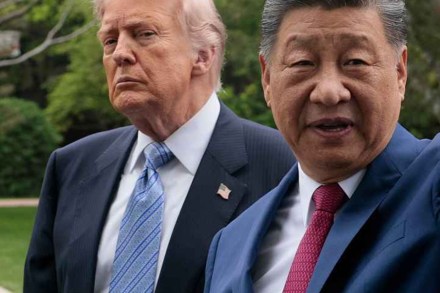
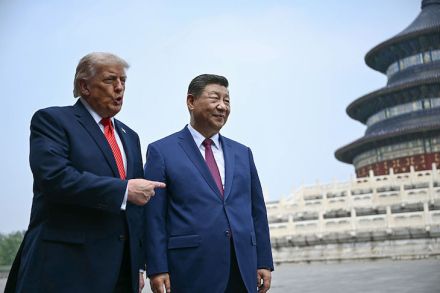
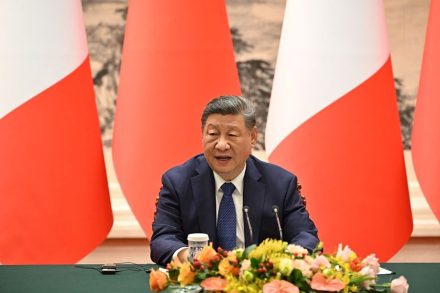
Sir Keir Starmer is not the only world leader fighting for his political future. Although the substance of the Donald Trump-Xi Jinping talks are about tariffs, trade, supply issues (rare earth metals etc), fentanyl, Taiwan, and most importantly Iran, the main purpose of the meeting for both leaders will be their future political survival. This is the essential subtext that you will probably not hear about from the BBC and most legacy media. Xi needs a successful deal with Trump to show that he is still useful as Secretary General of the CCP Trump needs to bag wins soon to bring to prevent a Democrat sweep of Congress in November’s midterm elections. Lose both houses of Congress and the US president can be sure that impeachment will follow.

The truth about Pakistan’s role in the US-Iran conflict

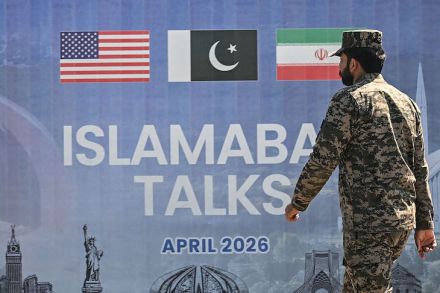
Pakistan was always an unlikely mediator for peace negotiations between the United States, Iran and sotto voce, China. It would not be an exaggeration to describe Pakistan as a failed state. Having outperformed India economically in the aftermath of partition, Pakistan went into steep decline after the arrival on the political scene of a corrupt chancer, socialist and demagogue, Zulfikar Ali Bhutto. Today, bankrupt Pakistan is kept afloat by loans from the IMF, China, and the Gulf States. Trump can be in no doubt that, with regards to political power in Pakistan, it is Munir who wears the trousers Bhutto’s political dynasty continued under the aegis of his daughter Benazir and later his grandson.

The dying art of the kimono

From our UK edition

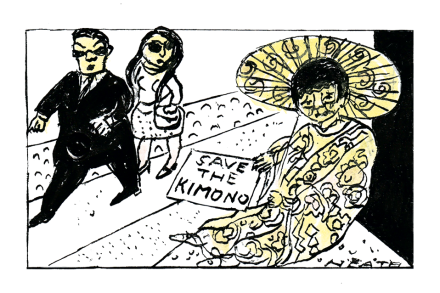
‘The road was frozen… Komako hitched up the skirt of her kimono and tucked it into her obi [broad sash]. The moon shone like a blade frozen in blue ice.’ When I think of the kimono (literally: ‘a thing to wear’) my thoughts turn to Yukiguni, the 1948 book by Nobel Prize winner Yasunari Kawabata. The novel is set in a city close to Minakami Onsen, a spa town where I used to rent a mountain cabin. For me, Kawabata’s images of kimono-clad women scurrying about in the snow were very real. However, my best memories of kimonos were in the epicentre of the craft, Kyoto, where I would dine with geisha at traditional wooden machiya houses in Gion, Kyoto’s pleasure quarter. By the 1980s kimonos were a dying fashion.

Damian Thompson, Francis Pike, Ysenda Maxtone-Graham & Lloyd Evans

From our UK edition

25 min listen

On this week’s Spectator Out Loud: Damian Thompson says his addiction to the piano has only got worse with age; Francis Pike ponders if Kim Jong-Un is lining up a female successor; Ysenda Maxtone-Graham explains the art to left-wing boasting; and finally, Lloyd Evans contemplates becoming a magistrate. Produced and presented by Patrick Gibbons.

Damian Thompson, Francis Pike, Ysenda Maxtone-Graham & Lloyd Evans

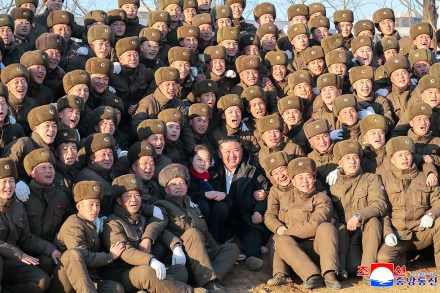
Kim Jong-un’s sister or daughter? Only one can survive…

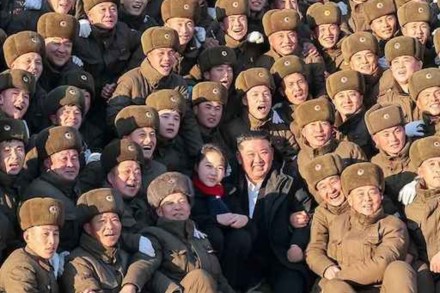
As a birthday treat, a good father might take his ten-year-old daughter to the ballet or a Disney movie. Three years ago, North Korea’s ruling dictator Kim Jong-un (a.k.a. ‘Brilliant Comrade’) took his ten-year-old daughter Kim Ju-ae to the launch of an intercontinental ballistic missile. It was her first public outing. Subsequent kiddie treats have included visits to the mausoleum that houses the bodies of her grandfather, Kim Jong-il (‘the Dear Leader’), and great grandfather, Kim Il-sung (‘the Great Leader’). She also got to stand at military parades, inspect nuclear facilities and make an official visit to Beijing. In the North Korean media, Kim Ju-ae is referred to as the supreme leader’s ‘beloved’ or ‘precious’ daughter.

Has Xi Jinping fought off another coup?

According to unconfirmed reports, General Zhang Youxia, China’s vice-chairman of the Central Military Commission (CMC), sent a company of troops (over a hundred or more) to the government’s Yingxi Hotel in western Beijing on 18 January. Their mission was to arrest Xi Jinping. A few hours before, the Chinese president – alerted by an informant – set in motion countermeasures. Troops under the command of Cao Qi, head of Xi’s Central Guards Bureau, ambushed Zhang’s soldiers. In the ensuing gunfight at Yangxi Hotel, nine guards were reportedly killed along with dozens of Zhang Youxia’s soldiers. Throughout China, military movements have been banned and troops and officers have been confined to barracks.

Black Christmas and the battle for Hong Kong

From our UK edition

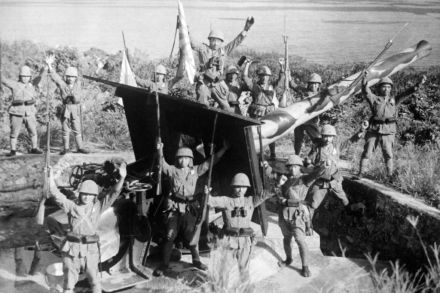
The Peak is where the smart set in Hong Kong has always lived. It’s an area of relative peace and tranquillity that sits above the hubbub of the city. Before the Pacific war, Chinese people were banned from living there. It was from her terrace here on 8 December 1941 (the day after Japan’s carrier fleet attacked Pearl Harbor) that Emily ‘Mickey’ Hahn – an implausibly beautiful New York bohemian, opium addict, mining engineer and journalist – watched as Japanese bombers pelted Hong Kong 85 years ago. On the adjoining property she heard an Englishman harrumph, ‘That’s it. The Japanese have committed suicide.’ He was right, but not quite in the timeframe that he imagined.

Will Sanae Takaichi fly or falter?

From our UK edition

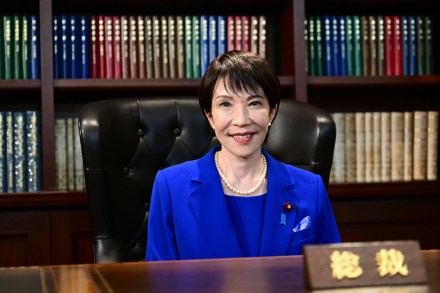
A former heavy metal drummer and biker is not someone the world would expect to become a prime minister of Japan. Particularly if that someone is a woman. But that is what is likely to happen tomorrow. Last month, 64-year-old Sanae Takaichi became the first female head of the Liberal Democrat Party – the party that has ruled Japan for all but 4 of the last 70 years – and soon she will be Japan’s first female prime minister too. On Monday, Takaichi signed off on a coalition pact with the right-leaning libertarian Japan Innovation Party (Ishin). They have replaced the Komeito, the socially conservative party that is affiliated with Soka Gakkai, a Buddhist organisation founded in 1930 which is dedicated to the teachings of the 13th century priest Nichiren.

Royal treatment, neurodiverse history & is everyone on Ozempic?

From our UK edition

45 min listen

First: a look ahead to President Trump’s state visit next week Transatlantic tensions are growing as the row over Peter Mandelson’s role provides an ominous overture to Donald Trump’s state visit next week. Political editor Tim Shipman has the inside scoop on how No. 10 is preparing. Keir Starmer’s aides are braced for turbulence. ‘The one thing about Trump which is entirely predictable is his unpredictability,’ one ventures. And government figures fear he may go off message on broadcast – he is scheduled to be interviewed by GB News. It is rare for leaders to receive a second visit, especially those in their second term. But, as Tim says, ‘Britishness is fashionable in Washington’ and no-one likes ‘royal treatment’ more than Trump.

Fragile China: who’s really in charge?

From our UK edition

Xi Jinping effectively vanished in July and the first half of August. Some China watchers speculated that his unexplained absence was a sign that he was losing his grip on power. But he has since reappeared and been very visible again. At the end of last month, he visited Tibet, then indulged in a high-profile, back-slapping meeting with Vladimir Putin and the Indian Prime Minister Narendra Modi in Tianjin. He capped off his busy fortnight with the 3 September military parade in Beijing and a second meeting with his star guest Putin, this time accompanied by Kim Jong-un. So, a great triumph for the neo-Maoist leader and the new Axis of Evil? Not so fast. The lessons to draw from these three events are a sight more nuanced. Here are five take-aways from Xi’s last few weeks. 1.

Is Xi Jinping still in charge of China?

From our UK edition

China will celebrate the 80th anniversary of the end of the 'war of resistance against Japanese aggression’ (i.e. what we call VJ day) tomorrow. Given that Japan’s invasion of China started some four years earlier than Japan’s attack on Pearl Harbour in 1941, and cost an estimated 20 to 30 million Chinese lives, this week's military parade is a major milestone. As the People’s Liberation Army Daily newspaper has explained: One of the highlights is a grand military parade at Beijing's Tian'anmen Square themed on commemorating the great victory and promoting the enduring spirit of the War of Resistance. Not surprisingly, China is pushing the boat out in terms of its invitation list. It includes 16 presidents and ten other world leaders.

How Britain came to dominate Formula 1

From our UK edition

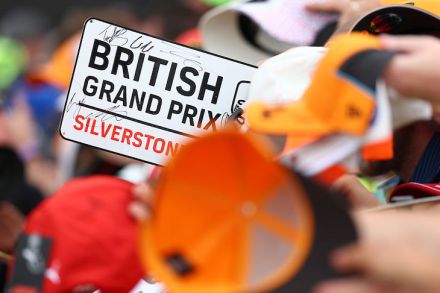
This weekend, Formula One returns to where it all started 75 years ago: Silverstone. But although the first F1 Grand Prix took place in the UK, the sport was initially dominated by Italian cars and Latin drivers, rather than Brits. Dottore Giuseppe Farina, a lawyer turned racing driver, won that first F1 race in front of King George VI. Driving an Alfa Romeo 158, Farina went on the win the championship. For the next seven years, Alfa Romeo, Ferrari and Maserati swept all before them. Did British dominance of F1 come only from European teams’ exit from the sport? It was in this era that the legend of Enzo Ferrari and his team – the only one to participate in every F1 championship since inception – was established.

Peter Frankopan, Tim Shipman, Francis Pike, Hermione Eyre and George Young

From our UK edition

42 min listen

On this week’s Spectator Out Loud: Peter Frankopan argues that Israel’s attack on Iran has been planned for years (2:00); just how bad are things for Kemi Badenoch, asks Tim Shipman (13:34); Francis Pike says there are plenty of reasons to believe in ghosts (21:49); Hermione Eyre, wife of Alex Burghart MP, reviews Sarah Vine’s book How Not To Be a Political Wife: A Memoir, which deals with Vine’s marriage to ex-husband Michael Gove (28:46); and, George Young reports on the French sculptors building the new Statue of Liberty (34:45). Produced and presented by Patrick Gibbons.

In defence of exorcism

From our UK edition

British politics and ghosts are subjects that rarely meet. Sometimes an MP or parliamentary aide might report a sighting of one of various spirits that inhabit the Palace of Westminster. It is said, for instance, that the ghost of the assassin John Bellingham haunts the Commons lobby at the spot where he gunned down Spencer Perceval. And last year the diary secretary to speaker Sir Lindsay Hoyle excited the tabloids with her claim that once, in one of parliament’s side rooms, she felt a phantom dog nuzzling against her leg. When I bought a pied-à-terre in Kensington, I got the dowser to give it a psycho-spiritual once-over In general, though, politicians aren’t preoccupied with the paranormal. One exception is David Bull, the former TV presenter of Most Haunted Live!

Porn Britannia, Xi’s absence & no more lonely hearts?

From our UK edition

47 min listen

OnlyFans is giving the Treasury what it wants – but should we be concerned? ‘OnlyFans,’ writes Louise Perry, ‘is the most profitable content subscription service in the world.’ Yet ‘the vast majority of its content creators make very little from it’. So why are around 4 per cent of young British women selling their wares on the site? ‘Imitating Bonnie Blue and Lily Phillips – currently locked in a competition to have sex with the most men in a day – isn’t pleasant.’ OnlyFans gives women ‘the sexual attention and money of hundreds and even thousands of men’. The result is ‘a cascade of depravity’ that Perry wouldn’t wish on her worst enemy.

Is Xi Jinping’s time up?

From our UK edition

Stories about Xi Jinping’s father, Xi Zhongxun, are blowing up on social media. He died in 2002, so why the interest in him now? The weird fact is that Xi Zhongxun is being talked about in the West because he is not being talked about in China. Omission is the perverse way that one learns about what is really going on in the opaque world of Chinese Communist party (CCP) politics. China-watchers live on scraps. Xi Zhongxun was a big cheese in his own right. Born in the north-west’s Shaanxi province, he was an early member of the youth league of the CCP. After meeting Mao Zedong at the conclusion of the Long March, which ended up in his home province, he quickly rose through the party ranks.

Should starvation ever be used as a weapon of war?

From our UK edition

Sorry to disappoint antisemites, but Operation Starvation is not an Israeli plan to murder millions of Palestinians; it was a US plan to starve Japan into submission at the end of the Pacific War. However, comparisons with Israel Defence Force’s (IDF) current strategy for defeating Hamas, and the changing legal landscape of warfare since World War II, are enlightening. Japan’s death cult was in full swing By April 1945, Japan had lost the war in the Pacific. At the naval Battle of the Philippine Sea, the Japanese fleet lost so many aircraft that the engagement was named ‘the Great Marianas Turkey Shoot. Months later, the Japanese Navy suffered even greater defeat at the Battle of Leyte Gulf. Thereafter the Japanese navy was nonfunctional – the war was lost.

For most of the world, VE Day did not mean peace

From our UK edition

While drinking, dancing and laughter were the order of the day in Britain on the VE Day, things were not so hunky dory in Germany. At the liberated Belsen concentration camp situated 65 miles to the south of Hamburg, nurse Joan Rudman cut a depressed and lonely figure. She recalled: ‘One could hardly think of peace when there’s so much human misery here.’ Meanwhile for many Germans, there were mixed feelings. Relief that the war was ended combined with bitterness and a sense of humiliation. These were feelings that led to most Germans blotting out their memories of this period. In Germany is known as Tag der Befreiung (day of liberation), in other words liberation from Nazi rule.