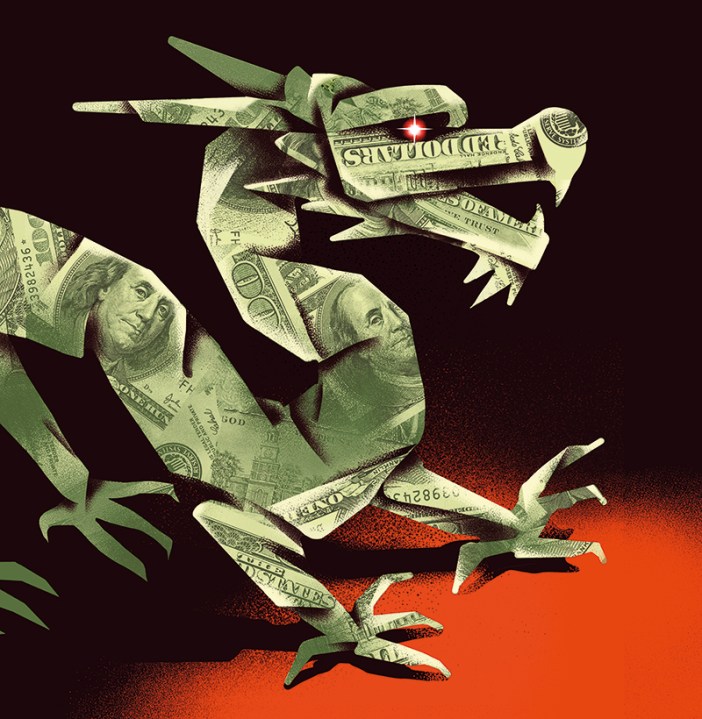
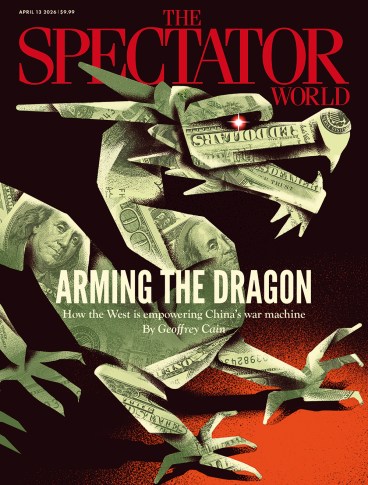
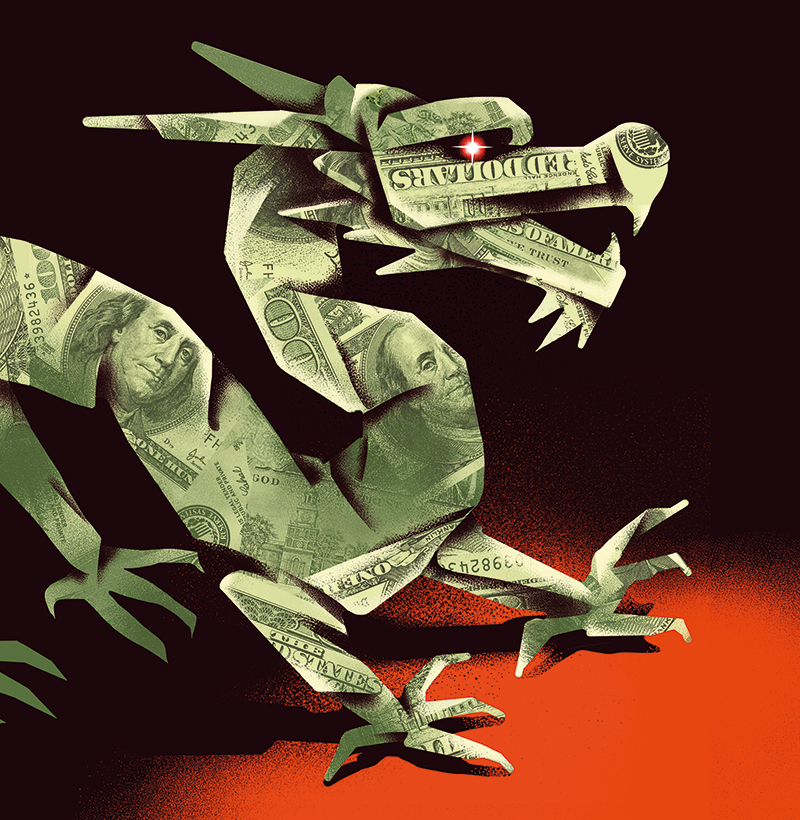
The West’s technology brains and universities are arming China. A few of them are potentially breaking the law to do it, but most of them don’t need to. The front door has been open for years, and nobody in London or Washington has thought to close it.
According to a federal indictment unsealed in Manhattan last month, on December 18, 2025, in a warehouse somewhere in Southeast Asia, a team of men used a hair dryer to peel serial-number labels off genuine server boxes and press them onto fakes. The real servers, loaded with some of America’s most restricted artificial intelligence hardware, are alleged to have long since been shipped to China. What remained, according to the indictment, were dummies – non-working replicas repackaged to look untouched. Surveillance cameras recorded the whole operation.
The next morning, a United States Commerce Department inspector arrived to verify the shipment. One of the men from the warehouse introduced himself as “Michael,” a legal assistant. Prosecutors say his real name is Ting-Wei “Willy” Sun, a fixer in a $2.5 billion smuggling operation, and that everything he told the inspector was false.
According to the indictment, Sun helped divert shipment after shipment of advanced AI servers from SuperMicro, one of Silicon Valley’s most important hardware companies, to buyers in China. The servers were the kind the US government restricts because of their potential use in weapons development and mass surveillance.
Selling chips to China is one thing, but giving Chinese engineers the keys to the Pentagon is another
The alleged architect of the scheme was not a Chinese intelligence operative. He was SuperMicro’s co-founder and senior vice president, Yih-Shyan “Wally” Liaw, a United States citizen. Both Liaw and Sun have pleaded not guilty to the charges against them. SuperMicro has not been named as a defendant and has said it is cooperating fully with the investigation. It has also confirmed that it has severed ties with Sun, who was a contractor, and has placed Liaw on leave. The company was itself embroiled in similar allegations 19 years ago. SuperMicro pleaded guilty in 2006 to illegally exporting computer equipment to Iran through a distributor in Dubai, using the same structure at the center of this indictment: a front company in a neighboring country, a disguised end buyer, restricted technology shipped onward. Combined federal penalties came to roughly $455,000.
Liaw left SuperMicro in 2018 amid an accounting scandal that led to the company’s delisting from Nasdaq. Then the company brought him back three years later and eventually restored him to the board.
What makes the Liaw case unusual is not what is alleged, but that evidence held by prosecutors indicates the participants texted each other about it. For the past two decades, western technology brains and companies have been feeding China’s war machine – sometimes potentially in violation of the law, but more often in careful compliance with its letter. The indictment alleges the crudest version. What the rest of the industry does legally may be more damaging, because nobody is trying to stop it.
Consider NVIDIA, the California chipmaker whose advanced processors have become the essential building blocks of artificial intelligence, and whose technology sat inside the servers Liaw and Sun allegedly diverted. Selling these chips to China is restricted for good reason. They are the hardware that is allegedly used to power the surveillance systems that have helped Beijing intern more than a million Uighurs.
Yet since Washington first restricted the sale of advanced AI chips to China in 2022, NVIDIA has responded not by pulling back, but by playing the line. The company designed three China-specific processors, each trimmed just enough to slip beneath the latest restriction. Analysts estimated one model alone was worth $12 billion a year in Chinese revenue.
When even the most restricted of these was banned in April 2025, NVIDIA chief executive Jensen Huang personally lobbied the White House. The ban was reversed after three months. Even when the rules hold, an estimated 140,000 controlled processors reached China through smuggling networks in 2024 alone, according to the think tank the Center for New American Security. Some chips are trafficked through middlemen operating openly in Shenzhen and Hong Kong. “Unlawful diversion of controlled US computers to China is a losing proposition across the board,” said a NVIDIA spokesman, adding that the company “does not provide any service or support for such systems, and the enforcement mechanisms are rigorous and effective.”
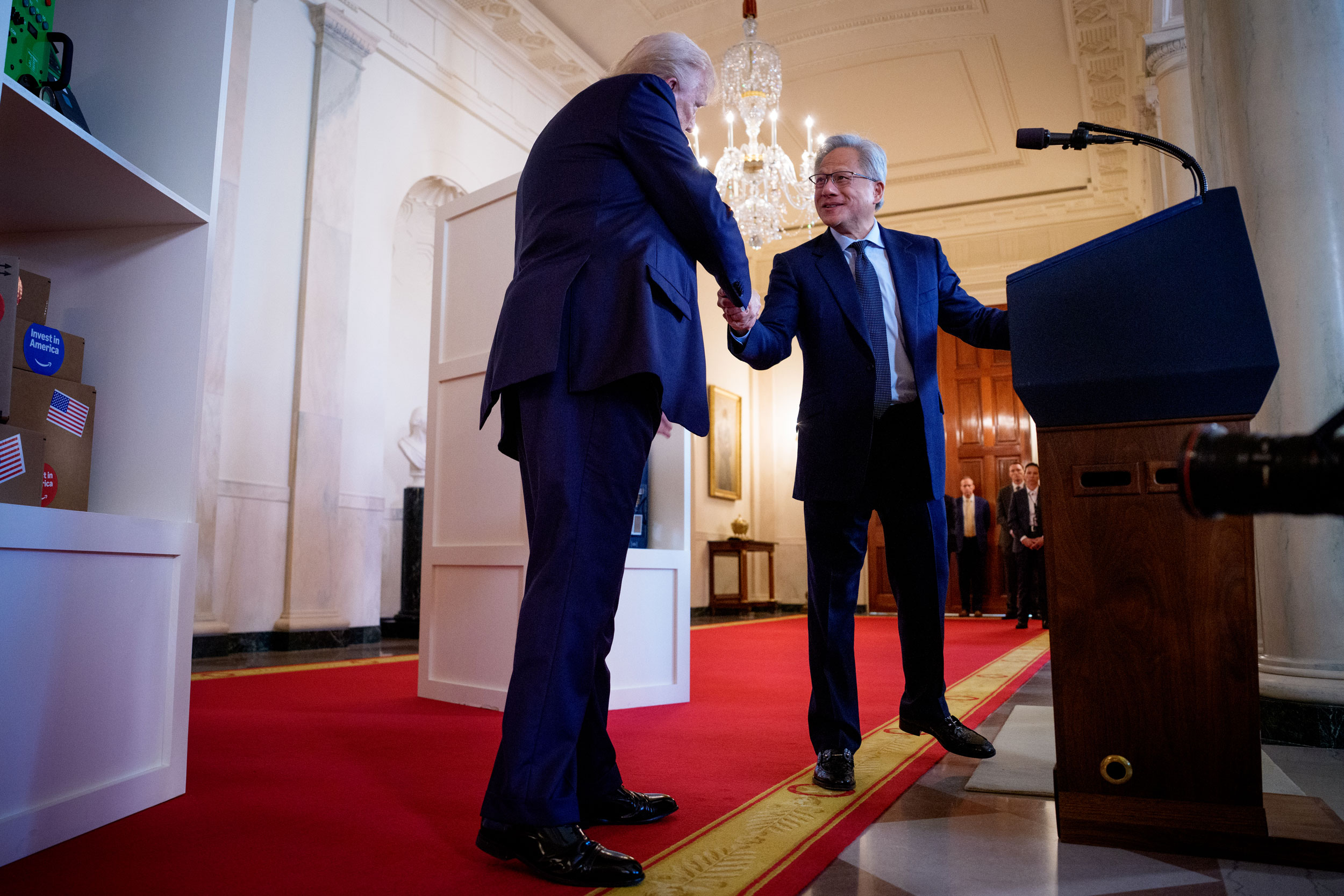
Selling chips to China is one thing, but giving Chinese engineers the keys to the Pentagon is another.
Microsoft spent a decade using China-based engineers to maintain sensitive cloud systems at the Pentagon, the Justice Department and the Treasury, supervised by American hires they called “digital escorts” who often lacked the technical skills to understand what their charges were doing.
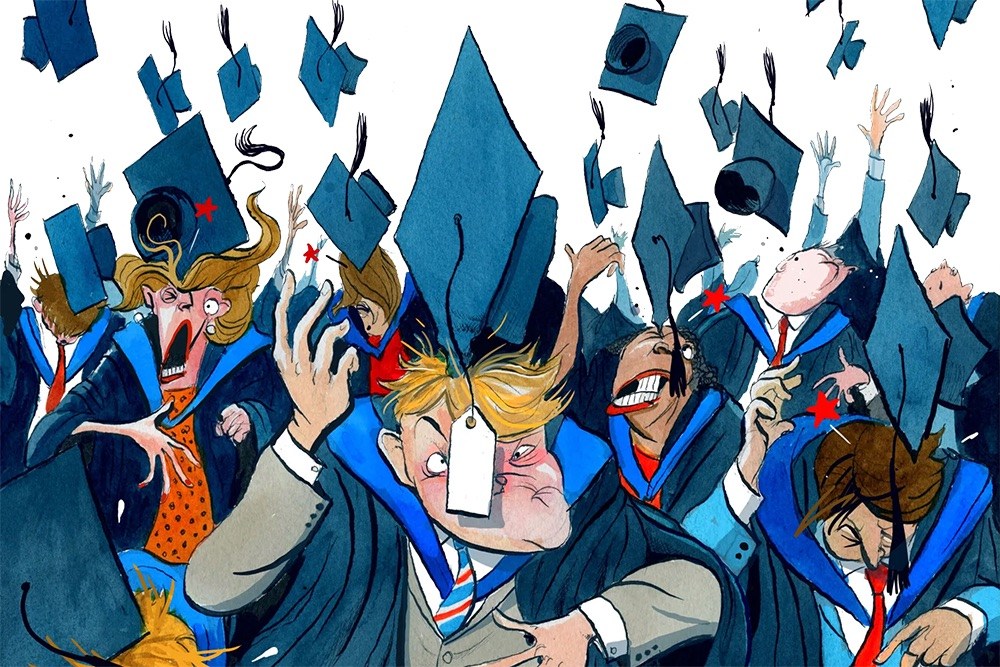
The arrangement ended only after journalists at ProPublica exposed it last summer. Defense Secretary Pete Hegseth wrote on X that foreign engineers should “NEVER be allowed to maintain or access DoD systems,” and Congress has since passed legislation outlawing the practice.
Banning China-based engineers from Pentagon servers is a start, but the deeper problem is what western-trained scientists have already taken home in their heads. Microsoft’s celebrated Beijing research lab is widely regarded as the elite academy of China’s AI industry. It’s the place where the country’s best developers go to train before fanning out across its tech sector.
The lab, called Microsoft Research Asia, has operated for more than 25 years with what the company calls appropriate “guardrails.” But the guardrails did not follow anyone out the door.
Li Shipeng, one of the lab’s founding researchers, went on to iFlyTek, a voice-recognition company sanctioned by Washington for supplying surveillance technology used in the mass internment of more than a million Uighurs. Today, he is designing an AI system for managing thousands of drones simultaneously over Chinese cities – a capability with obvious military applications.
Ask anyone in Silicon Valley why they keep feeding this pipeline and you get the same answer: if American companies don’t sell to China, they lose the money they need to stay ahead. China will find a way around the barriers regardless.
Exhibit A is DeepSeek, a Chinese startup that shook the industry in January 2025 when it released an AI model rivaling the best American systems, built largely with older chips acquired before the tightest export controls took effect. But even DeepSeek undermines the case it is meant to support. US officials have alleged that its latest model was trained on thousands of smuggled next-generation NVIDIA chips, obtained through the same kind of front-company diversions at the heart of the Manhattan indictment.
All of this might seem like an American problem. But Britain has been making the same mistakes, often with fewer excuses.
In January, Keir Starmer became the first British premier in eight years to visit Beijing, arriving with 60 business and cultural leaders and returning with nearly $3 billion in export deals. Among his headline achievements: China agreed to lift sanctions on six sitting British parliamentarians who had been banned for criticizing human rights abuses. The gesture cost Beijing nothing, and the MPs never wanted to go to China anyway.
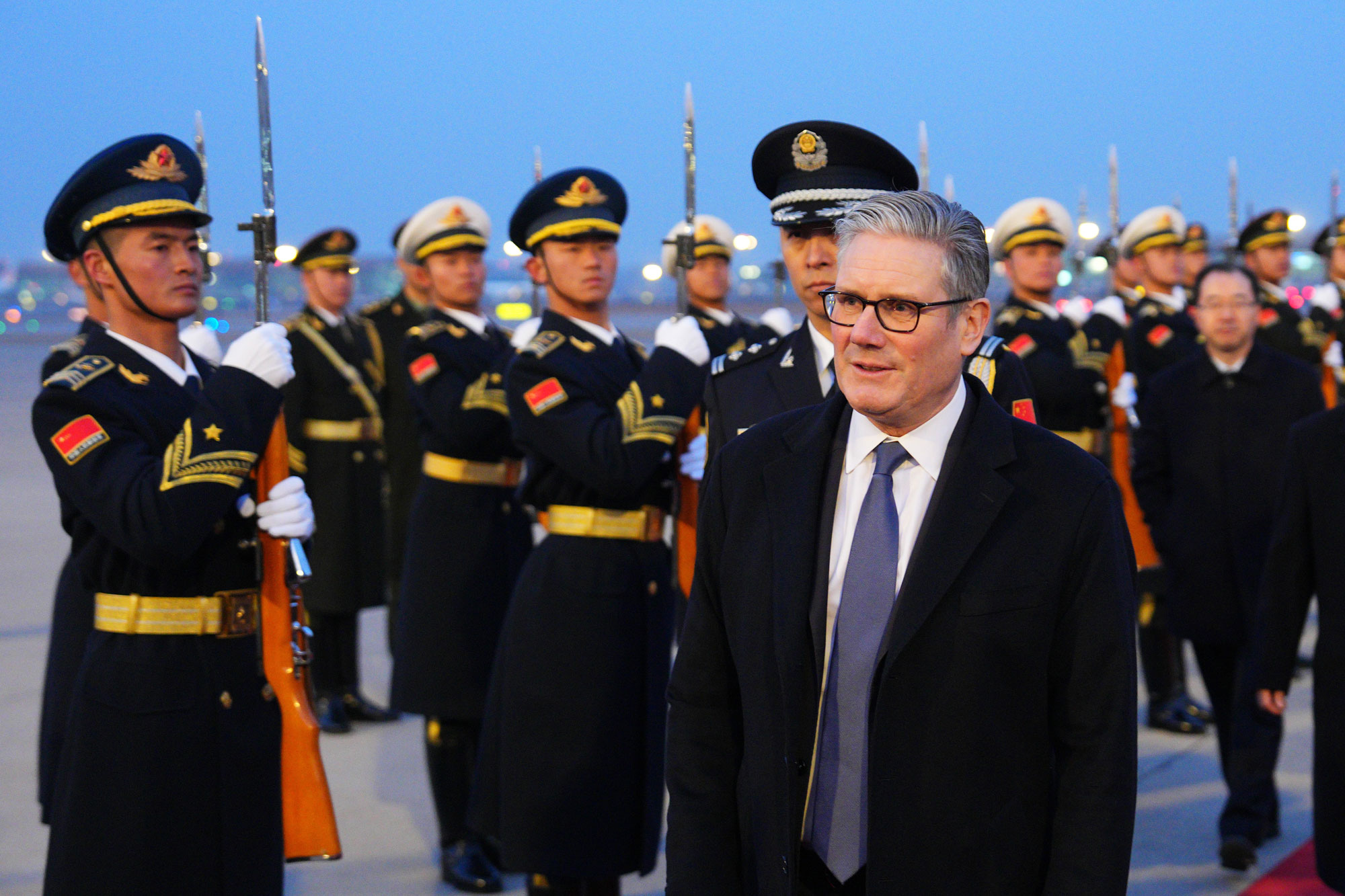
Tom Tugendhat, one of those sanctioned, called it “a direct affront to democracy” and “an attempt to divide and conquer.” Conservative party leader Kemi Badenoch observed that the Prime Minister had come home with little besides a Labubu doll, a collectible Chinese toy figure that was the trip’s most photographed souvenir. “I hope he’s checked it for bugs,” she told the House of Commons.
She might want to check the semiconductor industry, too. In 2017, a Chinese state-backed fund acquired Imagination Technologies, one of the UK’s two leading semiconductor design firms, for around $733 million. The same fund had simultaneously been trying to buy an American chipmaker, Lattice Semiconductor, but Donald Trump personally blocked that deal on national security grounds. The British acquisition was allowed to proceed.
The company’s former CEO, Ron Black, later told the BBC he was summoned to Beijing and pressured to hand over British chip designs to Chinese teams. He refused, and was fired after a brief standoff.
An employment tribunal ruled his dismissal unfair. According to an investigation by UK-China Transparency, a research group that monitors Chinese influence in Britain, the technology was subsequently transferred to Chinese chipmakers, at least two of which have since been sanctioned by the United States for their links to the Chinese military.
Companies, universities, governments – at every level, the pattern is the same
The Imagination saga should have served as a warning, but it didn’t. Anne Keast-Butler, the director of GCHQ, has called China the “epoch-defining” challenge facing British intelligence, and said her agency devotes more resource to it than to any other single mission. Yet Britain still has no published China strategy, no framework for deciding what technology is off-limits.
British universities are behaving as though no guardrails are needed. According to a December 2025 report by Strider Technologies, a firm that tracks foreign exploitation of western research, at least 5,000 British researchers have co-authored more than 8,000 scientific papers since 2020 with institutions tied to China’s army. Nearly 400 of those papers were written jointly with a Chinese military university so closely tied to Beijing’s war machine that Washington has sanctioned it as a national security threat.
American universities are no better. A separate investigation by Strategy Risks, a geopolitical intelligence firm, found that MIT, Stanford, Johns Hopkins and the University of California at Berkeley have all co-authored research with a Chinese AI laboratory. Its director previously worked for the state defense firm that built Beijing’s mass surveillance system. Some of that research was funded by the Pentagon.
Companies, universities, governments – at every level, the pattern is the same. The most revealing document in this whole affair may prove to be the text messages of SuperMicro’s co-founder, reproduced in the Manhattan indictment.
When new US export restrictions were set to take effect on May 13, Liaw’s response, according to prosecutors, was to ship faster. “Let us run fast before May 13!” he allegedly texted a co-conspirator. The indictment says that when dummy servers fooled the company’s own compliance inspectors: “That’s spectacular!” Then, immediately: “Order now!”
The capitalists will sell us the rope with which we will hang them, as the line commonly attributed to Lenin has it. Lenin may never have said it. He wouldn’t have needed to. The capitalists are shipping it express.






Comments