Culture

Culture

Why Gen Z is obsessed with yearning

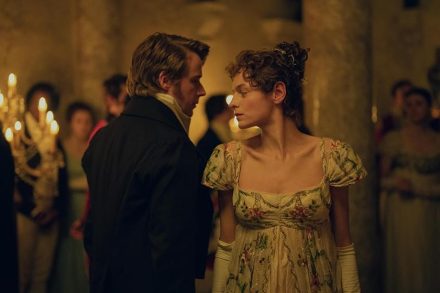
There’s a new trend in dating – or, rather, in not dating. The new trailer for the upcoming Pride and Prejudice shows Lizzie and Mr. Darcy looking longingly at each other in various contexts. This was a clear example of something that every Gen Zer recognizes: yearning. “The marketing team keep using the word yearning,” the director, Georgia Oakley, has said. Tinder has reported a 170 percent increase in the number of Australians using the term “yearn” in their profiles. A British news website claims we have just gone through the “Summer of Yearning” and Elle magazine recently enthused that “The yearn-aissance is far from over.
yearning

Why Robert Pattinson is the most interesting actor to play Bond

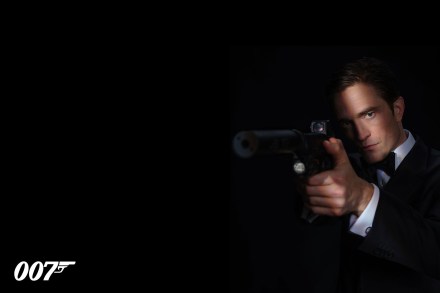
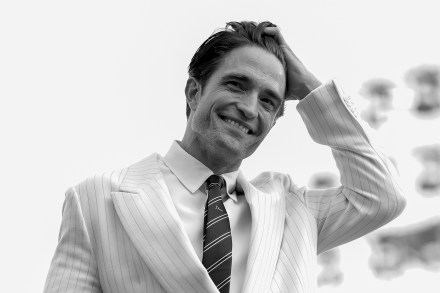
It has been something of a vintage year for Robert Pattinson, the actor once popularly known as R-Patz. He has released three pictures so far in 2026, including The Drama, The Odyssey and Primetime, and will round out the year with his villainous performance in the sure-to-be-massive Dune: Part Three. All this would be enough for the Krug to be popped in the Pattinson household under normal circumstances, but the news that he is to become the seventh actor to play James Bond in the 007 franchise has dwarfed all the other, considerable achievements. That Pattinson is by far the most famous actor to have played Bond has attracted a great deal of attention and interest, mostly but not universally positive.

robert pattinson

Robert Pattinson is a daring choice for Bond

Have they got Bond wrong? Absolutely not. As news ripples out that Robert Pattinson has seen off a field of erstwhile favorites – from Callum Turner, long the bookies' darling, to Josh O'Connor, whose screen test set tongues wagging – the internet has predictably split down the middle. Half are hailing his casting as a masterstroke, the rest wondering aloud how someone can be Batman and Bond at the same time. For my money, the moment he entered the frame, a last-minute curveball, it wasn’t even a contest. With his dangerous edge and gloriously weird streak, he was by far the most intriguing candidate, and may be precisely the fillip the franchise needs. For six decades, Bond made stars rather than hiring them.

robert pattinson bond

The genius of Richard Avedon

“I have seldom had such a delicious hour,” Isaiah Berlin wrote to me in January 1993. “I realize that Avedon and I are now friends for life, even if I never see him again.” Berlin wasn’t alone in being bewitched. A few months earlier, Tina Brown had taken over as editor of the New Yorker and hired Richard Avedon as staff photographer to open up its pages of solid, sacrosanct text. It was a blasphemous but brilliant move. With him came an incredible archive of images: Picasso, Stravinsky, Beckett, Hitchcock, Bogard, Garland, Auden, Chaplin, Streisand, Bacon, Capote, the Beatles… I could go on. As TNY’s photographer – its only photographer – Avedon was under commission to produce new work, and as London editor, my role was to suggest new subjects to interest him.

Children behaving badly – the wonderfully wicked world of Saki

“Light literature” has the potential to tell us more about the society that produced it than any number of more consciously cogitative productions. You can deduce a lot about the furious social mobility of the 1830s by reading the period’s terrible “silver fork” novels describing proceedings in ducal drawing rooms. Fantasies of opulent misbehavior abroad in the 1950s – Richard Mason’s The World of Suzie Wong and the James Bond novels – reveal a great deal about people’s desires in a nation tired of bad food, bad sex and restrictions on spending. The dreams of the Edwardians during the most solid and commanding of eras ventured into contrariness, like those of a CEO addicted in private to sexual humiliation.

Sylvester Stallone was an unlikely Hollywood hero

There shouldn’t be a major problem when it comes to adapting Sylvester Stallone’s recently published memoir The Steps into a big-screen biopic. Almost alone of his kind in the Hollywood pantheon, Stallone’s life already resembles the plot of one quite successful film, which I can never see without noting the happy likeness – I mean, of course, Rocky. It’s no wonder an acclaimed film, I Play Rocky (that Stallone has disassociated himself from) has recently premiered. The young Stallone may not have had his famous alter ego’s distinctive rolling gait and grunting speech (though he could come close), but the essential points of similarity are all there. In the early 1970s, Stallone was an unknown actor trying to make it in New York.

The American library is disappearing

In schools across America, libraries – once the heart of our educational institutions and protected home of deep, prolonged contemplation – have been rebranded as “learning commons.” The change is not only one of name: learning commons differ in kind from the libraries they replaced. Where libraries were quiet, almost sacred spaces, learning commons are loud, collaborative, screen-rich rooms designed for everything, which is to say, for nothing in particular. One boarding school in Massachusetts infamously rid its library of all physical books in 2009, believing that the future was digital; it has since come to its senses and reversed course.

The fibs of Blue Planet III

Whenever I hear the phrase “national treasure” I reach for my shotgun. Take David Attenborough. Yes, he may be impressively old – and modest and charming and sweet, so people claim – but he is also a menace who has probably done more to promote environmental hysteria, devious misinformation and spectacular misallocation of your scarce resources than Greta Thunberg, Al Gore and Prince William combined. The most effective propaganda takes you unawares, when your guard is down. So where better than in the cozy 8 p.m. Sunday slot when you are slumped on a sofa, hypnotized with that familiar soothing voice, manipulated by a score (Hans Zimmer) so soupy it could put Heinz out of business, and mesmerized by some of the most visually arresting images you’re ever likely to see.

blue planet iii
holmes

Haunted by the ghost of Sherlock Holmes

When Sherlock Holmes first stalked across the pages of London periodicals in 1887, journalists eagerly asked Arthur Conan Doyle “how on earth he had evolved, apparently out of his own inner consciousness, such an extraordinary person.” But Conan Doyle soon put them right: “If you please, he is not evolved out of any one’s inner consciousness. Sherlock Holmes is the literary embodiment... of my memory of a professor of medicine at Edinburgh University.” As a medical student, Conan Doyle had been taught by the surgeon and professor Joseph Bell, who had pioneered a deductive technique called “the Method,” based on the “vast importance of little distinctions, the endless significance of trifles.

The RA’s triumphant new exhibition

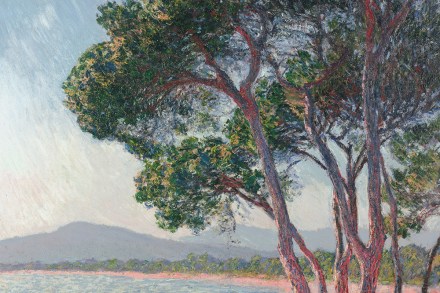
What a show at the Royal Academy. You go straight into a room of Cezannes and Renoirs and that is how it continues, with one coup de théâtre after another, at the hands of Monet, Signac, Braque, Matisse, Derain, Bonnard and more, all of them in thrall to the astonishing light and color of the Côte d’Azur. It hadn’t always been like that. These artists, Cezanne excepted, came from northern France and knew nothing about the southern coast. What changed it all was the completion of the Paris-Lyon-Méditerranée railway in 1860, which suddenly made this spectacular seaside accessible. Cezanne was from neighboring Provence, and he arrived on the coast before anyone else.

RA
eastern bloc

Opera’s obsession with the Eastern bloc

There was a fad a while back for photo books about Eastern bloc architecture. Derelict megastructures, brutalist monuments; you couldn’t move for them in the Barbican gift shop. Anyhow, Patrick Nolan and Leslie Travers – the director and designer respectively of Opera North’s new production of Eugene Onegin – were presumably big fans, because they’ve relocated the action to a provincial sports centre in the dying years of the USSR. It’s a fairly common gambit with Slavic operas. British opera companies are surely world leaders, by now, at rendering faded paintwork and water-stained concrete. But why?

The greatness of Patrick Stewart 

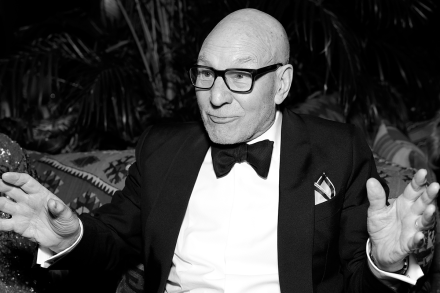
It says a lot for the late, great Sir Patrick Stewart, who has died aged 86, that two wholly disparate contingents of his fanbase are mourning his death. The first, of course, are those who followed his distinguished theatrical career, which spanned several decades and saw him attempt most of the major Shakespearean roles – all of which he played with his customary brio and charisma. The second are those who followed him to infinity and beyond as Captain Jean-Luc Picard, Star Trek star and inspiration to millions with his award-winning portrayal of quiet, steadfast decency. Forget the womanizing and self-regard of William Shatner’s Kirk; Picard was, for another generation, the captain of the starship Enterprise.

patrick stewart

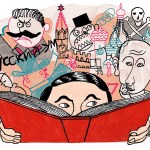
Russians read more. Do they think more, too?

The kids aren’t reading. Across the western world, Gen Zers are reading far fewer books than their parents. Many can barely read at all. In the US, 40 percent of fourth-graders have “below basic” reading abilities, while the same percentage of American adults reported reading no books at all in the previous year. Professors at elite US universities increasingly report that their students are no longer capable of reading an entire novel, or even a 30-page extract. In the UK, the National Literacy Trust found that just 33 percent of schoolchildren enjoyed reading in their free time, a 36 percent decrease since 2005. Does the rise of the postliterate society amount to a death knell for liberal democracy?

Michael Gambon pictured in 2002

‘We think you’re the best’ – the actors’ tribute to Michael Gambon

When Michael Gambon was made a CBE, Ian McKellen wrote generously on behalf of the acting profession: “We think you’re the best.” Arthur Miller pronounced him greater than Laurence Olivier. From a spear-carrying start in the early days – indeed on the first day – of the National Theatre, Gambon rose steadily to stardom and eventually, via a series of movie flops, to the well-paid prison of the Harry Potter films. On stage, in Shakespeare, Beckett, Pinter and Ayckbourn, or on television in The Singing Detective and Longitude, there was a might and scale to his talent that few could match – a force that did not preclude delicacy and emotional truth, his physical bulk capable of both high comedy and balletic grace. The essence of Gambon’s art was contradiction.

Our thirst for torching old buildings

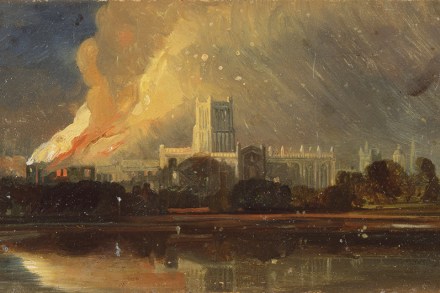
Regard the protestors. See how happy they are. Can you hear them whoop and whistle? The burning clock tower of the town hall has fallen inside the old building. Houp-là. How they whistle and whoop! The baying of such mobs in public places is as old as the history of towns and cities, the burning of buildings equally antique. Order and chaos, civilization and barbarity, the call of the primeval. Limoges has long been famed for its “arts of fire,” of the elements and crafts involved in the making of enamelware that reached its artistic zenith between the 12th and 14th centuries with a host of exquisite crucifixes, crosiers and tomb effigies, a hosanna of book covers and reliquary caskets.

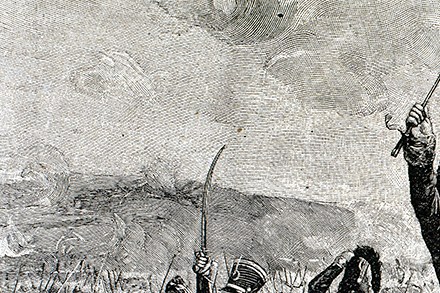
A history of Napoleon’s marshals has all the dash and vigor of a cavalry charge

In his fourth book on Napoleon, after Napoleon and Wellington (2001), Waterloo (2005) and Napoleon the Great (2014), Andrew Roberts focuses on the emperor’s relations with his 26 marshals. Writing with the dash and vigor of a cavalry charge, having walked 53 of Napoleon’s 60 battlefields, Roberts analyzes campaigns and battles from Italy in 1796, through Austerlitz, “the greatest victory in the history of France,” and the retreat from Moscow (ten marshals served in the Russian campaign) to Waterloo in 1815. Accounts of marches and battles are interspersed with frequent quotations from the emperor’s letters, sent day and night to his marshals to micromanage their campaigns, as well as from the marshals’ personal correspondence with each other.

The madness of the ‘femosphere’

Can a pop song cause mental illness? If you’re old enough to remember the Crazy Frog, there’s a strong chance you’ll reply in the affirmative. But I mean that question seriously. Can a pop song cause mental illness? In recent weeks, I’ve become convinced that one song in particular, a song called “Labour” by Paris Paloma, is having a detrimental effect on the sanity of young women across the Western world, especially in America.  Is it any wonder women are so mad and only getting madder?

Paris Paloma

The intellectual passions of J.R.R. Tolkien

It was December 1942 and J.R.R. Tolkien was having doubts about his new book, a sequel to The Hobbit published five years earlier. “Is such an ‘epic’ possible to consider in the present circumstances?” he wrote to his publisher Stanley Unwin. The specific circumstances included the second world war; but the literary climate was hardly more propitious. The warden of Merton College, Oxford, where Tolkien was Professor of English Language and Literature, was “visibly shaken” when Tolkien showed him the blurb for that sequel, eventually titled The Lord of the Rings. Reviews were largely poor: the American critic Edmund Wilson was not alone in thinking it “juvenile trash.” In a sense, Tolkien’s question to Unwin holds good.

The sick genius of Nathan Fielder

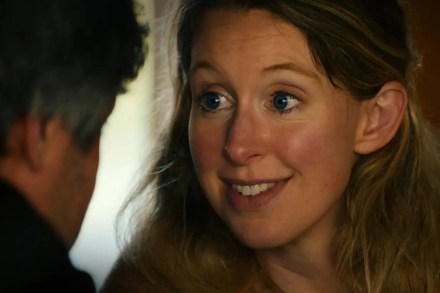
You Can See Everything is a brilliant and deeply evil film about the utterly cursed world we live in. It is the only world we have, so it’s worth getting good at living in. I am going to be free with the spoilers. There is nothing to spoil. There is actually no true content in this three-hour film. Well, about 90 seconds. You can see it twice and you probably should. The concept, editing, cinematography and performances are absolutely superb. It should teach you that, in an evil world of lies, only the truth can save you – and not always. The starting point of You Can See Everything is charisma. Nathan Fielder, the director, and Elizabeth Holmes, the subject, both have it, to Jedi mind power-level. They can look into your eyes and make you believe. Hitler had this too.

Elizabeth Holmes

How Boston became the cradle of American children’s literature

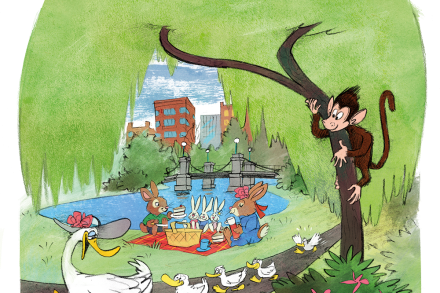
It was Labor Day in Boston and the bronze ducklings in the city’s Public Garden were each wearing a fluffy autumnal scarf. Nobody seems quite sure who dresses them, but at various points they have worn party hats, festive knitwear and hot pink. When the Tartan Army arrived for the World Cup earlier this year, Mrs. Mallard and her ducklings – Jack, Kack, Lack, Mack, Nack, Ouack, Pack and Quack – were forced to endure miniature traffic cones and saltires. The sculpture was created by Nancy Schön in 1987 to celebrate Robert McCloskey’s 1941 children’s book, Make Way for Ducklings. In 1990, former Soviet first lady Raisa Gorbachev visited Boston and admired the statue.

boston

The right has a woman problem

The right has its own unwritten rules of political correctness. There are forbidden words, and while they might not be met with censorship, they do elicit eye rolls. One proscribed term is “misogyny.” It also happens to be the most accurate description of the right’s mood and trajectory these days. The right’s response to this trend has been to downplay it, or even deny that it is happening at all. But ignoring it will not make it go away. Political discourse often operates like a ratchet: the intensity around a given topic is constantly turned up, but the mechanism is not designed to dial back.

right women

Around Britain with a theodolite: a celebration of the Ordnance Survey maps

It took six years, starting in the summer of 1784, for the Board of Ordnance to establish the baseline of its triangulation of Great Britain. First they used wooden poles, then glass tubes. After much clearing of furze bushes and anthills, the baseline ran for more than five miles from Hounslow Heath to Hampton Poor House. The maps of England and Wales were complete by 1870. Scotland had to wait until 1887. The delay was rumored to have been caused by the superintendent’s concern that surveyors would get in the way of the late summer deerstalking. As a wing of the military, the Ordnance Survey had extraordinary powers. The Surveyors’ Act of 1841 allowed it to trudge, clamber, squelch, measure and interrogate wherever necessary.

United by ambition: the ruthless rapacity of England’s two famous Cromwells

In the early years of the English Civil War John Milton turned his mind from the poetic arts and committed himself to writing some of the most searing pamphlet polemics of the 1640s. With the nation convulsed by violence, he set about finding causal explanations for the revolutionary ferment, and saw its roots in the 1530s and the unfinished nature of the Protestant Reformation. Only by completing the work of Reformation, Milton thought, would the English come closer to God and lasting peace. Such arguments had domestic as well as national urgency for Milton, much in need of peace himself, as he tried to extricate himself from his stupendously misguided marriage to Mary Powell, half his age and from a royalist family.

canadian literature

How progressive politics ruined Canadian literature

Canada is back, baby. Since Mark Carney’s election as Prime Minister in April last year, he’s projected an image of brawny, swaggering capability – another silverback statesman in a new, multilateral world. He’s tussled with Trump over tariffs; hobnobbed with autocrats including Xi Jinping and Narendra Modi and strongly criticized the US attack on Iran. In fact, the anger that many Canadians seem to feel at their cousins across the border is startling – on a recent trip to the Yukon, I found almost every public toilet tagged with “Trump Tower” graffiti. This newfound assertiveness is surprising. Canada, as the South Park movie astutely pointed out in 1999, is the eternal scapegoat of international politics.

The genius of Sherlock & Co.

The podcast audio-drama Sherlock & Co. is an updated version of Sir Arthur Conan Doyle’s stories in which the great detective is neurodivergent and gay, Dr. Watson is a millennial who preaches against ethnic stereotyping, Lestrade is a woman who speaks with a Caribbean twang, and the society gossip Langdale Pike has morphed into a drag queen. Throw in the fact that it’s produced by Gary Lineker’s Goalhanger and you might imagine that we’re talking about a woke brew designed to repel conservative Holmesians like me. Actually, Sherlock & Co. is my favorite podcast ever. I love it almost as much as Conan Doyle’s ur-text and infinitely more than the BBC’s Sherlock, which began well but then disappeared up its smug backside.

When will I see a Carmen set in 19th-century Seville?

No critic sets out to be a reactionary, even though it’s much easier that way. There’s no real satisfaction in rejecting novelty on sight; no joy in measuring a living performance against your record collection and coming down, every time, in favor of the dead Nazi. I get that. Still, it’s a plain fact that in three decades of regular opera-going, I have never – not once – seen a live production of Carmen that locates the action in 19th-century Seville. Or one that centers the visual elements – mantillas, sunshine, picture-postcard Spanishness – that directors tell us (and how they tell us!) have become such clichés.

carmen

Madness, mutiny and murder in the Canadian Arctic

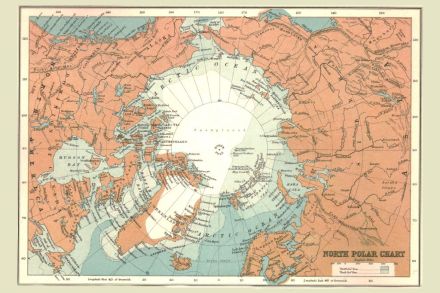
The elegant, charismatic and narcissistic explorer Vilhjalmur Stefansson wasn’t the average adventurer that Alaska attracted in 1912. When he arrived in Seattle from the Gold Rush port of Nome, he told journalists that he had discovered “a lost tribe of whites” in the uncharted High Arctic. He also sold politicians the vision of an undiscovered land rich in gold, raw metals and oil that, only nine years after the Wright Brothers’ first flight, would soon be covered with airfields. The Canadian government quickly offered Stefansson unlimited resources to lead an expedition back to the High Arctic. His objective was to claim what may have been the greatest geopolitical prize for Canada and the British Empire: the mysterious continent at the top of the world.