No critic sets out to be a reactionary, even though it’s much easier that way. There’s no real satisfaction in rejecting novelty on sight; no joy in measuring a living performance against your record collection and coming down, every time, in favour of the dead Nazi. I get that. Still, it’s a plain fact that in three decades of regular opera-going, I have never – not once – seen a live production of Carmen that locates the action in 19th-century Seville. Or one that centres the visual elements – mantillas, sunshine, picture-postcard Spanishness – that directors tell us (and how they tell us!) have become such clichés.
Presumably they must exist and increasingly I regret not catching one of Ellen Kent’s touring Carmens, the ones that promised majestic Andalucian stallions and smouldering glances. Meanwhile, a new set of clichés has settled on Bizet’s masterpiece, all pretty much downstream (consciously or not) of Calixto Bieito’s much-revived 1999 staging, which reset the action in a dusty, surreal 1970s Spain. Bieito, of course, had an intensely personal agenda. He grew up under Franco, and there’s a rawness and intelligence about his Carmen that still has the power to provoke.
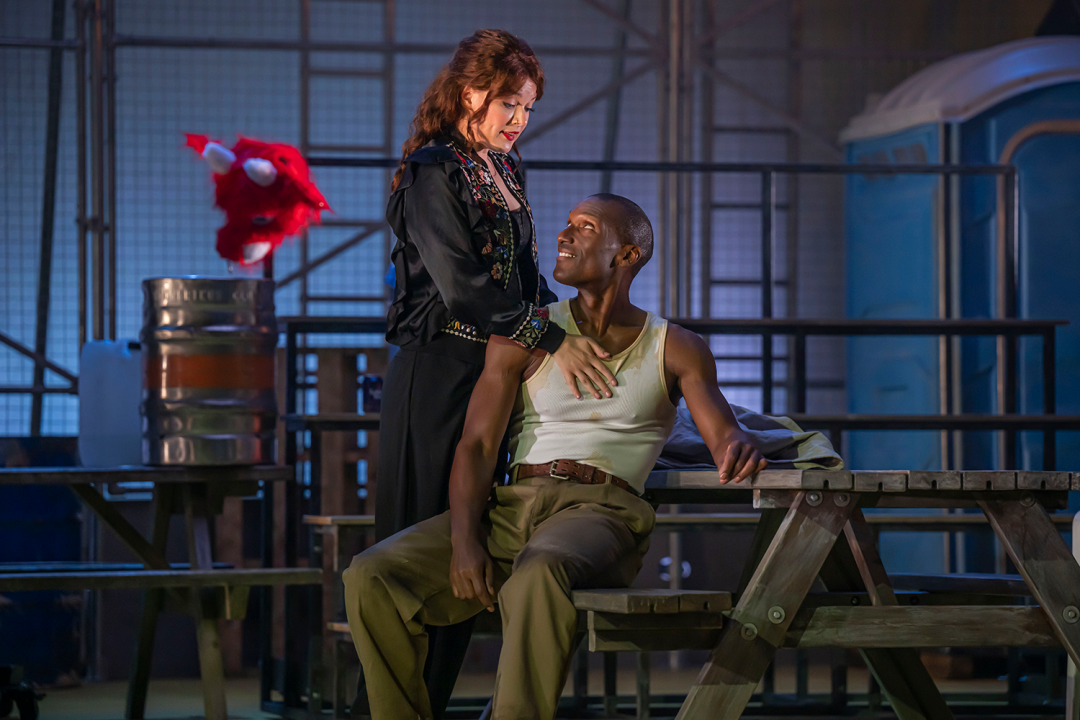
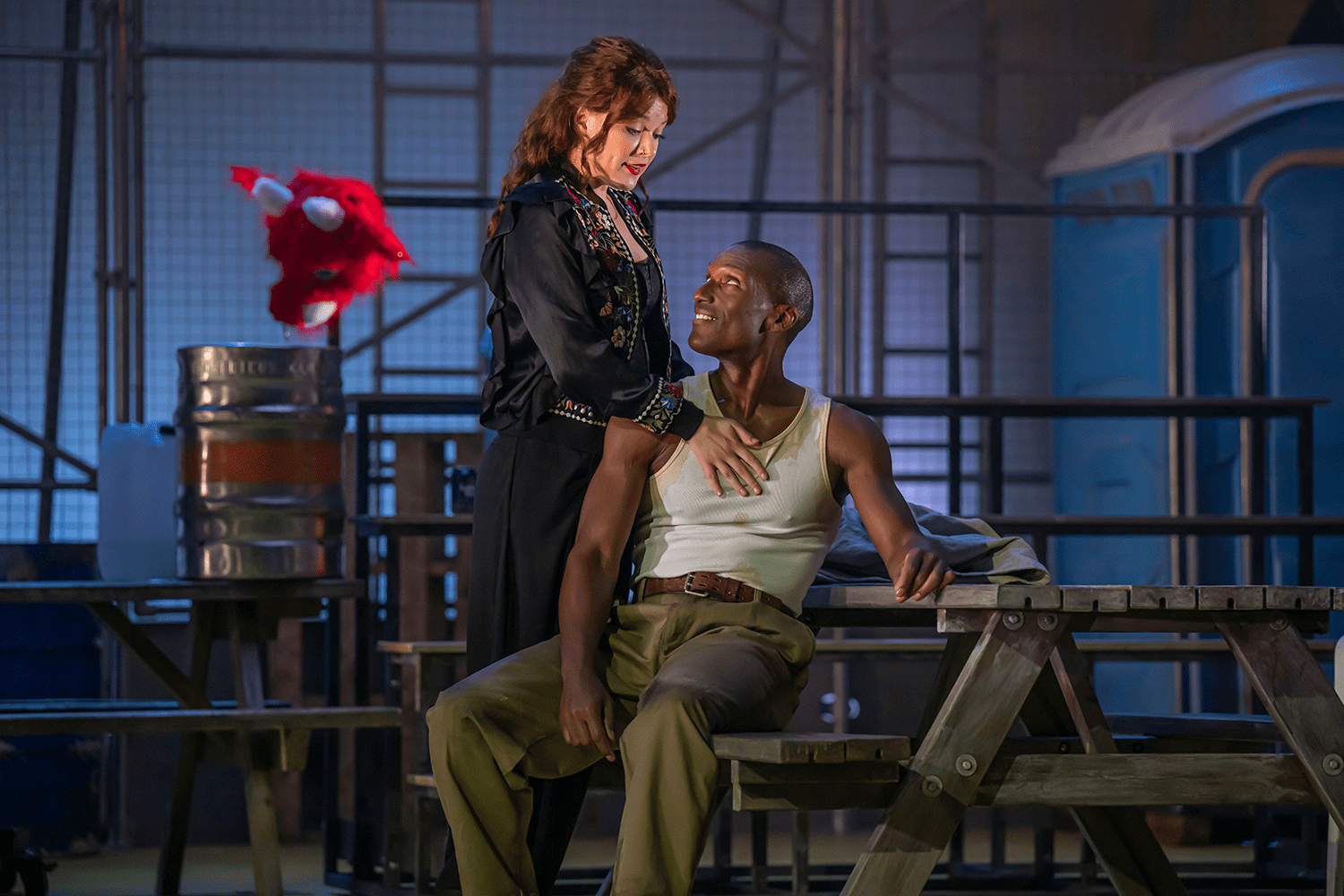
Cameron Menzies’s new production for Northern Ireland Opera came from the same playbook, and you could almost play Bieito Bingo with the visuals. Plastic chairs: check. Chain-link fence: check. Spotlights blasted straight in the audience’s eyes: house! Menzies’s set designer Niall McKeever added a Portaloo and placed the whole thing inside a sports hall. The soldiers were a pack of loafing police or security guards; it wasn’t wholly clear which, though as usual they acted as if they were about to assault Micaela (Mary McCabe). (Sleazy, lecherous Johnny Spaniard is one Carmen stereotype that no director seems interested in challenging.) The chorus wore balaclavas and party frocks in Act Four: Kneecap goes flamenco.
That’s all priced in these days, though it does seem tough on the Belfast public, who (through no fault of Northern Ireland Opera) get only one full-scale opera a year and might perhaps have appreciated seeing Carmen played relatively straight, before the deconstruction kicked in. In fairness, Menzies’s storytelling was clear enough, barring a few self-conscious gimmicks. The weirdest addition was a folk band, complete with accordion, who appeared before the prelude and noodled some Piazzolla-ish riffs on Bizet’s Fate motif. They kept popping up, though by the later acts they were mostly inaudible – present, but not involved.
Still, the cast was strong. Ruby Dibble’s flame-haired Carmen was in absolute command of her own sensuality, self-possessed and singing with poise as well as passion. This was a relatively rare occasion when her preference for Escamillo (Thomas Chenhall) seemed wholly understandable: Chenhall combined baritone swagger with warmth, while as José, Noah Stewart looked the part but never quite sounded it, with blocky phrasing and occasionally forced tone. You felt for Micaela, and McCabe was wholesomeness personified, in her carriage as well as her voice.
Menzies struggled to generate much chemistry between these four, though you could forgive a lot when secondary cast members such as Ross Ramgobin (Le Dancaire and Morales), Jenny Bourke (Mercedes) and Petra Wells (Frasquita) sang so stylishly, and leaned so engagingly into their roles. The orchestra, under Greg Arrowsmith, veered between scrappiness and bravura; why NIO doesn’t simply book the Ulster Orchestra is one of those Northern Irish questions that it feels unwise to ask. Last year’s Follies showed that Menzies and NIO can produce world-class work, but this Carmen didn’t really hang together.
The chorus wore balaclavas and party frocks in Act Four: Kneecap goes flamenco
Meanwhile at Covent Garden, Handel’s sex-bomb sorceress Alcina (Lisette Oropesa) is joined on stage by a troupe of dancing animals. The British public always appreciates performers in giant animal heads and judging from the laughter, all signs are that they absolutely adore Richard Jones’s 2022 staging, in its first revival. It’s easily Jones’s best work since Covid; chic, playful and fantastic. And the animals are 100 per cent canonic, too. That’s Alcina’s whole deal, you see. She turns discarded lovers into livestock, and as Oropesa plays it many chaps would consider that a price worth paying. As long as you got to be one of the cool animals, like the mandrill or the vulture, and not – say – the bat, or the boss-eyed spaniel.
Anyway, it’s super fun, and boy, it sounds lush, with Oropesa pealing out endless, alluring swirls of lark-like melody (she’s one of those singers whose voice glows from within). As her rival Bradamante, Beth Taylor finds deep wells of pathos and wounded pride. Then there’s Alcina’s toy boy Ruggiero (Emily D’Angelo, sounding vigorous), an endearingly up-for-it comic couple (Mary Bevan and Ru Charlesworth) and a wee kiddie (Thomas Mayes) who has to be heard to be believed. It’s all wrapped up by conductor David Bates with braying horns and bold, sensuous flourishes: Handel as luxury product, but the kind you actually enjoy.






Comments