Culture

Culture

An agreeable new 2D fighter

Grade: B The final boss of Marvel Tokon: Fighting Souls, called the Champion (they could have tried harder), is up front about his philosophy. “Actions are worth more than any word,” he says. “And the greatest action is... to fight!” Well, that’s Proust told, the big biscuit-dunking jessie. Here’s a very competently made, agreeably hectic new entry in the lineage of that most apparently basic of computer games, the 2D fighter. Ever since the heady days of Yie Ar Kung-Fu, gamers have known there’s fun to be had in having a couple of cartoon characters square off and slap each other upside the face. This one is an anime-style battler featuring an initial roster of 20 well-beloved Marvel superheroes (Wolverine, Deadpool, Captain America, etc.


The terror of Russian prisons

The competition must be pretty stiff for “World’s worst airport to be caught with drugs in your baggage”: Bogota? Miami? Singapore? Ciudad de la Paz? Gatwick? But Moscow would surely have to be a strong contender. I’ve been detained there myself, only for an hour. But you’re never told why you’re being kept waiting, how much longer it will be, or whether this is routine or serious. The young men and women in those oversized peaked hats are perfectly civil but apart from the impenetrable language barrier you’re dealing with several centuries’ worth of culturally-inbred opacity and bureaucracy. And the prisons don’t bear thinking about.

A true visual spectacle: Edinburgh’s The Galloping Cure reviewed

Those lights! Thinking back on The Galloping Cure, Missy Mazzoli’s new opera for the Edinburgh International Festival, that’s what lingers: cascades of lights, shimmering and flickering in every hue that modern LED technology can supply. At first the effect is almost Zen – soothing washes of pinks and blues and ochers, with carousel horses rising and weaving among them. Then, as the action intensifies and the characters succumb to collective mania, they’re brighter, faster, more aggressive: a frantic sensory overload, flashing to the rave-derived backbeat of Mazzoli’s score. Lucy Carter’s lighting designs are meant to transfix you, and they really do. Hardly the point of an opera, you might say.

A perfect little exhibition on the Isles of Scilly

I was in the most southwesterly pub in Britain, the Turk’s Head, on the Scilly island of St. Agnes (population: 75) when I noticed a poster advertising a local exhibition of the work of “renowned artist and birdwatcher Hilda Quick, 1895-1978.” I had stumbled upon an artist with a wonderfully sharp line and an even sharper eye I had never heard of her, but her work on the poster, “The Pursuit of Art,” was compelling. A stylish wood engraving from the 1920s, it showed female art students drawing a male life model. This was the new equality Hilda Quick would have discovered when she left her native Penzance to attend the Central School of Arts and Crafts in London in 1919.

A world full of artifice: Life of M, by Rachel Cusk, reviewed

The twin themes of Rachel Cusk’s latest novel are truth and fame. In fact it’s not quite accurate to call it a “novel”: there are two main characters, but there is no plot; and although you start to understand each woman, it’s through observation of their behavior in a series of vignettes rather than a conventional story. The titular “M” is an actress of beauty and renown, reportedly based on Natalie Portman. Her friend, the unnamed narrator, wants to write her biography. “Would you just make it up?” M suggests airily, giving us a notion of how fabrication is sewn into her life.

Will this century see the end of books?

Anyone proposing to publish a polemic between hard covers about the decline of literacy and reading will, of course, find themselves preaching to the choir. If you read books, you will agree with this one; if you don’t, your negligence will not be touched by its fervor. I won’t say that it is a useless object, merely how unhelpful it would be simply to agree with its main point. The decline of reading practices is quite convincingly demonstrated in surveys. Fewer and fewer people in the US and Britain read habitually, by their own admission. In one celebrated case, an entire cohort of English literature students in America was unable to make anything at all of the first page of Bleak House.

The spellbinding power of the du Maurier family

“We can never go back again,” wrote Daphne du Maurier in her bestselling novel Rebecca (1938). “The past is still too close to us.” Yet back she went, in book after book, to the past of her remarkable family. In 1934, six months after the death of her father, the matinée idol Gerald du Maurier, Daphne wrote his biography, portraying him as a spoiled man-baby with a “stable” of mistresses. Gerald’s own father, George du Maurier, was the celebrated book illustrator and Punch cartoonist whose characters such as Mrs. Ponsonby de Tomkyns and Lady Gatheremall skewered the Victorian nouveaux riches.

Why Wendell Berry mattered

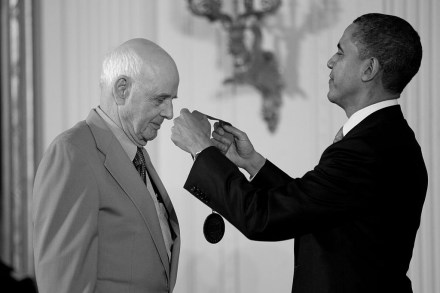
Like most adults who write their thoughts down regularly, I was raised in a home by a mother who maintained piles of books strewn around the house. There were more books than anyone in our home could read combined, but you could find our favorites open on tabletops and dressers with a pencil, or another book, pinned in them to hold a page. Most of these books that were propped open were my mother’s and they included dozens of Wendell Berry’s works. I slowly absorbed a version of Berry’s way of thinking: through reading, through my mom’s infatuation with his work, through osmosis as I watched Cartoon Network next to open copies of Hannah Coulter and What are People For? Berry has begun to suffer the same literary fate as C.S.

wendell berry

The new right-wing art scene is disappointing

It averaged a brutal 91 degrees this week in Cameron County, the southernmost tip of Texas, and a group dressed as the cast of O Brother, Where Art Thou have been there sweating away at something big. A colossal limbless torso is parked on the dunes and a head, suspended from a crane, is swaying very gently in an ocean breeze. There is the smell of metal and hot dust.  Pending some finishing touches and last-minute dabs of glue, this Atelier Missor’s Prometheus, soon to be unveiled at SpaceX’s Starbase launch site – standing contrapposto, torch aloft, bidding the rockets a comradely “Adieu!

Prometheus SpaceX

Tim Curry was the king of camp

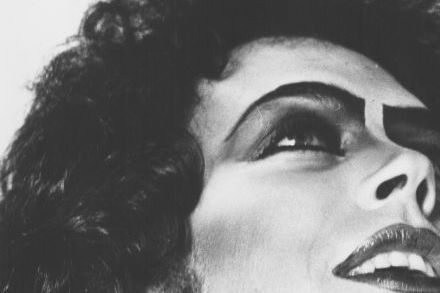
“Do Tim Curry proud,” my friend Simon said to me when he heard I was writing about him. Simon is, admittedly, a Tim Curry fan extraordinaire whose go-to karaoke song is "I’m Going Home" from the Rocky Horror Picture Show soundtrack, which Curry himself sang with mournful gravitas both on stage and in the 1975 film. Yet it also encapsulates the way in which the actor and singer, who has died aged 80, became an extraordinarily beloved part of the pop cultural landscape and remained that way for decades. Even a debilitating stroke in 2012, which forced him into a wheelchair and largely ended his on-screen career, could not damage the Englishman’s inimitable reputation as someone who made audiences laugh – a lot – and, when the occasion arose, tantalized or terrified them as well.

RIP Dolly Parton

“And try to make the most of every moment / ’Cause if you never try, you never win.” There are few more appropriate lines with which to begin an obituary of Dolly Parton, although they do have the slight disadvantage of sounding like something that might be printed on an especially tawdry greetings card. Dolly – always Dolly, never ‘Ms Parton’ – was never particularly concerned about that sort of thing. She understood that sincerity was generally more effective than sophistication, and that if something was true there was little point in making it sound cleverer than it was. She was the greatest singer of her generation, the female Elvis if you will, and she was damned if anyone was ever going to persuade her otherwise.

A much-deserved revival of John McCabe, a formidable British composer

Grade: B+ “Cheltenham Symphonies”, they used to call them – a catch-all term for the kind of large-scale, traditionally inclined postwar works that found a natural home at the Cheltenham Music Festival. But it was also a sneer: a dig at the supposedly parochial nature of British music in the 1960s and 1970s. Over in Europe, the avant-garde was doing whizzy things with Marxism and electronics. British music, went the narrative, was suburban, outdated and drab. Now listen to John McCabe’s Third Symphony of 1978. McCabe’s orchestration is as gorgeous as a bird of paradise; it shimmers like the colors on the surface of a bubble. Not that there’s anything fragile about McCabe’s musical engineering.

mccabe

The canonization of Tupac

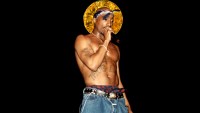
The Tupac murder trial has finally begun. A 63-year-old former gang leader, Duane “Keffe D” Davis, is accused of orchestrating the murder of rapper, actor, and activist Tupac Shakur in a drive-by shooting 30 years ago. Tupac’s reputation – both alive and since – is chequered to say the least. Some still perceive him as one of a cadre of thugs who glorified gun violence and the gang lifestyle in the 1990s (if you’ve ever heard the phrase “Thug Life,” that’s one of his). Others have continued a campaign of quasi-canonization, presenting him as a tortured poet struggling against the strictures of fate. The latter argument gradually won through, with Tupac now closing in on Princess Diana in the global “national treasure” stakes.

How the Ramones redefined punk rock

Is popular music truly an art form? This question has never met a straightforward answer, either from the musicians themselves or the public, and it hangs over the exhibitions currently commemorating the 50th anniversary of punk rock. Among others, there’s the Outsiders, Outcasts, Rebels + Weirdos show on at the Skirball Center in Los Angeles, while the Rock and Roll Hall of Fame in Cleveland is hosting its own celebration under the name Hey! Ho! Let’s Go! Punk at 50. Somehow I’m put in mind of the quote attributed to Jean Cocteau about “Ameri-cans being a funny people – first you shock them, then they put you in a museum.

William T. Vollmann: bard of the American empire

William T. Vollmann’s subject is 9/11. Always is, always was. Even before the attacks happened, they were somehow his thing. An Afghanistan Picture Show, Vollmann’s debut, was advertised as a Cold War memoir of a 22-year-old’s adventure battling the Soviets with the mujahideen. But it was really an inadvertent introduction to people and a place that were destined to become the enemies of America. Vollmann has spent his career writing around that day in 2001 – the first and main event of the 21st century – dissecting with retractor and forceps the American empire built before 9/11 and the country that the attacks created. Now, in his new novel, Vollmann faces the subject straight on. “A Table for Fortune is about September eleventh,” he writes to the reader at the start.

Apple Music has redeemed itself

Just two weeks ago I was ready to cancel my subscription to Apple Music. I’d stumbled across its “Composer Essentials” – a list of 100 composers so significant that they merit their own curated playlists. It includes Bonds, Boyle, Caccini, Dawson, Dett, Perry, Poldowski, Sohy, Strohl and Walker. If those names don’t ring a bell, how about the composers who are missing? Albéniz, C.P.E. Bach, Bellini, Berg, Bizet, Borodin, Chabrier, Kodály, Martinu, Messiaen, Mussorgsky, Nielsen, Poulenc, Schoenberg, Walton, Weber and Webern. See what I mean? The “Essentials” list is stuffed with DEI hires. Which – an analogy to Cambridge University comes to mind – does no favors to the black and female composers who deservedly feature in it, such as Joplin and Beach.

wagner apple music

The man who – inadvertently – invented the 1970s

Style, self-evidently among those who pursue an interest in such affairs, is, according to the Comte de Buffon, the man himself – the essence, the heart, the bowel, the Bovril. While, among the much greater majority who pursue an ignorance in such affairs, it is an assumed gamut of off-the-peg tics, props, accent – style is something bolted on to a being’s chassis and core in the hope that it will hold. We can be certain which of these two nugatory classifications better suits the late Christopher Gibbs (1938-2018) who in the course of his long, more or less antiquarian life encountered Everyone, absolutely Everyone.

The intrepid volunteers who risk all to preserve Ukraine’s cultural heritage

“The nonsense was over at last,” wrote the Lithuanian-Polish poet Czesław Miłosz in 1939, as a period of uncertainty gave way to the horrors of World War Two. Charlotte Higgins quotes these words at the beginning of Ukrainian Lessons, describing the outbreak of full-scale war in Ukraine after eight years of “local” warfare in the Donbas and the annexation of Crimea. From the first pages of this profound study of the impact of war on culture, replete with life stories, the author places the Russo-Ukrainian conflict within the context of global cultural history and geopolitics. References to Rwanda in 1994 and the bloody events in Londonderry in 1972 are in no way out of place.

What’s in a kiss? A millennium of mixed messages

Kissing is a tricky subject. It has a complex, baffling history. The kiss of a baby is one thing; the kiss of lust something quite else. Kings, generals and prelates used to kiss, as did mafiosi – often before killing. The kiss has many meanings, all of which are explored in this informative, if sometimes wearing, book. Finally, a warning: if you’re queasy about arse-kissing, don’t read it. But then you would be missing a lot. Katie Barclay, a diligent Australian academic, has written an “overview of the world of the kiss in Europe from medieval times to the present.” Her opening words begin listing the startling variety of the kissing involved: “Smooch, snog, pash, smack, peck, canoodle...

Shagger, chancer and oath-breaker – Harold Godwinson had a touch of the Viking about him

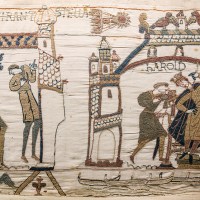
Oh Harold. So near and yet so far. So close and yet no cigar. In January 1066, the world (well, England) was at his feet. Two hundred and eighty-two days later he was battle meat. On day one he became the richest ruler Anglo-Saxon England had ever known. In late September, he defeated the hardest bastard in Europe (Harald Hardrada). In mid-October, England was changed forever, but not by him. He had, of course, no right whatsoever to be king. Sure, he was Edward the Confessor’s brother-in-law, but under the sacred rules of hereditary power that gets you zip. He claimed that Edward had promised him the throne (he hadn’t), but, again, that ain’t how the royal circus rolls.

The Shards is easily the best drama on TV

My father once drove down the King’s Road with Marianne Faithfull and Terence Stamp in a paisley-painted Mini to buy a velvet suit from Granny Takes A Trip while high on acid. No, not really. I was always very disappointed with my parents’ “what it was really like in the 1960s” anecdotes because basically they didn’t have any. Now my own children are having similar problems with my anecdotes about the legendary 1980s. Yes, it’s true that I did go to see Duran Duran at the height of their fame, but only to keep my little sister company in a football stadium smelling of chips and fizzy pop and filled with screaming 12-year-old girls. Yes, I did wear eyeliner and white lipstick once, but I looked a prat.

Why Marilyn Monroe is still as big a celebrity as ever

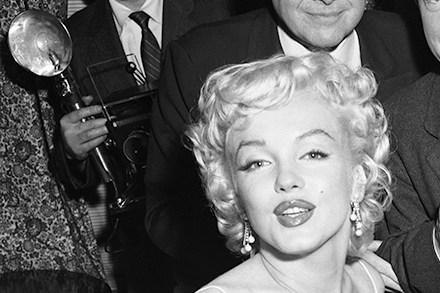
Marilyn Monroe would have celebrated her 100th birthday this year. My new biography of her begins with this story: she’s walking with a friend down Park Avenue dressed in a raincoat and sunglasses and without make-up. As the crowds stream past her, nobody gives her a second glance. Then she turns to her friend and asks, “Do you want to see me be her?” Without changing her hair or dress, the transformation begins and, after making some kind of inner psychological adjustment, she morphs from an ordinary woman into Marilyn Monroe, superstar. As her friend, the actress Susan Strasberg, recalled: “There she was – not the simple girl I’d been strolling with, but ‘Marilyn Monroe,’ resplendent, ready for her public. Now heads turned. People crowded around her.

marilyn monroe
naipaul

The dark heart of Jonestown

The Jonestown massacre, in which more than 900 people were killed and a US congressman was shot dead on a Guyanese airstrip, has been written about in dozens of books. Shiva Naipaul met some of those aspiring Jonestown authors loafing on a Georgetown hotel terrace. “Sex. Race. Suicide. Murder. Corruption. A hot Third World country. That’s a classic mix,” one said to him. There have been both forensic and lurid accounts of the Jonestown apocalypse, in which crowds of American expats were forcibly dosed with cyanide-laced Flavor Aid, but nothing comes closer to its dark, post-colonial heart than Journey to Nowhere. The book was first published in 1981, three years after the massacre, but fell out of publication.

What’s the point of UNESCO?

The FIM-92 Stinger missile is not a subtle weapon. An antiaircraft rocket, capable of launching a high-explosive “fire and forget” laser-guided warhead at targets up to five kilometers away, it can be carried and operated by a single man. During the 1980s Soviet invasion of Afghanistan, the CIA provided hundreds of Stingers to the Mujahideen, and they proved terrifyingly lethal, downing scores of helicopter gunships and killing thousands of Soviet troops. But at times they’ve been as effective against other, more unusual targets. In 2001, during the first Taliban administration of Afghanistan, the group’s leader, Mullah Muhammad Omar, ordered the destruction of the monumental Buddha statues in the Bamiyan valley, a historic Silk Road site deep within the Hindu Kush.

unesco
mario vargas llosa

‘A selfish, ignoble person’ – the dark side of the Nobel prize-winner Mario Vargas Llosa

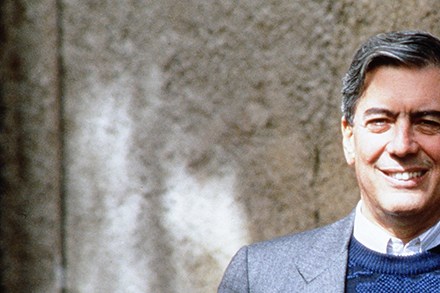
In October 2010, when Gabriel García Márquez, by then suffering from dementia, was told that his former friend and rival had won the Nobel Prize for Literature, he inquired: “Who is Mario Vargas Llosa?” This tottering, always compulsive biography of the writer who died last year, which has taken 15 years to write (“I completely miscalculated its complications”) is Gerald Martin’s valiant answer. “Is there a life quite like this one anywhere in the western world in the second half of the 20th century?” In Martin’s breathless judgment, “this literary adventurer, politician, diplomat and warrior all rolled into one” was a single-minded workhorse whose sheer intensity, quality and variety of life was “almost literally incredible.

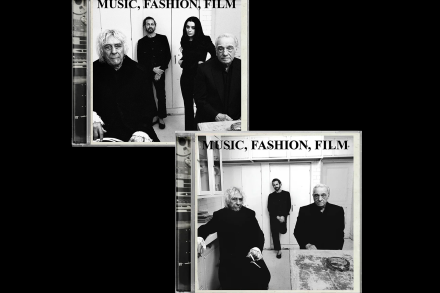
Is Music, Fashion, Film really the best Charli xcx can do?

Of the three creative pursuits that give Charli xcx’s eighth album its title, the English pop star seems least interested in the first. She admits as much on “Camera,” the best song on Music, Fashion, Film, which makes clear her obsession with acting and a desire to pursue it more fully. “Do I want to make music?” she asks herself. “Am I being fucking stupid if I try to be a girl on the screen and I’m turning 34?” Even without this clue – which, like much of the album, is presented via the singer throwing out rhetorical spiel more or less unexpurgated – it is no great stretch to surmise that the pursuit of making music is struggling to fully hold her attention.

brat