Culture

Culture

The good, the bad and the ugly in books, exhibitions, cinema, TV, dance, music, podcasts and theatre.

Why I’m obsessed with this podcast’s merciless little romps: Browned Off reviewed

Radio

Everything is too long these days, isn’t it? Every series is at least two episodes too long, podcasts go on for hours, you have to scroll through pages of someone’s barely disguised eating disorder mania to get to the recipe on their blog, and every documentary on Netflix is four hours long, forcing me to go to Wikipedia halfway through just to finally find out what happened — and I cannot even slightly deal with Adam Curtis any more. Podcasts also now have these excruciating intros before they start talking about actual things.

The funniest current affairs show since Brass Eye: Into the Grey Zone reviewed

Radio

It was something a friend said to me about The Revenant, Leonardo diCaprio’s bloody-minded and brutal Oscar vehicle: ‘The problem with the film is once you start laughing, you can’t stop. And for me, that moment was the second time he fell off a cliff.’ I thought about this a lot listening to Into the Grey Zone, a new podcast hoping to educate its audience about the new forms of constant pseudo-warfare that modern states engage in. This is the world of nerve poisoning in Salisbury, airspace incursions over Taiwan, cyberattacks, mass disinformation and remote interference. None of these things can be considered open warfare but taken together, the podcast implies, they do not suggest we are in a state of perfect peace.

It’s not easy running a stately home: Duchess podcast reviewed

Radio

The Duchess of Rutland, Emma Manners (née Watkins), grew up on a farm in the Welsh Borders before becoming proprietress of Belvoir Castle in Leicestershire. ‘On so many levels I was ill-equipped for the job,’ she reflects in her new podcast, Duchess. ‘I so remember opening a door and hearing the butlers downstairs saying: “Have we broken her yet?”… I felt like a ball they were bouncing.’ Thirty years after coming to Belvoir — pronounced ‘Beaver’ — the Duchess is ready to talk candidly about the difficulties she and other women have faced as custodians of stately homes.

Enjoyably tasteless: Power – The Maxwells reviewed

Radio

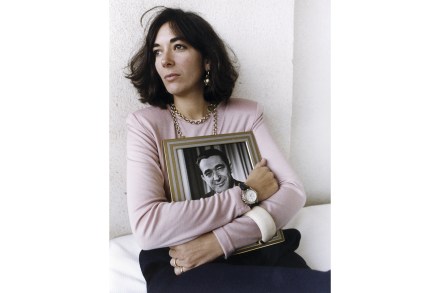
This year marks three decades since Robert Maxwell fell naked to his death from the deck of his yacht, The Lady Ghislaine. Power: The Maxwells is the latest contribution to the never-ending autopsy of Maxwell’s character and the circumstances of his death. It follows a now well-established formula, juxtaposing the lives of Ghislaine and her father, marvelling at how against seemingly unbeatable odds she can have managed to disgrace the good name of Maxwell, and throwing in the occasional Trump soundbite as a garnish of relevance.

Is the hottest new podcast, The Apology Line, worth sticking with?

Radio

With the arts world still largely in hibernation, the launch of a big podcast is as close as we get to a big cultural event these days. Such is the case with The Apology Line, the latest serial podcast from Amazon-owned Wondery, which shot to the top of the ‘most downloaded’ charts last week and has sat there comfortably since. The Apology Line tells the story of a 1980s experimental art project in which a Manhattan-based provocateur, Allan Bridge, issued an open invitation to the city’s criminals (‘amateurs, professionals, white collar, blue collar’) to record their anonymised confessions to an unmanned phone line.

Pleasant, cheerful and a little exhausting: Graham Norton on Virgin Radio reviewed

Radio

In my parents’ house, the radio is always tuned to one of two stations: Magic FM and LBC. When Magic is playing, it wafts through the kitchen like an over-scented camomile candle. LBC, by contrast, hits you like a strong gust of Novichok: it is undiluted poison, carefully synthesised from the DNA of hysterical US shock jocks. At times, they feel like the two paths for modern radio: a draught of herbal tea or a fit of apoplexy; James O’Brien having kittens or ‘Broken Strings’ playing constantly, for ever. Where does that leave the chatty host, the one who natters cheerfully while you potter aimlessly, who rabbits on while you faff about doing nothing?

Englishness vs California dreaming: Meghan and Harry’s Archewell Audio reviewed

Radio

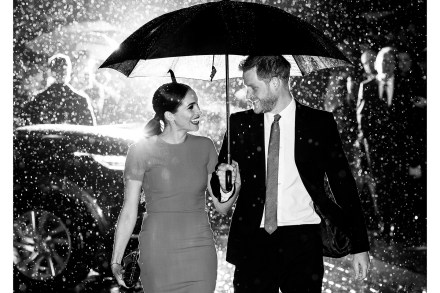
On Archewell Audio, Harry and Meghan’s new podcast, ‘love wins’, ‘change really is possible’, and ‘the courage and the creativity and the power and the possibility that’s been resting in our bones shakes loose and emerges as our new skin’. There’s no room for Christmas — the first episode dropped as a ‘Holiday Special’ — but there is for kindness, compassion and more than a few bromidic interjections of ‘So true!’ The podcast purports to ‘spotlight diverse perspectives and voices’ and ‘build community through shared experiences, powerful narratives, and universal values’.

A round-up of horror podcasts

Radio

Good evening! Come shivering on in through the garden side door, my friends, and distance yourselves in a semi-legal fashion around the flickering flames of my recently installed firepit while I guide you through the best horror listening for the depths of this December dark and drear. The Magnus Archives is an unslagoffably enthusiastic anthology series stuffed with monsters, ghouls and redundant adjectives. If you can get over the Alan Partridge touches (‘I didn’t move… I just stood there… sipping my tea… not even noticing it was still far too hot to drink comfortably’), this show features the scariest story I have heard this month, ‘Lost Johns’ Cave’.

The world’s greatest podcast: Dan Carlin’s Hardcore History reviewed

Radio

It’s well known that you should never meet your heroes because they will only disappoint you. Less commonly said, but equally true, is that you should never google your favourite podcast hosts, because their face will not match their voice. I have just finished looking at photos of Dan Carlin, the host and sole narrator of Hardcore History — the world’s greatest podcast — and I find myself disappointed. He’s a perfectly nice-looking man: bald, medium build, squarish of face. But he doesn’t look like I want him to. Why do we think we can imagine someone’s face just from the sound of their voice? It’s a mysterious but enduring illusion, like the image you have of a place before you visit, which you never quite forget.

The genius of I’m Sorry I Haven’t a Clue

Radio

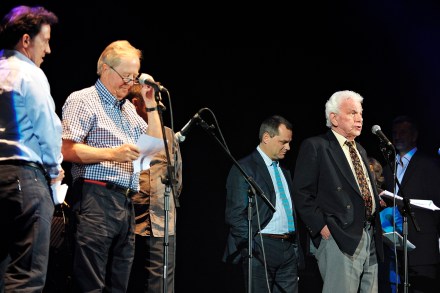
I’m Sorry I Haven’t a Clue has just been voted the greatest radio comedy of all time by Radio Times, ahead of Hancock’s Half Hour and the brilliant Round the Horne. The first two episodes of series 73 (can you believe it?) are also the last Tim Brooke-Taylor recorded before losing his life to coronavirus earlier this year. Brooke-Taylor was part of the original cast of the self-styled ‘antidote to panel games’, which first aired in 1972 with Bill Oddie, Jo Kendall and the show’s deviser Graeme Garden as fellow performers (Barry Cryer joined during the first series and Willie Rushton two years later).

A salmagundi of tedium: The White Pube podcast reviewed

Radio

The White Pube started life as an influential art blog, written by Zarina Muhammad and Gabrielle de la Puente. The name announced iconoclastic intent, playing on the White Cube gallery — which certainly deserves mockery (like a city law firm, it has outposts in Hong Kong and Manhattan). But The White Pube podcast is as inanely conventional as the gallery it makes fun of. Each episode is an hour-long salvo by the hosts, or ‘art critic baby gods’, and as with their exhibition reviews — rated with emojis, not stars — conversation is appealingly informal and spontaneous. But they have little of interest to say, especially about their ostensible subject. Three episodes into this art criticism podcast, hardly an artwork has featured.

Enjoyably bad-tempered: The Lock In with Jeremy Paxman reviewed

Radio

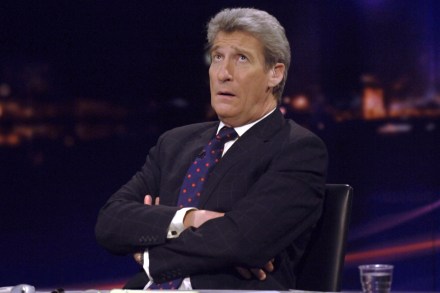
‘I used to be Mr Nasty! That was good! Mr Nasty was easy!’ Jeremy Paxman bellows at Michael Palin on his new podcast. Now Paxman wants to know: ‘Have you got any recommendations as to how you become the nicest man in Britain?’ ‘I’m a very angry, cross person half the time!’ Michael Palin protests, pleasantly. The Lock In with Jeremy Paxman is Paxman’s attempt at a more convivial register — ‘just interesting people, over a pint, with me’ — in contrast to the tone he deployed famously on Newsnight for 25 years: that of the professional curmudgeon. Luckily Paxman is still a hopeless grouch and cannot easily sustain common standards of politeness even over the course of a half-hour interview.

Boldly going where hundreds have gone before: Brave New Planet podcast reviewed

Radio

Since technology is developing at such light-speed pace, why does it feel so strangely slow? There is a sense that driverless cars, green energy and of course certain vaccines are, for all their breakneck pace, still taking for ever to arrive. Watching the future emerge is like watching slow-motion footage of a high-speed train. We know it’s going quickly — but can we not just fast-forward? Perhaps it’s merely our heightened expectations, our diminished boredom thresholds. Some of our most distinguished thinkers and entrepreneurs have warned that an all-powerful artificial intelligence, badly calibrated, might represent the greatest threat to the long-term survival of humanity.

The shocking story of Charles and Mary Lamb: Slightly Foxed podcast reviewed

Radio

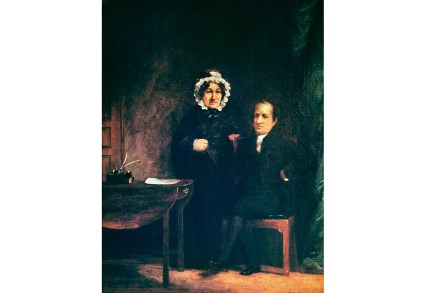
The Slightly Foxed podcast, like the quarterly and old bookshop of the same name, is almost muskily lovely. It’s the sort of thing you can imagine listening to with a dog at your feet and whisky by your side in a draughty Mitfordesque folly. Ordinarily, you might attribute its homeliness to the fact that it is recorded around a kitchen table. But with the hosts now socially distanced across the country, and it feeling just as cosy, you realise that the atmosphere must derive from something else. In the latest episode, Philippa, Hazel and Gail were joined down the line by biographer Felicity James to discuss the early 19th-century writers Charles and Mary Lamb.

How democracy can subvert itself: Bunga Bunga reviewed

Radio

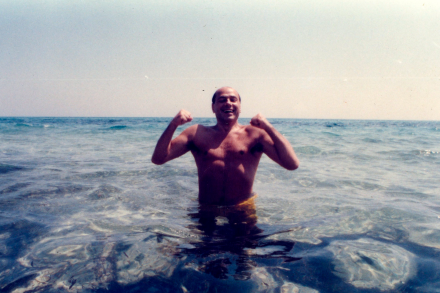
Italy has long captivated romantics from rainy, dreary, orderly northern Europe. Goethe, Stendhal, Keats and Shelley all flocked to Italy in search of the ideal society. There they found what they thought was a utopia. ‘There is,’ Byron marvelled in a letter home from Ravenna, ‘no law or government at all, and it is wonderful how well things go on without them.’ Well, Silvio Berlusconi has made some of Europe’s wisest men sound like chumps. If the notorious career — chronicled in the podcast Bunga Bunga — of the longest-serving prime minister of Italy since Mussolini and its sometime richest man has done one good thing, it’s to have dispelled for good our quixotic fantasies about his troubled nation.

A beautiful radio adaptation: Radio 4’s The Housing Lark reviewed

Radio

Nineteen fifty-six: the Suez crisis, the first Tesco, Jim Laker takes 19 wickets in a match. But also: Trinidadian pianist Winifred Atwell becomes the first black woman to have a UK number one with ‘The Poor People of Paris’; Kenneth Tynan announces a playwriting competition in the Observer, which is won by the Trinidadian dramatist Errol John, and a third Trinidadian, Sam Selvon, publishes his most enduring novel, The Lonely Londoners. He was photographed the same year by Ida Kerr, looking up out of shot past a crooked nose, a frown half creasing his forehead as a smile plays around the corners of his mouth. Selvon’s novels are fatalistic comedies, written with a keen ear for the ironic possibilities of spoken language. They are well studied but not much read.

Alan Partridge should replace Jenni Murray on Woman’s Hour

Radio

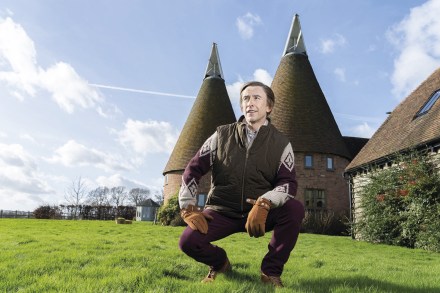
In the week Jenni Murray left Woman’s Hour, I was listening to Alan Partridge on his new podcast, From the Oasthouse, and imagining what he might have been like as her successor. As I chuckled through half a dozen episodes of awkward Norfolk frippery, it occurred to me that, short of taking him on, the BBC could do wonders for its reputation in the wake of Murray’s departure by taking a leaf out of the Partridge playbook. Partridge, played by Steve Coogan since 1991, has moved with the times. Although he hasn’t changed, his horizons have, and he is doing his best to retain his cringe-inducing record.

Tacky and incomprehensible: The Sandman audiobook reviewed

Radio

Listening to the tacky and incomprehensible audio-adaptation of Neil Gaiman’s graphic novel series Sandman, I couldn’t stop thinking about the 19th-century Swiss artist Rodolphe Töppfer. Did Mr Töppfer realise what he was doing when he one day decided to draw a narrative in sequential panels with captions underneath? His satirical novel in pictures, Histoire de M. Vieux Bois, was published in 1837, and made its way to America five years later as The Adventures of Mr Obadiah Oldbuck. ‘Mr Oldbuck drinks ass’s milk’ reads one caption, and then overleaf: ‘His physician recommending exercise, he buys an Arabian courser.’ Riding the courser, ‘Mr Oldbuck increases his speed, advancing at the rate of ten leagues an hour.

The Archers is a masterclass in how not to write a monologue

Radio

If you’ve been listening to The Archers lately, you’ll know how tedious monologues can be. The BBC has received so many complaints about the stream of soliloquys that has dominated the episodes since lockdown, that Mohit Bakaya, controller of Radio 4, has been compelled to issue an apology. The new format — introduced so that the cast and crew could follow social-distancing rules — has proven especially unpopular because, as some listeners have pointed out, the producers might easily have stitched recordings together to keep the drama going. Instead, they’ve more or less dispensed with dialogue between characters in favour of a watered-down talking heads approach.

A podcast about the literary canon that actually deepens your knowledge (sort of)

Radio

While most of life’s pleasures can be shared, reading is lonely. It’s more than possible for six friends to enjoy an exquisite meal, a bottle of wine and then settle down for a four- or five-hour orgy. Food, drink, sex: these things are better shared. But if, as dawn approached, someone cracked open Chaucer’s ‘Parliament of Fowls’ and intimated that it was time to really get down to brass tacks, it could only spoil the mood. Reading is lonely because so much of the reading that matters is hard. The books that change the world and shake the culture are rarely pure pleasure. The heaven sections of Paradise Lost. The war bits of War and Peace. The history bits embedded within the war bits of War and Peace.

Wholesome, intimate and suspiciously vague: The Michelle Obama Podcast reviewed

Radio

Back in March, I made a long-odds bet that Michelle Obama would be the Democratic party’s vice-presidential nominee. I knew that in her memoir, Becoming, she had said that she wasn’t interested in high office. But political candidates always claim they aren’t running — until suddenly they are. Joe Biden, the presumptive Democratic nominee, had already said he’d take Michelle as his VP ‘in a heartbeat’, which struck me as funny since, if Biden’s heart stopped beating, his VP would become commander-in-chief. Since Biden had been Michelle husband’s running mate, the idea of a 2020 Biden-Obama ticket had a fairytale symmetry that would thrill the public.

Hats (and knickers) off to the hosts: The Naked Podcast reviewed

Radio

I spent half an hour this week listening to a woman make a plaster cast of her vulva. Kat Harbourne, co-host of The Naked Podcast on BBC Sounds, opened a recent episode by buzzing her bikini trimmer over the microphone before squatting over a British Airways peanut dish. Jenny Eells, her partner in crime, stood close by offering to hold up her dress. ‘I feel a bit like a voyeur, almost,’ she said, as if surprised at herself. ‘Thanks for letting me be a part of it.’ Then the mould-maker, Phoebe, put a porridgy alginate in Kat’s dish, and Jenny thought it looked ‘tasty’. Jenny and Kat are used to seeing each other naked. Most weeks, they invite on a female guest, and encourage her to strip off with them so that they can have a chat in the nude.

Adapting Wodehouse for the radio is a challenge – but the BBC has succeeded brilliantly

Radio

Everyone knows a Lord Emsworth. Mine lives south of the river and wears caterpillars in his hair and wine on his shirt and has just occasionally written for this magazine. That doesn’t much narrow it down. When you look at him, you understand a little better why P. G. Wodehouse is topping the lists of authors to read during lockdown. It’s not just that the books are funny. With an Emsworth or a Bertie Wooster you’re guaranteed that idling and dithering will land you somewhere. Even if it is in the soup. Adapted for Radio 4 this fortnight, Leave it to Psmith, the second in Wodehouse’s Blandings series, sees the dithering Earl invite a prospective thief into his home after mistaking him for a Canadian poet.

I’ve lost patience with podcasts and their presenters

Radio

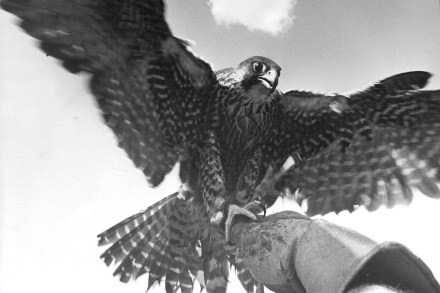
‘To be recognised and accepted by a peregrine,’ wrote J.A. Baker in 1967, ‘you must wear the same clothes, travel by the same way, perform actions in the same order. Like all birds, it fears the unpredictable.’ Sitting around in the same old clothes, performing chores in the same order, travelling by no way at all, I’ve found comfort in Baker’s assurance that I may at least prove attractive to birds in my slovenly purdah. Sir David Attenborough read The Peregrine beautifully on Radio 4 just before Christmas, but if you were too busy steaming puddings to listen, you may find this a good time for enjoying the series online.

Why do Radio 3 presenters adopt the tone stupid adults use when addressing children?

Radio

Anyone who has listened regularly to Radio 3 over the decades — not to mention the Third Programme, which Radio 3 replaced in 1967, and which provided an incomparable musical education for many of us — can’t have failed to notice the change in style and standard of presentation. Listening to any radio announcer from 50 years ago is bound to cause hilarity: carefully read scripts, un-emotional delivery; all told, quite like the Queen’s Christmas broadcast. It would be ridiculous to expect no change in the way that the music, and the occasional talks, not to mention the regular poetry programme — a northern camp Thursday-night regular — are presented.

Ill-disciplined and self-indulgent: The Guilty Feminist podcast reviewed

Radio

With theatres shut, radio must lighten the darkness. The Guilty Feminist is a wildly popular podcast performed by Deborah Frances-White and guests. In the episode of 23 March, the presenter hoped the superbug would cure our mania for business trips to ‘Philadelphia for a meeting about key performance indicators… Don’t fly to see people you hate. Fly to see people you love.’ She was probably unwise to dabble in medical predictions. ‘I hope Boris catches coronavirus so badly he needs to be sequestered on a desert island with no loo roll.’ Her co-presenter, Sindhu Vee, mocked her children’s frailties and her own. One of her young daughters announced her intention to become a feminist lawyer while the other said she wanted to be a mermaid.

Why do writers enjoy walking so much?

Radio

Writers like walking. When people ask us why, we say it’s what writers do. ‘Just popping out to buy a pencil,’ we cry, before tootling along the tarmac à la Virginia Woolf, Walter Benjamin or George Sand. BBC Radio likes walking, too, to judge by the number of programmes dedicated to the pursuit this fortnight. Some revolve around mental health and the environment; Clare Balding saunters over Berkshire’s Winter Hill in Ramblings with Steve Backshall and Helen Glover discussing wellbeing, parenthood and sewage. More involve the walking writer, with five authors retracing memorable ambulations on Radio 3, and Professor Jonathan Bate taking us on an altogether more dreamlike journey for In Wordsworth’s Footsteps on Radio 4.

The joy of Radio 3’s Building a Library

Radio

So, you’ve fallen in love with a piece of classical music and you want to buy a recording. The problems begin when you hit Amazon. Any reasonably established classic will have been recorded numerous times: do you go for the performer you’ve already heard of? The crackly vintage recording with the gushing five-star reviews? Or the budget-priced unknown with the vaguely Slavic name; after all, it’s the same music. Isn’t it? Radio 3’s Building a Library sorts it out so you don’t have to. Tucked away within Record Review each Saturday morning, the format is simple: every week, the BBC details a critic to listen to as many recordings of a given work as is humanly possible.

Radio 4’s new H.P. Lovecraft adaptation will give you the chills

Radio

Of all the many things I’ve learned from the radio so far this decade, the most deranging is that the universe is the dream of the god Azathoth. Not unreasonably, Azathoth yearns to wake up and visit his creation. In The Whisperer in Darkness (Radio 4), a crusty coven of drug-addled neopagans seek to realise this wish by summoning Azathoth through a mystic portal they’ve opened — just off the B1084 in Suffolk. Fools! Don’t they realise that they risk unleashing forces they don’t understand? Waking Azathoth would mean there will be no dreamer to dream the dream and so not just Suffolk but all reality would be obliterated as a result.