Culture

Culture

The good, the bad and the ugly in books, exhibitions, cinema, TV, dance, music, podcasts and theatre.

How podcasts have transformed radio

Radio

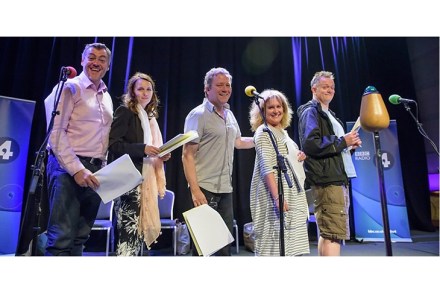
As if on cue, Lemn Sissay’s new series for Radio 4 tackles all those questions we would rather ignore in this season of good cheer and overindulgence. He starts out with a programme about homelessness, reminding us that the Christmas story begins with a young unmarried couple, ostracised because she’s pregnant and her current partner is not the father, who are desperately in need of a bed for the night. Cut to 2019 years later. ‘How do you decide how much to give?’ he asks a young woman in his audience who, it turns out, works with a charity for homeless people. ‘Do you ever feel you’ve not given enough?

The pleasures and perils of talking about art on the radio

Radio

‘I like not knowing why I like it,’ declared Fiona Shaw, the actress, about Georgia O’Keeffe’s extraordinary blast of colour, ‘Lake George, Coat and Red’. O’Keeffe was inspired by the lake in upstate New York but there’s no discernible lake on the canvas and no coat, although there is plenty of red. When Shaw is asked to describe the painting for us, her listeners, by Alastair Sooke, the presenter of The Way I See It, she puts her head in her hands. It’s almost like an amateur painting, Shaw concludes, and yet ‘it absolutely isn’t’. It’s an early work from 1919 when O’Keeffe was 32.

The Polish electronic music revolution of the 1950s

Radio

It was created in November 1957, a year before the BBC’s fabled Radiophonic Workshop, and was far more influential in shaping the development of electronic music, yet the Polish Radio Experimental Studio (PRES) is now virtually unknown even in Poland. Radio 3’s feature on Sunday night, Poles Apart (produced by Andrew Carter), made the case for its significance, taking us back to those early days of analogue bleeps, bongs, blurps and squelches. Robert Worby and the eerily electronic undercurrent to the programme gave us a completely new perspective on what else was going on in Poland in the 1960s besides the trouble at the Gdansk shipyards and the suppression of political thought.

Why I love a bit of death on a Sunday night

Radio

There’s nothing like a nice bit of death on a Sunday evening. Radio 4 originally transmit their obituary programme Last Word on Friday afternoons, but I love listening to the repeat. Sunday at 8.30 p.m. is the perfect time — the ending of people’s lives at the ending of the week. The stresses of Monday morning are beginning to appear on your mental horizon, so Last Word is a handy reminder that none of it matters. Triumphs and tragedies come and go, but in the end we all check out. This week provided the usual smorgasbord of mortality. Everyone from Irene Shubik, the TV producer behind Rumpole of the Bailey, to Abu Bakr al-Baghdadi.

From Brexit to Beethoven: John Humphrys returns to radio

Radio

Some listeners will have had quite a shock first thing on Monday. Turning on at six to Classic FM they would have heard a familiar voice but not quite the one they expected. In yet another surprising turn of events, John Humphrys, the fox terrier of news broadcasting, has just completed a stint on Classic FM’s breakfast show, swapping Brexit for Beethoven and smooth radio for the ebullient hectoring of the Today programme. ‘No need to readjust your radio,’ laughed Humphrys just after seven, before introducing the next track, Shostakovich’s Jazz Suite.

Can giving voice to the horrors of the past re-traumatise?

Radio

It is 50 years since Ronald Blythe published Akenfield, his melancholy portrait of a Suffolk village on the cusp of dramatic change. Akenfield was actually a composite of two real villages, Charsfield and Debach, and Blythe’s oral history was a patchwork created from about 50 conversations — with figures including a pig-farming colonel, the over-stretched blacksmith and a rural dean who reported residents being ‘blunted and crushed by toil’. It was an unsparing vision of rural poverty, yet also a homage to disappearing ways of life and the virtues of small communities. Last Saturday’s Akenfield Now, on Radio 4, followed local sixth-former Anna Davies as she surveyed the landscape afresh.

Without Joe Grundy The Archers feels lost

Radio

There was something really creepy about listening to the ten-minute countryside podcast released last weekend by Radio 4 supposedly transporting us to Marneys Field in Ambridge. Two worlds colliding. The fake countryside of Borsetshire was transfigured — no longer pretending to exist but existing, as if to make us all pretend we believe in it for real. We can hear David in the distance calling in the cows, just like an episode of The Archers. But those birds cheeping furiously; that tractor rushing past. The wind, the thunder, the sudden downpour. They could all have come from a nature documentary.

Did Radio 2 really need to give us four days of the Beatles to celebrate Abbey Road?

Radio

This Changeling Self, Radio 4’s lead drama this week, clearly ought to have gone out in August. It’s set — and was recorded — at the Edinburgh Festival and would have been a gift to marketing. ‘I love the festival!’ coos She. ‘All these millions of conversations, listen, listen, oh and stories, lots of stories, the different ways of telling…!’ No one in the real world speaks like this. But it’s just about OK, because she isn’t quite real either. She is a Fairy Queen, come to Edinburgh to spirit away a young pianist named Tam, as in Tamlin, who is a bit wet but really rather nice. The story is a modern retelling by Linda Marshall Griffiths of an old Scottish ballad that couldn’t be better suited to radio.

Radio 4’s The Art of Innovation is a series that — for once — deserves the label ‘landmark’

Radio

Radio 4, how do I love thee? Rather as one loves the flocked wallpaper that came with the house. It isn’t what one would have chosen — but it is home. Yes, even when plangent piano music indicates a meaningful drama is about to begin. Yes, even when said drama is a woefully wooden effort about Amy ‘a typical modern 18-year-old — who happens to be trans’. Sample quote: ‘You’ve had me for 18 years, now I want me for me!’ Sound effect: peevishly slammed door (mine). New trans dramas are, of course, welcome, but Woman’s Hour drama is often a bit miss and miss.

What’s the point of the Today programme?

Radio

What else is there to write about in the week that John Humphrys, that titan of the BBC airwaves, retires from his duties on the Today programme? Love or hate his terrier-like style of interviewing — baiting and occasionally biting his victims metaphorically on air — there’s no denying his stature as a news broadcaster or his influence on that staple of the Radio 4 schedule. He will surely be missed, much as Sue MacGregor, Brian Redhead, Jim Naughtie et al are missed, their presence in our lives determined by that early-morning slot, the first voice we might hear each day, the voice that brings news of never-to-be-forgotten events, the voice that infuriates and intrigues in equal measure.

General de Gaulle’s advice to the young Queen Elizabeth

Radio

There were so many ear-catching moments in Peter Hennessy’s series for Radio 4, Winds of Change, adapted from his new book by Libby Spurrier and produced by Simon Elmes. Harold Wilson answering a journalist’s question after a sleepless night while awaiting the results of the 1964 election, quizzical, cheeky and so quick off the mark. When asked if he felt like a prime minister, he replied: ‘Quite honestly, I feel like a drink.’ Later he was waylaid at Euston station having just got off the morning train from Liverpool and was still unsure of the result. (Labour won by just four seats after 13 years of Conservative rule.) At 3.50 that afternoon, Wilson, sitting by the phone in Transport House, at last received a message from the Palace.

Why 80 per cent of young people in this Macedonian town have turned to posting ‘fake news’

Radio

It’s such a relief to turn on the radio and hear the voice of Neil MacGregor. That reasoned authority, his deep knowledge of history and how things have come to be as they are, his measured common sense and ability to see round an argument or story. He’s like the voice of how things used to be, when the world was not so topsy-turvy and the news reports made sense. His series, As Others See Us, returns to Radio 4 this week (produced by Tom Alban), taking him this time to Singapore, the USA, Australia, Poland and Spain to talk to people there about Britain’s past connections, present woes and future prospects. It’s fascinating, salutary, and more than a little disturbing. Take Singapore, for instance.

The joys of Radio 4’s Word of Mouth

Radio

I first heard Lemn Sissay talking about his childhood experiences on Radio 4 in 2009. At that time he was still fighting Wigan social services for sight of the official dossier on his years as a child in care, fostered at first and then dumped back in the system and institutionalised in care homes and then a remand home. Eighteen years of his life stored in an Iron Mountain data facility. He’d been asking for his files, the story of his life, since he came of age. It was not easy to forget that programme; the banal cruelties of the system and Sissay’s resolute dignity in talking about them. At 18 he was told that the name he had been given by his foster parents was not his birth name.

Will you last beyond the madeleine? Radio 4’s In Search of Lost Time reviewed

Radio

The madeleine upon which Proust’s seven-volume epic In Search of Lost Time pivots makes its significant appearance after just 18 minutes in the new Radio 4 adaptation — with which, if you’re not obsessed with the Ashes or holed up with the family in some dank seaside cottage, you can while away this bank holiday weekend. It’s always a surprise to realise that the most significant cake ever baked (after Alfred’s burnt tarts) makes its fictional appearance so soon, almost before Proust’s characters, Swann, Gilberte and the Guermantes, have taken shape in your mind.

Two sides to every story

Radio

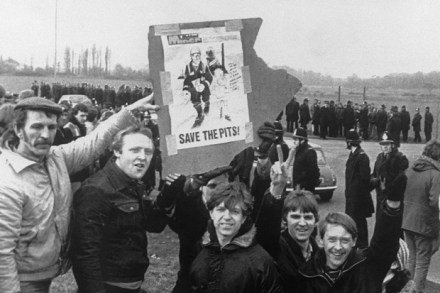
Maybe the equality inspectors at the corporation didn’t get the chance to vet Richard Littlejohn’s series for Radio 2, The Years that Changed Britain Forever, before it was broadcast on Sunday. Maybe the first programme (produced by Jodie Keane) was an accurate reflection of the year it focused on, 1972. But the most striking thing about it was not so much Littlejohn’s thesis, by which he declared that politically, culturally and musically it was a pivotal year in our national history, determining events that followed much later. No, it was his selection of music to accompany his thoughts about how the miners’ strike of 1972 led to the three day week, which led to the general election that destroyed Edward Heath and brought Arthur Scargill to national prominence.

Voices of import

Radio

By the age of eight Vaira Vike-Freiberga had learnt that life was both ‘very strange and very unfair’. Her baby sister had died from pneumonia the previous year because of the harsh conditions of life in a refugee camp in Germany (this was late 1944 and her family had fled their native Latvia for fear of the communists). Her mother soon had another child but when Vaira went to see her new brother in hospital she observed the young woman in the next-door bed turning her face to the wall against her wailing baby, product of a gang-rape by Russian soldiers. The nurses had given this unwanted baby girl the same name as Vaira’s much-mourned sister.

Let’s talk about sex | 25 July 2019

Radio

Every so often an idea for a show will come along that is perfect, and therefore should never be made. A sitcom based on Julian Assange’s time in the Ecuadorian embassy. Or a gender-flipped version of What Women Want. These are concepts to treasure, to return to, to discuss with friends. Once made flesh though, they disappoint. And this is what happened with the podcast My Dad Wrote A Porno. Here’s the concept. One Christmas Jamie Morton is asked to review a self-penned manuscript by his dad, which turns out to be astonishingly bad erotica written under the pen-name Rocky Flintstone. Morton recruits two old friends — BBC Radio 1 presenter Alice Levine and producer James Cooper — to read it out and talk about just how bad it is, a chapter an episode.

Listening space

Radio

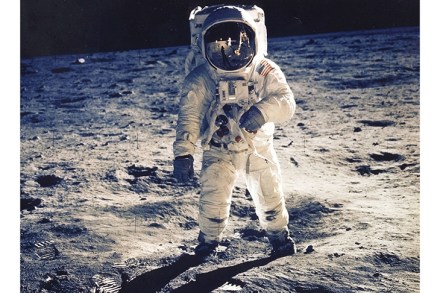
Television has the pictures but the most spine-tingling moments in the recordings from the Apollo space missions are the bursts of crackling conversation between the spacecraft and mission control. Never a word wasted, absolute precision and the most surprising clarity even when there are only seconds to spare before total disaster is averted. The wonderful documentary on BBC2 last week gave us those awe-inspiring shots of the Earth emerging from the dark side of the moon, taken by Buzz Aldrin from the Eagle, but it was the World Service’s podcast, 13 Minutes to the Moon, that made real just how incredible those 13 minutes were, when the Apollo 11 lunar module was blasted off from the command module and made its way down to the surface of the moon.

A matter of life and death | 11 July 2019

Radio

One of the advantages that podcasts have over the scheduled array of programmes is the space that can be given to a subject, turning what would have been a one-off into a whole series sometimes three or four hours long. This can be offputting. Who has the time to give so much to one programme? Even more so now when there’s so much else on offer to distract and entertain. But in the case of the new podcast ‘dropped’ this week by the Beyond Today team those three hours (in six half-hour episodes) have been used to best effect, allowing the story to build, the voices to become clearer, the families and the horror of what they have experienced to become more real.

End of an era

Radio

There’s been a Dimbleby on air since before I was born but last Friday saw the end of that era when Jonathan retired as chairman of Radio 4’s Any Questions after 32 years. It’s a bit like imagining life in Britain once the Queen dies. The Dimbleby family has been intertwined with the history of the BBC, and major national events, since the second world war when Richard, the father, carved out his career as a war reporter, most famously from Belsen in 1945. Mere mention of the name conjures up those Reithian values — clear reportage, an intelligent and fair-minded assessment of what’s going on, and access to that information for everyone.

Tables turned | 27 June 2019

Radio

It can’t be easy to find yourself on the other end of the microphone when you’re a journalist of the calibre of Emily Maitlis. You know all the pitfalls, how easy it is to be teased out of your bunker, to say more than you ever intended under the scrutiny of an ambitious, driven interviewer with a keen nose for a story. In One to One on Radio 4, though, it was surprising to hear the ultra-cool Newsnight presenter almost in tears as she recalled covering the Manchester Arena bomb and the Grenfell fire. We could hear her voice catching, the tears welling up, her words stuttering as she tried to get her breath back.

The sea, the sea

Radio

Walking into Fingal’s Cave, after scrambling across the rocks to reach it from the landing stage where the boat from Mull arrives, is a strangely emotional experience. It’s not just the extraordinary landscape, the precise, almost unnatural shaping of the hexagonal basalt columns that rise up high above you, the screeching of gulls and roaring of the sea as it enters and leaves the cave. That’s enough to provoke a sense of wonder. But there’s also so much history attached to the place since it was discovered by the Romantics and became the epitome of the sentimental landscape, awesome in scale, and also quite frightening.

Doing time

Radio

Nine on a Thursday morning is University Hour for those of us who don’t commute to an office every day. We time the clearing away of breakfast to coincide with Radio 4’s In Our Time. Melvyn Bragg, with his deadpan questioning, is our Thursday educator. Last week’s programme was a classic of the genre: about an obscure 17th-century physician I’d never heard of, Sir Thomas Browne — and here were three university professors who’d devoted their entire working lives to studying him. ‘With me to discuss…’, Melvyn said, introducing them all. These professors (one male and English, two female and American) would propel the nation’s knowledge-graph of Sir Thomas Browne from 0 per cent to 95 per cent before Book of the Week.

She hasn’t stopped dancing yet

Radio

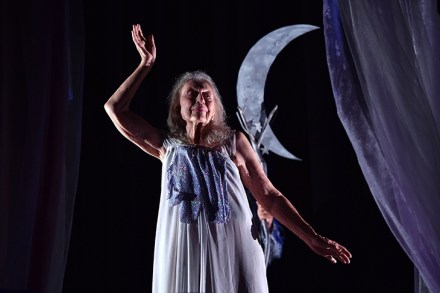
It’s not often you hear the voice of a 104-year-old on the radio. You’re even less likely to hear one so clear in thought, so spirited and full of enthusiasm for life. Eileen Kramer’s voice crackles with age, with the years she has lived, but from what she says, and the energetic way she says it, she could be at least 30 years younger. ‘I don’t know how long I will go on living,’ she says, but she’s still excited by the present: ‘There’s so much going on. I’m living in that period when a lot is being discovered about everything.

Acts of settlement

Radio

‘Put yourself in their shoes,’ says Zahra Mackaoui, a British-Lebanese journalist who has been following the stories of refugees from Syria for five years, catching up with them as they move on restlessly, searching for a place to settle. ‘Ask yourself, what would I have done?’ That question echoed through her series of documentaries for the World Service as we heard from those who have been exiled by a war in which they have played no part except as victims. What would I have done? In Beyond Borders (produced by Craig Templeton Smith), the open, frank honesty of Hani, Ayesha, Doaa Al Zamel and Fewaz gave us an opportunity to see deeper into their experiences. All of them have lost everything: the future they had once envisaged; the past, too, best forgotten.

By George

Radio

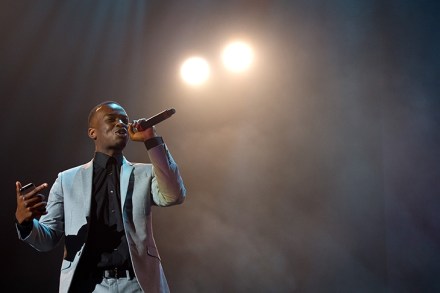
At last a podcast that takes the medium to its limit, created by someone who loves listening, understands how it can take the imagination to places visual images alone cannot, and wants to make use of this, not just for fun but with real intent. Have You Heard George’s Podcast? was last week awarded UK Podcast of the Year, and rightly so. I’ve never heard anything quite like it. At times George’s playfulness and gift for exploring the full meaning of the words he uses reminded me of early Tom Stoppard; other episodes were more like a Radio 1Xtra documentary about life on the street or the rise of drill. Each of the eight episodes tackles different themes, from the riots of 2011 to the Grenfell fire via an ideas war inside George’s head.

Women on top | 16 May 2019

Radio

On returning from a brief trip to Istanbul, where inside the mosques women are still very much kept to one side, only allowed to look on from an angle, unable to contemplate the full mystery of the space created within those extraordinary domes, I was intrigued on Sunday to happen upon Heart and Soul (produced by Lindsay Leonard) and to hear a Muslim woman leading the prayers to Allah. She sounded so natural, so intent, her voice modulated and firm, uplifting and authoritative. But how, I wondered, is this possible? Where is this female imam allowed to practise?

Afghanistan’s got talent

Radio

The cheering fans, the dramatic Hollywood-style drum rolls, the excitable host all sound just like The X Factor or The Voice. It’s hard to believe that beyond the lights and cameras there’s a huge security operation keeping the singers, TV staff and audience safe. But the Afghan version of the talent show is still under attack from the Taleban. In The Art of Now: Afghan Stars on Radio 4 (produced by Roger Short) we heard from Massood Sanjar, who set up the TV company that produces the programme, and Zahra Elham, this year’s winner, voted to the top spot by the audience, the first woman to win the show in its 14-year history.

Up close and personal | 2 May 2019

Radio

‘Can you fly down this evening?’ she was asked by her boss in the Delhi office of the BBC. ‘Yes, of course. I have to,’ replied Ayeshea Perera, a Sri Lankan journalist. She was talking from Colombo to David Amanor of the World Service’s The Fifth Floor, which looks at current news stories from the perspective of those intimately involved with them and is always worth catching for its alternative, less formal approach and Amanor’s gentle probing to find the real story. Perera described the chaos on arriving at the airport in the Sri Lankan capital on the evening of Easter Day and the weirdness of going to see the Church of St Anthony next morning to find that from the outside it looked just as she had always known it.