Culture

Culture

The good, the bad and the ugly in books, exhibitions, cinema, TV, dance, music, podcasts and theatre.

The genius of Caveh Zahedi

Radio

365 Stories I Want To Tell You Before We Both Die is a podcast that experimental filmmaker Caveh Zahedi started at the beginning of this year. Each episode is a short story, ranging from six minutes to 30 seconds, told directly to the audience. Zahedi has been a quiet star of the American indie scene for decades. His films are almost always autobiographical, and his podcast, with episodes titled ‘My Least Favorite Person’ and ‘My Therapist Insists I Tell Suzanne About the Prostitute’ and ‘What Richard Linklater Said To Me About Why I Was a Failure’, is no different. The subject matter ranges from past sexual experiences, failed film projects and parenting to run-ins with famous people, and his ex-girlfriends.

The best podcasts to help you become a better painter

Radio

There’s a great documentary film on Netflix at the moment about the late artist Bob Ross, he of the happy little trees and friendly perm, and the battles fought over his estate. It coincides with the revival on BBC4 of his Joy of Painting TV programmes, which originally aired in the US between 1983 and 1994, but have lately struck a chord with pandemic--stressed audiences here. They are, basically, free therapy, with a suburban far-out vibe and colour-laden fan brush. I was sceptical about how genuine Ross’s demeanour was until I saw the film, which left me in no doubt that he was exactly as he appeared. When someone is as enthusiastic and well-meaning as he was, you can’t help but stifle any sniggers and jump on board.

The best podcasts where girls sit around talking about ghosts

Radio

‘I’ve actually seen ghosts.’ This statement comes less than ten minutes into the first episode of Dark House, a limited-series podcast about ghosts, houses and interior decoration from House Beautiful magazine. And this is the moment, I assume, a certain number of people roll their eyes and switch over to the next podcast in their queue. Humans are fascinated by ghosts. We tell the stories, we take the city tours of hauntings when we travel, we see all the films in the Conjuring and Insidious series. But that’s a bit different from seeing real ghosts, which is just someone taking things too far. It was a shadow, or a dream, or a trick of the light, or a flaw with the camera.

The Sunday Feature is one of the most consistently interesting things on Radio 3

Radio

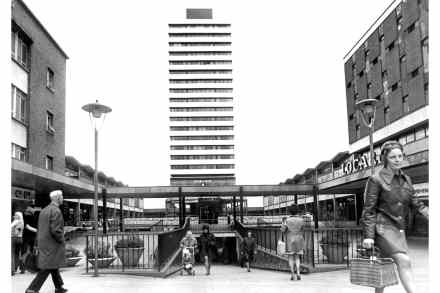
The story is likely apocryphal — and so disgraceful I almost hesitate to tell it — but it goes like this. On the night of 14 November 1940, as more than 500 Luftwaffe rained bombs on the people of Coventry, the newly appointed city architect Donald Gibson was watching the fires. Gibson had been appointed to the newly created position of ‘city architect’ three years earlier by the radical Labour council that had come to power in a local election. His job was to modernise what was then Britain’s best-preserved medieval city, and build the ideals of social justice and equality into the city’s brick and mortar.

Made me buzz like an electron: Science – Clear+Vivid with Alan Alda reviewed

Radio

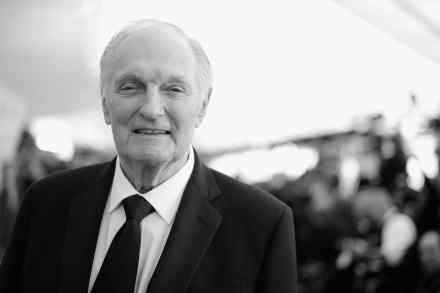
Given my affection for M*A*S*H, I can’t think why I haven’t listened to Alan Alda’s podcasts before now, besides the fact that they look quite uninviting. There is Clear+Vivid, on the power of communication, and Science: Clear+Vivid, on the power of scientific research. As someone who used to fall asleep listening to cassettes for A-Level physics, I am not easily excited by protons, and was prepared to give the latter particularly short shrift. Five hours on, however, Alda is still in my ears, and I am buzzing like an electron. Unlike many presenters, Alda, 85, doesn’t pretend not to know something just so that his interviewee will explain it to the audience, but nor does he strive to reveal how much he knows.

How the good intentions of Title IX ended up punishing the innocent

Radio

How do we have difficult conversations? Especially in an age of polarisation, where everything is immediately politicised? But also where calls for ‘nuance’ and ‘complication’ are sometimes used to justify what is really just bigotry. Is it possible to be both protective of the vulnerable and to allow for a larger pursuit of justice and compassion? These are the questions I was left with after listening to the podcast series The Inbox (part of the larger anthology The 11th), a tricky but sensitive look at the questions that surround the adjudication of sexual violence accusations on college campuses through the Title IX system. Sarah Viren wrote an essay for the New York Times about the accusations of sexual harassment against her wife that went viral.

A podcast that will rescue your relationship: Where Should We Begin? reviewed

Radio

Let me give you a free piece of relationship advice: just break up. If it’s more work than pleasure, if your heart sinks when they call, if you catch yourself writing ‘have sex’ on your to-do list, break up. Life is short, death is certain, relationships are for loving in, and if you can’t be with the one you love, you can at least leave the one you’re with. I give this advice because I know that people in bad relationships don’t take it. They are like those evacuation refuseniks, stumping around on the volcanic hillside, saying they’ve lived there 20 years and they’ll be damned if the whole thing blowing sky-high will change that.

Must all history programming be ‘relevant’?

Radio

When it comes to history programming, television’s loss is increasingly audio’s gain. People moan to me most weeks over the lack of really good, rigorous, eye-opening documentaries on the screen, and I can only nod along in agreement. Oh for a Kenneth Clark-style lecture! More Michael Wood! There’s an especially strong appetite for the adventurous commissions of the 1990s and 2000s. It’s principally podcasts, now, that are pouring into this void. Stephen Fry’s Edwardian Secrets, a 12-episode sequel to his previous series on the Victorians, even sounds like an extended BBC4 documentary, replete with talking heads, choral background music and just a dash of Horrible Histories.

Contains moments of spellbinding banality: Radio 4’s The Poet Laureate has Gone to his Shed reviewed

Radio

The interview podcast is a genre immoderately drawn to gimmicks, as the logical space of possible formats is gradually exhausted. The interviewee, quite often themselves a podcaster, might be, for example, invited to noisily eat lunch while nominating their top-five deceased childhood pets. The theory is that fanciful formats encourage the interviewee to open up. Under such conditions, the interview itself can come to seem incidental to the main event, the atmosphere chummy, comfortable, back-scratching, but fundamentally uninterested: you do my interview, I’ll do yours, no real questions asked.

Why do I find sketch shows – even the better ones – so embarrassing and charmless?

Radio

On sketch shows, the wisdom once was that you needed a punchline. That is, a slightly hammy, summative sign-off to let people know that they had come to the end of any given bit, to help the audience keep its bearings. The rules changed when the team behind Monty Python, who hated writing that mugging final joke, discovered that you could simply cut to Graham Chapman wearing a dress in a field and saying in a stern voice: ‘And now for something completely different’ — and it turned out that this was not only just as good, it was actually quite a lot better. This is the problem with sketch shows: you can hear the aching labour of the actors and the writers trying to be funny (and when they’re particularly bad, you can hear them praying for it too).

A podcast that listens to what anti-vaxxers think rather than lecturing them

Radio

Work is our new religion. There are people whose primary job is writing listicles of celebrity gossip, illustrated with gifs from the Fast & Furious franchise, who refer to being a writer as a ‘calling’. If I think about this for too long my brain simply shuts down to protect itself. What we used to do for God we now do for our work. In a secular culture, it seems totally normal — admirable, even — to sacrifice the possibility of having a family, to give up all leisure time, to starve yourself or live on insane, totally made-up diets like intermittent fasting or paleo for the sake of your job as an Instagram beauty influencer or whatever. But to wear a habit and be celibate and fast out of a religious devotion? That must be a cult!

Floods you with fascinating facts: Trees A Crowd reviewed

Radio

Listening to Trees A Crowd, a podcast exploring the ‘56(ish) native trees of the British Isles’, solved one of childhood’s great mysteries for me. Why, when you plant a pip from one type of apple, does it grow into a completely different type of apple tree? The answer — one kind of apple tree will typically cross-pollinate with another variety to pass on a different set of genes — is less interesting than the next bit. Which is that if you do plant, say, a Braeburn seed, and it takes, you’re likely to end up with crab apples.

The best theatre podcasts

Radio

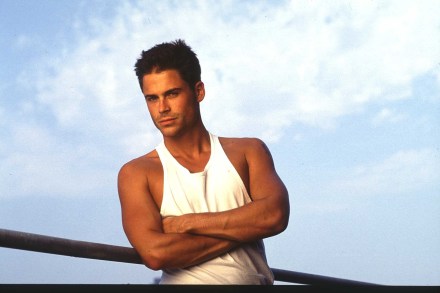
All the world’s on stage again so where to go to for insight into what to see and why? Podcasts, of course. Lowe’s ‘luck’ is that he happens to be friends, neighbours, or have starred, with everyone he interviews Let’s start with Literally! With Rob Lowe. An hour-long conversation between the most swoonable actor in the world who we’ve all forgotten, and everyone he knows and likes, from Alec Baldwin and Oprah Winfrey to St Elmo’s Fire co-star Demi Moore. It’s a wonderful and eye-opening listen. Lowe combines the enthusiasm and curiosity of the best interviewers with a knowledge and experience that makes conversation flow until the cup spilleth over.

Wallace Shawn’s Designated Mourner feels like watching the news

Radio

Pity the aesthete, the flâneur and the opera-goer. Those who find the contents of their own heads so dull and mundane they must fill them instead with the fantastical inventions of our most extravagant lunatics. They have been locked out of the theatres and cinemas and public spaces that make them feel at their most alive and abandoned to the content programming of Netflix and whatever Tenet was supposed to be. They’ve been deprived, sheltered, cut off from the only thing that gives their lives meaning. I’m describing me. I’m asking you to feel sorry for me.

Much smarter than your average podcast: Passenger List reviewed

Radio

Passenger List opens with a carefully structured ripple of breaking news bulletins: a mysterious catastrophe, an unconvincing official explanation, the repetitive stupidity that surrounds disaster. A plane has disappeared, no wreckage has been found. A woman whose brother was on board begins to search for the truth. The authorities say it was a bird strike: a flock of geese was shredded in the engines and 200 passengers crumpled on impact with the Atlantic ocean. Of course, the authorities’ story doesn’t make sense. So we follow our hero, Caitlin, a lone citizen searching indefatigably for answers in a shadow world of half-truth and paranoia. It seems that we never tire of this subject matter.

The best food podcasts

Radio

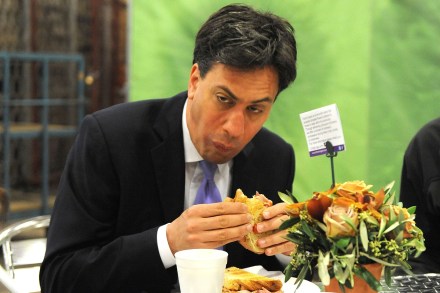
You have to hand it to Ed Miliband. After bacon sandwich-gate, he might never have eaten in public again, but there he was, wolfing down cod and chickpeas, eggs and Za’atar on the chart-topping podcast Table Manners with Jessie Ware. Presumably he thought that audio would be a fail-safe medium in which to redeem himself. No cameras, no aggressive questioning (the show is co-hosted by singer Jessie Ware and her mum Lennie), no risk. Suffice it to say he underestimated this one. An early part of the conversation, in précis, ran like this: ‘What’s your go-to dish?’, ‘I’m a recipe-box follower and a recipe follower.’ ‘Which recipe books?’, ‘That’s a good question.’ [Some minutes later.

The worst idea ever for a podcast – and it’s great: Our Struggle reviewed

Radio

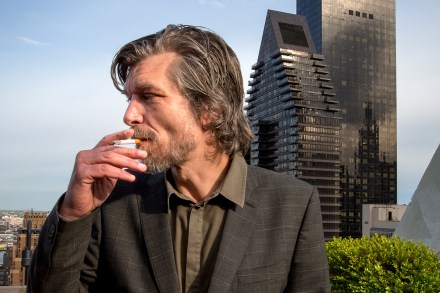
Our hosts are Lauren and Drew and they want to talk about Karl Ove Knausgaard. Or rather, they want to talk around Knausgaard. Or to talk through Knausgaard, towards the sense of what the Knausgaard phenomenon means. Or, it sometimes seems, they want to talk about everything but Knausgaard — cigarettes, Constance Garnett, the history of literary criticism, to what extent hotness is a function of tallness, Clarice Lispector, media hype, backlash, cancel culture, sneakers, Gen X, how Geoff Dyer got where he did — until the only territory left uncovered by the conversation is Knausgaard himself, described only through omission, in negative outline, raising yet another cigarette to his smouldering, craggy face.

The best podcasts to be enjoyed at 4 a.m.

Radio

Now that all of the billionaires are going into space, the night sky holds a special new kind of allure. We see a little twinkle in the distance and we can think to ourselves, there they are, out there, far away, away from us. It’s not clear whether Jeff Bezos and Elon Musk spent their childhoods looking up at the stars, fantasising fervently about joining them at some future date, or if they are now just bored. But perhaps their sense of identification and belonging in the vast night sky can be understood in another way. Humans have always told stories about the stars, and many of these myths could be relevant to the ambitions of these very wealthy men. Think of Prometheus, too smart and powerful for his own good.

The joy of Radio 4 Extra

Radio

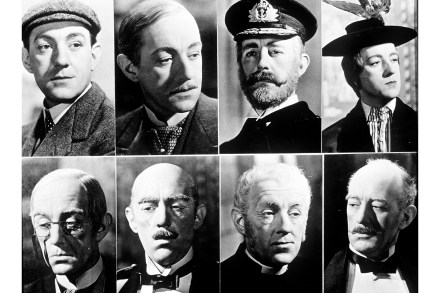
The best thing on the radio last week was, without question, Kind Hearts and Coronets. You may have missed it because it was on Radio 4 Extra, the poor, forgotten relation of the BBC’s main channels, which many regard as merely a Radio 4+1 for yesterday’s replays, when it is in fact home to the drama and comedy archive. Like the BBC4 TV channel, which is sadly ceasing commissioning, it hosts the sort of intelligent programmes people really enjoy, to the consternation of those who dismiss them as ‘old’. Fittingly, for Radio 4 Extra, Kind Hearts is all about a poor, forgotten relation who strives to reclaim his place within a family unwilling to acknowledge his existence.

The podcast that makes the world strange, mysterious and compelling again

Radio

It’s interesting that we have decided shaming and yelling are the easiest ways to change people’s minds. Which is not to say I do not think there are people in this world who deserve to be shamed and yelled at: people who use the term ‘cancel culture’ sincerely, people who are deeply invested in the marriage and divorce cycles of celebrities, Meryl Streep. But do I think yelling at Ms Streep will accomplish what I fervently wish for, which is for her to stop ruining perfectly fine movies with her barely adequate performances? No. Every issue in our cultural lives is politicised right now.

Insane and fascinating: BBC World Service’s Lazarus Heist reviewed

Radio

The narrative podcast remains a form in search of a genre. The template set by the hit show Serial — enterprising American journalists with janky piano theme tune shed new light on tantalising murder — still predominates seven years on. To this we can add the format pioneered by S-Town (initial murder investigation subsides into rich human detail) and, more recently, the excellent Wind of Change (intriguing what-if maps cultural and macropolitical shifts, with bonus CIA window-dressing). I remain sceptical about the form’s usefulness as a way of breaking hard news. Caliphate, the New York Times jaw-dropper on the Islamic State, is less gripping now its key source has been revealed as a fraud.

Seldom less than gripping: Banged Up podcast reviewed

Radio

Prison-based podcast Banged Up, now in its second series, is far more uplifting — and less soapy — than its name suggests. It begins with the tacit assumption that, if you haven’t personally been incarcerated, you probably have at least a dozen questions you’d want to ask someone who had. Is the food really awful? How likely are you to be beaten up? Is there a lending library? (I’d start with the last.) Banged Up has the answers to plenty more besides. The podcast is hosted by a prison lawyer named Claire Salama and two ex-inmates, a former footballer, Mike Boateng, known as ‘Boats’, and university-educated Rob Morrison, who describes himself as ‘probably not their [prisons’] target market’.

This is the golden age of the grifter – and there’s a podcast for every con

Radio

Truly we are living in the golden age of the grifter. From Fyre Fest to the WeWork empire to Theranos to the personal development cult NXIVM, we see a charismatic person promising us endless growth, pleasure or wealth and we give them all our money. The con-man economy doesn’t just stop at the men and women leading these frauds and profiting wildly from them. (Some of them go to jail, yes, but WeWork leader/charlatan Adam Neumann was paid many millions of dollars just to go away.) There is also now a podcast, usually sponsored by a security system, for every con.

It’s almost touching that the NFT world sees itself as radical

Radio

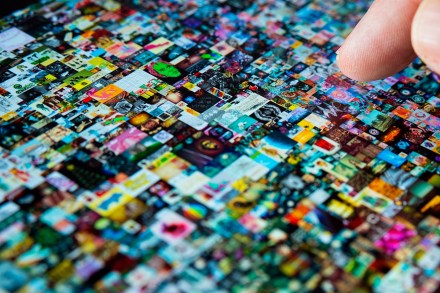
Some things are explained so many times that they become unexplainable: we can only relate to them as something complicated that needs to be explained. The global financial crisis was like this. Crypto-currencies were like this too. The newest thing that exists to be explained is the world of non-fungible tokens, or NFTs. NFTs are collectible digital objects. They are created with a technology called the blockchain, which unalterably and uniquely records their provenance. This means that if I mint an NFT of an image — a cartoon of Donald Trump, say, sitting naked astride the Capitol — I can prove definitive ownership of the image, no matter how many copies exist. In other words, NFTs can be authenticated, which means they can be sold.

Refreshingly unfettered: LRB Podcast’s Close Readings on Patricia Highsmith

Radio

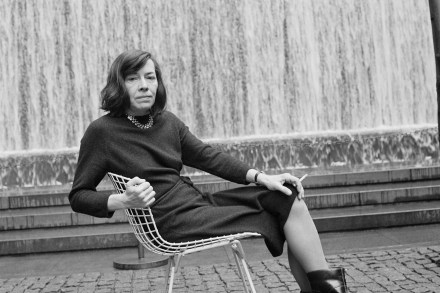
I’d forgotten what a rich and deep and characterful voice John le Carré had. Listening to author and lawyer Philippe Sands’s Archive on 4 programme on him last week, I was struck by how much more engaging it was than almost every other male voice on the radio these days. Le Carré’s weren’t simply the measured tones of a mid--century public schoolboy. There was a real spirit in his voice, something melodic, which, in a world of Nick Grimshaws and Greg Jameses, stopped me in my tracks. Le Carré’s voice was undoubtedly part of the armoury that enabled him to win people over, even ‘to manipulate crowds’.

My favourite failed podcasts

Radio

The promise of the internet was supposed to be thus: you could be your own bizarre, inappropriate self, and you would find a community of the likewise bizarre and inappropriate. You put yourself out there, and you will find what you consider unique or intolerable to be mundane and perfectly within the bounds of acceptable behaviour. But look, some of us went online, we said our things, and the internet responded: what the hell is your problem, truly why would you say something like that? There are a lot of reasons online projects fail, from lack of funds to real life intruding on your time to realising you just don’t care that much any more. But let’s not forget the power of realising you actually are a total weirdo in tracking the demise of creative endeavours.

Why In Our Time remains the best thing on radio

Radio

In Our Time is the best thing on Radio 4, possibly the best thing on the radio full stop. It is broadcast regularly from a parallel universe where everyone is interesting, everything is worth knowing and anyone can know it if they want to. It gets the best out of its medium by being somewhat contemptuous of it. It understands that the overproduced trimmings of modern radio are entirely extraneous. There will be no sound effects, no music and no catchphrases. All that we need by way of introduction is the word ‘hello’. After that, there’s no telling what will follow. ‘Hello. In 541 AD, in the realm of Justinian, there was a plague in which the whole human race came near to being destroyed.’ ‘Hello.

Barack Obama will make you cringe: Renegades: Born in the USA reviewed

Radio

Barack Obama wants the world to know how much he loves singing. In his new podcast, which takes the form of a series of conversations with Bruce Springsteen, he’s rarely without a tune on his lips. ‘Further on up the road…/ you been laughing, pretty baby…’ A shower-singer, a bedroom warbler, an Air Force One air guitarist with an okay voice, the former president is proof that you really can be embarrassing without feeling an ounce of embarrassment. Oh, to have seen his daughters’ faces when he broke into ‘Let’s Stay Together’ in front of Al Green. The sound team at the fundraiser in Harlem urged him to do it, he tells Springsteen, but no one’s buying it.

Claudia Winkleman’s new Radio 2 show gets off to a brainless start

Radio

Last Saturday on Radio 2 Claudia Winkleman was inaugurated as the host of what was formerly Graham Norton’s mid-morning spot. She announced her arrival by playing ‘Help!’ by the Beatles and offering a line-up comprised solely of fellow Saturday-night TV presenters. Here was Sir Tom Jones, calling in from ‘a terrace overlooking the Thames’ and repeating more or less the same interview he had delivered on Graham Norton’s TV show last month. Half an hour later came David Walliams, and to round things off Ant & Dec were prevailed upon to talk about their ‘jampacked’ ITV show later on that day. ‘How do you not unravel doing it?